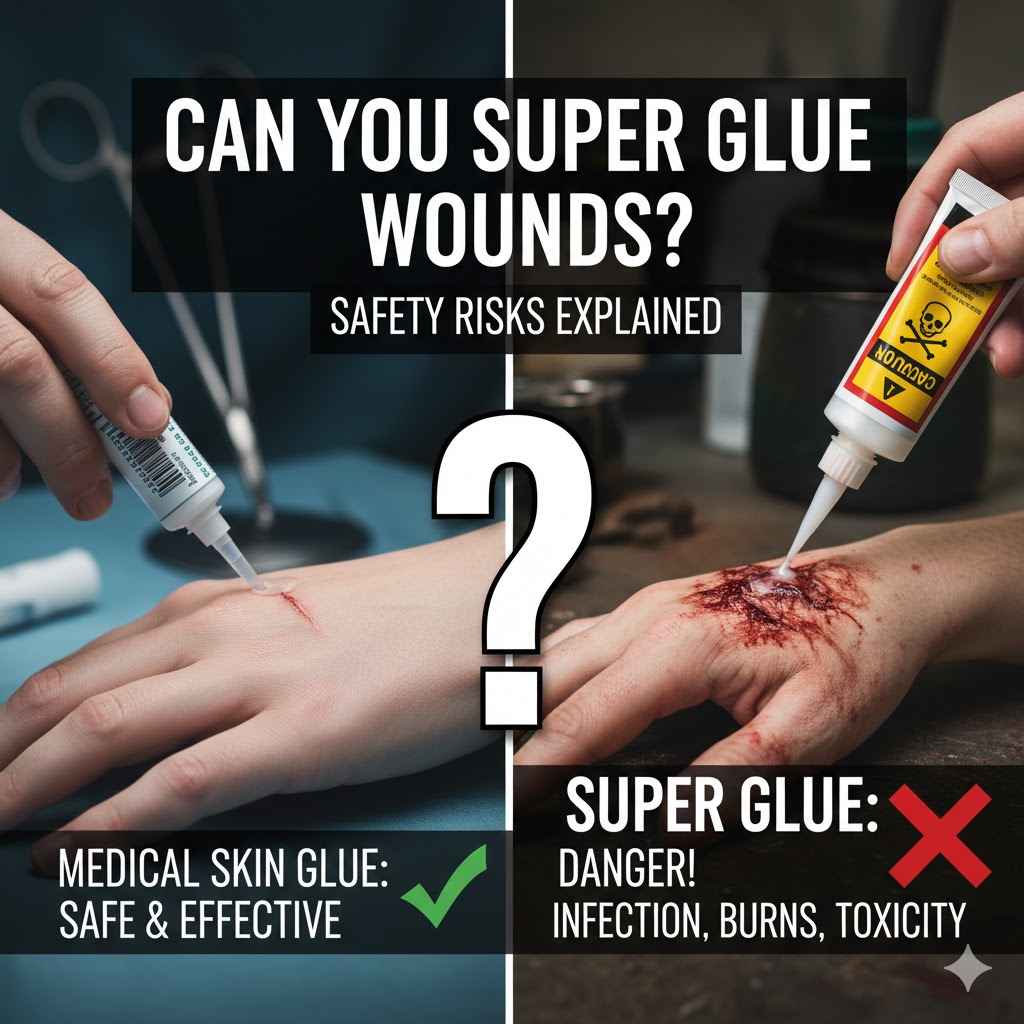
Can You Super Glue Wounds Safety Risks Explained
Many people wonder if super glue is safe for cuts. It seems like a quick fix for a wound, but is it a good idea? Thinking about using super glue on your skin can feel a bit confusing, especially if you’re not sure about the safety aspects.
This guide will break down Can You Super Glue Wounds? Safety Risks Explained in a super simple way. We’ll go step-by-step so you can easily understand what’s safe and what’s not for taking care of cuts.
Is Super Glue Safe for Skin Wounds
This section looks at whether super glue is a good option for closing up cuts and scrapes. We’ll explore what makes people think of it as a solution and discuss the immediate thoughts that come to mind when considering it for a wound. It’s about understanding the basic question and setting the stage for a deeper look into the topic.
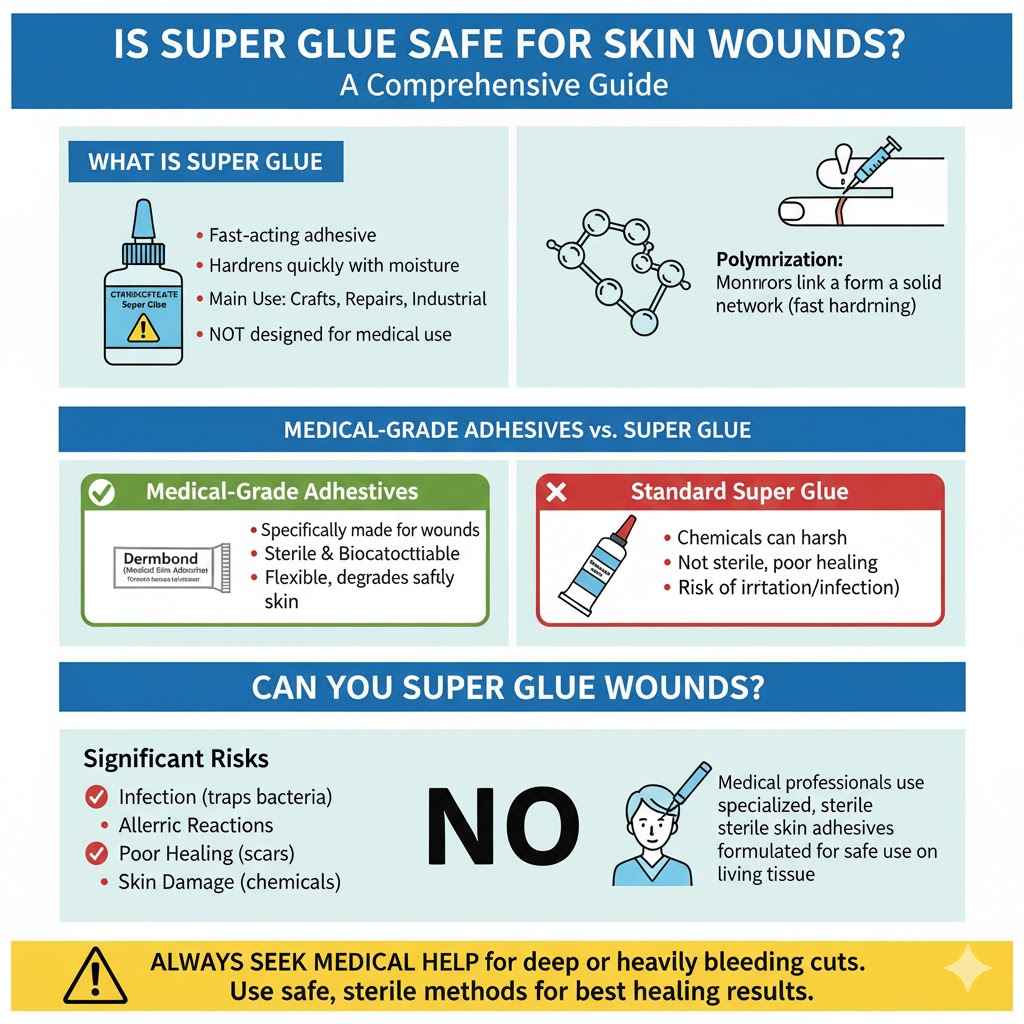
What Is Super Glue
Super glue, also known as cyanoacrylate, is a powerful adhesive. It works by a chemical reaction that hardens it quickly when exposed to moisture, like the moisture found on your skin. This fast-acting property makes it appealing for quickly sticking things together.
Its main use is for crafts, repairs, and industrial applications where a strong, fast bond is needed. It’s not designed for medical use, and this is a key point to remember. The chemicals in standard super glue are meant for surfaces like plastic, wood, or metal, not living tissue.
The way it hardens involves a process called polymerization. Monomers in the glue link together to form long chains, creating a solid material. This rapid hardening is what makes it seem like it could seal a wound instantly.
Medical-Grade Adhesives vs. Super Glue
Medical-grade skin adhesives are specifically made for closing wounds. They are tested to be safe for use on human skin and are designed to break down safely over time. They also offer flexibility and are less likely to cause irritation.
Standard super glue, on the other hand, contains chemicals that can be harsh. It doesn’t offer the same sterility or flexibility. While it might stick skin together, it doesn’t promote healing in the way a medical product would.
It’s also much harder to remove cleanly if needed.
Think of it like this: you can use a regular hammer to hang a picture, but for fine woodworking, you’d use specialized tools. Medical adhesives are the specialized tools for wounds. Regular super glue is more like the hammer.
Can You Super Glue Wounds
The direct answer is generally no, you should not use regular super glue on wounds. While it might seem like a quick fix, it comes with significant risks. The chemicals can irritate or damage the skin, and it’s not a sterile product.
Medical professionals have specific skin adhesives that look similar but are formulated for safe use on skin. These medical glues are sterilized and designed to be biocompatible, meaning they don’t harm living tissue. They also degrade naturally as the skin heals.
Using regular super glue can lead to infections, allergic reactions, and poor healing. It might seal the surface, but it doesn’t create a clean, sterile barrier that supports the body’s natural repair process.
Safety Risks Explained
This part goes into detail about why using regular super glue on wounds is a bad idea. We will explore all the potential problems and dangers that can happen. This will help you understand the safety concerns fully.
Infection Risk
Regular super glue is not sterile. This means it can carry bacteria, viruses, or other germs. When you apply it to an open wound, these germs can enter the body, leading to an infection.
An infection can make a minor cut much worse. Symptoms include redness, swelling, increased pain, warmth around the wound, and sometimes fever. If an infection gets serious, it could require antibiotics or even hospitalization.
Medical adhesives used by doctors are sterilized. They are manufactured in clean environments and packaged to remain sterile until opened. This is a critical difference that makes them safe for medical applications.
Consider a situation where a small cut gets infected. Without proper medical care, the infection could spread. This is why avoiding non-sterile products on open wounds is so important.
Skin Irritation and Allergic Reactions
The chemicals in regular super glue, like cyanoacrylate, can be very irritating to the skin. Your skin might react by becoming red, itchy, or developing a rash. Some people may have a more severe allergic reaction.
These reactions happen because the body sees the glue as a foreign substance. The chemicals can break down the skin’s protective barrier. This can cause pain, burning, and discomfort.
In some cases, the glue can bond to skin cells too strongly, making removal difficult and painful. It might pull away healthy skin when it eventually detaches.
A common experience people have is accidentally gluing their fingers together. While this is usually a minor inconvenience, imagine that kind of bonding on an open, injured part of your body. It can cause significant harm.
Poor Wound Healing
Super glue is designed to create a rigid bond. This rigidity can be problematic for a wound. Skin needs to be able to move and flex as it heals.
When a wound is sealed with a stiff material, it can restrict blood flow. This can slow down the healing process. It also creates a surface that might crack or break, reopening the wound.
Furthermore, the body’s natural healing process involves a complex series of events. Introducing a harsh chemical adhesive can interfere with these natural steps. It might prevent the formation of new tissue or cause scarring.
Medical glues are formulated to be flexible. They stretch and move with the skin. This flexibility is vital for allowing the wound to close properly and heal without issues.
Difficulty in Removal
If you use super glue on a wound, removing it can be a painful and damaging process. Acetone, a common solvent for super glue, is too harsh for open wounds and can cause further injury and irritation.
Trying to peel or pick the glue off can tear away healthy skin tissue. This can reopen the wound, increase bleeding, and lead to scarring. It’s a scenario that can turn a simple cut into a more complicated medical issue.
Medical skin adhesives are designed to be removed more easily or to break down on their own. This ensures that the healing skin is not damaged during the removal process.
Long-Term Scarring and Complications
Using non-medical glue on a wound increases the risk of scarring. The irritation, potential infection, and improper healing process can all contribute to more noticeable scars.
In severe cases, if an infection is not treated promptly, it can lead to more serious health problems. This could include damage to underlying tissues or nerves. Such complications require extensive medical attention.
Medical professionals choose treatments based on what will provide the best outcome for healing and minimize long-term effects. This includes choosing the right method for closing a wound.
Alternatives to Super Glue for Wounds
Knowing that super glue is not the right choice, what should you do instead? This section covers the safe and effective ways to handle cuts when you need to close them up.
First Aid Basics
For any cut, the first step is always to clean the wound. Gently wash the area with soap and clean water. This helps remove dirt and debris that could cause infection.
Next, apply gentle pressure to stop any bleeding. You can use a clean cloth or sterile gauze for this. If bleeding is heavy and doesn’t stop with pressure, seek medical help.
Once bleeding is controlled and the wound is clean, you can decide on covering it. For small cuts that don’t need stitches, a simple bandage is often all that’s needed. This protects the wound from further dirt and injury.
The goal of first aid is to stabilize the situation and prevent further harm. It’s about basic care that supports the body’s natural healing abilities.
When to Seek Medical Attention
It’s important to know when a cut needs professional care. If a wound is deep, wide, or bleeding heavily, you should see a doctor or go to an urgent care center.
Wounds that gape open and don’t stay closed on their own usually require stitches or medical adhesive. If the cut is on your face, or if it might leave a significant scar, medical attention is also recommended.
Signs of infection, such as increasing redness, swelling, pus, or fever, are also reasons to get medical help immediately. Don’t try to manage an infection at home, especially if it’s worsening.
A healthcare provider can properly clean and close the wound, administer pain relief if needed, and offer advice on aftercare to ensure the best healing outcome.
Medical Skin Adhesives
These are the sterile, specialized glues used by doctors and nurses. They are made from cyanoacrylate, similar to super glue, but are formulated differently for safety and effectiveness on skin.
Medical skin adhesives are applied directly to the edges of a clean wound. They dry quickly and form a flexible, sterile barrier. This barrier holds the wound edges together, allowing them to heal.
They are often used for minor surgical incisions or lacerations that don’t require stitches. They are a great alternative for closing wounds because they are less painful than stitches for some people and leave minimal scarring.
Examples include Dermabond, Histoacryl, and LiquiBand. These products are available to medical professionals and are specifically designed for wound closure. They are a proven and safe method.
A common scenario where medical adhesives are used is after a minor cut or a small surgical procedure. The doctor will clean the area, apply the glue, and the patient can often go home with instructions for care. It’s a quick and effective treatment.
Butterfly Bandages and Steri-Strips
These are adhesive strips that help pull wound edges together. They are often used for smaller cuts or as a way to support a wound after stitches or medical glue have been removed.
Butterfly bandages are small, often bow-tie shaped strips. You place the center of the strip over the wound and gently pull the ends to bring the skin edges together. They help keep the wound closed while it heals.
Steri-Strips are similar but are typically longer and narrower. They are used to close the skin on either side of an incision or cut. They offer good support for healing tissues.
These are excellent options for cuts that are not too deep or wide. They are easy to use at home and can help prevent the wound from reopening.
Statistics show that using proper wound closure methods, including medical adhesives and strips, can reduce infection rates by up to 70% compared to leaving wounds open or using improper closure.
Proper Bandaging and Wound Care
After a wound is cleaned and closed, proper bandaging is essential. A clean bandage protects the wound from dirt and bacteria, keeping it moist enough for healing but not so moist that it promotes bacterial growth.
Change bandages regularly, usually once a day or if they become wet or dirty. This helps keep the wound clean and allows you to check for signs of infection.
Keeping the wound clean and covered is a key part of the healing process. It creates an environment where your body can repair itself most effectively.
A study published in the Journal of Wound Care indicated that moist wound healing, supported by appropriate dressings, can speed up the healing process by up to 50% compared to dry wound healing.
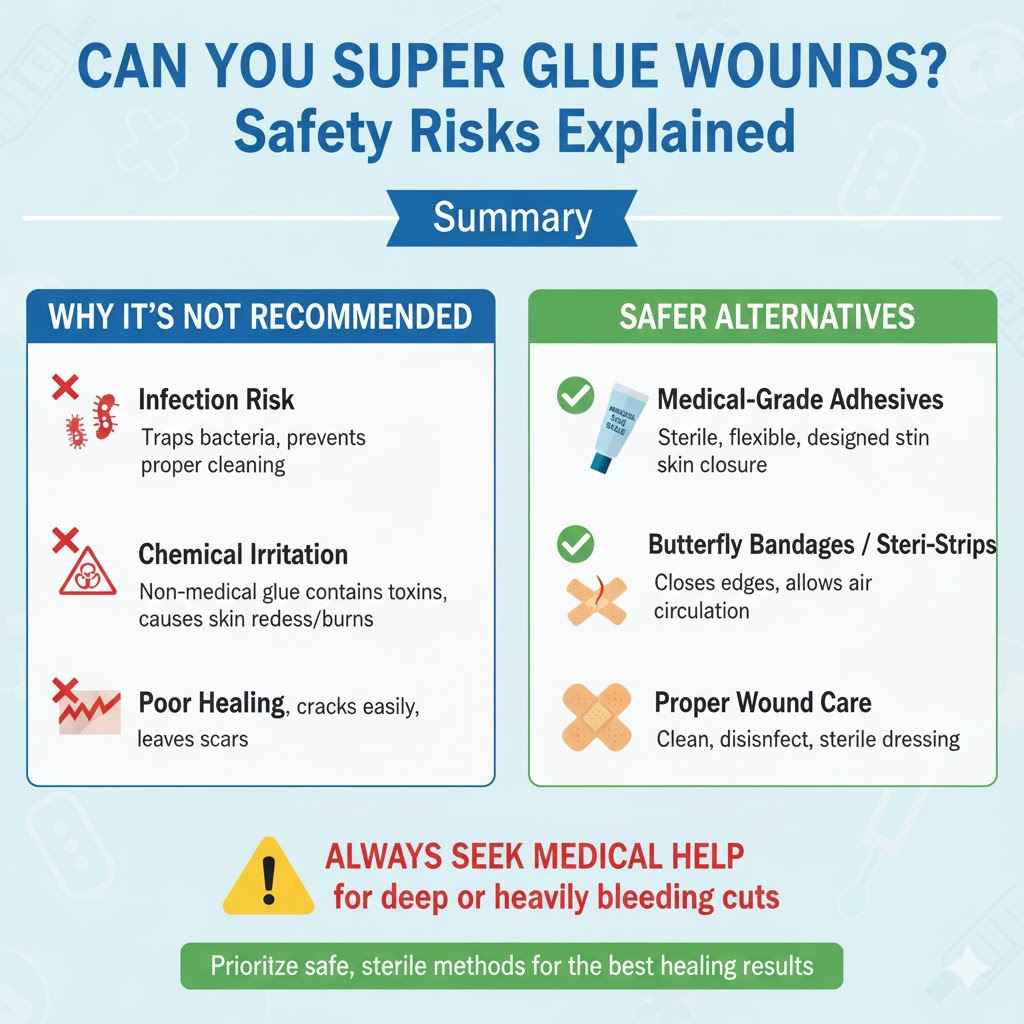
Can You Super Glue Wounds? Safety Risks Explained Summary
Using regular super glue on wounds is not recommended due to risks of infection, irritation, and poor healing. Medical-grade adhesives, butterfly bandages, and proper wound care are safe alternatives. Always seek medical help for deep or heavily bleeding cuts.
Prioritize safe, sterile methods for the best healing results.
Frequently Asked Questions
Question: Can I use super glue if I have no other option for a cut
Answer: While it might seem like a last resort, it’s best to avoid regular super glue. If you absolutely cannot get medical help, clean the wound very well and try to hold the edges together with clean fingers or a clean cloth until you can see a doctor. Infections are a serious risk.
Question: How do doctors close small cuts
Answer: Doctors use sterile medical-grade skin adhesives, stitches, or adhesive strips like Steri-Strips. These methods are designed to be safe, effective, and promote good healing without causing infection.
Question: Will super glue stop bleeding
Answer: Super glue might temporarily seal a small cut and slow bleeding, but it’s not a reliable or safe method. It can trap bacteria and cause more problems than it solves. Proper pressure is the best way to stop bleeding.
Question: Can super glue cause scars
Answer: Yes, using regular super glue on wounds can increase the risk of scarring. Infection, irritation, and improper healing can all contribute to more noticeable scars compared to medical treatments.
Question: Are medical skin glues the same as super glue
Answer: They are similar because they are both cyanoacrylates, but medical skin glues are specially formulated to be safe for use on skin. They are sterile, less irritating, and designed to break down as the wound heals, unlike regular super glue.
Conclusion
Using regular super glue on wounds is risky. It can lead to infection, irritation, and slow healing. Medical adhesives and other proper wound care methods are safe and effective alternatives.
Always choose sterile options for your health and best healing.