Can You Put Elmer’s Glue on Your Face? Safety Facts to Know First
Short answer: no. Elmer’s Glue-All and Elmer’s white school glue are labeled “non-toxic,” but that label covers accidental swallowing (see our separate breakdown of what happens if you eat Elmer’s glue), not intentional, repeated application to facial skin. The product was never formulated, tested, or approved for cosmetic use, and dermatologists who have commented on the viral “glue peel-off mask” trend point to real skin-barrier damage, not just a theoretical risk.
Below are the actual facts, not scare tactics and not a shrug. We’ll cover what the “non-toxic” label legally certifies, what happens to skin during the peel, where the real danger is (the eyes and broken skin), and what to use instead if the appeal is the satisfying peel itself.
The Quick Answer
Elmer’s glue is a polyvinyl acetate (PVA) emulsion made for paper, wood, and craft materials, and it’s not waterproof once it dries, which is part of why it releases from skin (and the surface it’s applied to) with enough force or moisture. It is genuinely non-toxic in the sense that swallowing a small amount is not expected to poison you. That is a real, accurate fact, and it’s also the whole reason the “put it on your face” idea took off online: people see “non-toxic” and assume that covers skin contact too. It doesn’t. Those are two different safety questions, and the glue has only ever been tested for the first one.
What the “Non-Toxic” Label Actually Certifies
Elmer’s glue carries the ASTM D-4236 designation, officially the “Standard Practice for Labeling Art Materials for Chronic Health Hazards.” It’s a real, legally required standard under the U.S. Labeling of Hazardous Art Materials Act (LHAMA) of 1988, and products that meet it are reviewed by toxicologists to confirm they won’t cause chronic harm, like organ damage or cancer risk, under their normal, intended use.
Here’s the part that gets lost in the DIY-trend version of this story: ASTM D-4236 review is about handling an art material as an art material, not about repeated, prolonged contact with facial skin. It is not a cosmetic safety standard. Actual cosmetic and skincare products go through separate dermatological testing, formulated specifically for skin, checked for irritation potential, and often checked for how they behave on the more delicate skin of the face. Elmer’s glue has never gone through that process, because it was never meant to.
What Dermatologists Say About the Peel-Off Glue Mask Trend
The specific trend behind this question is using Elmer’s glue as a cheap, DIY peel-off mask, usually for blackhead removal. It’s a real, documented social-media trend, and dermatologists who have weighed in on it are consistent on a few points.
First, it doesn’t do what people want it to do. Blackheads are debris trapped deep in a pore, and a surface film of dried glue isn’t formulated to lift that out. Glue is also occlusive, meaning it can sit on top of the skin and trap oil, dirt, and dead skin cells underneath rather than clearing them, which can make clogged pores and breakouts worse instead of better.
Second, and more importantly, the removal step is the actual hazard. As the glue dries, it bonds to the outermost layer of skin and to fine facial hairs. Peeling it off is a physical, abrasive action, not a gentle lift, and it can take part of the skin’s protective barrier with it. That’s the mechanism dermatologists point to for the redness, dryness, and irritation people report afterward: the same “satisfying peel” that makes the trend popular on video is also what strips the barrier that keeps skin hydrated and protected from bacteria and irritants. With repeated use, that can mean ongoing sensitivity rather than a one-time bad reaction.
Allergic reaction is a separate risk worth naming directly. Elmer’s glue contains PVA along with additives like plasticizers and preservatives that keep it shelf-stable and flexible. None of those ingredients were selected or tested for how they interact with facial skin over repeated use, so a reaction is possible even in someone who has never had a skin allergy before. If you have eczema, rosacea, or any active skin condition, the risk is higher, since compromised skin is already more reactive to substances it wasn’t built to handle.
It’s also worth being direct about why this trend spreads in the first place. Elmer’s glue is cheap, sitting in most junk drawers already, and the peel itself looks dramatic on video, which is a strong combination for something to go viral. None of that makes it a good skincare method; it just makes it an accessible one. Accessible and safe aren’t the same thing, and that gap is exactly what this article is trying to close.
Why the “Satisfying Peel” Is the Problem, Not the Benefit
It’s worth sitting with that point specifically, because it’s the honest, non-obvious part of this topic. The visual payoff of a glue mask, the dried film coming off in one piece with visible specks on it, is not evidence that it worked. It’s evidence that a layer of skin cells and hair came off with it. A product actually formulated for peel-off cosmetic use is designed to release from skin without taking the barrier layer along for the ride; craft glue has no such design consideration, because bonding strength for paper and wood is the entire point of the product.
Never Near or In the Eyes, and Never on Broken Skin
This should be obvious, but it’s worth stating plainly: Elmer’s glue should never be applied near or in the eyes. The skin around the eyes is thinner and more sensitive than anywhere else on the face, and any adhesive getting into the eye itself is a genuine medical concern, not a minor irritation.
The same caution applies to any skin that’s already broken, irritated, sunburned, or affected by a condition like eczema or active acne. Applying an adhesive not designed for skin to compromised skin raises the odds of irritation, infection risk, and a worse reaction overall.
If You Want the Peel-Off Feeling Without the Risk
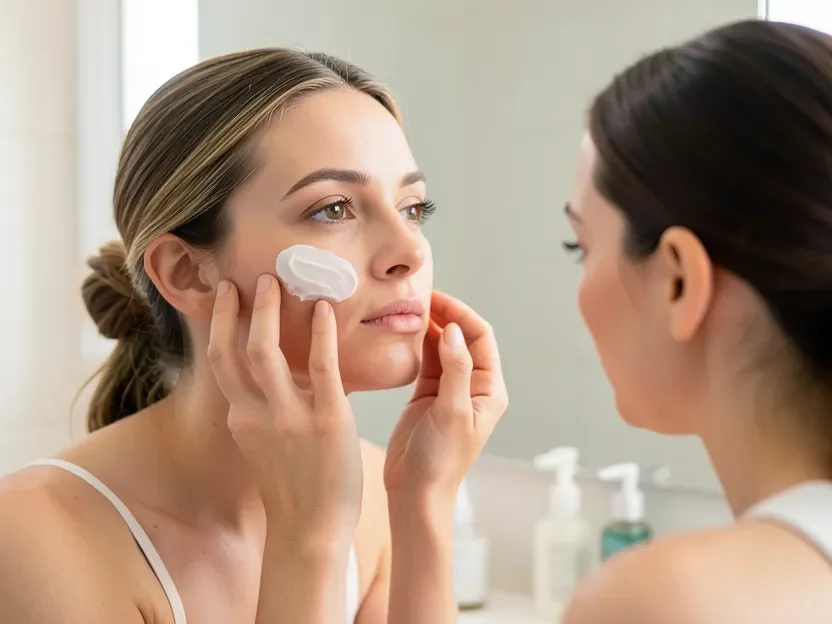
If the actual appeal is the ritual of a peel-off mask, or you’re trying to deal with blackheads and clogged pores, there are options that are genuinely made and tested for skin instead of paper:
- Cosmetic-grade peel-off masks: formulated to release cleanly from the skin’s surface rather than bonding to the barrier layer, and dermatologically tested before they’re sold as a face product.
- Salicylic acid (BHA) treatments: a dermatologist-recommended option for clogged pores that works chemically, by loosening the debris inside the pore, instead of relying on a physical peel.
- Clay masks: absorb excess oil without the strong adhesive bond that a peel-off film creates.
- A dermatologist or licensed esthetician: for persistent blackheads, professional extraction is safer and more effective than any at-home peel method, glue-based or not.
We’re intentionally not recommending a specific product to buy here. Given the actual point of this article, the responsible thing to do is point you toward the right category of product and let you choose one suited to your skin, rather than push a purchase in the same breath as a safety warning.
Whatever you use instead, patch-test it first: apply a small amount to your inner wrist or behind your ear, wait 24 hours, and check for redness or irritation before putting anything new on your face. That single habit catches most bad reactions before they happen anywhere near your face.
Frequently Asked Questions
Is Elmer’s glue toxic if it touches your skin?
No, brief skin contact with Elmer’s glue is not toxic. The concern isn’t poisoning, it’s irritation and, specifically, the damage that can happen when a dried layer is peeled off facial skin. “Non-toxic” and “safe for repeated cosmetic use” are different claims.
Can Elmer’s glue actually remove blackheads?
Not reliably. Blackheads are debris trapped inside a pore, and a surface film of dried glue isn’t designed to draw that out. It can also trap oil and dirt underneath it, which may make clogged pores worse rather than better.
What happens if you get Elmer’s glue in your eye?
Getting any adhesive in the eye is a real medical concern, not a minor issue. Elmer’s glue should never be applied near or in the eye area. If it happens, rinse thoroughly with clean water and seek medical advice.
Is there a safe way to use Elmer’s glue as a peel-off mask?
There’s no version of this that dermatologists recommend. Even a short, careful application still relies on peeling dried glue off skin, which is the exact mechanism linked to barrier damage and irritation. A cosmetic-grade peel-off mask achieves the same ritual without that risk.
Bottom Line
Elmer’s glue is a genuinely non-toxic, well-made product for what it’s built for: paper, wood, and craft materials. That’s a real and useful fact, and it’s also not the same thing as being safe for your face. The peel-off glue mask trend trades a satisfying video moment for real skin-barrier damage, it isn’t effective at what people use it for, and it should never go near the eyes or onto broken skin. If you want the ritual, reach for a product that was actually built and tested for your face.
Sponsored / affiliate links. As an Amazon Associate I earn from qualifying purchases. I may earn additional commission from eligible campaigns.