Can You Put Epoxy Over Painted Concrete? The Honest Answer
Yes, but only conditionally — epoxy will bond to painted concrete if the paint itself is fully adhered, properly cleaned, and scuff-sanded first, and it will fail if any of those conditions aren’t met. Epoxy doesn’t bond directly to concrete in this scenario; it bonds to the paint layer, so the paint’s own adhesion to the concrete becomes the limiting factor for the whole project — a genuinely different situation from applying epoxy to bare concrete.
Assessing The Existing Paint First
A Full Kit, Not Just The Coating
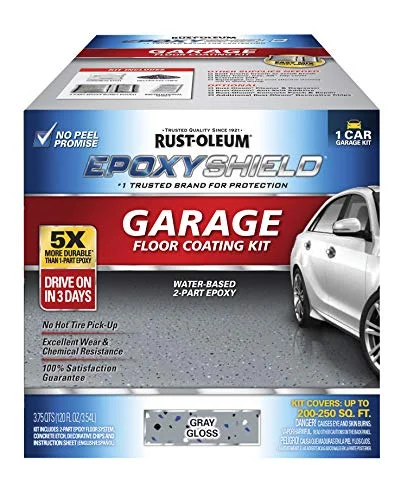 |
Rust-Oleum EpoxyShield Garage Floor Coating, 1 Car Kit – $96.79 Includes the 2-part epoxy, decorative chips, and concrete etch in one kit — full vehicle traffic ready in 3 days.
|
Before anything else, check whether the paint is actually still bonded. Look for peeling, flaking, bubbling, or chalking (a powdery residue that comes off on your hand when you wipe the surface) — any of these mean the paint itself is failing, and epoxy applied on top will fail along with it, often faster than the paint did on its own. A simple adhesion check: press a piece of duct tape firmly onto the painted surface, then pull it off sharply. If paint comes off with the tape, the bond is already compromised and epoxy over it is a bad idea — that area needs the paint stripped back to bare concrete instead.
When Epoxy Over Paint Is Not Recommended
- Any peeling, bubbling, or flaking paint — the underlying bond is already failing; epoxy can’t fix it.
- Chalking paint that leaves residue on contact — epoxy won’t bond well to a powdery surface no matter how thoroughly you clean it.
- Unknown or very old paint of uncertain type — some older coatings (including some oil-based paints) resist proper epoxy adhesion even when they look intact; a test patch (below) is the only reliable way to know.
- A garage floor with an active moisture problem (visible dampness, efflorescence, or a failed vapor barrier) — moisture pushing up through concrete will eventually delaminate any coating on top, paint or epoxy, regardless of how well the epoxy itself was applied.
Always Run A Test Patch First
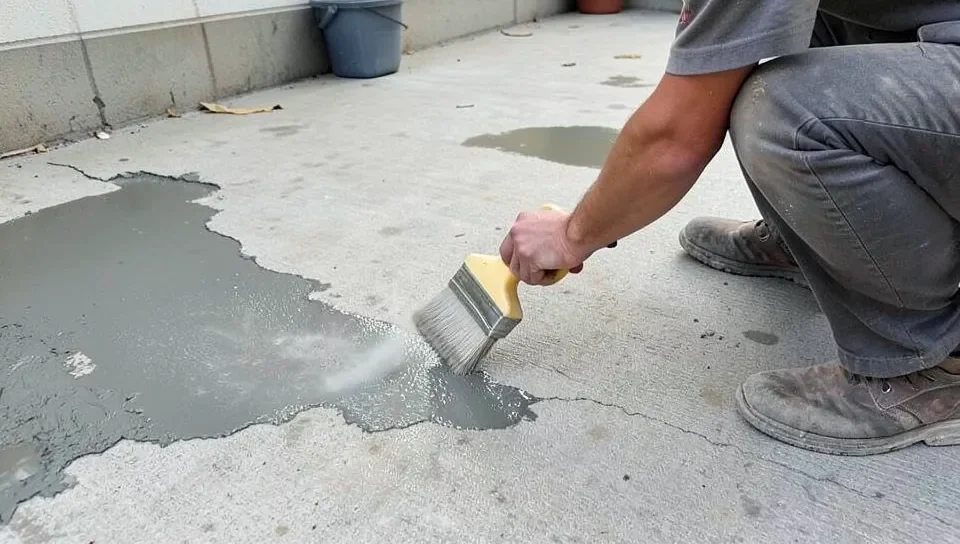
Even when the paint looks fully sound, apply epoxy to a small, inconspicuous test area first and let it fully cure per the product’s schedule before committing to the whole floor. This catches compatibility issues (some paint chemistries don’t play well with certain epoxy formulas) before you’ve invested in materials and labor for an entire garage floor, and it’s a fast, low-cost step that the old “just go for it” framing skips entirely.
Application Steps
- Clean thoroughly — degrease and remove all dust, dirt, and residue; let the surface fully dry.
- Scuff-sand the paint with a floor sander or coarse sandpaper to give the epoxy mechanical grip — this is not optional, and skipping it is the single most common cause of epoxy-over-paint failures.
- Run your test patch and let it fully cure before proceeding.
- Mix the epoxy exactly per the product’s instructions — incorrect part-A-to-part-B ratios are a real, common cause of a coating that never fully cures or stays tacky.
- Apply in manageable sections (commonly 4×4 feet) with a synthetic nap roller, working the coating evenly rather than pooling it.
- Respect the full cure schedule before returning the floor to use — light foot traffic and full vehicle weight typically have very different wait times on the same product.
When Stripping The Paint Is The Better Call
If the paint fails the adhesion check in more than a small, isolated area, or if you’re not confident about the paint’s age or type, stripping it back to bare concrete is often the more reliable path than trying to salvage a questionable bond. This adds real time and cost (mechanical grinding or chemical stripping, plus a proper concrete etch afterward), but it removes the biggest variable in the whole project — epoxy on properly prepared bare concrete is a well-understood, predictable process, while epoxy on partially-failing paint is a gamble on how long that paint layer holds. For a small area with isolated paint damage, spot-stripping just the affected section (then feathering the transition) can be a reasonable middle ground rather than stripping an entire floor over a few problem spots.
Frequently Asked Questions
Can you put epoxy directly over painted concrete?
Only if the paint is fully bonded with no peeling, flaking, or chalking, and only after proper cleaning and scuff-sanding. Epoxy bonds to the paint layer, not the concrete underneath, so a failing paint bond means the epoxy will fail too.
How do you know if paint is too damaged for epoxy over it?
Check for peeling, bubbling, flaking, or chalking (powdery residue on contact). A duct-tape adhesion test — press it on firmly, pull it off sharply, and see if paint comes with it — is a quick practical check.
Do you need to sand painted concrete before epoxy?
Yes. Scuff-sanding gives the epoxy mechanical grip on the paint’s smooth surface — skipping this step is the most common reason an epoxy-over-paint application fails to bond properly.
Conclusion
Epoxy over painted concrete is a real, workable option — conditionally, not automatically. The existing paint has to be fully sound, properly cleaned, and scuff-sanded, with a test patch run before committing to the whole floor. Skip any of those steps and the coating fails regardless of how good the epoxy product itself is.
Sponsored / affiliate links. As an Amazon Associate I earn from qualifying purchases. I may earn additional commission from eligible campaigns.