Is a Cedar Wood Playset Safe for Kids?
A cedar wood playset is one of the safest backyard structures you can buy for kids because cedar’s natural oils resist splinters and rot without any chemical treatment – unlike older pressure-treated pine. The tradeoff is that wood choice alone doesn’t make a playset safe; installation still has to meet basic fall-zone and surfacing standards. This guide covers what makes cedar safer than treated alternatives, the CPSC clearances your setup actually needs, and how to keep it that way for 15-20 years.
Quick Answer
Yes – cedar wood playsets are one of the safer backyard structure choices. Cedar’s natural thujaplicin oils make it splinter- and rot-resistant without chemical treatment, but CPSC guidance still calls for roughly a 6-foot fall zone around the structure and 9 inches of loose-fill surfacing under an 8-10 foot fall height, regardless of the wood used.
What Makes Cedar Safer Than Other Playset Woods?
Best Cedar Playset Sealant Pick

Natural Cedar Wood Sealer, Non-Toxic & Zero VOC (1 Gallon)
A crack-resistant, UV-protective sealer built for outdoor furniture and play structures where kids will be touching the wood directly.
- Best for: Parents who want zero added chemicals near a kids’ playset
- Why we picked it: Non-toxic and zero-VOC formula matches the “chemical-free” reason most families choose cedar in the first place
- Main drawback: Needs reapplication every 2-3 years like most penetrating sealers
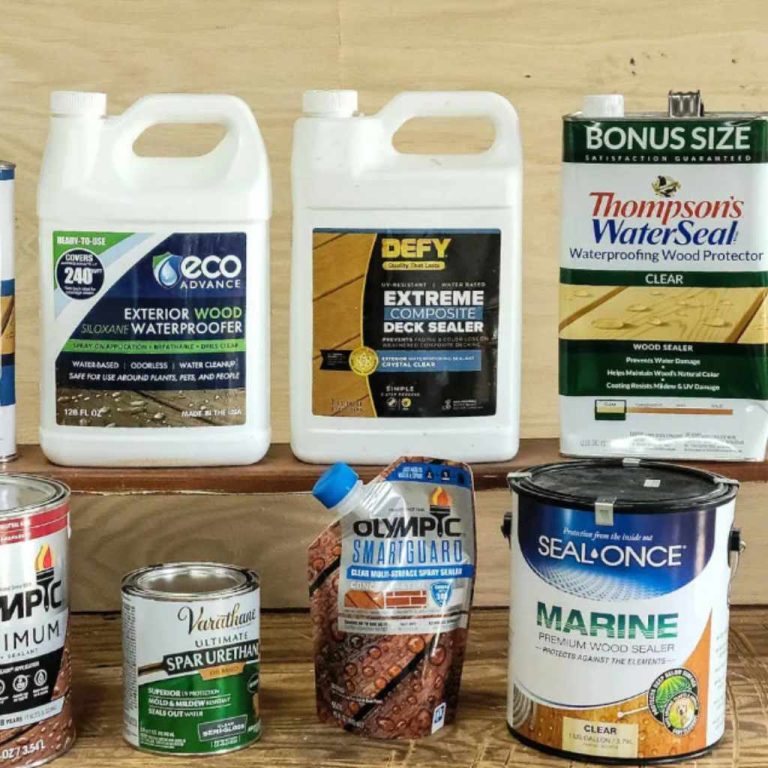
Compare more cedar playset sealant options
 Option 1 Roxil Wood Sealer Cream, Clear (1.5 Gallon)
|
 Option 2 Olympic WaterGuard Woodland Cedar Stain & Sealer (1 Gal)
|
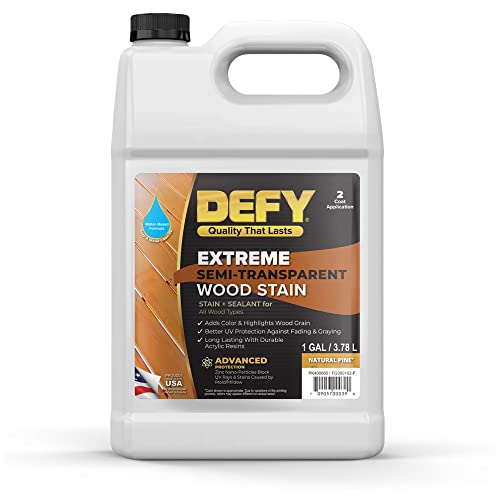
 Option 3 DEFY Extreme Wood Stain & Sealer, Cedar Tone (1 Gal)
|
As an Amazon Associate we earn from qualifying purchases.
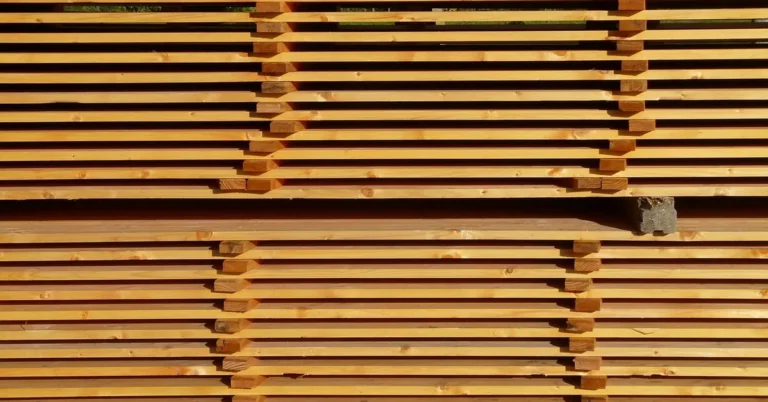
Cedar is a softwood whose heartwood contains natural compounds called thujaplicins that repel insects and resist the fungi that cause rot – the same reason cedar closets keep out moths. That resistance is rated “resistant to decay” by the USDA Forest Products Laboratory, while pine is rated “slightly or nonresistant” without treatment. For playsets, this matters for one specific reason: cedar does not need to be pressure-treated with chemical preservatives to survive outdoors, so there’s no ACQ or copper azole treatment sitting in the wood your kids grip every day.
Modern pressure-treated pine is not dangerous – the arsenic-based CCA treatment used before 2003 was phased out for residential use, and today’s ACQ-treated lumber is considered safe by the EPA. But cedar sidesteps the question entirely by not needing chemical treatment in the first place, which is the real reason safety-conscious parents lean toward it.
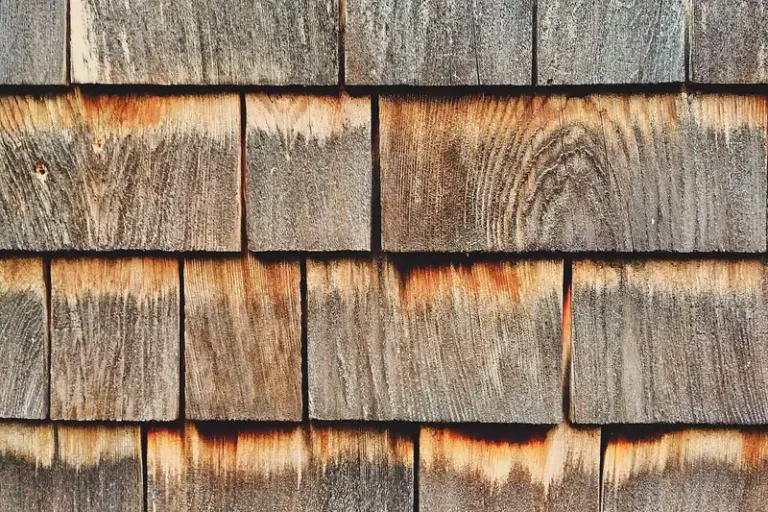
Splinters are the other half of the safety picture. Cedar’s straight, tight grain and low resin content mean it splinters far less than pine as it weathers, and any surface that does roughen up sands smooth easily. It is not literally splinter-proof forever – UV exposure and years of rain will eventually raise the grain on any wood surface, which is why the maintenance section below matters as much as the material itself.
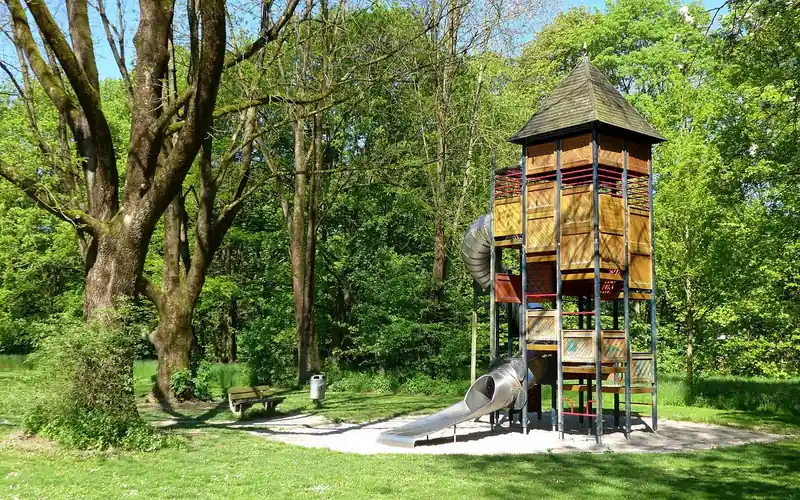
Cedar vs. Pressure-Treated Pine vs. Redwood: A Real Comparison
Most cedar playset articles say “cedar is better” without giving you numbers. Here is what actually separates the three most common playset woods, based on USDA durability ratings and typical retail pricing.
| Wood | Typical Lifespan | Chemical Treatment Needed | Splinter Risk | Typical Cost Premium |
|---|---|---|---|---|
| Cedar | 15-20 years | No (naturally rot/insect resistant) | Low | Baseline (most common playset wood) |
| Pressure-treated pine | 10-15 years | Yes (ACQ or copper azole) | Higher as it weathers | 10-25% cheaper than cedar |
| Redwood | 20-30 years | No (naturally rot/insect resistant) | Low | 20-40% more than cedar, limited availability outside the West Coast |
Redwood technically outlasts cedar, but it’s harder to find and more expensive outside West Coast markets, which is why the large national playset brands (Backyard Discovery, CedarWorks) build almost exclusively in cedar – it’s the best balance of durability, low chemical exposure, and availability.
CPSC Safety Standards Every Cedar Playset Should Meet
The wood is only one part of playset safety. The U.S. Consumer Product Safety Commission’s Public Playground Safety Handbook (Publication 325) is written for public playgrounds, but its core numbers are the standard reference for backyard sets too – and this is the part most cedar playset guides skip entirely.
- Fall zone: Keep at least 6 feet of clear space in every direction around the perimeter of the playset. For swings specifically, extend the zone in front of and behind the seat a distance equal to twice the height of the pivot point.
- Protective surfacing: Any equipment with a fall height over 18 inches needs shock-absorbing surfacing underneath, not grass, dirt, or concrete.
- Surfacing depth: Loose-fill wood chips or mulch need roughly 6 inches of depth for fall heights under 10 feet, and 9 inches for a 10-foot fall height. Because loose fill compresses about 25% over time, start with 25% more material than the target depth.
📊 9 inches of wood chips or mulch is the CPSC reference depth for a 10-foot fall height – Source: U.S. Consumer Product Safety Commission, Public Playground Safety Handbook (Publication 325)
None of this requires special skills to check – a tape measure and a bag of playground-grade wood chips from a home center covers it. What it does require is not skipping it just because the manufacturer’s instructions don’t mention it; assembly manuals cover the structure, not the ground underneath it.
Choosing the Right Cedar Playset for Your Yard
Size and Space
Measure the available yard space before selecting a model, and add the 6-foot fall zone on every side to whatever footprint the playset itself takes up. A set that looks fine in a showroom photo can easily need a 20 x 25 foot clearance once the fall zone is factored in.
Safety Features to Look For
- Rounded edges and sanded surfaces with no exposed sharp corners
- Enclosed or capped bolt heads rather than exposed threaded ends kids can catch clothing or skin on
- A swing beam height and chain length matched to the age range you’re buying for (lower beams for toddlers, higher for school-age kids)
- A published weight rating and age range from the manufacturer, not just a general “kids” label
Installation Tips
Preparing the Site
- Choose a level area with proper drainage for the playset
- Clear the site of debris, rocks, or roots that could interfere with assembly or create a tripping hazard
- Mark out the full footprint plus the 6-foot fall zone before you start digging or leveling
- Lay a weed barrier fabric under the surfacing area to cut down on maintenance
Assembly
- Sort and count all hardware against the manufacturer’s parts list before starting
- Follow the manufacturer’s assembly sequence – cedar playset kits are usually sequenced so structural pieces go on before decorative ones
- Check every connection with a level as you go; a frame that’s slightly out of square early on gets much harder to correct later
- Apply a sealant or protective finish to the assembled cedar wood once construction is complete, before kids use it
Maintenance for a 15-20 Year Lifespan
Cedar’s natural resistance buys you a longer maintenance interval than treated pine, not a maintenance-free structure. Two habits do almost all the work: cleaning and resealing.
Cleaning
- Remove loose debris such as leaves or dirt from the structure
- Wash surfaces with mild soap and water – skip pressure washers and harsh chemical cleaners, which strip cedar’s natural oils faster than normal weathering does
- Scrub stained or grimy spots gently with a soft brush
- Rinse thoroughly and let the wood air-dry completely before kids use it again
Resealing
Inspect the wood for cracks, gray “UV silvering,” or splintered sections once or twice a year. Lightly sand any rough patches before resealing – skipping this step is the most common mistake we see, because sun-bleached, weathered cedar won’t absorb a new coat of sealant evenly if you stain right over it. Apply a water-based sealant or stain every 2-3 years, covering all exposed surfaces evenly, and let it cure fully before the next use.
Safety Inspection Checklist
Run through this checklist every few months, and immediately after any major storm.
- Check every bolt and screw for looseness, and retighten as needed
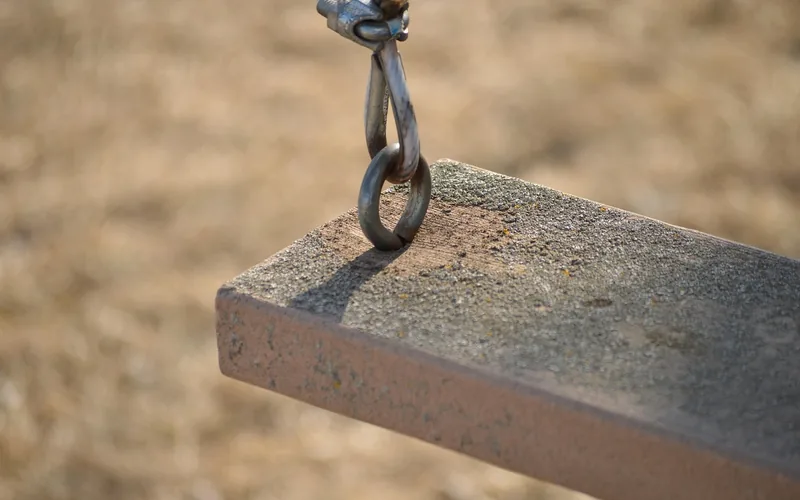
- Inspect swing chains and S-hooks for rust, stretching, or wear at the connection points – this is a classic entrapment and fall hazard if a hook opens under load
- Look for splintered wood at hand and foot contact points (rails, ladder rungs, slide edges)
- Confirm the fall-zone surfacing hasn’t compacted or washed away below the recommended depth
- Tighten loose hardware the day you find it, not “next weekend”
- Sand and reseal any splintered or rough wood before kids use that section again
- Replace stretched, rusted, or cracked chains and hooks rather than trying to repair them
- Top up loose-fill surfacing back to the full recommended depth
Frequently Asked Questions
Are cedar wood playsets safe for children?
Yes. Cedar’s natural splinter and rot resistance, combined with the fact that it needs no chemical treatment, makes it one of the safer playset wood choices. Safety still depends on proper CPSC-guideline fall zones, protective surfacing, and regular hardware inspections, not the wood species alone.
Do cedar playsets give kids splinters?
Rarely, and far less often than pressure-treated pine. Cedar’s tight, straight grain resists splintering, but years of sun and rain will eventually roughen any exposed wood surface. Sanding and resealing every 2-3 years keeps splinter risk low for the life of the structure.
How long do cedar playsets last?
A well-built cedar playset typically lasts 15-20 years with routine cleaning and resealing every 2-3 years, compared to roughly 10-15 years for pressure-treated pine. Redwood can last longer (20-30 years) but costs more and is harder to source outside the West Coast.
Is a cedar playset really chemical-free?
The wood itself needs no chemical preservative treatment, unlike pressure-treated pine, because cedar’s natural thujaplicin oils already resist rot and insects. Any sealant or stain applied afterward is a separate product choice – picking a low-VOC or non-toxic sealant keeps the whole structure closer to chemical-free.
What fall zone does the CPSC recommend around a playset?
CPSC guidance calls for roughly 6 feet of clear space in every direction around a playset’s perimeter, with protective surfacing (not grass or dirt) under any equipment with a fall height over 18 inches. Swings need extra clearance in front of and behind the seat equal to twice the pivot height.
Can a cedar wood playset be customized?
Yes. Most cedar playsets support add-ons such as rock walls, monkey bars, tire swings, and fort extensions, either from the original manufacturer or as aftermarket accessories, as long as the added weight and swing clearances still meet the structure’s rated limits.
Conclusion
Cedar earns its reputation as the safer backyard playset material – splinter-resistant, rot-resistant, and free of the chemical treatment pressure-treated pine relies on. But the wood is only half the safety equation. Pair a cedar structure with the CPSC’s fall-zone and surfacing guidance, a twice-yearly hardware check, and resealing every 2-3 years, and you’ve got a play space built to last 15-20 years without becoming a hazard along the way. For related buying research, see our cedar wood swing set guide and our guide to sanding cedar wood before resealing.
Sponsored / affiliate links. As an Amazon Associate I earn from qualifying purchases. I may earn additional commission from eligible campaigns.