![Chicago Electric vs Admiral Miter Saw: [Know Before You Choose]](https://cdn.woodworkingadvisor.com/2022/11/Chicago-Electric-vs-Admiral-Miter-Saw-_Know-Before-You-Choose_.webp)
Chicago Electric vs Admiral Miter Saw: Specs, Prices and Verdict
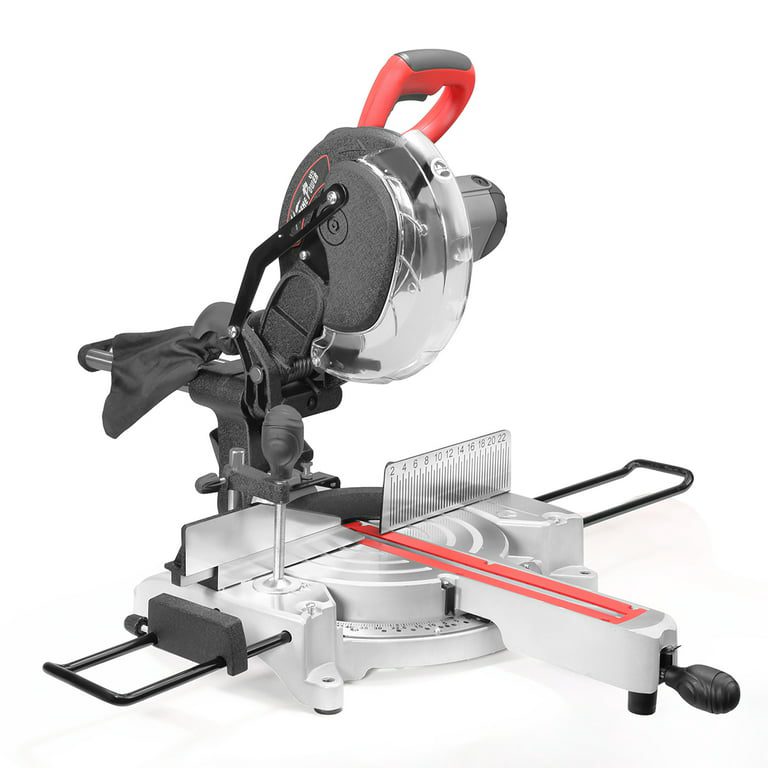
Admiral beats Chicago Electric on three hard specs — larger 12-inch blade versus 10-inch, dual bevel versus single, and a built-in laser guide — but both saws run identical 15-amp motors. The Admiral 12-inch dual-bevel sliding compound miter saw (item 57839) runs $239.99; the Chicago Electric 10-inch sliding miter saw (item 61971) costs $149.99 — a $90 gap that buys real cutting range. This guide covers the full verified specs side by side, who each saw is built for, and what the $90 price difference actually gets you.
Quick Answer
Choose Admiral if you cut crown molding, large lumber (2×8 and up), or need dual-bevel flexibility — the 12-inch blade and 47-degree dual bevel justify the $90 premium. Choose Chicago Electric for light DIY, tighter budgets, or a portable jobsite saw — the 15-amp, 5000 RPM, 10-inch model handles standard 2×4 and 2×6 work reliably at $149.99.
Chicago Electric vs Admiral Miter Saw: Full Specs Comparison
Best Miter Saw Blade Pick
WEN BL1060 10-Inch 60-Tooth Fine-Finish Saw Blade
A 60-tooth carbide-tipped blade that dramatically outperforms the stock blade included with the Chicago Electric 10-inch saw — cleaner cuts on trim and finish work.
- Best for: Finish carpentry and trim work on the Chicago Electric 10-inch
- Why we picked it: 60 teeth leaves a smooth cut without chip-out on pine and oak
- Main drawback: 10-inch only — Admiral owners need the 12-inch version below
Compare more miter saw blade options
 Option 1 AvantiPro by Freud 10-Inch Fine Finish Blade
|
 Option 2 FOXBC 12-Inch 60-Tooth Combination Blade
|
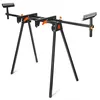 Option 3 WEN MSA200 Universal Miter Saw Stand
|
As an Amazon Associate we earn from qualifying purchases.
Before going deeper, here is every verified specification side by side — sourced from Harbor Freight’s own product pages (item 61971 for Chicago Electric, item 57839 for Admiral).
| Spec | Chicago Electric (Item 61971) | Admiral (Item 57839) |
|---|---|---|
| Motor | 15 amp | 15 amp |
| No-Load Speed | 5,000 RPM | 4,000 RPM |
| Blade Size | 10 inches | 12 inches |
| Bevel Type | Single bevel (left only, 45 degrees) | Dual bevel (47 degrees left and right) |
| Miter Range | 45 degrees left and right | 60 degrees left, 50 degrees right |
| Horizontal Cut Capacity | 8-1/4 inches | 13-5/8 inches |
| Vertical Cut Capacity | 2-3/4 inches | 4 inches |
| Laser Guide | No | Yes (LED + laser) |
| Weight | 32.56 lbs | 49.3 lbs |
| Price (Harbor Freight) | $149.99 | $239.99 |
| Warranty | 90 days | 90 days |

Key Differences: Chicago Electric vs Admiral Miter Saw
Both saws are sold exclusively at Harbor Freight and sit at different rungs of their tool lineup. Here is what each spec difference means in practice.
Motor and Speed
Both saws use identical 15-amp motors, but the no-load speed differs by a wide margin: Chicago Electric spins its 10-inch blade at 5,000 RPM while Admiral turns its 12-inch blade at 4,000 RPM. The higher RPM on the Chicago Electric does not translate to more cutting power — it simply reflects that smaller blades need less torque to spin fast. In practice, both motors handle common dimensional lumber without bogging down.
Blade Size and Cutting Capacity
This is the most consequential difference between the two saws. The Admiral’s 12-inch blade cuts 13-5/8 inches wide horizontally and 4 inches deep in a single straight pass. The Chicago Electric’s 10-inch blade covers 8-1/4 inches wide and 2-3/4 inches deep. For framing cuts on 2×4 and 2×6 lumber, the 10-inch handles the work fine. For 4×4 posts, wide baseboard, or nested crown molding, the Admiral’s 12-inch reach is the difference between one pass and two.
Single Bevel vs Dual Bevel — the Biggest Practical Gap
Single bevel means the saw head tilts in one direction only — the Chicago Electric tilts left up to 45 degrees. To make a matching bevel cut on the opposite face, you have to flip the workpiece over and reposition it. Dual bevel on the Admiral means the head tilts 47 degrees in both directions without moving the workpiece. For crown molding, picture frames, or any project requiring matching bevel pairs, this saves significant setup time. If your work is mostly square crosscuts and simple miters, single bevel is no limitation. If you regularly cut molding or complex trim, dual bevel is the feature that justifies the Admiral’s price premium.
Miter Range
The Chicago Electric rotates the table 45 degrees in both directions with positive stops at the common angles: 0, 15, 22.5, 30, and 45 degrees. The Admiral extends the miter range to 60 degrees left and 50 degrees right — useful for odd angles on furniture joints or high-pitch roof work where standard 45-degree stops fall short. For everyday trim and deck framing work, neither saw’s miter range will feel limiting.
Dust Collection
Neither saw ships with a vacuum hookup that works well out of the box. The Chicago Electric includes a dust bag; the Admiral has an improved port that directs dust rearward more effectively. Both benefit from connecting a shop vac to the dust port — a 1-1/4 inch hose adapter works on most units. Dust collection on Harbor Freight saws at this price point is functional rather than excellent.
Laser Guide and LED Work Light
The Chicago Electric includes no cut-line guide — you align by eye to the fence and blade. The Admiral includes both a laser guide and an LED work light. Independent reviews note the laser requires periodic recalibration after use; it drifts over time, which is common in laser guide systems at this price. The LED work light is consistently useful and does not require calibration. See our guide on adjusting the laser on a Chicago Electric miter saw if you own one of the older models with a laser — the calibration process is nearly identical to the Admiral.
Weight and Portability
At 32.56 lbs, the Chicago Electric is manageable for one person to carry to a jobsite. The Admiral, at 49.3 lbs, is a two-person lift or a wheeled cart job. If the saw stays on a dedicated bench, the Admiral’s weight is irrelevant. If you move it between job sites regularly, the 17-pound difference is a real factor.
Price and Warranty
The Chicago Electric retails for $149.99 and the Admiral for $239.99 at Harbor Freight. Harbor Freight regularly offers coupon discounts; the Chicago Electric has been seen as low as $85 on sale. Both saws carry Harbor Freight’s standard 90-day warranty. Neither qualifies for the Harbor Freight lifetime warranty program, which applies to hand tools, not powered saws. For longer coverage, Harbor Freight’s Service Agreement (extended warranty for purchase) adds 2 years on top of the standard warranty.
Who Should Buy the Chicago Electric Miter Saw?
The Chicago Electric 10-inch sliding miter saw is the right choice for:
- Budget DIYers doing occasional home repairs, picture frame cutting, or basic deck work where a 10-inch blade covers all the lumber they handle
- Beginners who want a capable saw to learn on without committing $240 to a tool they are still figuring out
- Contractors who need a lightweight portable saw for rough framing — the 32-pound weight makes it genuinely easier to move around a site
- Anyone tight on space — the 10-inch footprint is smaller and easier to store in a small shop
The main limitation: if you cut crown molding or need to make matching bevel cuts in both directions, the single-bevel design on the Chicago Electric will slow you down.
Who Should Buy the Admiral Miter Saw?
The Admiral 12-inch dual-bevel sliding compound miter saw fits:
- Finish carpenters cutting crown molding, baseboard, and door casing — the dual bevel eliminates workpiece flipping on compound angle cuts
- Serious DIYers tackling flooring, trim upgrades, or furniture projects where material size and angle range matter
- Semi-professional users who want mid-range performance without paying for a brand-name professional saw at $400 or more
- Anyone cutting 4×4 or wider stock — the 12-inch blade and 13-5/8 inch horizontal reach handle large material the 10-inch cannot
The Admiral is not the right tool for professionals doing production finish work daily — at 49 pounds and with a laser that needs occasional recalibration, it shows its Harbor Freight origins. For a shop or home workbench where precision matters but volume is moderate, it earns its price.
“The Admiral’s dual bevel is genuinely useful for crown molding work — you set the saw once and cut matching pairs without repositioning. On the Chicago Electric, you flip the stock and rely on the fence to keep it consistent. Both methods work; one is faster.”
How to Choose Between Chicago Electric and Admiral Miter Saw
Run through these five questions to find your answer without second-guessing:
- Do you cut crown molding or need matching compound angles? If yes, buy Admiral. Dual bevel is the deciding feature for trim work — single bevel costs extra setup time on every crown cut.
- Will you ever cut stock wider than 8 inches in one pass? If yes, buy Admiral. The Chicago Electric tops out at 8-1/4 inches horizontally; the Admiral reaches 13-5/8 inches.
- Is the saw moving between job sites regularly? If yes, lean Chicago Electric. The 17-pound weight difference matters when you are lifting the saw in and out of a truck.
- Is budget a real constraint below $200? Chicago Electric at $149.99 (or less with a coupon) is the only viable choice without stretching to another brand.
- Are you comparing these saws to a Hercules? The Hercules 12-inch dual-bevel at Harbor Freight sits a step above Admiral in build quality and is worth the price difference if you are a daily professional user — the Admiral is positioned between Chicago Electric and Hercules.

Frequently Asked Questions
Do Chicago Electric and Admiral miter saws both have 15-amp motors?
Yes. Both the Chicago Electric 10-inch (item 61971) and the Admiral 12-inch (item 57839) use 15-amp motors. The saws differ on no-load speed: Chicago Electric runs at 5,000 RPM and Admiral at 4,000 RPM. The higher RPM on the Chicago Electric is due to its smaller blade requiring less torque, not greater raw power.
Can the Chicago Electric cut the same lumber as the Admiral?
Not always. The Chicago Electric handles up to 8-1/4 inches wide in a horizontal cut, making it suitable for 2×4, 2×6, and most standard dimensional lumber. The Admiral reaches 13-5/8 inches wide, handling 4×4 posts, wide baseboard, and nested crown molding in one pass. For stock wider than 8 inches, the Admiral is the only option between the two.
What is the difference between single bevel and dual bevel on these saws?
Single bevel (Chicago Electric) tilts the blade left only, up to 45 degrees. Making a mirror-image bevel cut requires flipping the workpiece. Dual bevel (Admiral) tilts the blade 47 degrees in both directions without moving the stock. This matters most for crown molding, picture frames, and furniture joints where you need matching compound angles — dual bevel saves significant time on those cuts.
How much does each saw weigh?
The Chicago Electric 10-inch miter saw weighs 32.56 lbs; the Admiral 12-inch weighs 49.3 lbs. The 17-pound difference is meaningful for jobsite portability. If the saw stays on a fixed bench, weight is not a factor in choosing between them.
Do both saws carry the same warranty?
Yes — both carry Harbor Freight’s standard 90-day warranty against defects in materials and workmanship. Neither saw qualifies for the lifetime warranty, which applies to Harbor Freight hand tools only. Harbor Freight’s extended Service Agreement can add 2 additional years of coverage if purchased at the time of the saw’s sale.
Conclusion
Chicago Electric and Admiral are two tiers within the same Harbor Freight lineup, not two competing brands. Chicago Electric fits budget buyers and those with simple cross-cutting needs; Admiral fits trim carpenters and anyone who needs a 12-inch dual-bevel saw without paying a premium brand’s price. The $90 price gap between them buys real capabilities: larger blade, dual bevel, and a 13-5/8-inch horizontal cut range. If those features match your work, Admiral is worth it. If standard framing and cross-cutting is all you need, Chicago Electric delivers reliable performance at $149.99. For more detailed coverage of the Admiral 12-inch miter saw, see our full review. If you are comparing to other brands, our Chicago Electric vs DeWalt guide covers how these Harbor Freight saws stack up against a professional-grade alternative.
Sponsored / affiliate links. As an Amazon Associate I earn from qualifying purchases. I may earn additional commission from eligible campaigns.