DIY Boot Rack: Plans That Actually Fit Tall Boots (Not Just Shoes)
A boot rack only works if it’s built for boot height, not shoe height — most free plans online are shoe-rack shelf spacing with “boot” in the title.
Ankle boots need about 6 inches of vertical clearance. Mid-calf and Chelsea boots need 9 to 11 inches. Tall riding, western, and hunting boots need 14 to 17 inches of shaft clearance before the boot even touches a shelf. Build a flat, evenly-spaced shelf rack sized for sneakers and the top two rows either won’t fit a boot at all or will force the shaft to bend sideways, which is exactly what creases and cracks leather over a season of use.
Below are three builds — solid wood, PVC, and an upcycled pallet — with real shelf-spacing numbers for each boot height, plus the wall-mounting step most tutorials skip that keeps a loaded rack from pulling out of drywall.
Materials and Tools You Actually Need
Best Stud Finder For Mounting This Rack
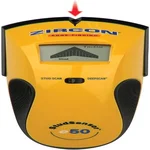 |
Zircon StudSensor e50 Stud Finder – $27.99 A loaded boot rack can weigh 30–40 lbs once it’s full — drywall anchors alone won’t hold that, so you need to find real studs before mounting any of the wall-mounted builds below.
|
For any of the three builds below you’ll also want: a tape measure, a saw (circular or hand saw both work), a drill with pilot-hole and driver bits, 120-grit sandpaper, wood glue, and 1¼-inch wood screws or 6d finish nails. Have paint, stain, or clear polyurethane on hand if you want a finished look rather than raw wood.
Build 1: Simple Wood Ladder-Style Boot Rack
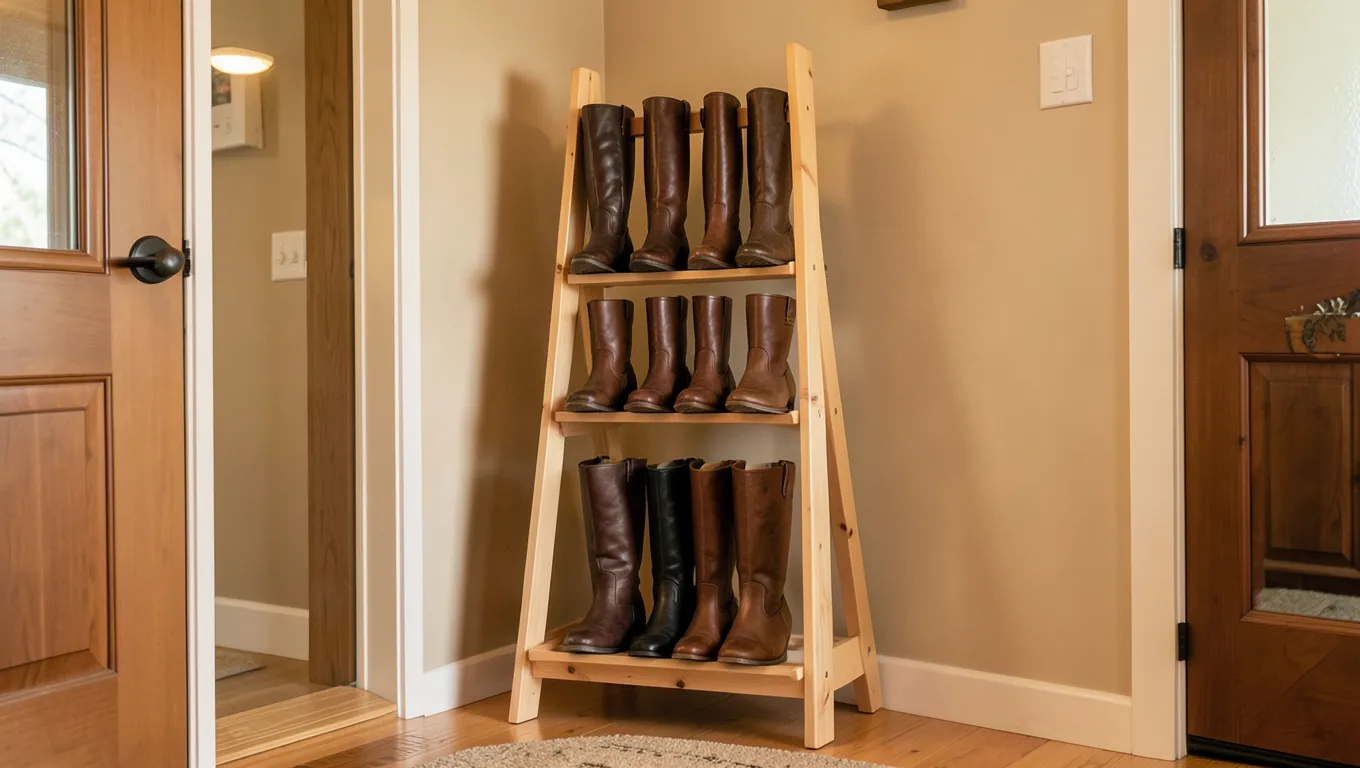
This is the version to build if you want boots to stand upright at a slight backward lean, which keeps tall shafts from folding over. It uses two angled side rails instead of flat vertical supports, so each shelf naturally cradles the boot instead of just supporting the sole.
- Cut two 1×3 side rails at 34 inches long, then rip a 10-degree angle off the bottom of each so the rack leans back slightly when standing.
- Cut three shelf boards from 1×10 pine at 24 inches wide — a 10-inch depth is enough for most boot soles without wasting floor space.
- Mount the bottom shelf 4 inches off the floor, the middle shelf 15 inches above that (clearance for mid-calf boots), and the top shelf 17 inches above the middle one (clearance for tall boots). This spacing is the part most plans skip — equal 12-inch spacing top to bottom looks tidy but crushes tall boots on the top shelf.
- Glue and screw the shelves into the side rails using a speed square to keep each shelf level before driving screws.
- Sand every edge boots will touch, then finish with stain, paint, or a wipe-on polyurethane.
A rack built to these dimensions holds 6 pairs of boots (2 per shelf) in about 24 inches of wall width, which fits most entryway corners without blocking a door swing.
Build 2: PVC Pipe Boot Holder
PVC costs less than wood, weighs almost nothing, and lets air circulate around wet or muddy boots, which is the main reason this version shows up in mudrooms and garages rather than living spaces. Use 3-inch schedule 40 PVC — anything narrower won’t accept a work boot toe comfortably.
- Cut four lengths of 3-inch PVC pipe to 14 inches each — long enough that a boot toe seats fully inside rather than perching on the rim.
- Cut two more pieces to 20 inches for the horizontal frame rails.
- Dry-fit the pieces with PVC elbows and T-fittings before gluing anything — PVC cement sets in under a minute and you don’t get a second chance to square up the frame.
- Apply PVC cement to one surface only per joint, twist the pieces a quarter turn as you seat them, and hold for 30 seconds.
- Let the assembled frame cure for at least 2 hours (check your cement’s label — some need 15 minutes, some need 24 hours for a load-bearing joint) before loading boots into the slots.
Because PVC doesn’t stain or seal the way wood does, this build is really only worth painting if you’re going for a specific look — a coat of plastic-specific spray primer followed by any spray paint rated for PVC will hold up fine.
Build 3: Upcycled Pallet Boot Rack
A pallet rack is the cheapest option if you already have (or can source free) a pallet, but not every pallet is safe to bring inside. Look for the stamp on the pallet block: HT means heat-treated, which is safe for indoor use. MB means methyl bromide fumigation — skip that one entirely, and skip any pallet that shows dark staining, which can indicate a chemical spill rather than just weathering.
- Sand the pallet thoroughly, paying extra attention to the slat edges boots will rest against — pallet wood splinters more than dimensional lumber.
- Decide orientation: standing the pallet vertically against a wall gives you natural boot slots between the slats; laying it flat turns it into a boot tray that catches drips but doesn’t separate pairs as clearly.
- For the vertical version, screw a horizontal 1×2 cleat across the slats about 6 inches up from the bottom to create a boot-toe stop, so boots don’t slide through to the floor.
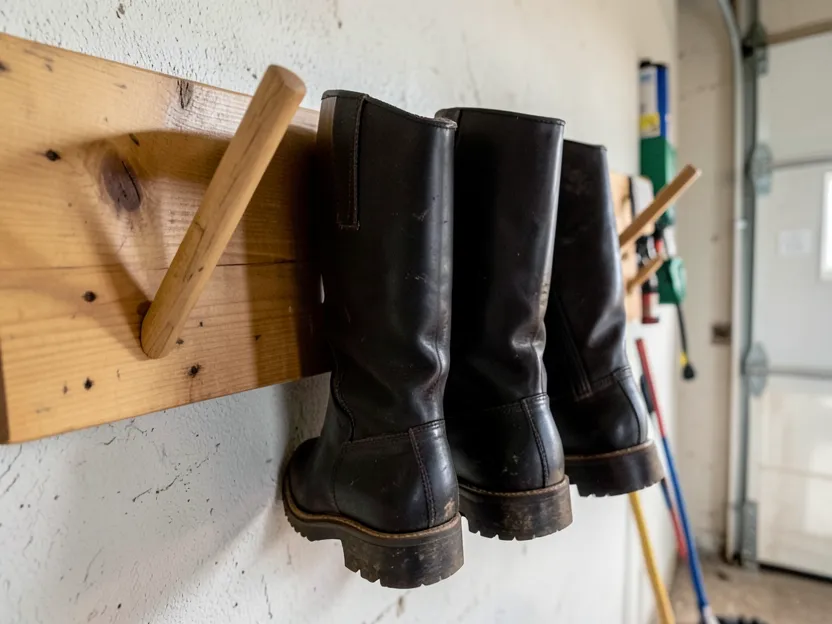
- Attach 2 to 3 heavy-duty hooks per slat gap if you want to hang boots by a back pull-tab instead of standing them.
- Mount to the wall using the stud-finder step below — a pallet loaded with boots is heavier than it looks, easily 25+ lbs.
Mounting It Safely to the Wall
Every wall-mounted version above needs to go into studs, not just drywall anchors. Run the stud finder horizontally across the mounting area first to locate two studs (studs are almost always 16 inches on-center in US home construction, occasionally 24 inches), then mark both edges of each stud so you know its true center rather than guessing. Pilot-drill your mounting screws directly into those centers. If your rack’s mounting points don’t line up with stud spacing, add a 1×3 mounting cleat across the back of the rack first, screwed into studs, then attach the rack to the cleat — this is the same trick cabinet installers use for upper cabinets that don’t land on studs.
Maintaining Your DIY Boot Rack
Wipe the rack down monthly with a damp cloth to clear dried mud before it works into the wood grain. Store wet boots upside down or on an angled shelf rather than flat — standing water inside a boot toe is what actually rots stitching, not the outside weather. Re-tighten mounting screws every few months if the rack sees daily use; wood shrinks and swells slightly with humidity, which can loosen a screw that was originally snug.
| Issue | Fix |
|---|---|
| Loose screws | Remove the screw, fill the hole with a wood glue-soaked toothpick, let it dry, then re-drive the screw into the plugged hole for a tighter bite. |
| Warped shelf | Clamp the board flat with cauls on both sides for 48 hours; if it springs back, the board wasn’t fully dry when built and may need replacing. |
| Cracked PVC joint | Don’t patch a cracked PVC weld — cut out the damaged section and re-glue a fresh coupling, since a patched joint won’t hold weight reliably. |
Frequently Asked Questions
What materials do I need to build a DIY boot rack?
The three builds above use either 1×3 and 1×10 pine boards, 3-inch schedule 40 PVC pipe with elbow fittings, or a heat-treated (HT-stamped) wooden pallet. All three also need a saw, drill, sandpaper, and either wood screws or PVC cement, depending on the build you choose.
How many pairs of boots can a DIY boot rack hold?
The three-shelf wood ladder design above holds 6 pairs in about 24 inches of wall width. A four-slot PVC holder fits 4 pairs in roughly 20 inches. A full-size pallet stood vertically can hold 8 to 10 pairs depending on slat spacing.
How do I make sure the rack fits tall boots, not just shoes?
Give tall riding, western, or hunting boots at least 14 to 17 inches of vertical clearance on whichever shelf holds them, versus 6 to 11 inches for ankle or mid-calf boots. Building every shelf at one generic height is the most common reason a “boot rack” only ends up fitting sneakers.
Can I build a DIY boot rack without any prior woodworking experience?
Yes — the PVC build in particular requires no cutting tool more advanced than a hand saw or PVC pipe cutter, and no fasteners beyond cement and elbow fittings. The wood ladder build is the most demanding of the three, but still only needs straight cuts and a drill.
Conclusion
The difference between a boot rack that lasts and one that ends up back on the floor in a month usually comes down to two things: sizing the shelves for actual boot shaft height instead of shoe height, and mounting into real studs instead of trusting drywall anchors alone. Pick whichever build above matches your budget and tools, get those two details right, and the rest is straightforward carpentry.
Sponsored / affiliate links. As an Amazon Associate I earn from qualifying purchases. I may earn additional commission from eligible campaigns.