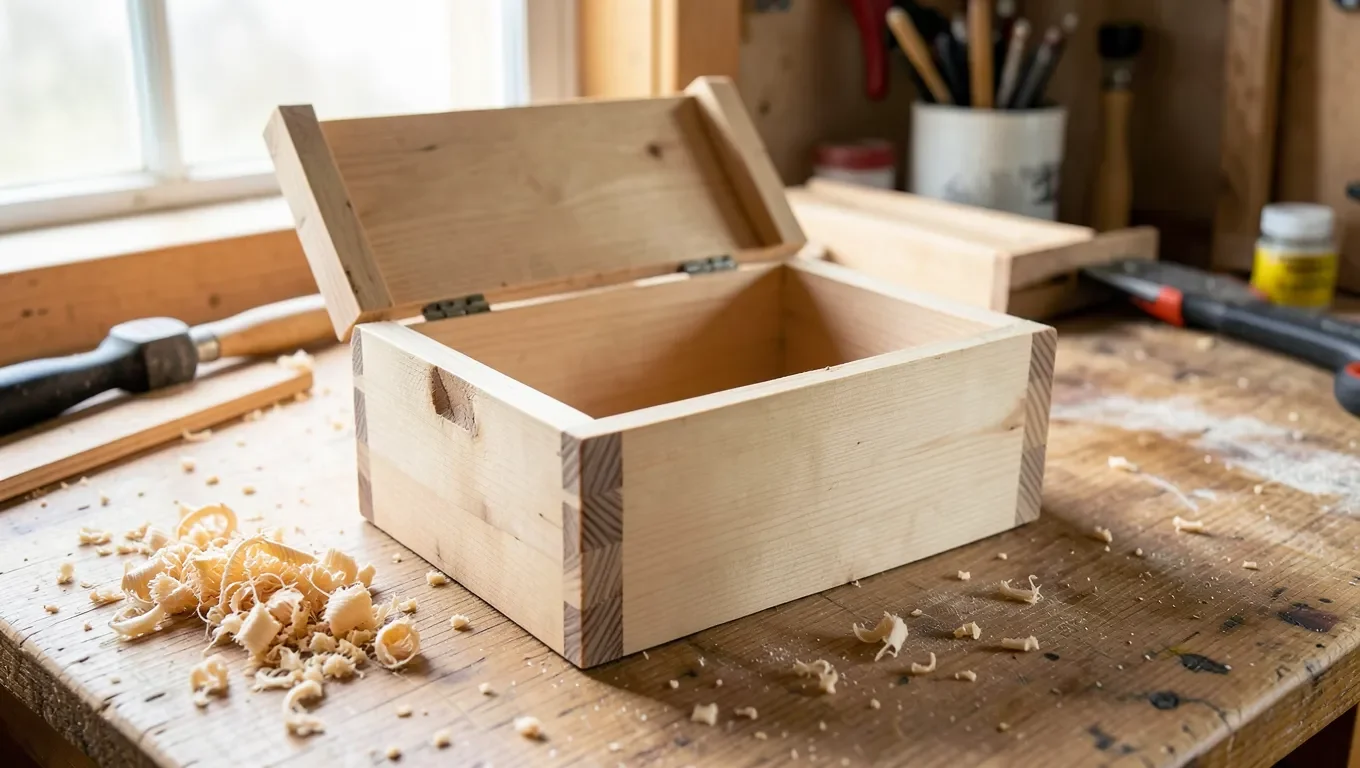
DIY Wood Boxes: Build One That Won’t Fall Apart
A wood box is one of the best first joinery projects you can build – small enough to finish in a weekend, but it will still teach you exactly how corner and lid choices affect strength and looks.
Most “how to build a wood box” guides stop at “cut four sides, glue them together, add a bottom.” That leaves out the two decisions that actually determine whether your box survives daily use: which corner joint you cut, and how the lid registers against the box opening. Get those two things right and a simple box will hold up for decades. Get them wrong and you end up with a box that racks apart at the corners or a lid that slides off-center every time someone opens it. This guide covers both, along with the wood selection, tools, and finishing steps you need for a complete build.
Choosing Wood and Tools for a DIY Wood Box
Pine and poplar are the easiest woods to start with – both are soft enough to cut and sand quickly, and inexpensive enough that a miscut board doesn’t sting. Cedar is a good step up if you want natural rot and insect resistance without finishing it. For a box that will get handled a lot (a jewelry box, a tool box, anything opened daily), a hardwood like maple, oak, or walnut is worth the extra cost and effort – hardwood holds joinery, especially box joints, far better than softwood over years of use. Whatever species you pick, sight down each board before you buy it and skip anything with visible warp, cupping, or cracks; those defects only get worse once the wood is cut into narrow box parts.
Best Router Table Box Joint Jig
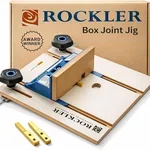 |
Rockler Router Table Box Joint Jig – $102.99 If you want real box joints (see below for why they’re the strongest corner option) without hand-cutting each finger, this jig indexes the spacing for you on a router table.
|
Beyond wood and a joint jig, a basic DIY wood box needs only a handful of tools: a saw capable of clean, square cuts (a miter saw or table saw beats a handsaw for repeatable results), wood glue, clamps, a carpenter’s square to check corners as you assemble, and sandpaper in a couple of grits. A drill with small bits helps if you’re adding hinges or a hasp later.
Box Joints vs. Miter Joints vs. Butt Joints: Which Corner Should You Cut?
The corner joint you choose matters more than any other decision in this project, and it’s the one most beginner guides skip past. Here’s how the three common options actually compare, not just in looks but in real strength.
Miter joints cut each corner at 45 degrees so no end grain shows on the outside – it’s the cleanest-looking option and the one most people picture first. The catch is that a plain glued miter is genuinely weak. The two mating faces are cut at an angle across the grain, so the glue bond doesn’t get the long-grain-to-long-grain contact that makes wood glue strong in the first place. A miter joint glued and clamped with nothing else will often crack apart under normal handling within a year or two. If you want the mitered look, reinforce every corner with splines (thin strips of wood glued into a slot cut across the joint) or biscuits – that’s not optional if the box needs to survive being picked up and set down regularly.
Box joints (also called finger joints) interlock a row of rectangular fingers cut into the end of each board. This is the classic corner joint for drawers and boxes for a reason: because the fingers interlock, the glue surface area is much larger than a miter or a butt joint, and most of that surface is long grain meeting long grain. That combination is what makes a box joint the strongest of the three by a wide margin – it’s genuinely difficult to pull apart once glued, even without extra reinforcement. The tradeoff is that cutting evenly spaced fingers by hand takes practice; a table saw jig or a router table jig like the one above is what makes this joint practical for a first build.
Butt joints are the simplest option: one board’s end grain glued flat against the face of the next board, usually reinforced with brad nails or screws since the glue bond alone (end grain to face grain) is the weakest of the three. Butt joints are fine for a low-stress decorative box that mostly sits on a shelf, but they’re a poor choice for anything that gets opened and closed often or carries real weight, since the joint has the least resistance to racking of the three options.
For a first project where you mainly want practice and don’t mind reinforcing corners, start with a butt joint or a splined miter. If you want a box that will hold up to years of daily use with no reinforcement needed, box joints are worth the extra setup time.
Designing and Measuring Your Box
Before cutting any wood, sketch your box with actual dimensions, not just a rough shape. Decide on the interior dimensions first (what needs to fit inside), then add the thickness of your walls to get the outside cutting dimensions. If you’re adding compartments or a divider, plan those into the sketch now – it’s much easier to account for a divider’s thickness on paper than to discover your compartments don’t add up after the sides are already cut.
A comfortable wall thickness for a small to mid-sized box is between 1/2 and 3/4 inch – thick enough to hold a joint securely, thin enough not to look clunky or waste material. Measure every board twice before you cut, and cut your four side pieces in matched pairs (two long sides, two short sides) so opposite walls are exactly the same length; even a 1/16 inch mismatch will throw the corners out of square.
Step-by-Step: Building the Box
Once your pieces are cut to size and your corner joints are cut (box joints, splined miters, or plain butt joints, per the section above), assembly follows the same basic sequence regardless of which joint you chose.
- Dry-fit all four walls together without glue first, and check every corner with a carpenter’s square. Fix any gaps now – once glue is involved, you have only a few minutes before it starts to grab.
- Apply wood glue evenly to the mating surfaces and clamp the box square. Measure diagonally corner to corner in both directions; if the two diagonal measurements match, the box is square. If they don’t, adjust the clamps before the glue sets.
- Cut a bottom panel (thin plywood or solid wood) to fit into a groove or rest against the bottom edge, and glue or pin it in place once the main box is square and dry.
- Let the glue cure fully (check the glue bottle’s stated cure time, typically 24 hours for a full bond) before sanding or handling the box roughly.
Getting the Lid Right: Rabbeted vs. Flat Lids
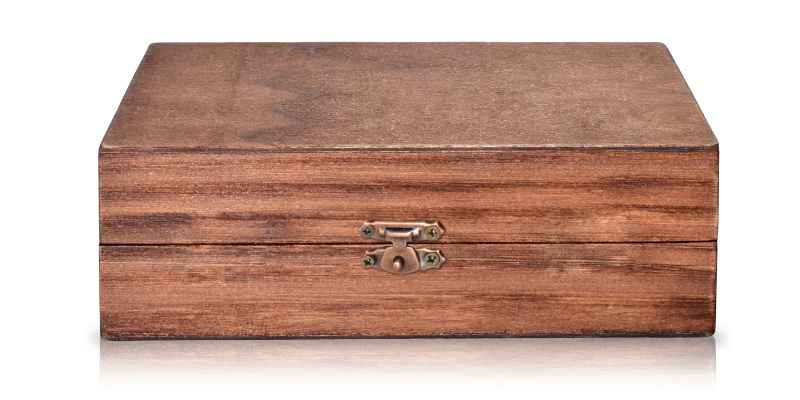
Lid design is the other detail beginner box plans tend to skip, and it’s a common gap: a flat lid cut to the exact outside dimensions of the box and simply set on top with no registration will slide around every time the box is moved or the lid is opened and closed. Over time that sliding wears the finish and makes the box look sloppy even if the joinery underneath is solid.
The fix is a rabbeted (or “lipped”) lid – a small recessed step cut into the underside of the lid, or alternatively into the top inside edge of the box opening, sized to match the opening exactly. That step registers the lid in the same position every time and keeps it from sliding, without needing hinges or a catch. You can cut a rabbet with a router and a rabbeting bit, or on a table saw with two passes. If your box will have a hinged lid instead, the rabbet isn’t necessary since the hinge itself keeps the lid aligned, but for a simple lift-off lid, a rabbet is the difference between a box that looks handmade in a good way and one that looks handmade in a sloppy way.
Finishing Techniques
Sand through progressively finer grits (120, then 180, then 220 is a reasonable progression for most box projects) before applying any finish, and round over sharp edges slightly so the box feels comfortable to pick up. From there, your finishing options fall into two broad categories:
Stain and clear coat lets the wood grain show through, which is usually the better choice on a hardwood with attractive figure, or on box-jointed corners where the interlocking fingers themselves are a visual feature worth showing off. Wipe-on oil finishes or a polyurethane topcoat both work well on a small box.
Paint is a better fit for softwoods like pine that don’t have much grain figure to show off, or when you want a specific color rather than a natural wood look. Prime first on porous woods to avoid a blotchy finish. Either way, apply thin coats rather than one heavy coat – it dries more evenly and won’t obscure fine details like box joint fingers or carved decoration.
Practical Uses for Your Wood Boxes
A finished wood box is useful well beyond the workshop. A shallow box with a rabbeted lid makes a solid jewelry or keepsake box. A slightly deeper box with box-jointed corners holds up well as a desktop organizer for office supplies, or as a spice box in the kitchen. Larger versions with reinforced (box-jointed or splined) corners work as small tool totes, since they’ll be picked up by the edges repeatedly – exactly the kind of stress that exposes a weak butt joint. And a well-built box, especially one with a nicely finished lid, makes a better gift than most store-bought options, since it’s sized and finished specifically for whatever it’s holding. If the box will hold anything you want secured, our guide on how to put a lock on a wooden box covers adding hardware after the build is finished.
Maintaining Your Wood Box
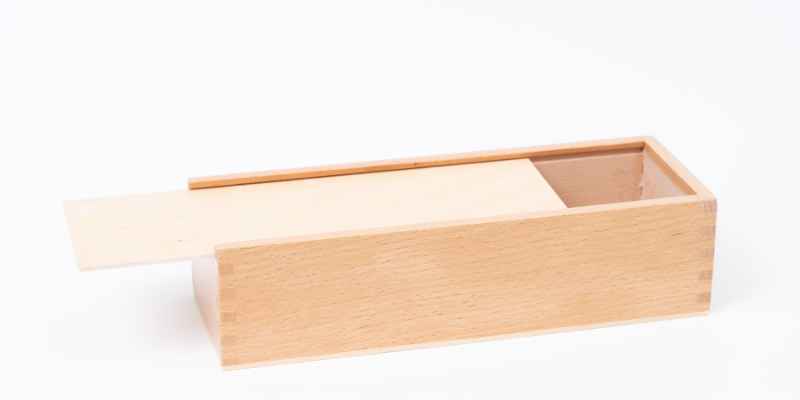
Dust a finished wood box with a soft, dry cloth regularly, and use a barely damp cloth with mild soap only for stubborn marks – avoid soaking the wood, since standing moisture can swell joints or lift a finish. A occasional coat of wood polish or paste wax on a stained or oiled finish helps maintain luster and adds a light layer of protection.
For small scratches or dents, a color-matched wood filler or touch-up marker handles most cosmetic repairs. If a joint itself loosens over time (more likely on an unreinforced miter or butt joint than on a box joint, for the same strength reasons covered above), a small amount of glue worked into the joint with a clamp applied overnight will usually resolve it, as long as you catch it before the joint fails completely.
Frequently Asked Questions
What is the strongest corner joint for a wood box?
Box joints (finger joints) are the strongest common option because the interlocking fingers create a much larger long-grain-to-long-grain glue surface than a miter or butt joint. A plain glued miter joint is the weakest of the three unless it’s reinforced with splines or biscuits.
How thick should the wood be for a wooden box?
For a small to mid-sized box, 1/2 to 3/4 inch thick walls give a good balance of strength and proportion – thick enough to hold a box joint or splined miter securely, without looking bulky.
Why does my wood box lid keep sliding out of place?
A flat lid with no registration will slide because nothing keeps it centered on the opening. Cutting a rabbet (a recessed step) into the underside of the lid or the top edge of the box opening solves this by locking the lid into the same position every time.
Are miter joints strong enough for a wood box on their own?
Not reliably. A plain glued miter joint has a weak glue bond because the mating faces don’t give the glue much long-grain contact. For a box that will be handled regularly, reinforce every mitered corner with splines or biscuits, or choose a box joint instead.
Conclusion
A DIY wood box is a small project with an outsized amount to learn from it: wood selection, squaring up a glue-up, and – most importantly – how corner joinery and lid fit determine whether the finished piece holds together or falls apart. Pick box joints if you want maximum strength and don’t mind the extra setup, a splined miter if you want the cleaner mitered look with real reinforcement, or a simple butt joint for a low-stress decorative piece. Whichever joint you choose, don’t skip the lid rabbet – it’s a small detail that makes a handmade box look and function like one that was actually planned, not just assembled.
Sponsored / affiliate links. As an Amazon Associate I earn from qualifying purchases. I may earn additional commission from eligible campaigns.