Dewalt Table Saw Accessories: Which Upgrades Are Worth It
Miter gauges, dust port adapters, featherboards, and zero-clearance inserts turn a bare Dewalt table saw into a safer, more precise shop tool — most bolt on in minutes and cost $15 to $80. Skip the dust port adapter and fine sawdust builds up inside the saw’s guts, shortening motor life. This guide covers the accessory categories worth buying, what each one actually fixes, and one upgrade pick worth the money.
Introduction To Dewalt Table Saw Accessories
Best Miter Gauge Upgrade Pick
 |
WEN Steel and Brass Premium Miter Gauge, 27 Angle Stops – $60.70 A direct upgrade over the stock miter gauge covered above — steel and brass construction with 27 positive angle stops for repeatable crosscuts and miters.
|
As an Amazon Associate we earn from qualifying purchases.
A stock table saw handles straight rip cuts fine, but miter bars, dust ports, miter gauges, and push sticks close the gaps — better angle accuracy, real dust collection, and safer hand placement near the blade.
The Importance Of Quality Accessories
Cheap, loose-fitting accessories can do more harm than good — a miter bar with play in the slot reintroduces the exact inaccuracy it’s meant to fix. Quality accessories machined to a snug slot fit are what actually improve cut precision and safety.
Typical Price Ranges By Accessory Type
Prices vary by brand and slot compatibility, but these are typical street prices for the categories covered in this guide:
| Accessory | Typical Price Range | What It Fixes |
|---|---|---|
| Miter bars | $25 – $50 | Loose sled/jig fit in the miter slot |
| Dust port T-adapter | $15 – $30 | Poor dust collection at the source |
| Aftermarket miter gauge | $40 – $180 | Imprecise, hard-to-repeat angle cuts |
| Mobile base / stand | $40 – $120 | No safe way to move or level the saw |
| Zero-clearance insert | $10 – $25 | Tear-out and thin offcuts falling into the throat plate |
Miter Bars And Gauges
Investing in the right miter bars and gauges improves the accuracy and repeatability of angled cuts, which matters most for miters, dados, and any joinery that depends on a consistent angle.
Choosing The Right Miter Bars
When selecting miter bars, check durability, slot compatibility, and fit. A snug bar with minimal side-to-side play in the miter slot delivers the stability and accuracy a loose stock bar can’t, and steel or aluminum bars machined to size hold up longer than stamped ones.
Benefits Of Upgraded Miter Gauges
An upgraded miter gauge adds accuracy, repeatability, and versatility for angled cuts. Look for adjustable positive stops, a precision angle indicator, and a smooth-gliding bar — these let woodworkers dial in and repeat an angle across many cuts without re-measuring each time.
Dust Collection Solutions
Sawdust that isn’t captured at the source settles inside the saw’s motor housing and trunnions, which is a real long-term reliability issue, not just a cleanliness one.
Dust Port T-Adapter
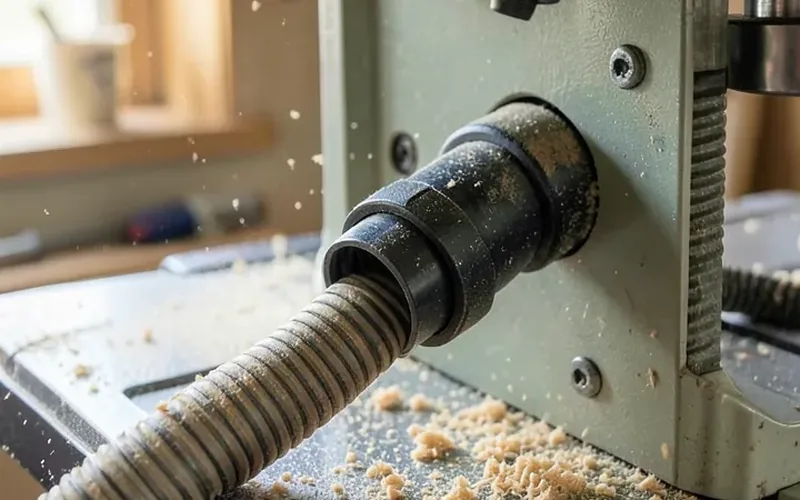
A dust port T-adapter connects the saw’s stock dust port to a shop vacuum or dust collection system so sawdust is captured at the source instead of piling up inside the saw. Most adapters are sized to fit common shop-vac hose diameters and install with a friction or twist-lock fit — no tools required.
Achieving A Cleaner Workspace
Managing dust at the source reduces the risk of inhaling fine sawdust particles, keeps dust from interfering with cut-line visibility, extends the saw’s internal components’ lifespan, and keeps the shop floor and surfaces clearer to work on.
Enhancing Precision With Stands And Brackets
Stands and mobile bases add the support and alignment a benchtop or jobsite saw needs for accurate, repeatable cuts.
Lightweight Design For Mobility
A lightweight table saw stand makes it practical to move a saw between job sites without a second person, which matters for anyone doing work outside a fixed shop.
Quick-Connect Stand Brackets For Stability
Quick-connect stand brackets give a secure, level foundation with fast assembly and teardown, which reduces vibration during a cut and keeps repeat cuts consistent.
Specialty Blades And Inserts
Dado throat plates and zero-clearance inserts round out the accessory categories that most improve cut quality and safety on a stock saw.
A dado throat plate widens the blade opening to fit a stacked dado set, letting you cut grooves and dados for joinery in one pass instead of multiple shallow passes with a standard blade. Match the plate to your saw’s throat plate dimensions — they are not universal across brands.
A zero-clearance insert replaces the factory throat plate’s wide slot with one cut exactly to the blade’s kerf, which supports thin offcuts and reduces splintering on the underside of a cut. It’s a cheap upgrade with an outsized effect on cut quality, especially on plywood and veneered panels.
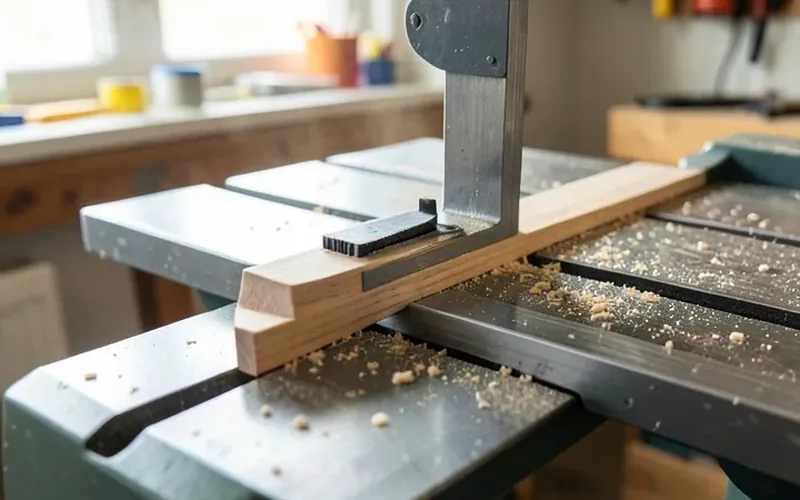
Table Saw Safety Accessories
Safety accessories are the cheapest insurance a table saw owner can buy — most cost under $30 and take seconds to install.
Push Sticks and Push Blocks
A push stick or push block keeps hands well clear of the blade during narrow rip cuts, where a stock fence leaves too little clearance for fingers to safely guide the workpiece.
The Role Of Featherboards In Safe Operations
Featherboards hold a workpiece firmly against the fence and table throughout a cut, preventing it from shifting or lifting into the blade — a major cause of kickback. They clamp to the fence or table and are easy to reposition between cuts.
“Adding a $20 dust port adapter and a featherboard to a jobsite table saw made a bigger difference in day-to-day use than any blade upgrade — the shop stayed cleaner and narrow rips stopped drifting off the fence.”
Creative Upgrades: Jigs And Sleds
Jigs and sleds extend what a table saw can do beyond straight rips and simple crosscuts.
The Utility Of Box Joint Jigs
A box joint jig indexes evenly spaced notches for strong, visually consistent box joints, turning a repetitive layout task into a repeatable, guided cut.
Crosscut And Miter Sleds
A crosscut sled rides in the miter slots and supports the workpiece on both sides of the blade, giving more stable, accurate crosscuts and miters than a stock miter gauge alone — especially useful for picture frames, moldings, and other angled work.
DIY Table Saw Enhancements
A few DIY additions round out a table saw setup without buying every accessory pre-made.
Router Attachment Projects
A router table extension built into the saw’s outfeed side adds working surface for edge profiles, joinery cuts, and repeatable router work without a second dedicated table.
Building Your Own Outfeed Table
An outfeed table supports long workpieces so they don’t tip or fall off the back of the saw during a cut. Build it from plywood or MDF at the exact height of the saw table for a seamless surface, and add a folding or retractable design if shop space is tight.
Conclusion: Maximizing Your Table Saw’s Potential
A miter gauge upgrade, a dust port adapter, a zero-clearance insert, and a featherboard cover most of what a stock Dewalt table saw is missing — each is inexpensive on its own but adds up to real gains in accuracy, dust control, and safety.
Recap Of Essential Accessories
Miter gauges, push sticks, featherboards, zero-clearance inserts, and dado throat plates each solve a specific gap in a stock table saw‘s capability — accuracy, dust control, or safety.
Investing In Quality For Long-Term Benefits
A slightly higher upfront cost on a well-machined accessory pays off in fit, accuracy, and longevity compared to a loose-fitting budget version that has to be replaced within a season.
Frequently Asked Questions
Why Does My Dewalt Table Saw Blade Wobble?
A Dewalt table saw blade may wobble due to an unbalanced blade, a worn-out arbor, or a loose arbor nut. Check that the blade is properly installed and tightened and that the arbor is in good condition. If the problem persists, consult a professional for further assistance.
Can You Use Dado Blades On A Dewalt Table Saw?
Yes, dado blades can be used on a Dewalt table saw, provided the saw has the horsepower and arbor size to accommodate the dado set. Use a dado throat plate insert for safety.
How Do You Attach A Guard To A Dewalt Table Saw?
Locate the guard’s attachment points on the saw, align the guard with them, insert the provided screws or bolts, and tighten securely with a screwdriver or wrench. Confirm the guard doesn’t obstruct the blade or any moving parts, then test it with the saw running before cutting. Always check the manufacturer’s instructions for your specific model.
How Thick Can A Dewalt Table Saw Cut?
Most Dewalt table saws cut wood up to about 3 inches thick, depending on the specific model’s blade size and depth-of-cut rating.
Conclusion
Miter bars, dust ports, miter gauges, and push sticks each fix a specific gap in a stock Dewalt table saw’s accuracy, dust control, or safety. Prioritize a snug-fitting miter gauge and a dust port adapter first, then add featherboards and a zero-clearance insert as budget allows — together they cover most of what separates a stock saw from a genuinely upgraded one.
Sponsored / affiliate links. As an Amazon Associate I earn from qualifying purchases. I may earn additional commission from eligible campaigns.