Does Maple Make Good Firewood? The Essential Facts
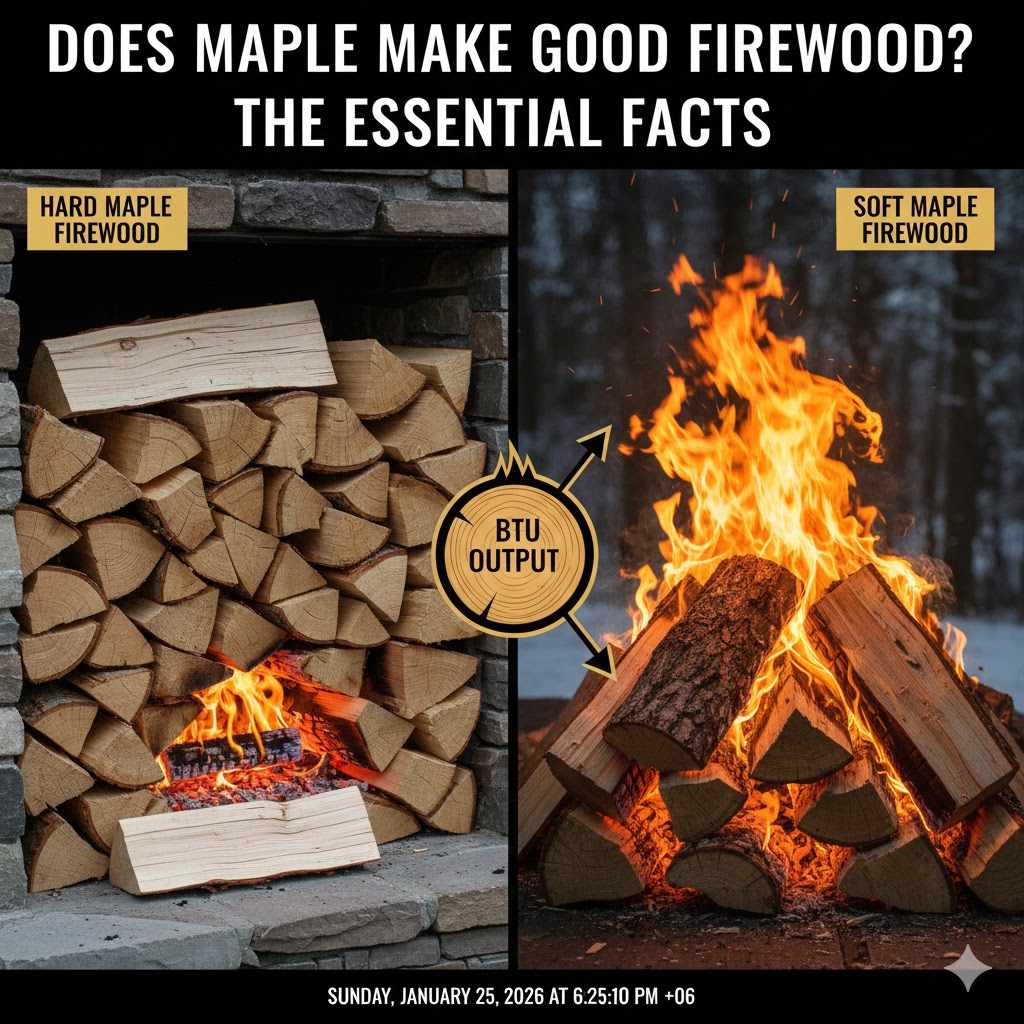
Yes, maple is excellent firewood, especially hard maple varieties like Sugar and Black Maple. It burns hot and long, produces great coals, and is easy to split. While soft maple provides less heat, it still burns cleanly and is a good choice for shoulder-season fires when seasoned properly.
Hello, fellow makers and homeowners! It’s Md Meraj, your friendly guide in the world of woodworking and DIY. If you’ve ever found yourself with a fallen maple tree or a chance to get some maple logs, you’ve probably asked the big question: “Does maple make good firewood?” It’s a common point of confusion because not all maple is the same. Some people rave about it, while others seem less impressed.
Don’t worry, I’m here to clear things up. The truth is, maple can be a fantastic fuel for your fireplace or wood stove, but you need to know what you’re working with. It’s all about understanding the difference between its two main types and getting the preparation right. In this guide, we’ll walk through everything you need to know, step-by-step. We’ll cover how to identify it, how to season it perfectly, and how it stacks up against other popular firewoods.
Understanding Maple Wood: More Than Just Syrup
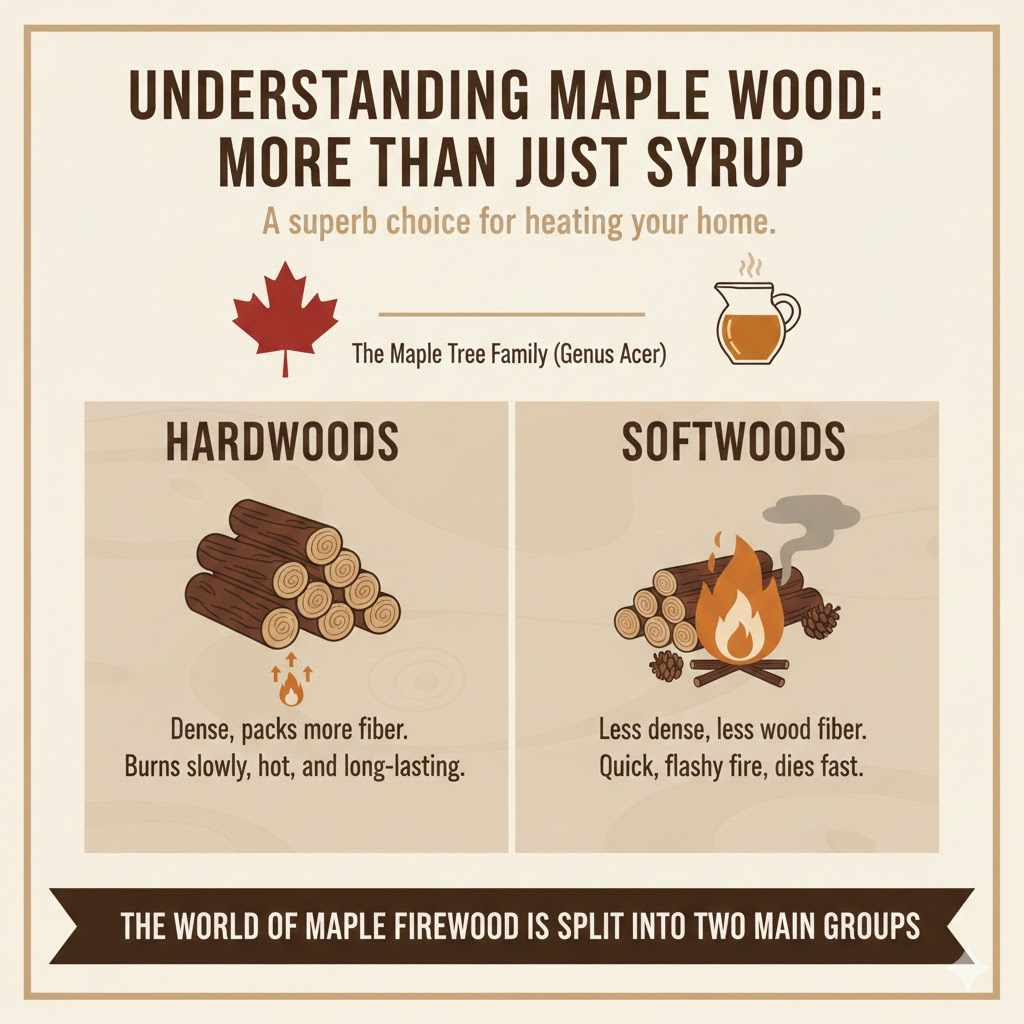
When most of us think of maple, we picture the classic Canadian flag leaf or delicious pancake syrup. The maple tree family (genus Acer) is widespread across North America, and its wood is famous in furniture making for its beauty and strength. But these same qualities can make it a superb choice for heating your home.
Maple wood is a hardwood, which is generally what you want for firewood. Hardwoods are dense, meaning they pack more wood fiber into the same amount of space compared to softwoods like pine or fir. This density is the key to a long, hot fire. When you burn a dense wood, it releases its energy slowly and steadily, giving you hours of warmth instead of a quick, flashy fire that dies out fast.
But here’s the most important thing to learn right from the start: the world of maple firewood is split into two main groups. Getting this part right will make all the difference in your wood-burning experience.
The Two Faces of Maple: Hard vs. Soft Firewood
Thinking that all maple is the same is the most common mistake people make. The maple family is divided into two categories based on wood density: hard maple and soft maple. While they are related, they behave very differently in a fire.
Hard Maple: The Premium Choice
Hard maple is the heavyweight champion of the maple world. This category includes species like Sugar Maple (the one famous for syrup) and Black Maple. It is very dense, heavy, and burns for a very long time, producing a fantastic bed of hot coals that can keep a room warm overnight.
- High Heat Output: It burns very hot, rivaling other top-tier firewoods like oak and hickory.
- Long Burn Time: Its density means it burns slowly and steadily.
- Great Coals: Creates a long-lasting coal bed, perfect for continuous heating.
- Clean Burning: Produces very little smoke and few sparks when properly seasoned.
Soft Maple: The Dependable Contender
Soft maple isn’t actually “soft” like pine. It’s still a hardwood, just less dense than its hard maple cousins. This group includes species like Red Maple, Silver Maple, and Box Elder. Soft maple is easier to find in many areas and is a perfectly good firewood, especially for certain situations.
- Moderate Heat Output: It provides good warmth, just not as much as hard maple. It burns faster.
- Easy to Start: Because it’s less dense, it catches fire more easily, making it great for starting fires or for quick-warming fires in the spring and fall.
- Easier to Split: Generally, soft maple is a bit easier to split by hand than the tougher hard maples.
- Faster Seasoning: It dries out and is ready to burn more quickly than hard maple.
Hard Maple vs. Soft Maple at a Glance
Here’s a simple table to help you see the differences side-by-side.
| Feature | Hard Maple (e.g., Sugar Maple) | Soft Maple (e.g., Red, Silver Maple) |
|---|---|---|
| Wood Density | Very High | Medium |
| Weight | Heavy | Lighter |
| Heat Output (BTUs) | High (Excellent) | Medium (Good) |
| Burn Time | Long | Shorter |
| Splitting Ease | Moderate to Difficult | Easy to Moderate |
| Seasoning Time | 12–24 months | 6–12 months |
How Hot Does Maple Burn? A Look at BTUs
To really compare firewood, we use a measurement called a British Thermal Unit, or BTU. Think of a BTU as a unit of heat energy. The higher the BTU rating per cord of wood, the more heat you’ll get out of it. A cord is a standard measure for firewood, stacked 4 feet high, 4 feet wide, and 8 feet long.
Hard maple is one of the top performers in the firewood world. It consistently ranks high on BTU charts, often sitting just below hickory and white oak. Soft maple offers a respectable amount of heat, making it better than most softwoods but not quite as powerful as the premium hardwoods.
Let’s see how maple compares to some other common firewoods. Heat values can vary slightly based on moisture content, but this gives you a great general idea.
| Wood Type | Average BTUs per Cord (in Millions) | Rating |
|---|---|---|
| Oak (Red/White) | 24.0 – 29.1 | Excellent |
| Hickory | 27.7 | Excellent |
| Hard Maple (Sugar Maple) | 24.0 | Excellent |
| Birch | 20.2 | Good |
| Soft Maple (Red Maple) | 18.7 | Good |
| Pine (White) | 15.9 | Fair |
As you can see, hard maple is right up there with the best of the best, while soft maple holds its own as a solid, mid-range firewood.
The Pros: Why You’ll Love Burning Maple Firewood
Maple offers a lot of benefits that make it a favorite for many people who heat with wood. Here are some of the best reasons to add it to your woodpile.
- Easy to Split: Most maple, especially when it’s green (freshly cut), splits very easily. It usually has straight grain, which means your axe or splitting maul can slice through the rounds with satisfying ease. This saves you a lot of time and effort.
- Clean Burning: Once seasoned, maple produces very little smoke. This helps keep your chimney cleaner and the air clearer. It also produces very few sparks or pops, making it a safer wood for an open fireplace.
- Pleasant Aroma: Maple gives off a mild, sweet, and pleasant smell as it burns. It’s not overpowering like some woods can be, just a subtle, cozy scent that adds to the atmosphere.
- Excellent Coal Production: This is where hard maple truly shines. It burns down to a bed of hot, glowing coals that continue to radiate heat long after the flames have died down. This steady, long-lasting heat is ideal for keeping your home warm through a cold night.
- Widely Available: Maple trees are very common in many parts of North America. This often makes maple firewood more affordable and easier to find than some of the more exotic hardwoods.
The Cons: What to Watch Out For
Of course, no firewood is perfect. Here are a few things to keep in mind when working with maple.
- Seasoning is a Must: Like all hardwoods, maple has a high water content when green. Burning it unseasoned is a big mistake—it will produce a lot of smoke, creosote (a dangerous chimney deposit), and very little heat. Patience is key!
- Soft Maple Burns Faster: If you’re relying solely on soft maple, you’ll find yourself reloading your stove more often than you would with hard maple or oak. It’s a trade-off for its faster seasoning time and easier splitting.
- Can Rot if Left Unattended: Maple wood can begin to rot if it’s left in direct contact with wet ground for too long. Once you cut it, it’s important to split and stack it off the ground as soon as you can to promote good airflow and prevent decay.
Identifying Maple in the Wild: A Beginner’s Guide
Not sure if that tree in your yard is a maple? Identifying trees can seem tricky, but maple has a few telltale signs that are easy for beginners to spot.
- Opposite Branching: This is the number one clue! Look at how smaller branches grow from larger ones. On a maple tree, branches grow directly opposite each other. Most other trees have alternating branches. Remember the simple acronym MAD Horse: Maple, Ash, Dogwood, and Horse Chestnut are the most common trees with opposite branching.
- Distinctive Leaves: Everyone recognizes the classic maple leaf. It has several distinct points or lobes. Sugar maples have smooth-edged leaves with five lobes, while red maples have toothed or serrated edges. Even in winter, you can often find old leaves on the ground beneath the tree to help you identify it.
- Bark: The bark can vary by age and species. Young maple trees often have smooth, gray bark. As they get older, the bark of a sugar maple becomes thick, gray-brown, and deeply furrowed. Red maple bark often has long, scaly strips.
The Secret to Great Fires: How to Season Maple Perfectly
Seasoning just means drying the wood until its moisture content is below 20%. This is the most critical step for any firewood. Properly seasoned maple will give you all the heat and none of the smoky hassle. Here’s how to do it right.
- Cut it to Length: As soon as you can, cut your maple logs into the right length for your fireplace or wood stove, usually around 16 inches. Shorter pieces dry out faster.
- Split it Soon: Don’t let your rounds sit for long! Split them while the wood is still green. Splitting exposes more surface area to the air, which dramatically speeds up drying. Maple is much easier to split when it’s green than when it’s dry and hard.
- Stack it for Airflow: Stack the split wood off the ground. Use pallets, concrete blocks, or lumber to create a base. Stack the wood in single rows with plenty of space between them so that air can circulate freely all around each piece. A crisscross pattern at the ends of the stack helps with stability.
- Location, Location, Location: Find a sunny and breezy spot for your woodpile. Good airflow and sunlight are your best friends for seasoning wood.
- Cover the Top (Only): Use a tarp or a simple roof to cover just the top of your stack. This keeps rain and snow off the wood but leaves the sides open for air to move through. Never wrap the entire pile in a tarp, as that will trap moisture and cause mold and rot.
- Be Patient: This is the hardest part! The drying time depends on your climate and the type of maple.
- Soft Maple: Needs at least 6 to 12 months.
- Hard Maple: Needs at least 12 months, but 18 to 24 months is even better for premium fuel.
You can find excellent resources on proper wood seasoning from institutions like the Environmental Protection Agency (EPA), which provides tips for burning wood efficiently and safely.
Maple vs. The Competition: A Firewood Showdown
So, how does maple stack up against other popular firewood choices? Here’s a quick comparison to help you decide what’s best for your needs.
| Firewood | Heat Output (BTU) | Splitting Ease | Seasoning Time | Smoke/Sparks |
|---|---|---|---|---|
| Hard Maple | Excellent | Moderate | Long (1-2 years) | Very Low |
| Soft Maple | Good | Easy | Short (6-12 months) | Low |
| Oak | Excellent | Moderate to Hard | Very Long (2+ years) | Very Low |
| Birch | Good | Easy | Short (6-12 months) | Low (can have creosote if paper is burned) |
| Pine | Fair | Easy | Short (6-12 months) | High (resinous, creates creosote) |
The bottom line? Hard maple is a top-tier fuel, while soft maple is a fantastic mid-tier option that’s great for beginners thanks to its easy splitting and fast seasoning.
Safety First: Tips for Burning Maple Wood
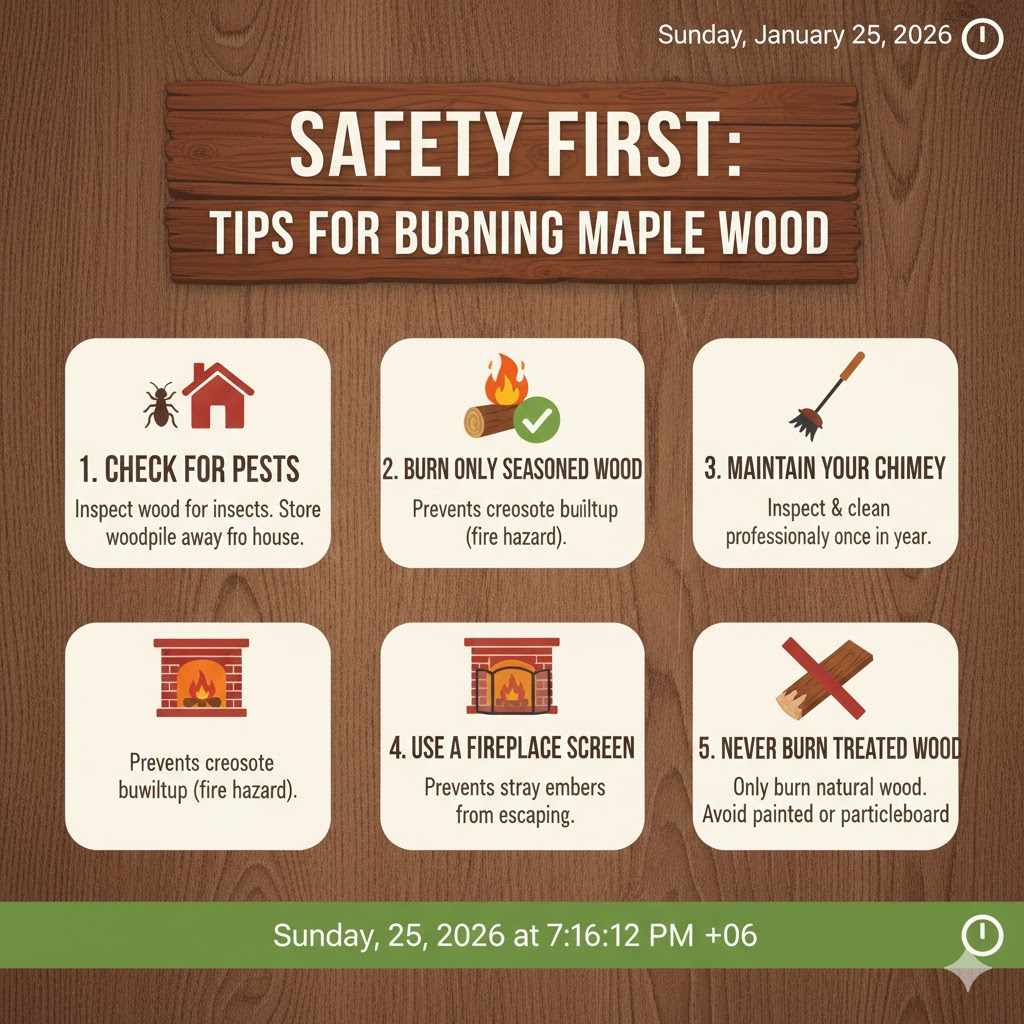
Working with firewood always requires a focus on safety. Here are a few reminders to keep you safe and warm.
- Check for Pests: Always inspect your wood for insects before bringing it indoors. Storing firewood inside can invite unwanted guests. Keep your main woodpile away from your house.
- Burn Only Seasoned Wood: We’ve covered this, but it’s the most important safety rule. Burning wet wood creates creosote buildup in your chimney, which is a major fire hazard.
- Maintain Your Chimney: Have your chimney professionally inspected and cleaned at least once a year.
- Use a Fireplace Screen: Even though maple produces few sparks, it’s always wise to use a screen to prevent any stray embers from escaping.
- Never Burn Treated Wood: Only burn natural, untreated maple. Never burn painted wood, pressure-treated lumber, or particleboard, as they can release toxic chemicals.
Frequently Asked Questions (FAQ)
Is all maple good for firewood?
Yes, all types of maple make good firewood when properly seasoned. However, hard maple (like Sugar Maple) is considered premium because it burns hotter and longer than soft maple (like Red or Silver Maple).
How long does maple firewood need to season?
Seasoning time depends on the type. Soft maple needs about 6 to 12 months of drying time. Hard maple, being much denser, requires longer—at least one full year, and preferably 18 to 24 months for the best results.
Does maple firewood smoke a lot?
No, one of the best qualities of seasoned maple is that it burns very cleanly with minimal smoke. If your maple wood is smoking heavily, it almost certainly means it is not fully seasoned and still has too much moisture.
Can I burn maple in my wood stove?
Absolutely! Maple is an excellent choice for a wood stove. Its long burn time and fantastic coal production, especially from hard maple, are ideal for providing steady, overnight heat in an efficient stove.
What does maple firewood smell like when it burns?
Maple has a faint, slightly sweet, and pleasant aroma when it burns. It’s not a strong or pungent smell, making it a very agreeable choice for an indoor fireplace.
Is Red Maple a hard or soft maple?
Red Maple is classified as a soft maple. While it’s one of the harder soft maples, its density and heat output place it in the soft maple category, not alongside Sugar Maple.
How can I tell if my maple firewood is seasoned?
Seasoned wood is lighter in weight than green wood. It looks grayish or faded, and the ends will have cracks or “checks.” When you knock two pieces together, they should make a sharp, hollow “clack” sound instead of a dull “thud.”
Conclusion: So, Is Maple the Right Firewood for You?
So, does maple make good firewood? The answer is a resounding yes! Maple is a top-quality fuel that can provide excellent heat for your home. Hard maple stands tall among the best firewoods available, delivering impressive heat, a long burn, and a wonderful bed of coals. Soft maple is a fantastic, accessible option that seasons quickly and is easy to handle, perfect for less intense cold and for getting a fire going quickly.
The key to unlocking maple’s potential is simple: identify whether you have hard or soft maple, and then give it the time it needs to season properly. By following the steps of cutting, splitting, and stacking it correctly, you’ll be rewarded with clean, efficient, and beautiful fires. Whether you’re a seasoned wood-burner or just starting, maple is a reliable and satisfying choice to keep your home cozy and warm.
Happy splitting, and stay warm!