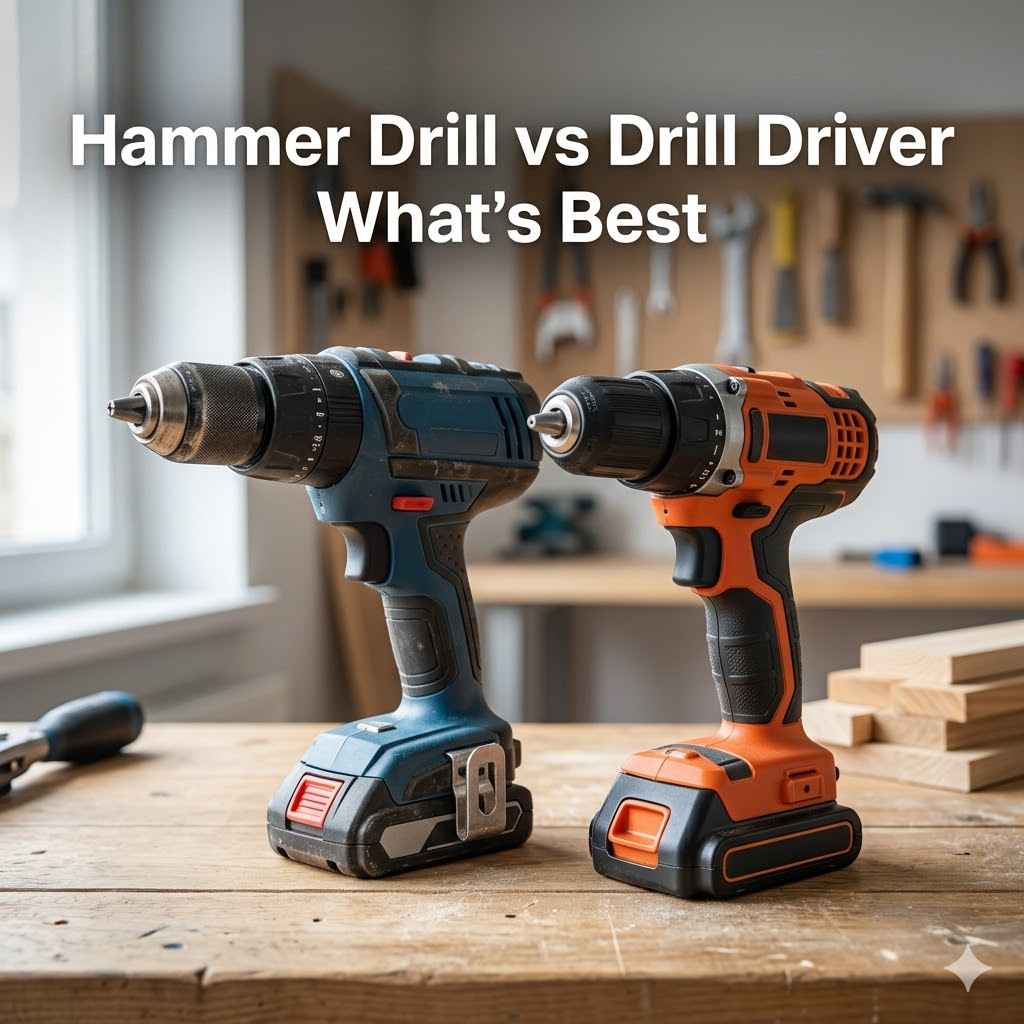
Hammer Drill vs Drill Driver: What’s Best
Many people get confused when they first look at power tools. You see all these different kinds, and it’s hard to know which is which. The question Hammer Drill vs Drill Driver Which One Should You Use is a common one for DIYers and beginners.
It seems tricky, but we can make it simple. This guide will walk you through everything step by step. We will show you the main differences and help you pick the right tool for your projects.
Understanding the Hammer Drill
A hammer drill is a powerful tool that can drill holes in tough materials. It has a rotating chuck and a motor. What makes it special is its hammering action.
This action adds a pounding force as it spins. This is like a tiny jackhammer built into the drill. It helps break apart hard substances like concrete or brick.
Think of it as a drill that can also punch through tough stuff.
What is a Hammer Drill’s Pounding Action
The hammering mechanism in a hammer drill is key to its strength. It uses two notched discs, called cams, that spin against each other. As these discs rotate, they push the chuck forward and backward rapidly.
This creates a percussive force. This forward and backward pounding, combined with the rotational drilling, is what allows it to tackle hard surfaces. It’s this dual action that sets it apart from a standard drill.
Imagine trying to hammer a nail into concrete with just a regular screwdriver. It wouldn’t work well, right? A hammer drill is designed for this exact kind of job.
The impact it delivers helps to chip away at the material as the drill bit turns. This significantly speeds up the process and reduces the effort needed from the user. It’s the perfect tool for drilling into stone, masonry, or other dense building materials.
When to Use a Hammer Drill
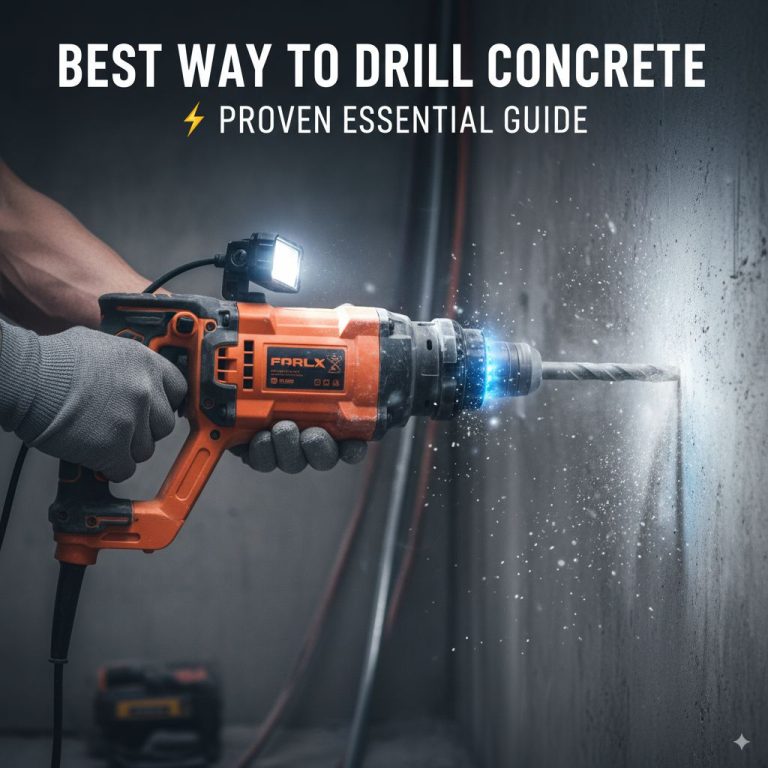
You should reach for a hammer drill when your project involves drilling into materials that are very hard. This includes things like concrete walls for hanging shelves or pictures. Drilling into brick or stone for garden projects or repairs also calls for a hammer drill.
It is ideal for setting anchors into masonry. If you plan to do any work on foundations or exterior walls, a hammer drill will be your best friend.
- Drilling into concrete: This is the hammer drill’s primary job. It makes holes for anchors, bolts, or wiring with ease.
- Masonry work: Whether it’s brick or block, a hammer drill cuts through these materials quickly. This is useful for home renovations or building projects.
- Heavy-duty anchors: Installing large anchors for significant weight requires the brute force of a hammer drill.
For instance, if you want to mount a TV on a brick fireplace, a standard drill might struggle. It would take a very long time and could even overheat. A hammer drill, however, will make quick work of it.
It will create a clean hole, ready for your anchor. This saves you time and frustration. Many homeowners find this tool indispensable for any kind of home improvement involving hard surfaces.
Hammer Drill Limitations
While powerful, hammer drills are not always the best choice for every job. They can be overkill for softer materials like wood or drywall. Using the hammer function on wood can splinter it or create a messy hole.
It can also damage the drill bit if used incorrectly. For delicate tasks or working with lighter materials, a different tool is usually better suited.
The weight and vibration of a hammer drill can also be a factor. They are often larger and heavier than standard drills. This can lead to fatigue during extended use.
The percussive action can also be quite noisy. So, if you’re working in a quiet apartment or around sleeping children, it might not be the ideal tool at that moment. Always consider the material and the environment before picking up a hammer drill.
Exploring the Drill Driver
A drill driver is a very common and versatile power tool. Its main job is to drive screws and drill holes. It spins a bit to turn screws in or out.
It also spins a drill bit to make holes in softer materials. Think of it as your go-to tool for most everyday tasks around the house. It is lighter and easier to handle than a hammer drill for many jobs.
What Makes a Drill Driver Unique
The defining feature of a drill driver is its clutch. This clutch allows you to set a torque limit. Torque is basically twisting power.
By setting the clutch, you tell the drill driver how much force it should apply before it stops turning. This is crucial for driving screws. It prevents you from over-tightening and stripping the screw head or damaging the material you are working with.
It gives you control.
Drill drivers typically have a variable speed trigger. This means you can control how fast the drill spins by how hard you press the trigger. A gentle squeeze means slow speed, perfect for starting screws.
A harder squeeze means faster speed, great for drilling holes. This control is a major advantage for many DIY projects. It makes the tool very adaptable to different tasks and user skill levels.
When to Use a Drill Driver
A drill driver is your best friend for most common household tasks. This includes assembling furniture that comes flat-packed. It’s perfect for hanging shelves on drywall or wood.
You’ll use it for putting together cabinets, decks, or fences. Basically, if you are fastening things together with screws or drilling into wood, drywall, or metal, a drill driver is the right tool.
- Furniture assembly: This is where drill drivers shine. They drive screws quickly and precisely, making assembly much faster than by hand.
- Woodworking projects: From building birdhouses to constructing shelves, a drill driver is essential for joining wood pieces.
- Hanging decorations: Safely installing hooks, brackets, or curtain rods on walls is easy with a drill driver.
For example, when you buy a new bookshelf, the instructions will often involve dozens of screws. Using a drill driver with the clutch set correctly means you can put all those screws in quickly and evenly. You won’t have to worry about sinking them too deep or leaving them sticking out.
This saves a lot of time and results in a much better-looking final product.
Drill Driver Limitations
The main limitation of a drill driver is its inability to effectively drill into very hard materials like concrete or brick. While some drill drivers have a “hammer” setting, it is usually much less powerful than a dedicated hammer drill. Attempting to drill into masonry with a standard drill driver can be very slow and may even damage the tool or the drill bit.
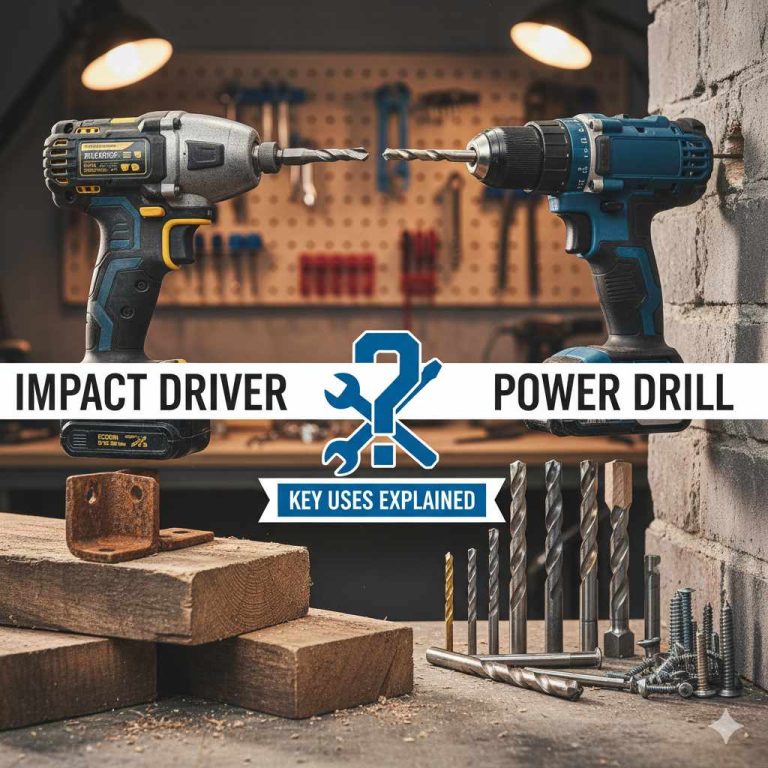
They also lack the sheer power needed for very large fasteners or heavy-duty drilling tasks. If you need to drill a large hole in thick metal, or drive a very long screw into dense hardwood, you might find a drill driver struggling. For these more demanding jobs, a more specialized tool like an impact driver or a hammer drill would be a better fit.
Hammer Drill vs Drill Driver Key Differences
The core distinction between a hammer drill and a drill driver lies in their primary function and capability. A drill driver is designed for driving screws and drilling into softer materials. It offers precise control over torque thanks to its clutch.
A hammer drill, on the other hand, adds a powerful percussive action to its drilling capability. This makes it ideal for hard materials like concrete and masonry.
Mechanism and Power
The mechanical difference is significant. A drill driver uses a motor to rotate a chuck. It has adjustable torque settings.
A hammer drill has the same rotating chuck but also includes a mechanism that delivers rapid, short impacts. This impact mechanism is often a set of notched discs that slide against each other, creating a hammering effect as they spin. This additional force is what allows it to penetrate tough surfaces.
In terms of power, the hammer drill generally has a higher wattage motor for its drilling function, specifically designed to withstand the stresses of impact. The drill driver’s motor is optimized for sustained rotation and torque control for fastening. You can visually see the difference in some models.
Hammer drills are often larger and feel more substantial due to the added components for the hammering action.
Applications and Use Cases
The applications for each tool are quite distinct. A drill driver is your everyday workhorse for tasks like building flat-pack furniture, installing shelving, or basic woodworking. Its clutch is perfect for delicate work where over-tightening is a concern.
The drill driver is about controlled fastening and light drilling.
A hammer drill is specialized. You bring it out when you need to create holes in concrete for anchors, hang heavy items on masonry walls, or do any work that involves breaking through hard materials. It’s for tasks that require brute force and impact, not just rotation.
Trying to use a drill driver for these jobs would be like trying to break rocks with a spoon.
Torque vs. Impact
Torque is the rotational force that a drill driver uses to tighten screws. The adjustable clutch on a drill driver allows you to fine-tune this torque. This is essential for preventing damage.
Impact, on the other hand, is the hammering action of a hammer drill. It’s a linear force that pounds into the material. This impact helps to break down hard substances.
Imagine assembling a piece of IKEA furniture. You want to drive screws in smoothly without stripping the heads. That’s where the torque control of a drill driver is vital.
Now, imagine you need to mount a heavy bracket into a concrete wall. You need to create a hole that a standard drill can’t manage. The impact of a hammer drill is what makes that possible.
One is about controlled turning, the other is about powerful pounding.
Speed and Efficiency
For tasks suitable for a drill driver, like driving screws, it is very efficient. It can drive hundreds of screws on a single battery charge. Its speed is adjustable, allowing for quick work.
When drilling into wood or drywall, it also offers good speed.
A hammer drill can be slower than a drill driver for simple screw-driving tasks. The added weight and mechanism can make it feel cumbersome. However, for its intended purpose, drilling into concrete or masonry, it is vastly more efficient than a drill driver.
What might take a drill driver hours to do (if it could do it at all) a hammer drill can accomplish in minutes.
Cost and Availability
Generally, drill drivers are more affordable than hammer drills. This is because they are simpler tools without the extra impact mechanism. They are also the most common type of drill, so there is a wider variety available at different price points.
You can find basic drill drivers for under $50.
Hammer drills are typically more expensive. This is due to the added complexity of their design and the more powerful motors they often possess. However, the price difference is often justified by their specialized capabilities.
If you frequently work with concrete or masonry, the investment in a hammer drill is worthwhile.
Choosing the Right Tool for Your Project
Deciding between a hammer drill and a drill driver comes down to the main type of work you plan to do. Consider the materials you will be working with most often. Think about the size and nature of your projects.
This will help you make the best choice for your needs and budget. It’s about matching the tool to the task.
DIY Homeowner Needs
For the average DIY homeowner, a good quality drill driver will likely be the most used tool. It handles the majority of common home improvement tasks. If you are assembling furniture, hanging pictures, or doing minor repairs, a drill driver is your go-to.
It offers great versatility and control.
However, if your home has a lot of brick or concrete, like a basement or patio, you might also benefit from a hammer drill. Many homeowners find that having both tools gives them the most flexibility. But if you have to pick just one to start, the drill driver is generally the more essential tool for most households.
Professional Trades
For professionals, the choice depends on their specific trade. A carpenter or furniture assembler will primarily use drill drivers. An electrician or a contractor who does a lot of work on buildings will rely heavily on hammer drills.
Some professionals may even carry both, along with other specialized tools like impact drivers.
The choice in professional settings is also about efficiency and durability. Professionals need tools that can withstand daily use and perform reliably. They often invest in higher-end models that offer better power, battery life, and ergonomics.
The distinction is not just about function but also about how the tool impacts their workday and productivity.
Budget Considerations
If your budget is tight, a drill driver is a more economical starting point. You can find excellent basic models for a reasonable price. These will cover most of your general-purpose drilling and driving needs.
You can always add a hammer drill later if your projects demand it.
If you need the capabilities of a hammer drill and your budget allows, consider it. Some tools are combo units that offer both drill driver and hammer drill functions. This can be a cost-effective solution if you need both but don’t want to buy two separate tools.
However, dedicated tools often perform better in their specific roles.
Future Projects
Think about the types of projects you might undertake in the future. Are you planning a major renovation that involves breaking through walls? Do you live in an older home with plaster and lathe?
If so, a hammer drill might be a wise investment now. If your plans are mostly about minor updates and assembly, a drill driver will suffice.
Consider the long term. Buying a tool that can handle future needs is often more economical than buying a cheaper tool now and needing to replace it later. However, don’t buy a specialized tool if you’ll only use it once every few years.
Match your purchase to your realistic future needs.
Frequently Asked Questions
Question: Can a drill driver be used as a hammer drill
Answer: Some drill drivers have a hammer setting, but it’s much less powerful than a dedicated hammer drill. It might work for very light masonry, but it’s not ideal for concrete or brick.
Question: What is torque
Answer: Torque is the twisting force that a drill uses to turn a screw or drill bit. Drill drivers have adjustable torque settings to control how tight screws become.
Question: Can a hammer drill be used to drive screws
Answer: Yes, a hammer drill can drive screws. However, you must turn off the hammer function and use the clutch setting. It can be more powerful than needed for delicate tasks.
Question: Which tool is better for drilling into wood
Answer: A drill driver is generally better for drilling into wood. It offers more control and is less likely to damage the wood than a hammer drill with its hammer function on.
Question: Is a hammer drill too heavy for small jobs
Answer: A hammer drill can be heavier and more cumbersome than a drill driver, making it less ideal for very small or delicate jobs. A drill driver is usually preferred for its lighter weight and maneuverability.
Wrap Up
Choosing between a Hammer Drill vs Drill Driver Which One Should You Use depends on your tasks. For most home needs like furniture assembly or hanging shelves, a drill driver is best. If you need to drill into concrete or masonry, a hammer drill is the powerful choice.
Match the tool to your material and project for the best results.