Drill Press vs Mill: What Actually Separates Them
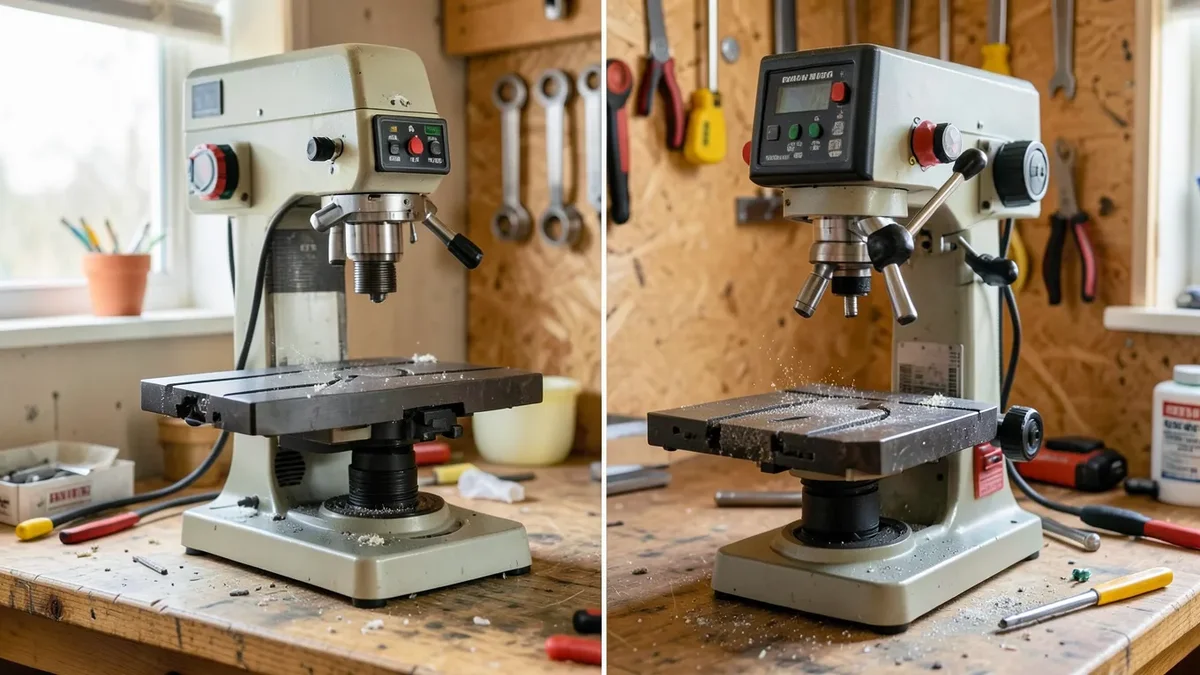
A drill press only moves in one direction – straight down. A mill moves the workpiece itself, in two more directions, under a spinning cutter. That single difference is why a mill can cut slots, pockets, and flat surfaces that a drill press physically cannot, no matter what bit you chuck into it.
The Core Difference: One Axis Vs. Three
Best Entry-Level Mill/Drill Combo
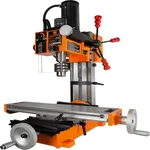 |
WEN 33013 Compact Benchtop Milling Machine – $122 An R8 taper spindle and true X-Y table movement do what a drill press physically can’t, for close to the price of a mid-range benchtop drill press.
|
A drill press has one working axis: the quill moves the spinning bit straight down into a fixed workpiece. Repositioning for a second hole means physically moving the material and re-clamping it – the machine itself has no way to shift the cut location.
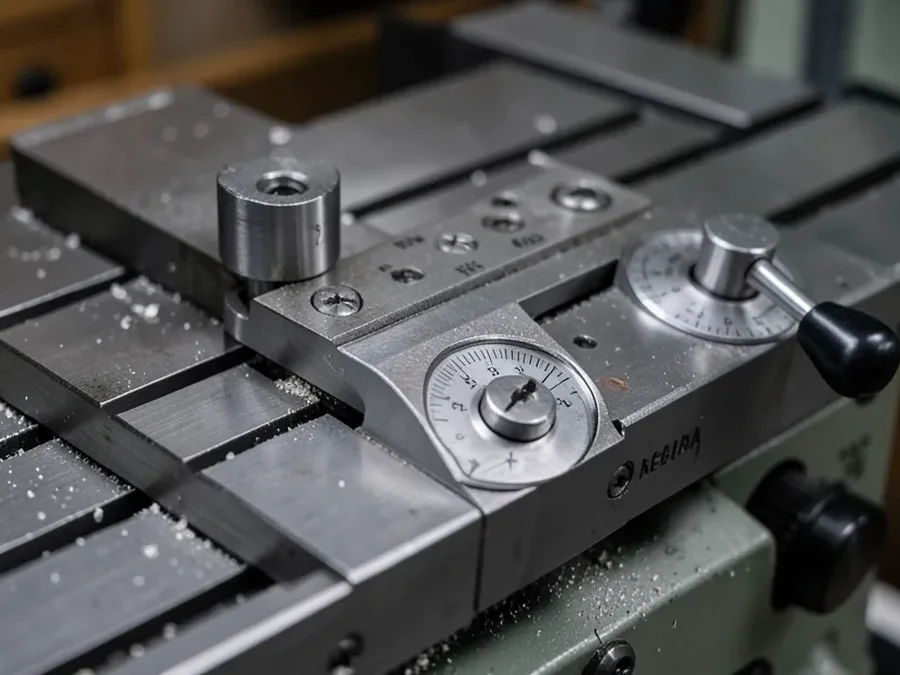
A milling machine adds two more axes at the table: precision handwheels move the workpiece left-right (X) and front-back (Y) under the spinning cutter, in addition to the vertical (Z) movement a drill press already has. That’s what lets a mill cut a straight slot, machine a flat pocket, or space a row of holes to within a few thousandths of an inch without ever unclamping the workpiece.
Why You Can’t Just Use A Drill Press As A Mill
This is the part most comparisons skip: it’s not just that a drill press lacks X-Y table movement, it’s that its spindle and bearings aren’t built to handle the kind of force milling puts on a cutter. Drilling is almost entirely axial force – straight down, in line with the bit. Milling adds significant lateral (sideways) force as the cutter pushes through material while also moving across it. A drill press’s quill and bearings are designed for axial load; feeding a workpiece sideways into a spinning end mill, or even nudging the table by hand to fake an X-Y cut, puts side load on components that weren’t built for it. At best this causes chatter and a poor finish; at worst it accelerates bearing wear, introduces spindle runout, or snaps the cutter. A genuine milling machine uses a more rigid column and spindle bearing arrangement specifically because it’s engineered to take that lateral load.
What Each Machine Is Actually Good For
| Task | Drill press | Mill |
|---|---|---|
| Drilling a straight, clean hole | Yes – this is its job | Yes, but overkill for simple holes |
| Precisely spaced hole patterns | Manual layout and re-clamping each time | Dial in X/Y position between holes, no re-clamping |
| Cutting a slot or pocket | Not possible safely | Yes – this is what it’s built for |
| Facing a surface flat | No | Yes, with a fly cutter or face mill |
| Woodworking joinery, dowel holes | Ideal – simpler, cheaper, plenty accurate | Unnecessary expense and complexity |
| Precision metal parts (jigs, fixtures) | Limited to simple holes | Where a mill earns its cost |
Which One Do You Actually Need?
If your work is primarily woodworking – joinery, dowel holes, hardware installation – a drill press covers it completely, and a mill would sit unused most of the time. If you regularly need slots, pockets, flat-milled surfaces, or hole patterns positioned to tight tolerances in metal, that’s specifically what a mill is built for, and no amount of care on a drill press substitutes for the rigidity and axis control a real milling machine provides. Some benchtop mill/drill combo machines (like the pick above) give you both functions in one footprint if your shop doesn’t have room for two separate machines, though a dedicated mill and a dedicated drill press will each outperform a combo unit at its specific job.
Frequently Asked Questions
What is the main difference between a drill press and a mill?
A drill press only moves the spindle straight down onto a fixed workpiece. A mill also moves the workpiece itself in two horizontal directions (X and Y) under the cutter, which lets it cut slots, pockets, and precisely spaced hole patterns that a drill press can’t.
Can I use a drill press like a milling machine?
Not safely. A drill press’s spindle and bearings are built for straight-down (axial) force, not the sideways (lateral) force milling puts on a cutter. Forcing lateral movement can cause chatter, spindle wear, or a broken cutter.
Do woodworkers need a milling machine?
Generally no. A drill press handles the drilling, doweling, and joinery holes most woodworking requires. A mill becomes worthwhile mainly for metalworking tasks like slots, pockets, and tight-tolerance hole patterns.
Conclusion
A drill press and a mill can look similar, but the mill’s X-Y table and heavier-duty bearings are what actually let it cut sideways, not just down. Choose based on what your projects need – drilling and joinery point to a drill press, while slots, pockets, and precise metal parts point to a mill.
Sponsored / affiliate links. As an Amazon Associate I earn from qualifying purchases. I may earn additional commission from eligible campaigns.