Handheld Mini Circular Saw: Ultimate Portable Cutting Power
A handheld mini circular saw is a compact power tool, typically with a 3-3/8″ to 4-1/2″ blade and weighing 3-5 pounds, built for one-handed cuts in tight spaces where a full-size 7-1/4″ circular saw is too bulky. It trades maximum cutting depth for maneuverability and control.
A true mini circular saw is a different tool category from a “compact” full-size saw — the blade diameter is the giveaway. Anything under about 4-1/2″ is genuinely mini; a 6-1/2″ cordless saw marketed as “compact” is really a smaller version of a full-size saw, not the same class of tool. That distinction matters for choosing the right one, so we’ll be specific about it below rather than lumping every small circular saw together.
Evolution Of Circular Saws
Best Mini Circular Saw Pick
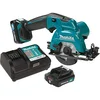
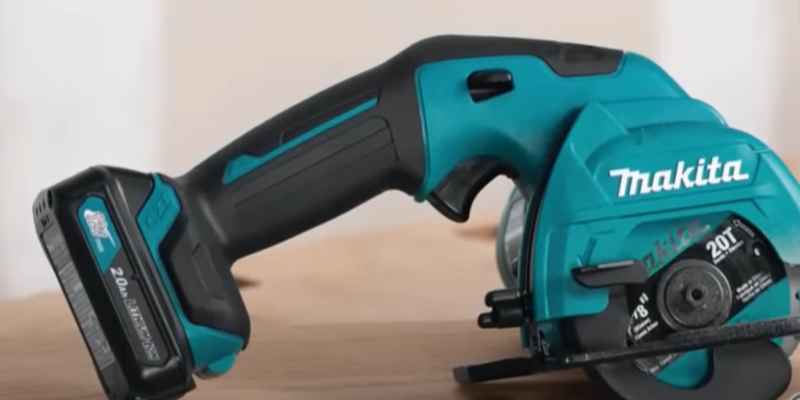
Makita SH02R1 12V 3-3/8″ Cordless Mini Circular Saw Kit – $149.00
This is the exact 3-3/8″ true mini saw class discussed above – the premium cordless pick for trim and tight-space cuts.
- Best for: Trim carpentry, cabinet work, and cordless tight-space cuts
- Why we picked it: Genuine 3-3/8″ mini blade class, not a downsized full-size saw, with a real blade guard and brushless-comparable performance
- Main drawback: Higher price and the shallowest cutting depth (~1″) of the mini class
Compare more mini circular saw options
 Option 1 Rockwell RK3441K 4-1/2″ Compact Circular Saw – $89.00
|
 Option 2 GALAX PRO 20V Cordless Mini Circular Saw 4-1/2″ – $69.99
|
 Option 3 SEESII Mini Circular Saw 4-1/2″ Corded with Laser – $44.99
|
As an Amazon Associate we earn from qualifying purchases.
From Large Stationary Tools To Portable Handheld Designs
Circular saws have evolved from cumbersome stationary tools to compact, handheld designs, and more recently split into two clear categories: full-size (6-1/2″-7-1/4″ blade) saws built for framing and sheet goods, and true mini saws (3-3/8″-4-1/2″ blade) built for trim, thin stock, and cuts a full-size saw can’t get into.
What Actually Changed In Mini Saw Technology
- Brushless motors now fit in a housing small enough for one-handed use, closing much of the power gap with corded models
- Lighter battery platforms (12V-20V) keep total tool weight under 5 lbs, versus 10-15 lbs for a full-size saw
- Blade guards and electric brakes, once full-size-only features, are now standard on quality mini saws
Benefits Of Handheld Mini Circular Saws
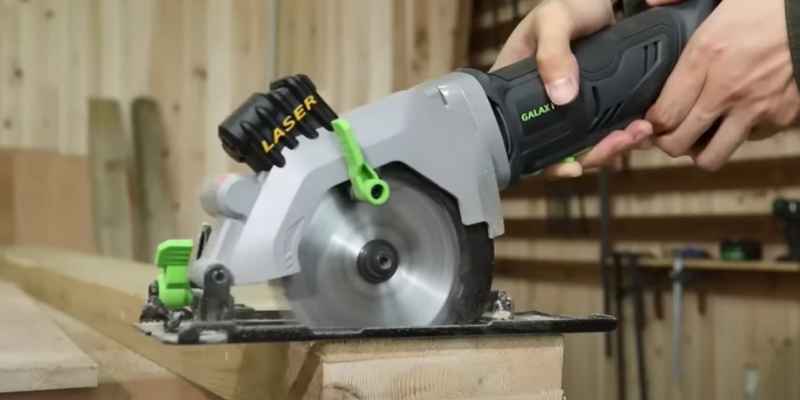
Handheld mini circular saws offer real advantages for the right job — but they’re advantages with a tradeoff, not a free upgrade over a full-size saw.
Portability For On-the-go Projects
At 3-5 lbs versus 10-15 lbs for a full-size circular saw, a mini saw is dramatically easier to carry, hold overhead, or use one-handed for an extended job. Cordless models remove the extension-cord tether entirely, which matters more for mini saws since they’re often used exactly where a cord is awkward — up a ladder, inside a cabinet, or on a roof.
Precision Cutting In Tight Spaces
The smaller shoe and blade give you a clearer sightline to your cut line and let you get the saw into spaces a full-size shoe simply won’t fit — tight cabinet interiors, notching trim, or cutting flooring against a wall. That control is the real reason to reach for a mini saw over a jigsaw for straight cuts in confined areas.
The Tradeoff: Cutting Depth
A 3-3/8″ blade cuts roughly 1″ deep at 90°; a 4-1/2″ blade cuts roughly 1-5/8″ deep. That’s plenty for 3/4″ plywood, trim, and most sheet goods, but it won’t get through a 2×4 (1.5″ actual thickness, and more at an angle) in one pass the way a 7-1/4″ saw will. Know this limit before buying one as your only saw.
Key Features To Look For
Understanding the essential specs will help you pick the right mini saw for your actual jobs, not just the cheapest one.
Blade Size And Cutting Depth Capacity
Blade size directly sets maximum cutting depth: 3-3/8″ saws (like the Makita SH02R1) top out around 1″, while 4-1/2″ saws (like the Rockwell RK3441K) reach about 1-5/8″. Match this to your actual material thickness before buying — it’s the single spec that determines whether the saw can do the job at all.
Power Source Options: Corded Vs. Cordless
Corded mini saws give consistent power for long sessions and cost less up front. Cordless mini saws (typically 12V-20V) trade some runtime for the freedom to work anywhere, which matters more for a tool this size since it’s often used in spots a cord can’t easily reach.
Safety Features Like Blade Guards And Trigger Locks
A retracting blade guard and a trigger lock (or lock-off switch) are non-negotiable on any mini saw — the small size makes it tempting to use one-handed in awkward positions, which is exactly when an accidental blade exposure is most dangerous.
Applications In Various Industries
A handheld mini circular saw earns its place in a toolkit for specific jobs, not as a full-size saw replacement.
Construction And Woodworking
Trim carpentry, cabinet installation, and any cut that needs to happen inside a tight framed space are where a mini saw genuinely outperforms a full-size one — not on raw cutting power, but on access and control.
DIY Home Improvement Projects
Installing laminate flooring, notching baseboard, or building small shelving units are ideal mini-saw jobs — thin material, tight cuts, and a tool light enough to hold steady one-handed.
Metal Fabrication And Plumbing
With the correct blade swapped in (never use a wood blade on metal), a mini saw can cut sheet metal and thin conduit. This requires a blade rated for the material — check the saw’s max no-load RPM against the blade’s rating before using it on anything other than wood.
Comparison With Traditional Circular Saws
Here’s how the two categories actually compare, spec for spec:
| Spec | Mini Circular Saw | Full-Size Circular Saw |
|---|---|---|
| Blade diameter | 3-3/8″ – 4-1/2″ | 6-1/2″ – 7-1/4″ |
| Weight | 3 – 5 lbs | 7 – 10 lbs (cordless), up to 15 lbs (corded) |
| Max cutting depth at 90° | ~1″ – 1-5/8″ | ~2″ – 2-1/2″ |
| Best for | Trim, thin sheet goods, tight-space cuts | Framing lumber, full sheets of plywood, deep rips |
Neither is strictly “better” — a mini saw genuinely can’t replace a full-size saw for framing, and a full-size saw is genuinely overkill and harder to control for trim work in a tight corner.
Best Practices For Using Handheld Mini Circular Saws
Following these guidelines matters more on a mini saw than a full-size one, since the compact size makes it easy to get complacent about control.
Proper Blade Installation And Adjustment
- Ensure the saw is unplugged or the battery is disconnected before touching the blade.
- Securely attach the correct blade for your material — wood, metal, and tile blades are not interchangeable.
- Set cutting depth about 1/4″ deeper than your material thickness, no more — less blade exposure below the material means better control and a safer cut.
Safety Precautions During Operation
- Wear safety goggles; a mini saw throws chips just as fast as a full-size one despite its smaller size.
- Clamp your workpiece rather than holding it — the compact size makes one-handed cutting tempting, but you still need your other hand free and the material secured.
- Keep the retracting guard functional — never wedge it open, even for a “quick” cut.
Popular Mini Circular Saw Models
These are genuine mini saws (3-3/8″-4-1/2″ blade) rather than smaller versions of full-size saws — an important distinction, since several models commonly listed as “mini circular saws” elsewhere are actually standard 6-1/2″ compact saws.
| Model | Blade Size | Weight | Power |
|---|---|---|---|
| Makita SH02R1 | 3-3/8″ | ~3.3 lbs | 12V cordless |
| Rockwell RK3441K | 4-1/2″ | ~4.6 lbs | 5A corded |
| GALAX PRO 20V | 4-1/2″ | ~4.5 lbs | 20V cordless |
Frequently Asked Questions
What Are The Key Features Of A Handheld Mini Circular Saw?
A genuine mini circular saw has a 3-3/8″ to 4-1/2″ blade, weighs 3-5 lbs, and offers adjustable cutting depth up to about 1-5/8″. Look for a retracting blade guard and trigger lock as non-negotiable safety features.
How To Properly Use A Handheld Mini Circular Saw?
Clamp the workpiece rather than hand-holding it, set cutting depth about 1/4″ deeper than the material thickness, wear eye protection, and keep the blade guard functional throughout the cut. Match the blade to the material — wood and metal blades are not interchangeable.
What Materials Can A Handheld Mini Circular Saw Cut?
With the correct blade, a mini circular saw cuts wood, plywood, plastic, thin sheet metal, and tile. It cannot cut material thicker than its maximum depth (roughly 1″-1-5/8″ depending on blade size), so a full 2×4 or thick lumber is outside its range.
Is A Mini Circular Saw A Replacement For A Full-Size Saw?
No. A mini circular saw is better for trim, thin sheet goods, and tight-space cuts, but a full-size 7-1/4″ saw has more cutting depth and power for framing lumber and full plywood sheets. Most woodworkers keep both rather than choosing one over the other.
Conclusion
A handheld mini circular saw earns its spot in a toolkit for tight-space, thin-material cuts — not as a full-size saw replacement. Choose blade size based on your actual material thickness, prioritize a real blade guard and trigger lock, and know the roughly 1″-1-5/8″ depth ceiling before you rely on one for a job that needs more.
Sponsored / affiliate links. As an Amazon Associate I earn from qualifying purchases. I may earn additional commission from eligible campaigns.
 SHALL 20V Cordless Mini Circular Saw, 4-1/2’’ 4000RPM Power Circular Saw with 4.0Ah Battery, Laser Guide, 3 Saw Blades Max Cutting Depth 1-11/16" (90°), 1-1/8" (45°) for Wood, Tile, Plastic
 6-1/2" Metal Cutting Circular Saw Blade - BRSCHNITT 1pcs Tungsten Carbide Tipped TCT Saw Blades for Iron, Iron Pipe, Ferrous Metals 48T Arbor:4/5"-5/8"