How Long Should Deck Paint Dry Before Rain: 24-48 Hours
Deck paint needs 24-48 hours without rain to cure — water-based acrylic formulas often reach a rain-safe stage in 4-6 hours, but true oil-based paints need the full 24 hours minimum. Rain on wet paint washes out pigment, traps moisture under the film, and can cause peeling or rot months later. This guide covers dry times by paint type, mid-project rain, and how long to wait if rain fell before you paint.
How Long Should You Wait Before Rain?
Best Dryness-Check Pick

General Tools MMD4E Moisture Meter – $37.70
The tape test in our FAQ below works in a pinch, but a moisture meter gives you an actual number instead of a guess — useful both before painting (is the wood dry enough after rain?) and after (is the paint cured enough for furniture?).
- Best for: confirming wood is actually dry before you commit to painting
- Why we picked it: pin-type reading is more reliable on deck lumber than a tape test
- Main drawback: leaves small pinholes in the wood surface
Compare more rain-timing gear
 Option 1 Liquid Rubber Deck Coating – $99.95
|
 Option 2 Cartman 8x10ft Poly Tarp – $11.69
|
 Option 3 Rain Guard Paint Sealer – $23.59
|
As an Amazon Associate we earn from qualifying purchases.
The safe window depends on the type of paint, the humidity, and the temperature. Water-based (acrylic/latex) deck paints dry through evaporation, so they reach a rain-resistant stage faster — usually 4-6 hours per most manufacturer labels. Oil-based paints and stains cure through oxidation, a slower chemical process, so plan on a full 24 hours before rain and up to 48-72 hours before the finish is fully cured. (Paint drying is technically two separate processes — solvent evaporation and oxidative curing — and they happen at very different speeds.)
Factors Affecting Drying Time
Four things move the timeline: paint chemistry (water-based vs. oil-based), humidity, temperature, and coat thickness. High humidity slows evaporation and can double the wait. Cooler temperatures below 50°F also slow curing significantly — most exterior deck paints are rated for application between 50°F and 90°F. A heavier coat takes longer than a thin one, even in the same weather.
Water-Based vs. Oil-Based: Which Dries Faster?
This is where a lot of advice online gets it backwards. Water-based paint is the faster-drying option, not oil-based:
| Paint Type | Touch-Dry / Rain-Safe | Full Cure | Best For |
|---|---|---|---|
| Water-based (acrylic/latex) | 4-6 hours | 24-48 hours | Tighter weather windows, faster recoating |
| Oil-based | 24 hours minimum | 48-72 hours | Durability, when you have several dry days |
📊 Sherwin-Williams’ SuperDeck exterior waterborne stain lists a 2-4 hour touch-dry time and a 45°F-95°F application range — Source: Sherwin-Williams, SuperDeck product page
What Happens If It Rains Before The Paint Dries?
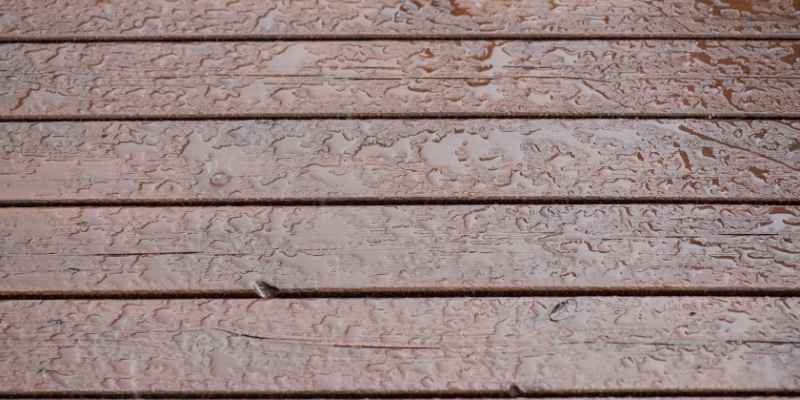
Rain that lands before the paint has set can wash pigment straight off the surface and lead to peeling down the line, and it can trap moisture underneath the film where it has nowhere to go.
- Uneven finish: rain washes the paint before it bonds, leaving light patches or dark spots where it pools.
- Discoloration, rotting, and warping: water trapped between the paint film and the wood keeps the board from drying out normally, which is what eventually causes rot or warping.
“Our stain is designed to be rain-safe within 2 to 4 hours of application, though full curing still takes 24 to 48 hours — treat the early window as water-resistant, not waterproof.”
Tips For Timing Your Deck Paint Around Rain
Plan the project around the forecast, not the other way around. A few dry days in a row beats rushing a coat in before a storm.
Choose the Right Time
Check a 5-day forecast, not just tomorrow’s — you need the full cure window, not just the rain-safe window, to be genuinely durable. Avoid painting when the temperature is expected to drop below 50°F overnight, since cold slows curing even if the day itself looks clear.
Choose the Right Paint
If your weather window is unpredictable, a water-based deck paint gives you more margin — it reaches rain resistance in hours instead of a full day. Oil-based paints last longer once cured, so they’re the better call when you can count on several dry days. Still deciding between paint and stain? deck stain dry times run on a similar clock.
Prepare Your Deck Properly
Clean the deck surface first, then sand rough spots and let the wood itself dry completely before you open a can — paint applied over damp wood is what causes bubbling and peeling, independent of the weather afterward. For the rest of the deck-care basics beyond paint timing, see our wood care and maintenance guide.
Dealing With Unexpected Rain
What to Do If Rain Starts During Painting
Stop painting and cover the wet section with a tarp or plastic sheeting right away, weighted down so wind can’t lift it. Once the rain passes, check for washout or discoloration — if you see any, let the area dry fully and touch it up before continuing.
What to Do If Rain Starts After Painting
Keep the surface covered until the paint is dry to the touch. If water is already pooling, clear standing water with a broom or wet/dry vacuum rather than letting it sit — the goal is to limit how long the film stays saturated, not to prevent every drop from landing.
Different Situation?
Everything above assumes you’re protecting paint you’ve already applied from rain that hasn’t happened yet. If it’s the reverse — rain already fell and you’re waiting for the wood itself to dry enough to paint — that’s a different drying question with its own timeline. See how long wood needs to dry after rain before painting for that.
Frequently Asked Questions About Deck Paint Drying Time
What Happens If It Rains After You Paint Your Deck?
If it rains after you paint your deck, it can cause an uneven, washed-out, or patchy finish and expose the wood to rotting, warping, and discoloration. The earlier the rain falls after painting, the worse the damage — that’s why waiting for the rain-safe window for your specific paint type matters.
How Long Does Deck Paint Take To Dry Completely?
Deck paint typically takes 24 to 48 hours to dry completely, but full cure can run longer depending on the type of paint, humidity, temperature, and how many coats you applied. Wait at least 48 hours before walking on it or setting furniture back down. A simple check: press a piece of tape on it — if it doesn’t peel or smudge, it’s cured.
Can I Use A Fan Or Heater To Speed Up Drying?
Yes — a fan can speed up drying, especially in high humidity, by moving air across the surface. Keep it several feet back so it doesn’t blow dust or debris into the wet paint. If you use a heater, keep it well clear of the deck; too much direct heat can cause the paint to blister or crack instead of curing evenly.
Is It Okay To Paint My Deck In High Humidity?
It’s not recommended. High humidity slows evaporation, which can leave the surface tacky far longer than the label suggests and increases the risk of peeling or blistering later. If you have to paint in humid conditions, pick the driest part of the day and expect the whole timeline in this guide to run longer.
Can I Paint My Deck In Cold Temperatures?
It’s not recommended below the paint’s rated range, generally under 50°F — the film can fail to form properly and the finish suffers. If cold weather is unavoidable, use a paint formulated for cooler application and avoid painting when temperatures are close to freezing.
How Long Should Wood Dry Before You Can Paint It After It Rains?
As a starting point, give bare wood at least 24-48 hours of dry, sunny weather after rain before painting — pressure-treated lumber and shaded areas can need longer. For the full breakdown by wood type and how to actually test for it, see our guide on how long wood needs to dry after rain before painting.
What Happens If It Rains Between Coats Of Paint?
Rain between coats can wash away or thin the first coat before it’s ready, leading to an uneven or patchy final result. Wait at least 24 hours for the first coat to dry before applying the second, and check the forecast so rain isn’t expected within that window.
Conclusion
Give deck paint 24-48 hours of dry weather before rain, and lean toward the longer end for oil-based products or cool, humid conditions. Check the forecast before you start, keep a tarp on hand in case it changes, and confirm dryness with a tape test or moisture meter rather than guessing. Do that, and rain stops being the thing that ruins the project.
Sponsored / affiliate links. As an Amazon Associate I earn from qualifying purchases. I may earn additional commission from eligible campaigns.