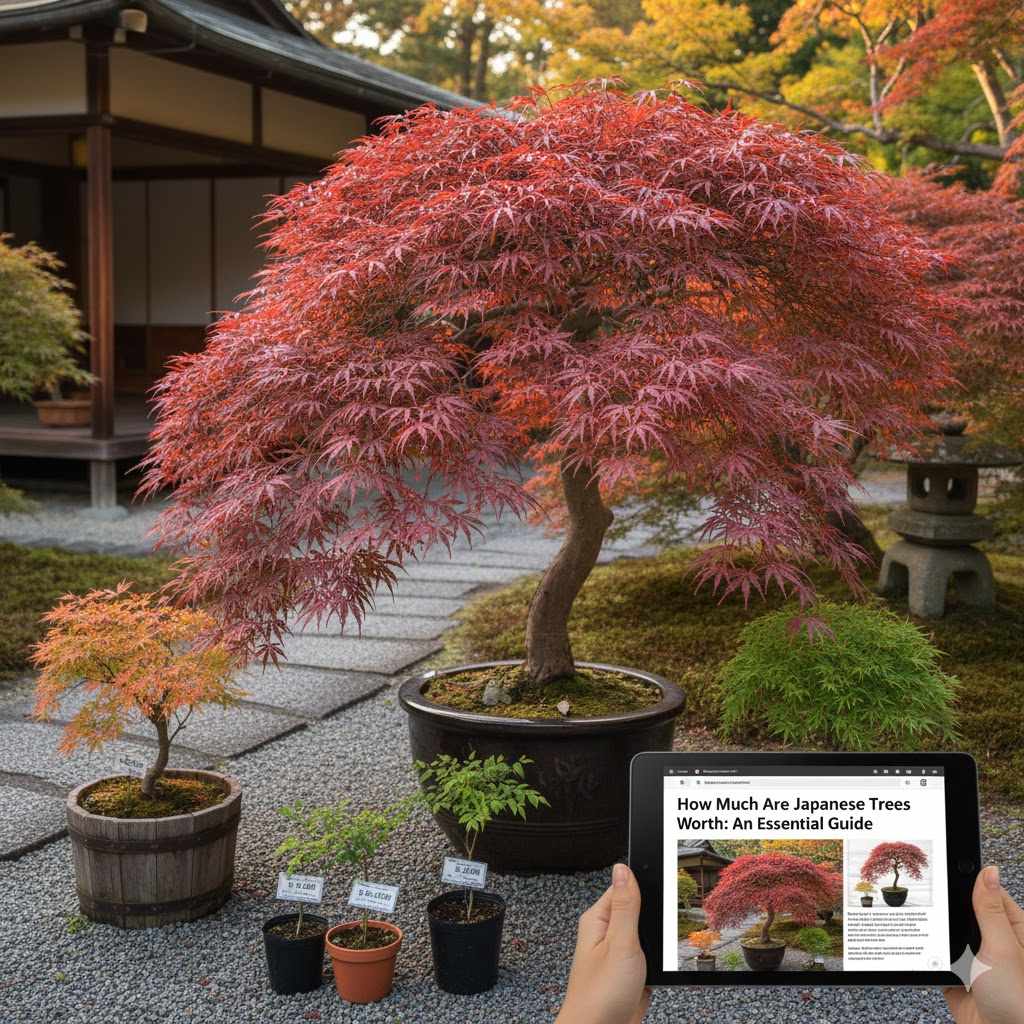
How Much Are Japanese Maple Trees Worth: An Essential Guide
Japanese Maple trees are worth anywhere from $30 for a small sapling to over $20,000 for a rare, mature specimen. Most homeowners will find healthy, well-established trees at a nursery for $100 to $800. The final cost depends entirely on the tree’s age, size, variety, health, and overall shape.
Have you ever admired a stunning Japanese Maple and wondered about its price tag? It can be confusing. You see small ones at the local hardware store for a low price, but then hear about collectors paying thousands for a single tree. It feels like there’s a big secret to how they are valued.
Don’t worry, it’s much simpler than it seems. Understanding the value of a Japanese Maple is just like appreciating a fine piece of woodwork; you just need to know what to look for. I’m here to walk you through it, step by step. Together, we’ll uncover the key factors that determine a tree’s worth, so you can find the perfect one for your home and budget.
What Determines the Value of a Japanese Maple Tree?
Just like a piece of furniture isn’t just wood, a Japanese Maple isn’t just a tree. Several key factors work together to determine its final value. When you understand these, you’ll be able to spot a great deal and know why some trees command such high prices. Let’s break them down.
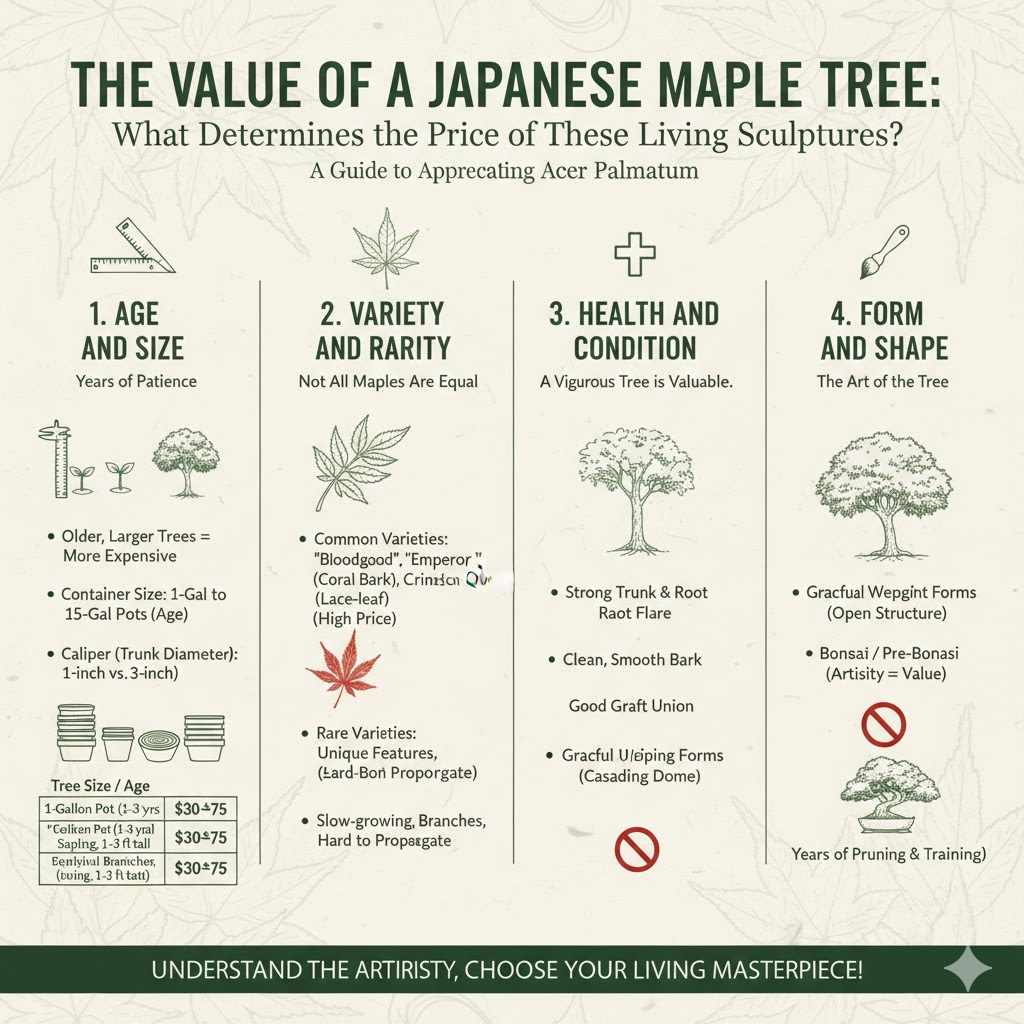
1. Age and Size: The Biggest Factors
This is the most straightforward factor. Older, larger trees are almost always more expensive. Why? Because they represent years, or even decades, of slow, careful growth. A small sapling you can carry in one hand is an investment in the future. A large, mature tree that provides immediate impact and shade has already had that time invested in it.
In the tree world, size is often measured in two ways:
- Container Size: Young trees are sold in pots measured by gallons (e.g., 1-gallon, 5-gallon, 15-gallon). The bigger the pot, the older and more developed the tree.
- Caliper: For larger trees, the value is often tied to the trunk’s diameter, or caliper, measured about six inches from the ground. A tree with a 3-inch caliper is significantly older and more valuable than one with a 1-inch caliper.
Think of it this way: buying a small, young tree is like buying the lumber for a project. Buying a large, mature tree is like buying the finished, handcrafted table. Both have value, but one offers instant gratification and shows years of prior effort.
| Tree Size / Age | Typical Price Range | Description |
|---|---|---|
| 1-Gallon Pot (1-3 years old) | $30 – $75 | A small sapling, usually 1-3 feet tall. Perfect for patient gardeners on a budget. |
| 5-Gallon Pot (3-5 years old) | $100 – $250 | A good-sized young tree, often 3-5 feet tall. Starting to show its characteristic shape. |
| 15-Gallon Pot (5-8 years old) | $250 – $800 | An established tree with a noticeable presence. Great for making an immediate impact in your yard. |
| Mature Specimen (10+ years old) | $800 – $20,000+ | Large, field-grown trees sold balled-and-burlapped. Valued for their impressive size and form. |
2. Variety and Rarity: Not All Maples Are Created Equal
There are hundreds of Japanese Maple cultivars, and each has unique characteristics. Some are common and easy to grow, while others are rare, slow-growing, or difficult to propagate. This difference in availability plays a huge role in price.
- Common Varieties: Cultivars like ‘Bloodgood’ and ‘Emperor I’ are popular, strong growers. Nurseries produce a lot of them, so they are widely available and more affordable. They are fantastic, reliable trees for any home.
- Rare and Desirable Varieties: A tree with unique features, like the bright ‘Sango Kaku’ (Coral Bark Maple) with its stunning red winter bark, will cost more. Weeping, lace-leaf varieties like ‘Crimson Queen’ or ‘Viridis’ are also prized for their delicate, cascading forms. These are harder to grow to a good size, making them more valuable.
Collectors might seek out extremely rare variegated or dwarf varieties, and these can fetch very high prices because of their scarcity. To learn more about the incredible diversity, the NC State Extension has an excellent guide on Acer palmatum cultivars that shows just how many options there are.
3. Health and Condition: A Healthy Tree Is a Valuable Tree
No one wants to pay good money for a weak or sick tree. A healthy, vigorous Japanese Maple is always worth more. When you’re inspecting a tree, you’re looking for signs of good craftsmanship in its care, just like you would on a well-built chair.
Here’s what increases value:
- A Strong Trunk: Look for a solid trunk with a gentle taper. A visible root flare at the base is a sign of a properly planted and healthy tree.
- Clean Bark: The bark should be smooth and free of major wounds, cracks, or signs of disease.
- Full Canopy: The leaves should look vibrant and healthy for the season. A full, well-distributed canopy of leaves is a sign of a strong root system.
- Good Graft Union: Most named varieties of Japanese Maples are grafted onto a hardier rootstock. A clean, well-healed graft that isn’t oversized is a sign of a quality tree.
Things that decrease value include broken branches, signs of pests, sun-scorched leaves, or a weak, circling root system from being kept in a pot for too long.
4. Form and Shape: The Art of the Tree
This is where a Japanese Maple truly becomes a piece of living art. The structure and shape of the tree, developed through years of careful pruning and training, can add tremendous value. A tree that looks like a generic shrub is worth far less than one with an elegant, sculptural form.
Some highly valued shapes include:
- Graceful Weeping Forms: For lace-leaf varieties, a beautiful cascading dome shape is highly desirable.
- Artistic Upright Forms: For upright trees, an open, multi-branched structure that shows off the trunk and branches is prized.
- Bonsai and Pre-Bonsai: Trees that have been meticulously pruned and styled for bonsai are in a class of their own. Their value is based on artistry, not just size.
A beautifully shaped tree serves as a focal point in a garden. This artistic quality is something growers work hard to cultivate, and it’s a major part of what you’re paying for in a premium specimen.
Price Guide: What to Expect at Different Price Points
Now that you know what creates value, let’s talk numbers. This guide will help you understand what your budget can get you, whether you’re just starting out or looking for a show-stopping centerpiece for your yard.
Budget-Friendly Options ($30 – $150)
In this range, you’ll find young, small trees, typically in 1 to 3-gallon pots. These are often common, hardy varieties like ‘Bloodgood’. They are perfect for a DIYer who wants to save money and has the patience to watch their tree grow over the years. You get the satisfaction of nurturing it from a small sapling into a mature tree.
The Mid-Range Sweet Spot ($150 – $800)
This is where most homeowners find what they’re looking for. Trees in this price range are well-established, usually in 5 to 15-gallon pots, and stand anywhere from 4 to 7 feet tall. You have access to a much wider selection of varieties, including popular weeping and coral bark maples. These trees are large enough to make an immediate visual impact in your landscape.
Premium and Specimen Trees ($800 – $5,000)
Here, you are entering the world of specimen trees. These are mature, often over 10 years old, and are either in very large containers (25+ gallons) or sold as “balled-and-burlapped,” dug directly from the field. They have impressive size, established character, and often, beautifully pruned shapes. These trees are for those who want a mature, picture-perfect tree from day one.
The Collector’s Market ($5,000 – $20,000+)
This is the high end of the market, reserved for exceptionally old, large, or rare trees. These are often field-grown for 20-30 years or more by specialty nurseries. They have massive trunks, breathtaking shapes, and are considered living sculptures. This is also where you find high-end, professionally styled bonsai trees that have been trained for decades. These trees are major investments for botanical gardens, estates, and serious collectors.
Japanese Maple Price Comparison Table
| Price Range | Tree Size / Age | Typical Varieties | Best For |
|---|---|---|---|
| $30 – $150 | 1-3 Gallon Pot / 1-3 Years Old | Common uprights (‘Bloodgood’, ‘Emperor I’) | Budget-conscious buyers and patient gardeners. |
| $150 – $800 | 5-15 Gallon Pot / 3-8 Years Old | Wider selection, including weeping & specialty types. | Most homeowners wanting immediate impact. |
| $800 – $5,000 | 25+ Gallon or B&B / 10+ Years Old | Mature, well-shaped specimens and rarer varieties. | Creating an instant landscape focal point. |
| $5,000+ | Very Large B&B or Bonsai / 20+ Years Old | Ancient, rare, and artistically pruned trees. | Collectors, estates, and botanical gardens. |
How to Buy a Healthy Japanese Maple (And Get Your Money’s Worth)
Choosing the right tree is a rewarding process. It’s like picking the perfect piece of lumber for a special project. By inspecting it carefully, you can ensure you’re bringing home a healthy tree that will thrive for years to come. Here’s a simple checklist to follow.
- Inspect the Leaves and Branches: Look at the overall canopy. The leaves should be healthy and consistent in color (unless it’s a variegated type). Avoid trees with a lot of brown, crispy edges (sun scorch) or signs of insect damage. Check for flexible, living branches; avoid those that are brittle and snap easily.
- Check the Trunk and Graft Union: Look for a solid, sturdy trunk without deep gouges or wounds. If it’s a grafted variety (most are), find the graft union. This is a slightly swollen area low on the trunk. A good graft should be fully healed and look like a clean, slight curve. Poor grafts can cause problems later on. The Arbor Day Foundation offers a simple visual guide on what to look for in tree grafts.
- Examine the Root System: This is crucial. Gently slide the tree out of its pot if you can. You want to see a healthy network of light-colored roots. If the roots are a thick, circling mat at the bottom, the tree is “root-bound” and may struggle when planted. Avoid these if possible. At the very least, you’ll need to carefully loosen those roots before planting.
- Look for a Good Root Flare: The spot where the trunk widens out to become the roots should be visible at the top of the soil. If the trunk goes straight into the soil like a telephone pole, it might be planted too deep, which can lead to future health issues.
- Consider the Overall Shape: Step back and look at the tree’s form. Does it have a pleasing structure? Are the branches evenly spaced? Even for a young tree, you can get a sense of its future potential. Choose a shape that appeals to you and fits the space you have in mind.
Can You Increase the Value of Your Own Japanese Maple?
Absolutely! This is one of the best parts about owning a Japanese Maple. With care and patience, you can turn a young, affordable tree into a valuable specimen right in your own yard. It’s a long-term DIY project with a beautiful reward.
The key is proper care:
- Thoughtful Pruning: The most significant way to increase value is through careful, artistic pruning. Each year, you can remove dead or crossing branches and selectively thin out the canopy to create a more open, sculptural shape. The goal is not just to trim it, but to enhance its natural form.
- Proper Watering and Feeding: Keeping your tree consistently watered, especially during dry spells, ensures it stays healthy and grows strong. A light feeding with a balanced, slow-release fertilizer in the spring gives it the nutrients it needs.
- Protecting Its Health: Keep an eye out for pests or diseases and address them quickly. Protect the trunk from damage from lawnmowers or string trimmers. A healthy tree with clean bark is a beautiful tree.
Over the years, your small investment of time and care will transform your tree into a stunning focal point, adding both beauty and monetary value to your property.
Frequently Asked Questions (FAQ)
What is the most expensive Japanese Maple tree?
The most expensive Japanese Maples are typically very old, mature specimens of rare varieties that have been expertly field-grown and pruned for decades. A famous example is the ‘Sessile Oak’ cultivar, though any ancient, beautifully shaped tree can be valued at over $20,000, especially if it has a documented history.
How long does it take for a Japanese Maple to mature?
Japanese Maples are slow growers. While they will look like a nice small tree in 5-7 years, it often takes 15 to 25 years for one to be considered fully mature and reach its ultimate size and grand, sculptural form.
Is it cheaper to grow a Japanese Maple from a seed?
Yes, growing from a seed is the cheapest way, but it is a very long and unpredictable process. Seeds can take a year or more to germinate, and the resulting tree will not be a clone of its parent. This means it might not have the same color or leaf shape you expect. It’s a fun project for a patient gardener, but not a reliable way to get a specific variety.
What is the best time of year to buy a Japanese Maple?
The best times to buy and plant a Japanese Maple are in the spring or early fall. This gives the tree time to establish its root system in moderate temperatures before the stress of extreme summer heat or winter cold. Buying in the fall is often great because you can see the tree’s true autumn color.
Can I sell my mature Japanese Maple tree from my yard?
It is possible to sell a mature tree, but it’s a complex process. You would need to find a buyer, often a landscaper or a specialty tree nursery, who is willing to pay for it. The cost and risk of professionally digging, transporting, and replanting a large, established tree are very high, which will be factored into the price you are offered.
What are the best Japanese Maple varieties for beginners?
For beginners, it’s best to stick with hardy, reliable, and widely available varieties. The ‘Bloodgood’ and ‘Emperor I’ are excellent red upright trees that are known for their resilience and beautiful color. For a weeping variety, the ‘Crimson Queen’ is a popular and relatively tough choice that performs well in many climates.
Conclusion: A Beautiful Investment for Your Home
As we’ve seen, the value of a Japanese Maple is about so much more than a simple price tag. It’s a story told through its age, the rarity of its leaves, its overall health, and the artistry of its shape. From a thirty-dollar sapling full of promise to a twenty-thousand-dollar specimen that is a living masterpiece, there is a Japanese Maple for every budget and every garden.
Now, you have the knowledge to look at any Japanese Maple and understand its worth. You can confidently choose a healthy tree, whether it’s a small one you plan to nurture yourself or a mature one that will instantly transform your space. More than just a plant, a Japanese Maple is an investment in beauty and tranquility—a piece of natural craftsmanship that will grow with you for years to come. Happy planting!