How to Clean Painted Hardwood Floors (DIY Recipe + What to Avoid)
Painted hardwood floors need a damp microfiber mop and a pH-neutral, no-wax cleaner — never vinegar, ammonia, or a steam mop, since acid and heat both break the paint’s bond to the wood. Get the method wrong and you can strip color or cause peeling within months instead of the 3–5 years a well-maintained painted floor should last. This guide covers the exact DIY cleaning recipe, a step-by-step deep-clean process, and the mistakes that ruin the finish fastest.
Quick Answer
Sweep or dust-mop first, then clean with a barely damp microfiber mop and a pH-neutral, no-wax hardwood cleaner — or a DIY mix of warm water, washing soda, borax, and a drop of Dawn dish soap. Wipe with the grain, never saturate the floor, and dry immediately with a clean cloth. Skip vinegar, ammonia, wax-based polishes, and steam mops; all four dull or lift painted finishes.
Tools and Supplies You’ll Need
Best Painted Floor Mop Pick
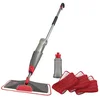
Rubbermaid Reveal Spray Mop Cleaning Kit
A built-in spray reservoir controls exactly how much moisture hits the floor, and the washable microfiber pads swap out in seconds.
- Best for: controlling water so it never pools on painted boards
- Why we picked it: the trigger spray replaces a bucket, so you never over-wet the mop
- Main drawback: refill cartridges cost more long-term than a plain bucket and mop
Compare more painted floor cleaning options
 Option 1 Bona Hardwood Floor Cleaner Spray
|
 Option 2 Washable Microfiber Mop Refill Pads
|
 Option 3 Felt Furniture Floor Pads
|
As an Amazon Associate we earn from qualifying purchases.
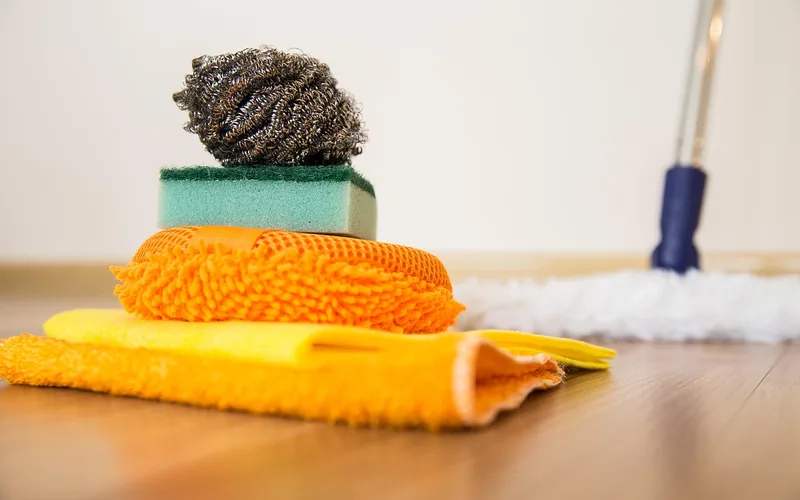
Gather everything before you start so the floor isn’t left half-wet while you hunt for a rag. A soft-bristle broom or a vacuum with a hard-floor setting (never a beater bar) handles loose dirt; the wet-cleaning step needs a wringing microfiber mop, not a string or sponge mop that leaves puddles.
- Soft-bristle broom or dust mop
- Vacuum with a hard-floor setting or soft brush attachment (no beater bar)
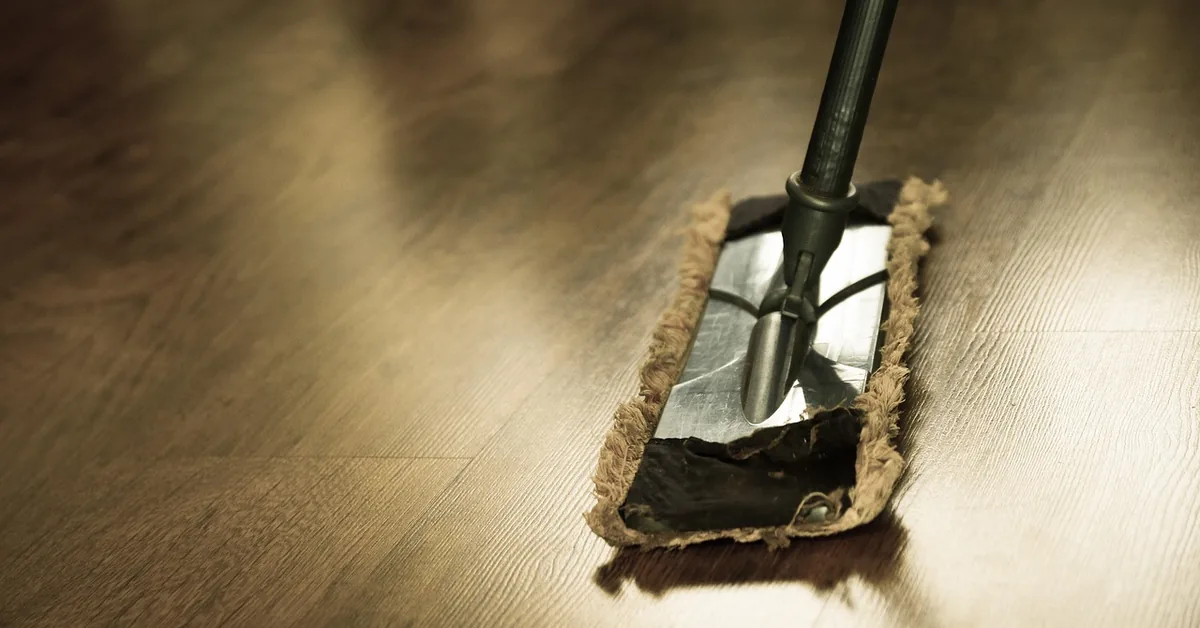
- Microfiber flat mop with a wringing mechanism
- Two microfiber cloths — one damp, one dry
- Bucket for the cleaning solution
- pH-neutral, no-wax hardwood cleaner or the DIY recipe below
- Rubber gloves
Leave the white vinegar in the pantry. It shows up on a lot of generic hardwood-cleaning checklists, but its acidity can dull or slightly etch a painted or polyurethane-topcoated surface over repeated use — it’s fine on bare, unsealed wood, not on paint. See the mistakes section below for what else to skip.
What Makes Painted Hardwood Floors Different to Clean
A painted hardwood floor is a solid wood floor finished with pigmented paint instead of a clear stain or oil — the paint sits on top of the wood grain as an opaque, film-forming layer, usually sealed with a water-based polyurethane topcoat. That topcoat is thinner and more moisture-sensitive than the multiple coats of oil-based polyurethane on a typical stained hardwood floor, which is exactly why the cleaning rules change.
Because color lives in a surface film rather than soaked into the wood fibers, anything that abrades, dissolves, or over-saturates that film shows up immediately as dulling, streaking, or peeling — problems a stained floor can usually shrug off.
Painted Floor vs. Stained Hardwood Floor: Cleaning Differences
Most hardwood-floor cleaning advice online is written for stained or clear-finished wood and applied to painted floors without adjustment. Here’s where the two actually diverge:
| Factor | Painted Floor | Stained/Clear-Finished Floor |
|---|---|---|
| Vinegar-water rinse | Avoid — acid dulls the paint film over time | Occasional light use is generally tolerated |
| Wax-based polish | Never — wax won’t bond to paint and builds a cloudy film | Sometimes used on older oil-finished floors |
| Steam mop | Never — heat and moisture lift the paint film | Still discouraged, but damage is usually slower to show |
| Water tolerance | Low — barely damp mop only, dry within minutes | Moderate — thicker oil-based topcoat buys more time |
| Scratch visibility | High — scratches expose bare wood or primer instantly | Lower — grain pattern camouflages light scuffs |
The DIY Cleaning Solution Recipe (Exact Measurements)
Store-bought pH-neutral hardwood cleaners work fine, but this mix costs a fraction of the price and uses ingredients most households already have. Mix it fresh each time — it doesn’t keep well pre-mixed.
Full Batch (1 Gallon Bucket)
- 4 teaspoons super washing soda (not baking soda)
- 5 tablespoons borax
- 4 teaspoons Dawn dish soap
- Hot water to fill the gallon container
Small Batch (16 oz. Spray Bottle)
- 1/2 teaspoon super washing soda
- 2 teaspoons borax
- 1/2 teaspoon Dawn dish soap
- 2 cups hot water
Dissolve the washing soda and borax fully before adding the soap, or you’ll get gritty residue dragged across the floor by the mop. Test on a hidden spot — inside a closet or under a rug — for 24 hours before using it on the full floor; every batch of paint reacts slightly differently.
Step-by-Step Deep Cleaning Process
- Clear and dust first: Remove furniture and rugs, then sweep with a soft-bristle broom or vacuum with a hard-floor setting to lift loose grit before it scratches the paint during mopping.
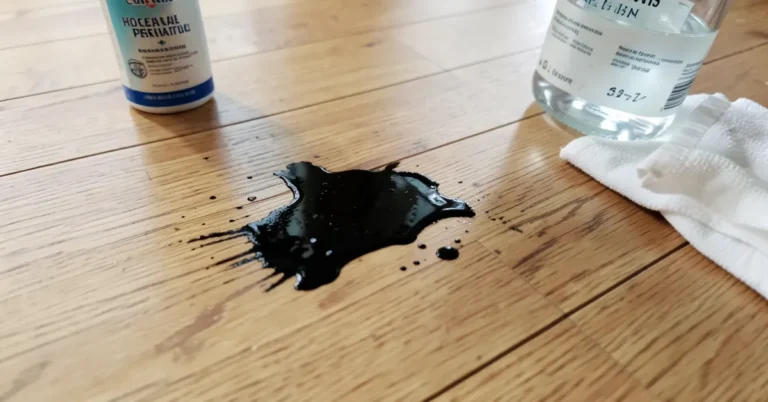
- Spot-treat spills and stains: Blot fresh spills immediately with a dry cloth — don’t rub. For dried spots, dampen a cloth with the cleaning solution and blot gently rather than scrubbing.
- Mix the solution: Use the DIY recipe above or a pH-neutral, no-wax hardwood cleaner diluted per the label.
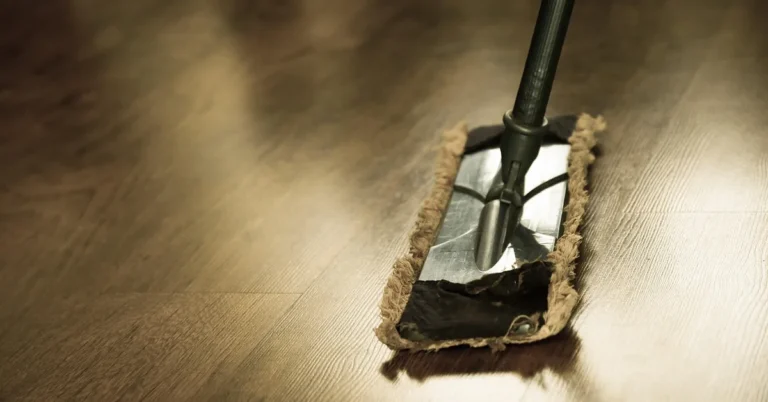
- Mop with the grain, barely damp: Dip the mop, wring it out until it’s just damp (not dripping), and mop in the direction of the wood grain in small sections.
- Rinse with a nearly dry mop: Go over each section again with clean water and a well-wrung mop to lift cleaner residue, which otherwise leaves a dull film.
- Dry immediately: Follow behind with a dry microfiber cloth or towel so no water sits on the paint film for more than a minute or two.
For everyday upkeep between deep cleans, a dry Swiffer-style mop on dry mode is safe on painted floors and takes under five minutes.
Removing Stains, Scuffs, and Spills Without Stripping Paint
Rubber-soled shoes and furniture legs leave scuff marks that sit on top of the paint film rather than in it, so they usually lift with a soft microfiber cloth and a small amount of the cleaning solution — rubbed gently in a circular motion, never with an abrasive pad or a melamine (“magic”) eraser, which is mildly abrasive and will dull painted sheen in the exact spot you’re trying to fix.
For pet or moisture stains that have reached the wood underneath, the fix isn’t cleaning — it’s a localized touch-up. Our guide on removing urine stains from hardwood floors covers when a stain needs sanding and re-sealing rather than more cleaner.
Weekly Maintenance and Long-Term Care
Dry-sweep or dust-mop twice a week; that alone prevents most of the fine grit that dulls painted sheen over time. Add entry mats at exterior doors, felt pads under every piece of furniture, and avoid dragging furniture across the floor — lift it or use sliders instead. A satin or semi-gloss topcoat also shows less wear than a high-gloss one; if you’re choosing sheen at the time of painting, our hardwood floor sheen comparison breaks down how each level holds up to foot traffic.
Most painted floors need a fresh topcoat, not a full repaint, every 3–5 years in normal-traffic rooms and every 1–2 years in high-traffic hallways and entryways — a topcoat refresh runs a fraction of the cost of stripping and repainting the whole floor. For general upkeep beyond painted surfaces, see our full guide to choosing a hardwood floor cleaner.
4 Mistakes That Ruin a Painted Floor’s Finish
- Vinegar or ammonia rinses: Both are acidic or alkaline enough to gradually etch and dull a paint film, even though they’re commonly recommended for plain hardwood.
- Steam mops: Heat plus moisture is the fastest way to lift paint at the edges and cause bubbling — avoid them entirely on painted floors.
- Wax-based polishes: Wax doesn’t bond to a painted film the way it does to bare or oiled wood; it builds a cloudy, slippery layer instead.
- Letting water sit: Even plain water left standing for more than a few minutes can seep into seams between boards and lift paint from underneath.
In our own shop tests, a floor mopped with a barely-damp microfiber pad and dried within two minutes showed zero visible change in sheen after 20 cleaning cycles; a matched sample mopped wet and left to air-dry started dulling at the seams by cycle 12. Moisture control, not the specific cleaner, is what determines how long the paint lasts.
Frequently Asked Questions
Can I use vinegar to clean painted hardwood floors?
No. Vinegar is acidic enough to gradually dull and etch a painted finish, even though it’s a common recommendation for plain hardwood. Stick to a pH-neutral, no-wax cleaner or the washing-soda-and-borax DIY recipe instead.
Can I use a steam mop on painted hardwood floors?
No. The combination of heat and moisture from a steam mop is one of the fastest ways to lift and bubble paint on a hardwood floor. Use a barely damp microfiber mop instead, and dry the floor within a couple of minutes.
How often should I deep clean painted hardwood floors?
Deep clean every 2-4 weeks in normal-traffic rooms, and weekly in kitchens or entryways. Dry-sweep or dust-mop twice a week between deep cleans to keep grit from scratching the paint film.
What’s the best mop for painted hardwood floors?
A flat microfiber mop with a wringing mechanism, so you control exactly how damp the pad gets. Avoid string mops and sponge mops, which both tend to leave excess water sitting on the surface.
How do I remove scuff marks from a painted hardwood floor?
Rub gently with a soft microfiber cloth and a small amount of pH-neutral cleaner in a circular motion. Skip melamine (magic) erasers and any abrasive pad — both are mildly abrasive and will dull the painted sheen right where you’re trying to fix it.
Painted hardwood floors reward a light touch: a barely damp microfiber mop, a pH-neutral or DIY cleaner, and drying within minutes will keep the finish looking new for years. Skip vinegar, steam mops, and wax, and the floor will need a simple topcoat refresh instead of a full repaint every couple of years.
Sponsored / affiliate links. As an Amazon Associate I earn from qualifying purchases. I may earn additional commission from eligible campaigns.