How to Drill a 2-Inch Hole in Wood: Hole Saw vs. Forstner Bit
A 2-inch hole in wood cuts cleanest with a hole saw in a handheld drill, or a Forstner bit in a drill press for a flat-bottomed edge, but the drill’s chuck must be large enough to grip the bit’s shank. Skip the pilot hole or use an undersized chuck and the bit wanders or splinters on breakthrough. This guide covers the right bit, drill size, RPM range, and how to finish the edge clean.
What You’ll Need
Best Hole Saw Kit Pick
KATA 8PCS Hole Saw Kit 1″ to 2-1/8″ – $7.99
Covers the exact 2-inch size this guide walks through, plus four other common sizes, with the mandrel and pilot bit already matched to each hole saw.
- Best for: handheld drilling in softwood, plywood, and drywall
- Why we picked it: includes the 2-inch size plus the pilot bit and mandrel this guide recommends starting with
- Main drawback: carbon steel teeth dull faster than bi-metal in dense hardwood
Compare more 2-inch hole options
 Option 1 HYCHIKA 17-Pc Bi-Metal Hole Saw Kit – $35.29
|
 Option 2 CORTOOL 16-Pc Forstner Bit Set – $40.98
|
 Option 3 IRWIN Marples 14-Pc Forstner Set – $68.79
|
As an Amazon Associate we earn from qualifying purchases.
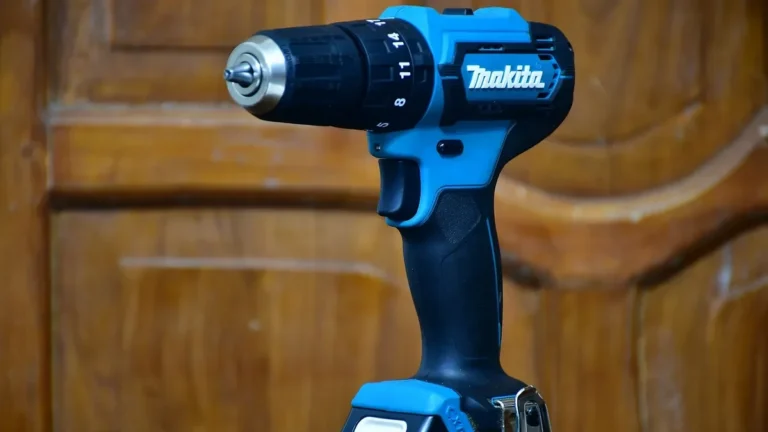
To drill a 2-inch hole in wood you need a drill with at least a 3/8-inch chuck (1/2-inch for wood over 1 inch thick — see our 1/2-inch vs. 3/8-inch drill comparison if you’re shopping for one), a 2-inch hole saw or Forstner bit, a smaller pilot bit, and a way to secure the workpiece.
- Drill: corded or high-capacity cordless (see our impact vs. hammer drill guide if you’re unsure which type you have), 3/8-inch chuck minimum (1/2-inch for wood over 1 inch thick)
- 2-inch bit: hole saw (handheld) or Forstner bit (drill press)
- Pilot bit: 1/8 to 3/16-inch, to start the hole saw’s arbor pin straight
- Clamps or a vise to hold the wood still
- Measuring tape, pencil, and painter’s tape to mark the spot and reduce splintering
- Safety glasses and hearing protection
Hole Saw or Forstner Bit: Which One Should You Use?
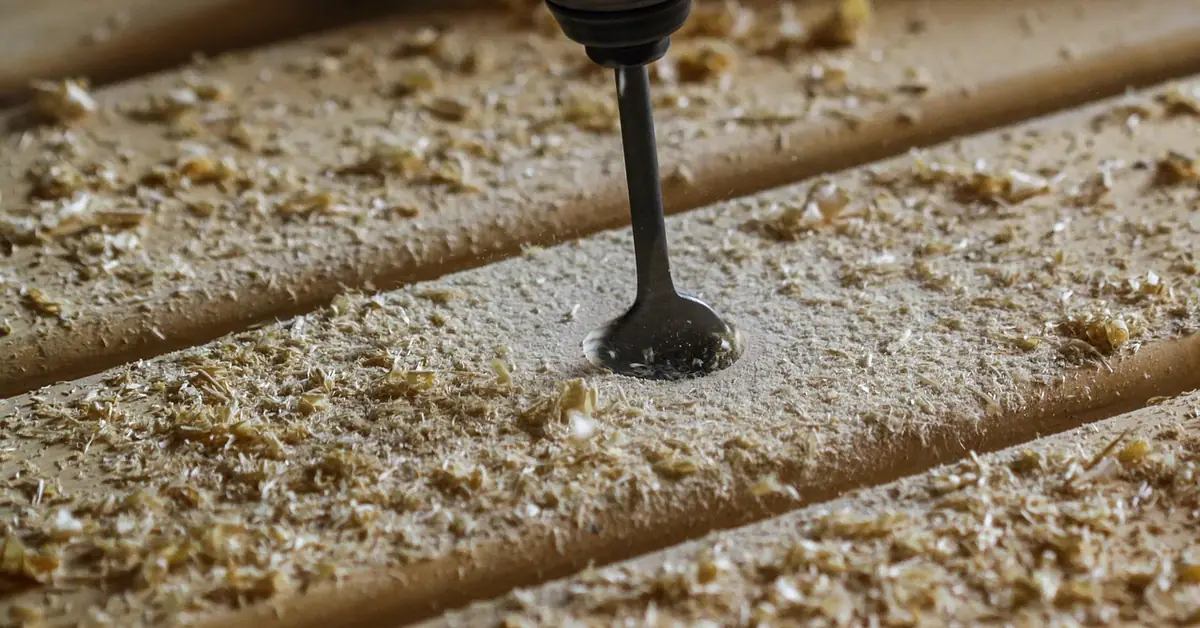
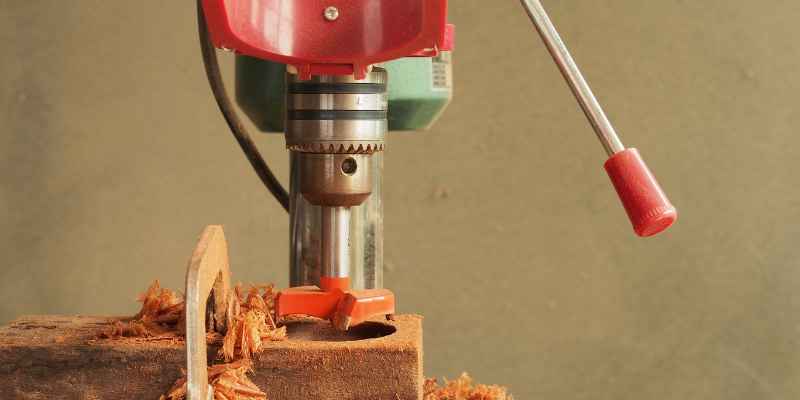
A hole saw cuts a 2-inch circle by removing only the outer ring of material, leaving a wood plug behind — it works in a standard handheld drill and cuts fast. A Forstner bit removes the entire disc of material for a clean, flat-bottomed hole, but for a full 2 inches of cutting diameter it performs best in a drill press, since a handheld drill struggles to keep it from wandering off-center.
| Feature | Hole Saw | Forstner Bit |
|---|---|---|
| Hole finish | Clean edge, hollow core | Cleanest edge, flat bottom |
| Best drill type | Handheld drill | Drill press (for 2″ diameter) |
| Speed | Faster cut | Slower, more controlled |
| Best for | Pass-through holes (pipes, cables, vents) | Stopped/flat-bottom holes (hinge cups, dowel joints) |
Drill chuck size matters as much as bit choice: a 3/8-inch chuck handles most hole saw arbors for wood up to about 1 inch thick, but wood thicker than that needs a drill with a 1/2-inch chuck to grip the longer arbor shaft and deliver enough torque without stalling.
“A multi-spur bit will drill those all day with no problem. I only use Forstner bits for specific applications such as flat bottomed holes, etc.”
— A cabinet shop professional, in WoodWeb’s Knowledge Base forum
Preparing the Wood
Marking the Spot
Measure and mark the exact center of the hole with a pencil, then press a strip of painter’s tape over the mark — the tape gives the bit’s spur something to bite into cleanly and reduces splintering on the entry face.
Securing the Wood Piece
Clamp the workpiece to a bench or table so it can’t shift, and back it with a sacrificial scrap board underneath. That backer board is what keeps the exit side from blowing out into splinters the moment the bit breaks through — the same principle covered in our drilling and pilot-hole guides hub.
Safety First
Wearing Protective Gear
Wear safety glasses to keep wood chips out of your eyes, and hearing protection if you’re using a drill press or running the drill for more than a few holes at a time.
Awareness of Surroundings
Clear the work area of tripping hazards, and if you’re drilling into an existing wall or structure, confirm there are no hidden wires or pipes behind the drilling spot first.
How to Drill a 2-Inch Hole Step by Step
- Drill a pilot hole: Center the pilot bit on your mark and drill straight through, keeping the drill perpendicular to the wood.
- Seat the hole saw or Forstner bit: Fit the pilot hole (or the bit’s own center pin) into the mark so the bit starts exactly on center.
- Start at low speed: Ease into the cut at low RPM so the bit doesn’t skate across the surface before it bites in.
- Apply steady, even pressure: Use both hands and keep the bit perpendicular the whole way through — uneven pressure is what makes a hole come out oval instead of round.
- Ease off near breakthrough: Reduce pressure as the bit nears the back face to prevent the exit side from splintering out.
📊 A 2-inch Forstner bit runs best at 900–1,500 RPM in softwood and 700–1,000 RPM in hardwood — going faster overheats and dulls the bit within minutes. — Source: Diablo Tools Forstner Bit Speed Chart, 2026
For wood thicker than about 1-1/2 inches, drill halfway through, then flip the board over and finish the hole from the other side using your first hole as the guide — this keeps the bit from overheating in one long pass and avoids exit-side blowout. The same halfway-and-flip principle applies to much larger openings, like the 6-3/8-inch cutout a 6-inch recessed light needs — see our recessed light hole saw size guide for that size chart.
Avoiding Common Mistakes
Preventing Wood Splintering
Press painter’s tape over the drilling spot before you start, and always back the workpiece with a sacrificial scrap board — both stop the wood fibers from tearing out as the bit exits.
Maintaining Drill Bit Sharpness
A dull hole saw or Forstner bit burns the wood and forces you to push harder, which is what actually causes most bit binding and off-center holes — not the wood itself. Clean resin buildup off the teeth after every few holes.
Finishing the Hole
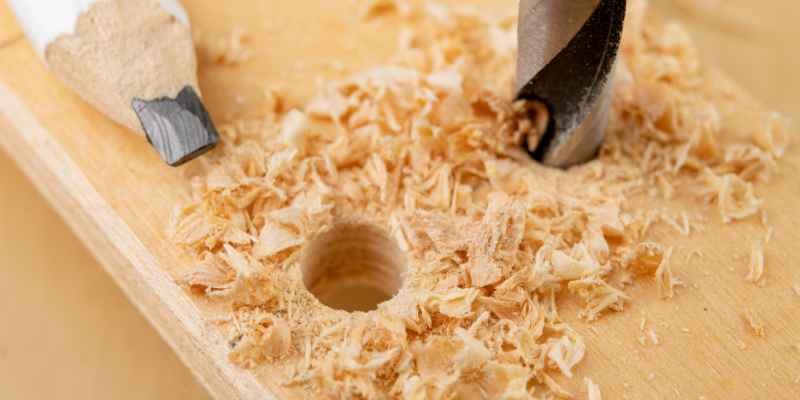
Once the hole is cut, knock any leftover wood plug free, then sand the inside edge with fine-grit sandpaper wrapped around a dowel or use a deburring tool to remove rough spots. Vacuum out the dust before applying any finish or sealant, since trapped dust will show through stain or paint.
Troubleshooting Common Problems
Dealing With a Stuck Bit
- Stop the drill immediately — don’t force it.
- Reverse the drill briefly to back the bit out.
- Clear sawdust and debris from around the bit.
- Add a drop of lubricant to the teeth and try again at a slower speed.
Fixing an Off-Center or Oval Hole
- Check that the drill was held perpendicular the whole way through, not just at the start.
- Confirm the wood was clamped down and didn’t shift mid-cut.
- Drop the drill speed — running too fast is a common cause of wandering.
- Use a scrap-wood guide block clamped next to the mark to keep the bit from drifting on the next attempt.
- If the hole came out slightly too small or off-round, don’t redrill from scratch — see our guide to reaming out a hole in wood to enlarge and true it up.
Frequently Asked Questions
What type of drill bit is best for a 2 inch hole in wood?
A hole saw is best for a handheld drill and pass-through holes like pipe or cable openings. A Forstner bit in a drill press gives the cleanest, flat-bottomed hole for joinery work. Spade bits aren’t a good fit at 2 inches — they tend to tear the edges and wander at this diameter.
What safety precautions should be taken when drilling a 2 inch hole in wood?
Wear safety glasses to protect against flying chips, and hearing protection for extended drilling. Clamp the wood securely to a stable surface so it can’t spin or shift, and keep both hands on the drill once the bit engages.
How can I ensure a clean and precise 2 inch hole in wood?
Mark the center accurately, drill a pilot hole first, start at low speed, and back the workpiece with a sacrificial board. Ease off the pressure right as the bit breaks through the far side to prevent splintering.
Can you drill a 2-inch hole with a hand drill, or do you need a drill press?
Yes, a handheld drill works fine with a hole saw if you use both hands, a pilot hole, and a slow starting speed. A drill press is only necessary for a Forstner bit at this diameter, since keeping a Forstner bit centered by hand is difficult.
What size drill do I need for a 2 inch hole?
A drill with a 3/8-inch chuck handles most hole saw arbors for wood up to 1 inch thick. For anything thicker, use a drill with a 1/2-inch chuck — it grips the longer arbor shaft and provides the torque needed to keep the bit from stalling.
Conclusion
Drilling a clean 2-inch hole in wood comes down to matching the bit to the job — a hole saw for quick, handheld pass-through holes, a Forstner bit in a drill press for flat-bottomed precision work — and never skipping the pilot hole. Get the drill chuck size and RPM right, back the wood with a scrap board, and the hole comes out round and splinter-free on the first try.
Sponsored / affiliate links. As an Amazon Associate I earn from qualifying purchases. I may earn additional commission from eligible campaigns.