Can You Harden Soft Wood: Resin Soak and Heat Treatment Options
Softwood and hardwood are botanical terms — conifer vs. flowering tree — not hardness ratings, so you can’t truly turn one into the other. A wood hardener soak, resin impregnation, or heat treatment (160–220°C) can raise softwood’s surface hardness past 800 lbf on the Janka scale. Using the wrong method wastes money: hardener won’t fix sound wood, and heat treatment trades toughness for stability. This guide covers real hardening methods, actual Janka numbers, and their true limits.
Hardwood vs. Softwood: A Botanical Classification, Not a Hardness Rating
Best Wood Hardener Pick
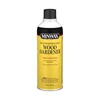
Minwax High Performance Wood Hardener, 1 Pint ($18.35)
Thin, solvent-based resin that soaks deep into punky or rotted softwood and cures in 2–4 hours.
- Best for: Repairing rotted trim, sills, and door frames before filling
- Why we picked it: Thinnest, deepest-penetrating formula of the major brands, per manufacturer spec
- Main drawback: Solvent-based — needs ventilation and acetone cleanup
Compare more wood hardening options
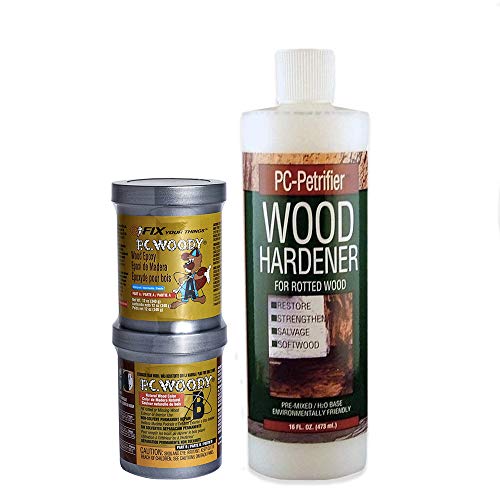
 Option 1 PC-Petrifier Water-Based Hardener, 16oz ($10.19)
|
 Option 2 PC-Woody Epoxy Paste, 12oz ($17.29)
|
 Option 3 TotalBoat Penetrating Epoxy, 1.5qt ($59.99)
|
As an Amazon Associate we earn from qualifying purchases.
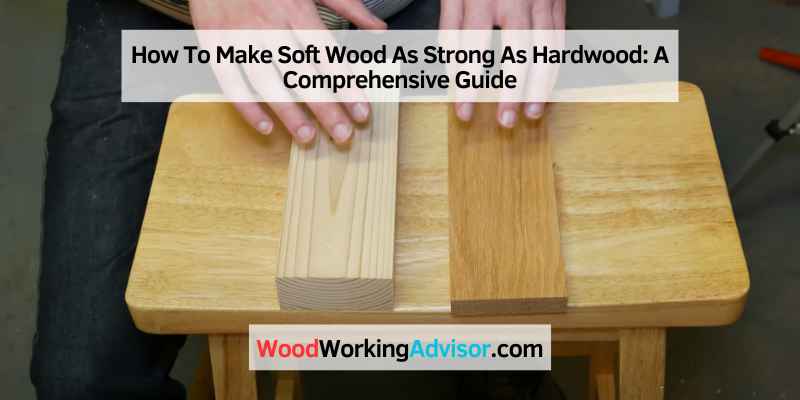
“Hardwood” is timber from angiosperm trees (broadleaf, flowering trees that typically lose their leaves) and “softwood” is timber from gymnosperm trees (cone-bearing conifers that stay evergreen). The split is about how the tree reproduces and grows, not how hard the resulting board is. That’s why the names are misleading: several softwoods are physically harder than several hardwoods.
The Janka hardness test measures this directly — the force (in lbf) needed to push an 11.28mm steel ball halfway into a wood sample. Higher number, harder wood. Real ASTM D1037 test results show the overlap:
| Species | Type | Janka Hardness |
|---|---|---|
| Balsa | Hardwood | 70 lbf |
| Western Red Cedar | Softwood | 350 lbf |
| Basswood | Hardwood | 410 lbf |
| Douglas Fir | Softwood | 660 lbf |
| Silver Maple | Hardwood | 700 lbf |
| Sycamore | Hardwood | 770 lbf |
| Honduran Mahogany | Hardwood | 800 lbf |
| Southern Yellow Pine (Longleaf) | Softwood | 870 lbf |
| Red Oak (Northern) | Hardwood | 1,290 lbf |
| Hard Maple (Sugar Maple) | Hardwood | 1,450 lbf |
Notice Southern Yellow Pine — a softwood — outranks Honduran Mahogany, Sycamore, and Silver Maple, all true hardwoods. And balsa, one of the lightest woods on Earth, is botanically a hardwood at just 70 lbf. See our full wood type hardness scale for more species, or check whether a specific species like cedar is a hardwood or softwood before you start a project.
📊 Southern Yellow Pine tests at 870 lbf on the Janka scale — harder than Honduran Mahogany (800 lbf), Sycamore (770 lbf), and Silver Maple (700 lbf), even though all three are classified as hardwoods. Source: Janka Hardness Test data, ASTM D1037
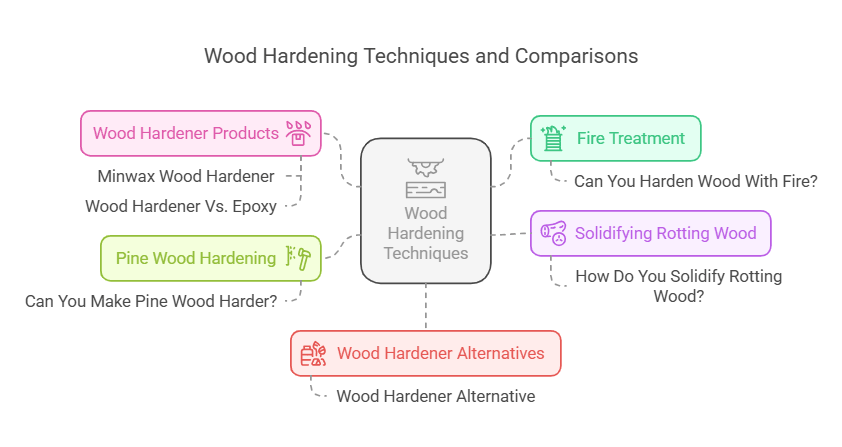
Can You Actually Turn Softwood Into Hardwood?
No. A tree’s species is fixed — pine will never become oak no matter what you soak it in or how you heat it. What hardener, resin, and heat treatments actually do is increase the surface hardness, density, or decay resistance of the softwood you already have. That’s a real and useful improvement, but it’s a different claim than “turning softwood into hardwood,” and no product on the market does the latter.
Three legitimate methods exist, each with real limits:
- Wood hardener / resin soak — a thin resin penetrates a few millimeters and cures rock-hard, mainly to stabilize wood that’s already gone punky or rotted.
- Deep resin impregnation (Compreg/Impreg) — an industrial process, phenolic resin under pressure and heat, that significantly raises density and decay resistance clear through the piece — not a DIY technique.
- Thermal modification (heat treatment) — controlled heating at 160–220°C improves dimensional stability and rot resistance but often makes the wood more brittle, not simply “harder.”
How to Harden Soft Wood With a Wood Hardener (Resin Soak)
A wood hardener is the easiest way to firm up soft, punky, or lightly rotted wood before repairing it. The liquid resin soaks into the damaged fibers and cures into a solid matrix, giving you a sound base to sand, fill, and finish.
- Remove loose material: Scrape or chisel away any crumbly, rotted wood until you reach reasonably solid material underneath.
- Dry the area: Let the wood dry fully — hardener won’t cure properly over wet or damp wood.
- Apply the hardener: Brush it on generously, letting the wood soak up as much as it will absorb. Recoat while the surface is still wet for deeper penetration.
- Let it cure: Most hardeners set in 2–4 hours; leave overnight for a full cure before filling or sanding.
- Fill and finish: Once hard, fill any remaining voids with a matching epoxy wood filler, then sand, prime, and paint or stain.
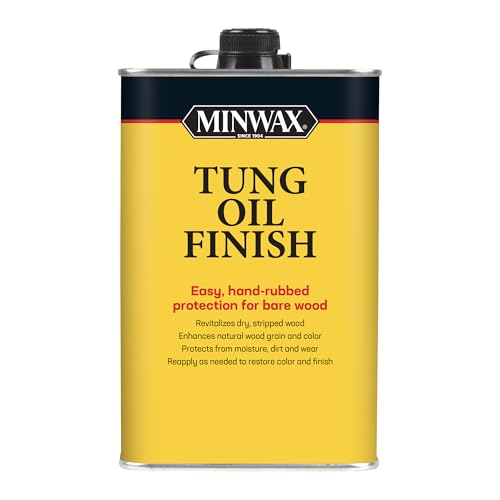
“Minwax® High Performance Wood Hardener is a quick drying liquid formulated to strengthen and reinforce decayed or rotting wood. The hardener penetrates deep into the wood and its special resin binds and reinforces the decayed wood fibers.”
Real limit: hardener stiffens the wood it soaks into, but it isn’t a miracle fix. If the wood couldn’t support weight before treatment because the rot went deep, it won’t support much more after — the resin only reaches a few millimeters in. It’s a repair-and-stabilize product for damaged wood, not a general strength upgrade for sound softwood.
How Does Heat Treatment (Thermal Modification) Harden Wood?
Heating wood to 160–220°C in a low-oxygen chamber — a process called thermal modification — changes its chemistry: hemicellulose breaks down, the wood loses much of its ability to absorb moisture, and it becomes more dimensionally stable and decay-resistant. Commercial versions of this (like Thermowood) are used for decking and siding precisely because treated wood resists rot and swelling far better than untreated softwood.
Before heat treatment, wood must first be dried — either kiln dried or air dried to equilibrium moisture content to avoid cracking during the heat cycle.
Real limit: research on thermally modified wood consistently finds a trade-off — while stability and rot resistance improve, several species come out more brittle, not simply harder. Thermal modification is a legitimate industrial process, but it isn’t a home technique (a kitchen oven can’t hold a controlled low-oxygen atmosphere at these temperatures), and it doesn’t uniformly raise Janka hardness the way marketing sometimes implies.
How Do You Solidify or Repair Rotted Wood?
When rot has already softened a section of wood, hardener alone often isn’t enough — you need to remove the damaged material and rebuild the missing structure with epoxy. Here’s the standard repair sequence:
- Cut out the rot: Chisel or cut away all soft, rotten wood until you reach solid material — leaving rot behind lets it keep spreading.
- Apply wood hardener: Saturate the remaining punky edges so the epoxy has a solid, non-flexing base to bond to.
- Fill with epoxy: Pack a two-part epoxy wood filler into the void, slightly overfilling since it shrinks minimally as it cures.
- Clamp if needed: On vertical or overhanging repairs, use clamps or tape to hold the epoxy in place while it cures.
- Sand and finish: Once fully cured (usually 24 hours), sand flush and finish to match the surrounding wood.
Wood Hardener vs. Epoxy: Which Should You Use?
Both harden wood, but they solve different problems. Use this to decide:
| Product | What It Does | Best For |
|---|---|---|
| Wood hardener (resin soak) | Penetrates a few mm, stiffens punky fibers in place | Small areas of soft/rotted wood before filling |
| Epoxy wood filler | Rebuilds missing wood volume, doesn’t penetrate | Gouges, holes, and voids after rot is cut out |
| Penetrating epoxy consolidant | Deep-soaks larger sections, then cures rigid | Bigger structural repairs (sills, boats, posts) |
Most repairs actually use both in sequence: hardener (or a penetrating consolidant) first to stabilize the fibers, then epoxy filler to rebuild the missing shape. See our comparison of a sealing wood before resin for surface prep tips that apply to both.
Common Mistakes When Hardening Soft Wood
- Expecting hardener to fix sound wood: hardener is a repair product for damaged fibers, not a general strength booster for healthy softwood.
- Skipping full rot removal: hardening over wood that’s still actively rotting traps the fungus instead of stopping it.
- Applying to wet wood: resin-based hardeners need dry wood to cure and bond properly.
- Assuming heat treatment is a DIY project: controlled low-oxygen thermal modification requires industrial equipment, not a home oven.
- Confusing “hardwood” with “hard”: as the Janka numbers above show, picking a species by its hardwood/softwood label alone can leave you with a softer board than you expected — check the actual species-specific hardness instead.
Frequently Asked Questions
Can you really turn softwood into hardwood?
No. Hardwood and softwood describe which type of tree the wood came from (flowering tree vs. conifer), and that’s fixed at the species level. Treatments like resin hardener or heat treatment can increase softwood’s surface hardness and durability, but they cannot reclassify it as hardwood.
Does wood hardener actually work?
Yes, for its intended purpose — stiffening punky or lightly rotted wood so it can be filled and sanded. It penetrates only a few millimeters, so it won’t restore load-bearing strength to wood that has rotted all the way through.
Is any softwood harder than hardwood?
Yes. Southern Yellow Pine, a softwood, tests at roughly 870 lbf on the Janka scale — harder than Honduran Mahogany (800 lbf), Sycamore (770 lbf), and Silver Maple (700 lbf), all of which are botanically hardwoods.
How long does wood hardener take to dry?
Most brands, including Minwax High Performance Wood Hardener, set in 2–4 hours and reach a full cure overnight. Always check the specific product label, since solvent-based and water-based formulas dry at different rates.
Does heat treatment make wood harder or just more stable?
Mostly more stable and rot-resistant, not reliably harder. Thermal modification at 160–220°C reduces moisture absorption and swelling, but studies on treated species often show increased brittleness rather than a straightforward hardness gain.
Bottom line: you can’t change a board’s species, but a wood hardener, epoxy consolidant, or professional thermal treatment can genuinely improve softwood’s surface hardness and resistance to rot — as long as you match the method to the actual problem, not the marketing claim.
Sponsored / affiliate links. As an Amazon Associate I earn from qualifying purchases. I may earn additional commission from eligible campaigns.