How to Make a Wood Swivel Base (Plate Sizes + Weight Ratings)
A wood swivel base is made by screwing a metal turntable bearing plate — the same hardware used under a lazy Susan — to the underside of a wood platform, then mounting that platform to the seat or stand. Skip a rated plate and the base will bind, squeak, or crack the wood within weeks. This guide covers picking the right plate size, cutting and mounting the wood base, and converting an existing stool or chair.

What You Need to Make a Wood Swivel Base
Gather these before you start — running out of pilot-hole depth or the wrong screw length mid-build is the most common reason a first attempt wobbles.
- 3/4″ plywood or MDF for the base platform (hardwood like plywood resists warping better than solid boards this thin)
- A rated swivel/turntable bearing plate sized to the seat (see the sizing table below)
- Wood screws — 3/4″ to 1″ long, sized to sit flush in the plate’s pre-drilled holes
- Power drill with a pilot bit slightly narrower than the screw shaft
- Circular saw or jigsaw to cut the base to size
- Countersink bit so screw heads sit flush under the seat
If you’re cutting the base from scratch rather than reusing an existing chair or stool bottom, our DIY wooden stool guide covers sizing the seat itself, and our guide to cutting a circle on a table saw covers cutting a round platform cleanly if your seat isn’t square.
Best Wood for a Swivel Base Platform
The platform between the seat and the swivel plate takes all the screw-holding stress, so the material matters more than it looks like it should. 3/4″ cabinet-grade plywood is the standard choice — its cross-laminated layers resist splitting around pilot holes far better than solid lumber of the same thickness, and it won’t warp the way a single board can as humidity shifts through the seasons.
MDF is a workable substitute for a lightweight decorative piece, but its compressed fibers strip out of a pilot hole more easily under repeated spinning, so it’s a poor choice for anything load-bearing like a stool or chair base. Solid hardwood — oak or maple, not a softwood like pine — works fine for the platform if you orient the grain so the screws bite across it rather than into the end grain, which is the orientation most likely to split.
How to Choose the Right Swivel Plate Size
Swivel/turntable bearing plates are rated by diameter, and diameter drives weight capacity directly — undersizing the plate is why a swivel base that felt solid in the shop starts to sag or bind once someone actually sits in it. Match the plate to both the seat’s footprint and the heaviest person who’ll use it, not just the lightest.
| Plate Size | Typical Weight Capacity | Best For |
|---|---|---|
| 6″ | ~400 lbs | Small stools, plant stands |
| 8″ | ~500 lbs | Bar stools, desk chairs |
| 10″ | ~600 lbs | Dining chairs, recliner bases |
| 12″ | ~1,000 lbs | Larger armchairs, TV stands |
📊 A plate’s rated capacity assumes centered, even weight. Mounting it off-center toward the front or back edge of the seat cuts its effective load rating — center it under the seat’s balance point, not just its geometric middle. Source: swivel-plate manufacturer spec sheets, 2026.
Best Swivel Plate Pick
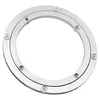 |
8″ Aluminum Alloy Turntable Bearing Swivel Plate – $17.99 An 8″ plate covers the bar-stool and desk-chair range from the sizing table above — pre-drilled holes and rubber feet mean no extra hardware to source before mounting it to your base.
|
As an Amazon Associate we earn from qualifying purchases.
How to Make a Wood Swivel Base Step by Step
- Cut the base platform: Cut 3/4″ plywood a little smaller than the seat’s outer edge so it stays hidden once mounted.
- Center the swivel plate: Set the plate on the platform with its screw holes facing down, centered on the seat’s actual balance point, and trace the hole positions.
- Drill pilot holes: Use a bit slightly narrower than the screw shaft at every marked point — full-size holes strip out under load.
- Screw the plate to the platform: Drive screws through the plate into the platform first, before attaching anything to the seat, so you can check the plate spins freely with no wobble.
- Mount the platform to the seat: Center the assembled platform under the seat, drill pilot holes through the platform into the seat, and screw it in place.
- Attach the legs or stand: Screw the legs, stool stand, or pedestal to the underside of the swivel plate’s bottom half, keeping the load centered.
- Test before use: Spin the seat through a full rotation and sit near the center first — a bind or a dip on one side means the plate isn’t centered and needs to be re-mounted.
How to Convert an Existing Chair or Stool to Swivel
Converting a fixed-leg chair or stool follows the same hardware, just in reverse order. Remove the existing legs first — unscrew them if they’re fastened with screws, or work a hammer under the joint gently if they’re doweled and glued in. Attach the swivel plate to the underside of the seat using the pilot-hole method above, then reattach the same legs (or a new pedestal base) to the bottom half of the plate. Test the rotation before you sit in it: any wobble at this stage almost always means the plate went on off-center, not that the hardware is faulty.
A rotating swivel mechanism is a bearing assembly that lets a seat or platform spin freely on a fixed base while still supporting the sitter’s full weight. It only works correctly when the load stays centered over the bearing — that’s why centering matters more than screw count for a solid feel.
Common Mistakes That Ruin a Swivel Base
- Undersized pilot holes: drilling at the full screw diameter instead of slightly narrower is the single most common reason a plywood platform splits during installation.
- Off-center mounting: even a rated plate binds or dips if it isn’t centered under the seat’s actual balance point, not just its visual middle.
- Skipping the rating check: a 6″ plate rated for 400 lbs under a heavy recliner will bind long before it fails outright — it just feels stiff and wrong.
- Using the wrong screw length: screws that are too long punch through the seat’s top surface; too short and the plate works loose under repeated spinning.
“Undersized pilot holes are the most common reason a plywood swivel base splits during installation — drill at roughly 90% of the screw’s diameter, not the full size, and it won’t happen.”
Frequently Asked Questions
How do you attach a swivel to a piece of wood?
Screw the swivel/turntable bearing plate directly to the wood through its pre-drilled holes, using pilot holes slightly narrower than the screws. Center the plate under the wood’s balance point before driving any screws, since an off-center plate binds even when every screw is tight.
What size swivel plate do I need for a stool?
Most bar stools and desk-height stools use a 6″ to 8″ plate, rated for roughly 400 to 500 lbs. Go up to a 10″ or 12″ plate for a wider seat or a heavier user, since capacity rises with diameter.
Can you add a swivel base to any chair?
Yes, as long as the chair has a flat underside wide enough to mount a plate at least 6″ across. Upholstered chairs with a solid wood or plywood seat base convert the same way as a bare wood stool; chairs with only a thin fabric-wrapped frame underneath usually need a mounting board added first.
Do swivel plates need lubrication?
Sealed ball-bearing plates come pre-lubricated and don’t need regular maintenance. If a plate starts squeaking or feels stiffer over time, a drop of light machine oil at the bearing seam usually resolves it — avoid heavy grease, which attracts dust and grit into the raceway.
Conclusion
Building a wood swivel base comes down to matching a rated plate to the seat’s weight and footprint, centering it precisely, and pre-drilling every hole before driving a screw. Gather your wood glue, drill, and a circular saw, cut the platform to size, and mount the plate before attaching the legs. Check our wood load capacity calculator if you’re unsure whether your platform thickness can handle the plate’s rated weight, and browse more woodworking projects for other furniture builds using the same hardware.
Sponsored / affiliate links. As an Amazon Associate I earn from qualifying purchases. I may earn additional commission from eligible campaigns.