How to Secure Glass to Wood: The Adhesive (or Mount) That Actually Holds
The short answer: 100% clear silicone sealant is the adhesive that actually holds glass to wood long-term — not wood glue, not super glue, and not standard latex caulk. Wood glue and cyanoacrylate (super glue) are built to grip porous surfaces; glass is non-porous, so those glues just sit on top of it and shear off under any real load. Below is which adhesive to use for which job, how long each one actually needs to cure before you trust it, and the three mistakes that cause most glass-to-wood bonds to fail within a week.
Why Wood Glue and Super Glue Don’t Work on Glass
PVA wood glue cures by soaking into wood fiber and mechanically locking into the grain as the water in the glue evaporates. Glass has no grain and no pores for the glue to grip, so the bond is purely surface-tension — it looks fine on day one and lets go the first time the joint gets bumped or flexed. Cyanoacrylate (super glue) has the same problem in reverse: it cures almost instantly on contact with surface moisture, which means it skins over before it can wet out the full contact area on a smooth glass surface, leaving a brittle, spotty bond. Neither is rated for sustained load-bearing contact between glass and wood, which is exactly the situation in a tabletop, cabinet door, or display case.
The Three Options That Actually Work
100% Silicone Sealant (best for most projects)
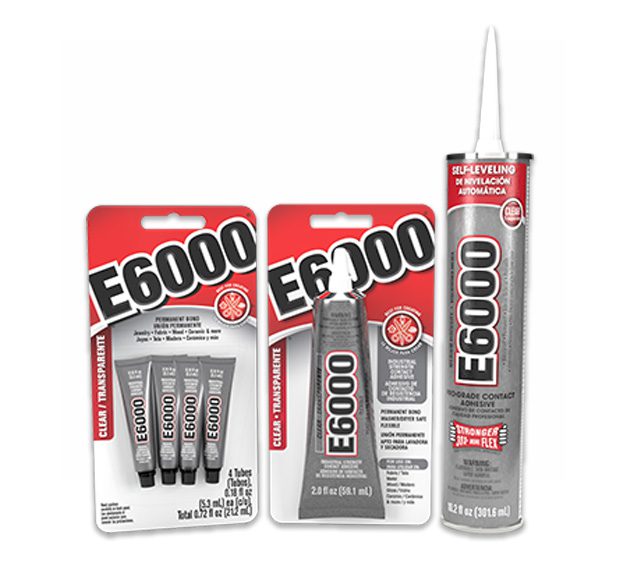
A 100% silicone sealant — sold as aquarium sealant, kitchen & bath sealant, or window/door sealant — stays flexible after it cures, which matters because wood expands and contracts with humidity while glass does not. That flexibility is what keeps the bond from cracking as the wood moves. Avoid anything labeled “siliconized acrylic” or “painter’s caulk” — those are latex-based and don’t have the same bond strength or flexibility.
UV-Cure or Two-Part Glass Adhesive (best for a fast, rigid bond)
Dedicated glass-bonding adhesives (UV-cured acrylics, or two-part epoxies formulated for glass) form a rigid, high-strength bond and are the standard choice in glass shops for things like glass shelving pins and structural glass-to-metal joints. They cost more, and UV-cure types need a UV lamp or direct sunlight to set, but they’re worth it when the joint carries real weight or can’t flex at all.
Mechanical Mounting (best when you don’t want adhesive at all)
Z-bar retainer clips, rabbeted frame lips with a cork or rubber gasket, or drilled glass with metal standoffs hold the glass in place with pressure or hardware instead of glue. This is the right call any time the glass needs to come out again later — for cleaning, replacement, or storage — since a cured silicone or epoxy bond is not meant to be undone.
Step-by-Step: Silicone Method
- Wipe both the glass and the wood contact surface with isopropyl alcohol on a lint-free cloth, not glass cleaner — ammonia-based cleaners leave a residue that weakens the bond.
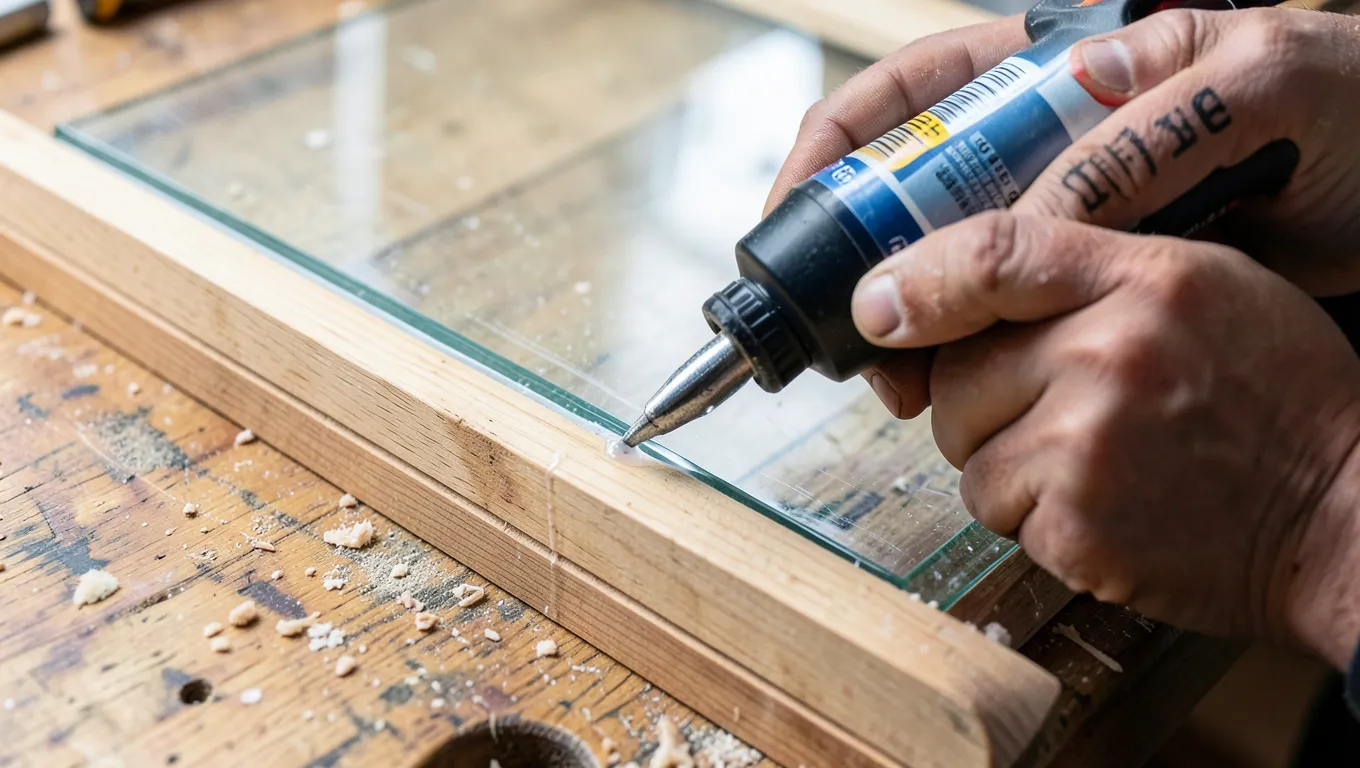
- Let both surfaces dry fully, then run a continuous, even bead of 100% silicone along the wood, not the glass — it’s easier to control the bead thickness this way.
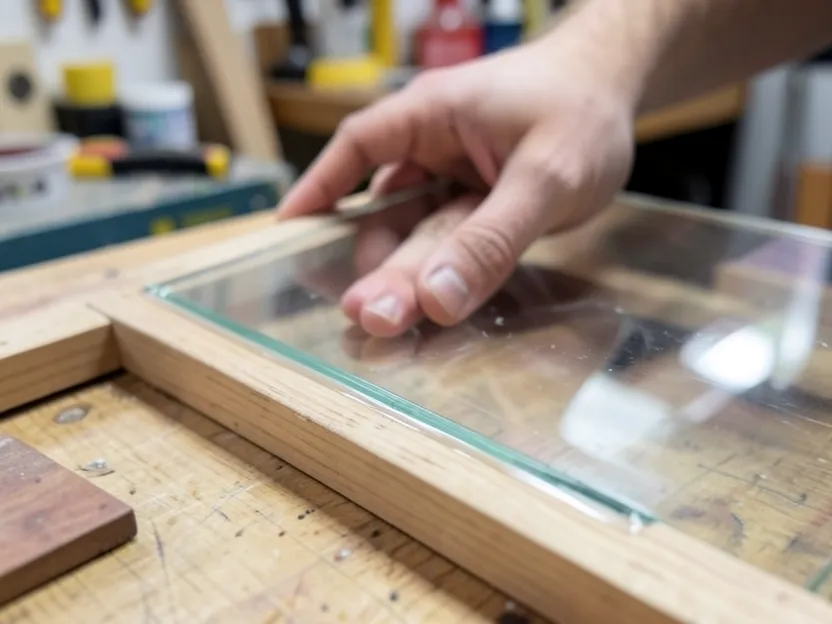
- Set the glass down and apply light, even pressure. Don’t clamp hard; silicone needs a thin, even layer, and squeezing it out entirely defeats the flexible cushion it’s supposed to provide.
- Tool off any squeeze-out immediately with a plastic scraper before it skins over — once it cures, silicone has to be cut or peeled off, not wiped.
How Long to Wait Before You Trust the Bond
Silicone skins over in about 30 minutes but isn’t fully cured for 24 to 72 hours, depending on the bead thickness and the humidity in the room — thicker beads and drier air both slow it down. Don’t set anything on the glass or move the piece until at least 24 hours have passed, and give it the full 72 hours if the finished piece will carry regular weight, like a coffee table top. Two-part epoxies typically reach handling strength in 5 to 10 minutes but need 24 hours for full cure strength; UV-cured adhesives are working-strength within seconds of light exposure but should still sit undisturbed for a few hours before load-testing.
Mistakes That Cause the Bond to Fail
- Using painter’s caulk instead of 100% silicone. The label will say “siliconized” if it’s not pure silicone — that’s a latex product with silicone additives, not the real thing, and it won’t hold under load.
- Skipping the alcohol wipe. Fingerprints and dust on glass are invisible but block adhesion; a bond that looks solid at first can release weeks later because of this.
- Gluing onto an uncured wood finish. Silicone bonds poorly to fresh stain, polyurethane, or lacquer that hasn’t fully cured (typically 7 to 30 days depending on the product) — sand the finish lightly in the bond area or let it cure fully first.
Bottom Line
For nearly every glass-to-wood project — tabletops, cabinet doors, display cases — 100% silicone sealant is the right call: it’s cheap, it stays flexible, and it holds up to years of wood movement. Save the two-part epoxy or UV-cure adhesive for joints that need to be fully rigid, and use a mechanical mount any time the glass needs to come back out.
Frequently Asked Questions
What is the best adhesive for glass to wood?
100% silicone sealant is the best all-around choice because it stays flexible after curing, which absorbs the natural expansion and contraction of the wood without cracking the bond. For a rigid, high-strength joint that won’t flex at all, a two-part glass epoxy or UV-cure adhesive is a better fit.
How do you attach glass to wood without glue?
Use a mechanical mount: Z-bar retainer clips, a rabbeted frame lip with a cork or rubber gasket, or drilled glass secured with metal standoffs. This is also the better option any time you’ll need to remove the glass later, since cured silicone or epoxy isn’t meant to be undone.
How long does silicone need to cure before the glass can be used?
Silicone skins over in about 30 minutes but needs 24 to 72 hours for a full cure, depending on bead thickness and humidity. Wait the full 72 hours before putting regular weight on the piece, such as a tabletop.
Why is my glass not sticking securely to the wood?
The most common causes are using a siliconized latex caulk instead of 100% silicone, skipping the isopropyl-alcohol wipe before gluing (fingerprints and dust block adhesion), or applying the adhesive over a wood finish that hasn’t fully cured yet.
Sponsored / affiliate links. As an Amazon Associate I earn from qualifying purchases. I may earn additional commission from eligible campaigns.