Is Cedar Decking Worth the Money? Proven Value
Yes, cedar decking is often worth the money due to its natural beauty, durability, and resistance to rot and insects. While the upfront cost can be higher than some alternatives, its longevity and low maintenance contribute to significant long-term value for your outdoor space.
Thinking about building a new deck or upgrading your old one? You might be wondering if cedar decking is the right choice. It’s a question many DIYers and homeowners ponder. Cedar offers a classic, natural look that many people love. But is it worth the extra expense compared to other materials? As your woodworking mentor, I’m here to break down the value of cedar decking, so you can make an informed decision. We’ll look at what makes it special, how it stacks up against other options, and where its true worth lies. Let’s dive in and see if cedar is the perfect fit for your next project!
Understanding Cedar Decking: Nature’s Own Guardian
Cedar wood is a popular choice for outdoor projects, especially decks, for good reason. It comes from trees known for their beautiful grain, pleasant aroma, and impressive natural abilities. Unlike many other woods, cedar has inherent qualities that make it a fantastic material for structures that face the elements. It’s not just about looks; it’s about performance.
The magic of cedar lies in its natural oils and extractives. These compounds act as built-in protection against common deck destroyers like fungi (which causes rot) and insects (like termites and wood-boring beetles). This natural resistance means you don’t have to rely as heavily on chemical treatments, which is a big plus for many homeowners.
Different types of cedar are used for decking, with Western Red Cedar being one of the most sought-after. It’s known for its stability, meaning it’s less likely to warp or crack over time compared to some other woods. This stability is crucial for a deck, where uneven expansion and contraction can lead to structural issues and an unsightly appearance.
The Perks of Choosing Cedar: Why It Shines
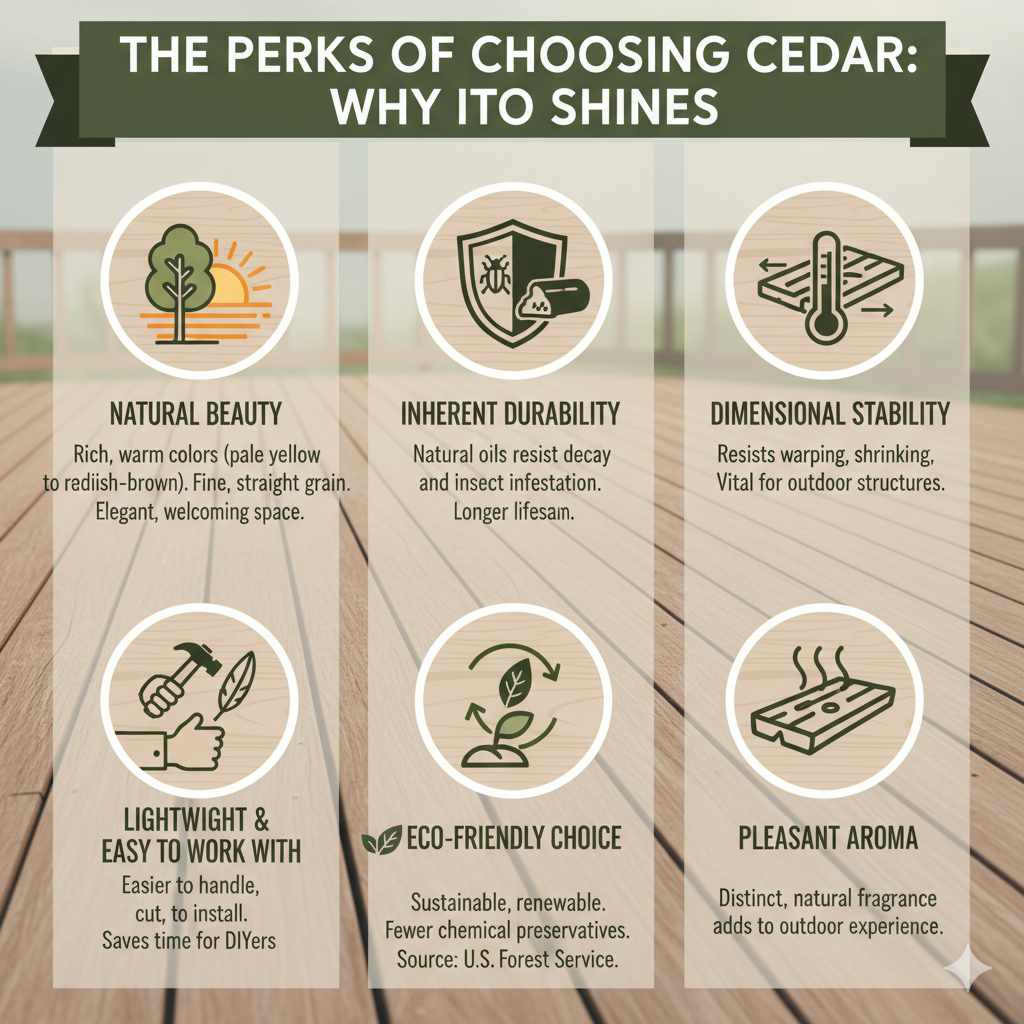
When you choose cedar for your deck, you’re not just picking a type of wood; you’re investing in a blend of aesthetics, durability, and natural advantages. Here’s why cedar stands out:
- Natural Beauty: Cedar boasts a rich, warm color palette that ranges from pale yellow to deep reddish-brown. Its fine, straight grain adds an elegant touch that’s hard to replicate with artificial materials. It creates a welcoming and sophisticated outdoor living space.
- Inherent Durability: Thanks to its natural oils, cedar is highly resistant to decay and insect infestation. This means your deck is less likely to suffer from rot or be eaten away by pests, leading to a longer lifespan.
- Dimensional Stability: Cedar wood is known for its ability to resist warping, shrinking, and swelling. This stability is vital for outdoor structures that are constantly exposed to changes in temperature and moisture. A stable deck looks better and lasts longer.
- Lightweight and Easy to Work With: Cedar is relatively lightweight compared to some other hardwoods, making it easier to handle, cut, and install. This can save time and effort during the construction process, which is great news for DIYers.
- Eco-Friendly Choice: Cedar is a sustainable and renewable resource, especially when sourced from responsibly managed forests. Many cedar products are also naturally resistant, meaning they require fewer chemical preservatives. For more on sustainable forestry, check out the U.S. Forest Service’s guidance on forest management.
- Pleasant Aroma: Cedar has a distinct, pleasant scent that many people find appealing. This natural fragrance can add to the overall sensory experience of your outdoor deck.
Weighing the Costs: Is Cedar Decking Worth the Investment?
Let’s get down to the numbers. When people ask “is cedar decking worth the money?”, they’re often thinking about the upfront cost. It’s true that cedar can be more expensive per square foot than pressure-treated pine, which is a very common and budget-friendly decking material. However, the “worth” of any material isn’t just about its initial price tag. It’s about its performance, longevity, and the overall value it brings to your home over time.
Consider these factors when evaluating the cost:
- Upfront Price: Cedar decking typically costs more per linear foot than pressure-treated lumber. This higher initial investment is a primary concern for many homeowners.
- Longevity: Cedar, when properly maintained, can last for 15 to 25 years, and sometimes even longer. This is often significantly longer than untreated or poorly maintained pressure-treated decks.
- Maintenance Costs: While cedar requires some maintenance to keep it looking its best, it doesn’t demand the same frequent repairs or potential replacements that cheaper materials might.
- Environmental Impact: If you’re concerned about the chemicals used in pressure-treated wood, cedar’s natural resistance offers a more eco-friendly alternative.
To give you a clearer picture, here’s a comparison of typical costs and lifespans. Keep in mind these are estimates and can vary widely based on region, specific wood grade, and installation complexity.
| Decking Material | Estimated Cost Per Sq Ft (Material Only) | Estimated Lifespan | Typical Durability Factors |
|---|---|---|---|
| Cedar | $8 – $15 | 15-25+ years | Natural resistance to rot/insects; stability |
| Pressure-Treated Pine | $4 – $8 | 10-20 years | Chemical treatment required; prone to warping/cracking |
| Composite Decking | $10 – $25+ | 25-50+ years | Artificial, very durable, low maintenance; can be costly, might fade |
| Hardwoods (e.g., Ipe) | $15 – $30+ | 25-50+ years | Extremely durable, dense; requires special tools, may require regular oiling |
As you can see, cedar falls into a mid-to-high price range upfront. However, its extended lifespan and good durability often make its “cost per year of use” quite competitive, especially when compared to materials that degrade faster or require more frequent costly repairs.
Cedar vs. Other Decking Materials: A Closer Look
To truly understand if cedar decking is worth the money, it’s helpful to compare it directly with other popular decking options. Each has its own set of pros and cons.
Pressure-Treated Lumber: The Budget-Friendly Contender
Pressure-treated lumber, usually pine, is chemically treated to resist rot and insects. It’s often the cheapest option upfront.
- Pros: Most affordable, widely available, easy to find.
- Cons: Can warp, crack, split, or splinter more easily than cedar. Requires regular sealing and staining to maximize its lifespan and appearance (usually every 1-3 years). The chemicals used in treatment can be an environmental concern for some. Its gray, weathered look can become unappealing if not maintained.
Cedar’s natural resistance means less dependence on chemicals and a greater likelihood of holding its shape and appearance longer, often justifying its higher initial cost.
Composite Decking: The Low-Maintenance Alternative
Composite decking is made from a mix of wood fibers and plastic. It aims to mimic wood’s look with much less maintenance.
- Pros: Extremely durable, very low maintenance (no staining or sealing needed), resistant to rot, insects, and fading (depending on quality). Comes in a wide variety of colors and textures.
- Cons: Higher upfront cost than cedar. Can be heavier and more difficult to cut than wood. Some lower-quality composites can still fade or become scratched. It doesn’t have the natural warmth and unique grain of real wood.
If your primary goal is minimal upkeep and you’re willing to invest upfront, composite is a strong contender. However, for those who appreciate the natural aesthetic and feel of wood, cedar offers a premium wood experience that composite can’t fully replicate.
Hardwoods (e.g., Ipe, Teak): The Premium Choice
Exotic hardwoods like Ipe are incredibly dense and durable, offering exceptional longevity and a luxurious look.
- Pros: Unmatched durability and longevity (can last 50+ years), highly resistant to rot, insects, and fire. Stunning, rich appearance.
- Cons: Very expensive upfront, significantly more so than cedar. Extremely heavy and dense, making installation difficult and requiring specialized tools and fasteners. Requires regular oiling to maintain its rich color; otherwise, it weathers to a silvery gray. Sourcing can be an ethical concern if not from sustainable sources.
While hardwoods offer ultimate durability, they come with a significant price tag and installation challenge. Cedar provides a good balance of durability, beauty, and workability at a more accessible price point for many.
Maximizing the Value of Your Cedar Deck
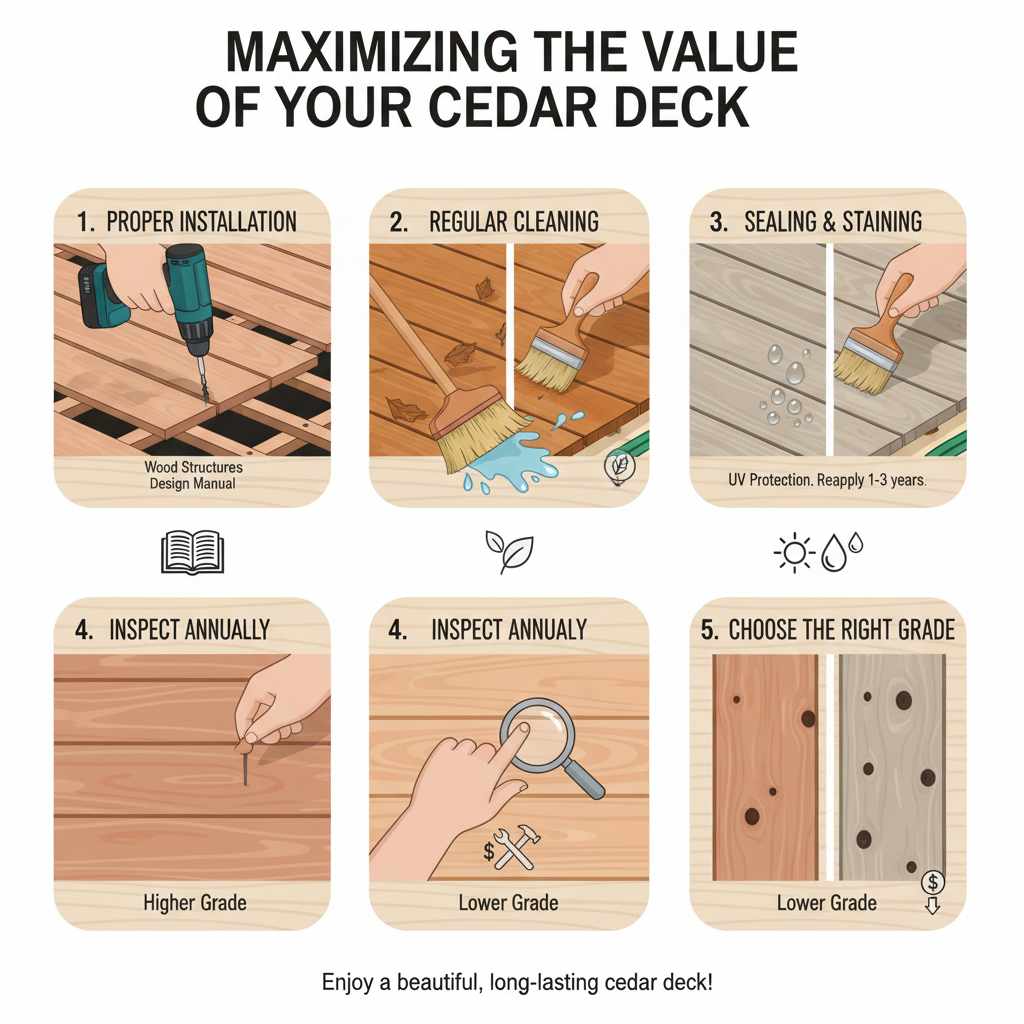
To ensure you get the most bang for your buck with cedar decking, a little care and attention go a long way. Here’s how to maximize its value:
- Proper Installation: Even the best materials can fail if installed incorrectly. Ensure your deck has adequate support, proper ventilation to prevent moisture buildup, and that fasteners are appropriate for cedar. Following best practices, like giving wood room to expand and contract, is key. Resources like the Wood Structures Design Manual offer detailed guidance on proper wood construction.
- Regular Cleaning: Sweep your deck regularly to remove dirt, leaves, and debris. This prevents moisture from being trapped against the wood, which can lead to mildew and rot, especially in shaded areas. A simple hose-down a couple of times a year is usually sufficient.
- Sealing and Staining (Optional but Recommended): While cedar is naturally resistant, applying a quality water-repellent sealer with UV protection will significantly extend its life and preserve its color. If you want to keep the natural reddish-brown hue, stain it. If you prefer the weathered gray look, you can simply use a clear water repellent. Aim to reapply every 1-3 years, depending on the product and your climate.
- Inspect Annually: Take a moment each year to walk around your deck and look for any loose boards, popped nails, or signs of wear. Addressing minor issues early can prevent them from becoming major, costly repairs.
- Choose the Right Grade: Cedar comes in different grades, affecting its appearance and price. Higher grades have fewer knots and a more uniform appearance. Choose a grade that fits your budget and aesthetic preferences.
By following these steps, you can feel confident that your cedar deck will remain beautiful and structurally sound for many years, proving its worth time and again.
Frequently Asked Questions About Cedar Decking
Here are some common questions folks have when considering cedar decking:
Q1: Does cedar wood require sealing?
A1:
While cedar is naturally resistant to rot and insects, sealing it is highly recommended. A quality water-repellent sealer with UV inhibitors will protect the wood from moisture damage, prevent splitting and cracking, and help maintain its natural color. Without sealing, cedar will eventually weather to a silvery-gray color and may show wear faster.
Q2: How often should I seal or stain my cedar deck?
A2:
Generally, you’ll want to reseal or restain your cedar deck every 1 to 3 years. The exact frequency depends on the product used, your local climate (amount of sun, rain, snow), and how much foot traffic the deck receives. Inspect the finish annually to see if it’s still effectively repelling water.
Q3: Can cedar decking be painted?
A3:
Yes, cedar can be painted, but staining or sealing is more common as it highlights the wood’s natural beauty. If you choose to paint, ensure the wood is clean, dry, and properly primed. Paint might eventually chip or peel with wood movement, requiring more maintenance than stain.
Q4: Is cedar decking slippery when wet?
A4:
Like most wood decking, cedar can become somewhat slippery when wet, especially if moss or algae starts to grow on its surface. Regular cleaning can prevent this. Some deck stains and sealers also have anti-slip additives.
Q5: What is the difference between Cedar and Redwood decking?
A5:
Both cedar and redwood are naturally resistant to rot and insects. Redwood is typically more stable, meaning it warps less, and it often has a richer, deeper red color. Cedar is generally more affordable and readily available. Both are excellent choices, but redwood often commands a higher price.
Q6: How do I clean my cedar deck?
A6:
Cleaning is straightforward. Start by sweeping away loose debris. You can then use a mild detergent and water solution with a soft brush or a dedicated wood deck cleaner. Rinse thoroughly with a hose. Avoid using a high-pressure washer, as it can damage the wood fibers. For stubborn stains, you might consider a cedar-safe brightener or oxygen bleach.
Conclusion: Cedar Decking’s Proven Value
So, is cedar decking worth the money? After exploring its natural resilience, stunning aesthetics, and long-term benefits, the answer for many homeowners is a resounding yes. While the initial investment might be higher than some basic options, cedar decking offers a beautiful, durable, and naturally protected outdoor living space that stands the test of time. Its ability to resist rot and insects without heavy chemical reliance, coupled with its pleasing appearance and the satisfaction of working with a natural material, makes it a truly valuable choice.
Think of it as an investment in your home’s appeal and your enjoyment of your outdoor areas for years to come. With proper installation and a little regular care, your cedar deck will not only look fantastic but will continue to provide a reliable and inviting space for family gatherings, relaxation, and making memories. It’s a material that offers enduring beauty and proven performance, making it a wise choice for those who appreciate quality craftsmanship and natural elegance.