Cedar Deck Ideas: Real Costs, Durability & Design Options
Installed cedar decking runs about $30–$47 per square foot in 2026 — roughly the same range as pressure-treated lumber ($25–$40) and often cheaper than premium composite ($25–$54). Cedar’s natural oils give it moderate rot and insect resistance, but it still needs re-staining every 2–3 years to hold its color.
If you’re deciding whether cedar is worth it, or you already have one and want to make the most of it, this guide covers the real numbers first — cost, lifespan, and how cedar stacks up against pressure-treated and composite — then the design side: multi-level layouts, built-in seating, lighting, and the maintenance schedule that actually keeps a cedar deck looking good for 15–20 years.
Cedar Deck Cost: What You’ll Actually Pay in 2026
Cedar boards themselves cost about $4–$10 per square foot, similar to or slightly above pressure-treated lumber ($3–$6/sq ft) and below mid-to-high-end composite ($5–$18/sq ft). Once labor is added, the gap narrows:
| Material | Installed Cost | Typical Lifespan | Annual Upkeep |
|---|---|---|---|
| Cedar | $30–$47/sq ft | 15–20 years, maintained | $300–$800/yr (cleaning + restaining) |
| Pressure-Treated | $25–$40/sq ft | 10–15 years, maintained | $300–$800/yr (cleaning + sealing) |
| Composite | $25–$54/sq ft | 25–50 years | Near $0 (occasional wash) |
Cedar’s real advantage is upfront cost plus a natural look no composite fully copies — not lifetime cost. If you skip the every-2-3-year restaining, cedar and redwood deteriorate faster than kiln-dried pressure-treated lumber. Run your own numbers with our deck calculator and deck stain calculator before you buy.
2026 data point: Industry cost guides put cedar’s installed price at $30–$47/sq ft nationally, with materials-only running $4–$10/sq ft — see Angi’s 2026 cedar decking cost breakdown for regional ranges.
Benefits Of Cedar Decks
Cedar’s rot and insect resistance comes from natural oils and tannins in the wood itself, not a chemical treatment. That’s why it holds up outdoors without the copper-based preservatives used in pressure-treated lumber. It’s also dimensionally stable — it resists warping and cupping better than many softwoods across temperature and humidity swings.
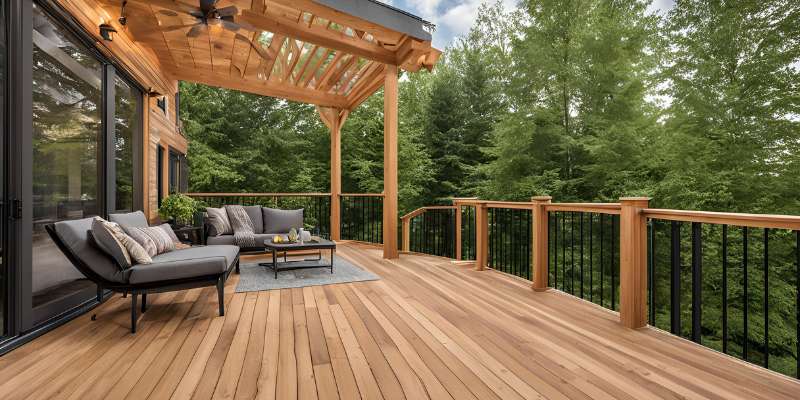
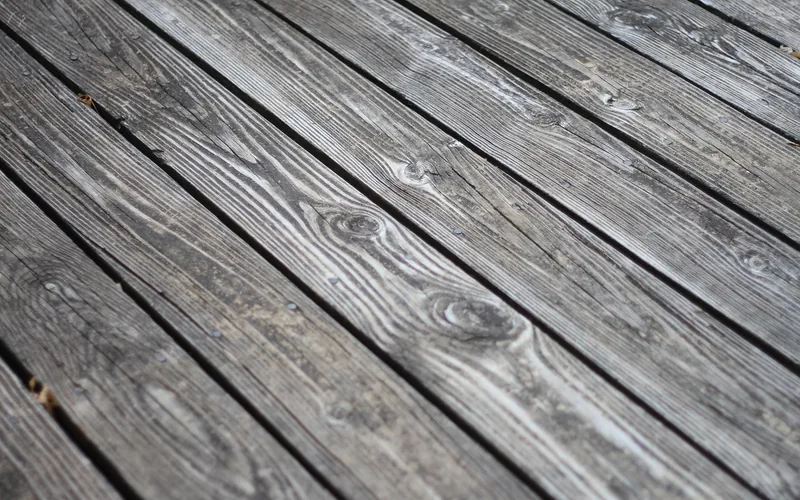
Fresh-cut cedar has a warm, reddish-brown tone; left unsealed, it will weather to a silvery gray over a couple of seasons. Cedar’s natural color and grain are part of the appeal, and it can also be stained to match almost any exterior palette.
How Long Does a Cedar Deck Actually Last?
A cedar deck that’s cleaned yearly and resealed or restained every 2–3 years typically lasts 15–20 years before major boards need replacing. That number drops significantly if maintenance lapses — cedar left unsealed in a wet climate can show rot and softening within 5–7 years. Compare that against how cedar actually resists (and eventually succumbs to) rot for the mechanics of why upkeep matters so much.
Design Inspiration
Modern cedar decks lean on sleek, clean lines: minimal furniture, gray and black accents, metal railing hardware, and glass panels that keep the view open. A built-in bench along one edge saves floor space without cluttering the layout. LED strip lighting under the rail caps adds a modern glow at night.
Rustic cedar decks go the other way — natural grain left visible, weathered tones embraced rather than fought, vintage-style furniture, potted plants, lanterns, and a stone path connecting the deck to the yard. A built-in or portable fire pit (rated for use on wood decking, with a heat-shield mat underneath) turns the space into a gathering spot.
For more on cedar in exterior applications beyond decking, see our guide to affordable cedar siding options.
Maximizing Space
Multi-level layouts and built-in seating are the two easiest ways to get more out of a cedar deck’s footprint without adding square footage.
Multi-level Decks
Splitting a deck into two or three levels — a dining tier, a lounge tier, maybe a lower tier near a fire pit — adds visual depth and gives each zone its own purpose. It costs more in framing and stairs than a single-level deck, so factor that into your budget before committing to the layout.
Built-in Seating
Benches built into the perimeter railing free up floor space that loose patio furniture would otherwise take up, and hollow bench bases double as weatherproof storage for cushions or tools.
Incorporating Greenery
Planter boxes soften the hard lines of a deck and can double as a visual divider between zones. Keep them off the deck boards directly where possible (use pot feet or a saucer) — standing water under a planter is one of the more common causes of localized rot on an otherwise well-sealed deck.
Vertical gardens — wall-mounted planters or a simple trellis with climbing vines — add greenery without eating into usable floor space, which matters most on smaller decks. If you have yard space next to the deck, a raised garden bed gives you far more planting depth than any deck-mounted planter can.
Lighting Ideas
String Lights
Solar or low-voltage LED string lights strung along railings or a pergola are the cheapest way to add ambience. LEDs run cooler and last longer than incandescent bulbs, which matters since they’re exposed to weather year-round.
Recessed Lighting
Recessed deck lights (post-cap or step lights) are more of an install project than string lights, but they light stairs and pathways for safety and look intentional rather than added-on afterward.
Furniture Choices
Look for furniture rated for outdoor use — powder-coated aluminum, teak, or all-weather wicker with quick-dry cushion foam. Anything without weather-rated materials will warp or rust within a season or two of full sun and rain exposure, which defeats the point of investing in the deck itself.
Decorative Elements
Outdoor-rated rugs and pillows add color without competing with cedar’s natural tone. For sculptural pieces, stick to metal, stone, or resin — anything else needs to come inside before winter in most climates.
Maintenance Tips: Keeping Cedar Looking Its Best
Two habits do most of the work: an annual clean and a stain or sealer reapplied on schedule — not “whenever it looks bad.”
Regular Cleaning
Sweep or leaf-blow debris off regularly — trapped leaves and dirt hold moisture against the boards. Once a year, wash with mild soap and water or a dedicated wood deck cleaner, using a soft brush rather than a pressure washer on close settings, which can gouge softer cedar fibers.
Protective Finishes
A semi-transparent oil-based stain protects against UV graying and typically needs reapplying every 2–3 years in full sun exposure; a clear water-repellent sealer alone offers less UV protection but preserves the most natural look. Combo stain-and-sealer products save a step but generally need touch-ups more often — every 12–18 months for some water-based formulas. See our full breakdown of how well cedar takes stain before picking a product.
Our Pick for Sealing a Cedar Deck
Restore-A-Deck Semi-Transparent Wood Stain
A penetrating oil-based stain that lets cedar’s grain show through the color while adding UV protection — expect to reapply roughly every 2-3 years in full sun.
Check Price on AmazonCompare more stain, sealer & cleaner options
 Thompson’s WaterSeal Clear Sealer Pigment-free, keeps cedar’s natural color; minimal UV protection so wood still grays over time. |
 Ready Seal Stain & Sealer Combo Color and water protection in one coat, no back-brushing; UV protection weaker than a dedicated stain. |
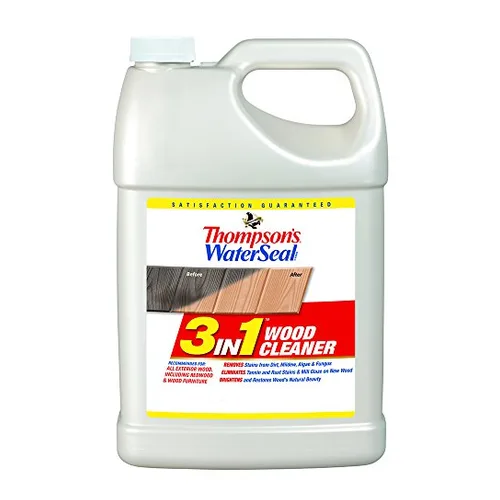 Thompson’s WaterSeal 3-in-1 Cleaner Strips dirt, mildew, and mill glaze before staining — use this before any of the products above, not instead of them. |
As an Amazon Associate we earn from qualifying purchases.
From My Own Shop: What I’d Do Differently
I’ve built and refinished cedar decking alongside furniture work over the past 12+ years, and the mistake I see most often — one I made myself on an early project — is treating the first coat of stain as a one-and-done job. Cedar looks great for the first year almost no matter what you put on it. The real test is year three, when an under-maintained deck has already started graying unevenly while a deck on a proper 2-3 year restaining schedule still looks close to new. If I were starting over, I’d mark the restain date on a calendar the day the deck goes down, rather than waiting until it visibly needs it.
Frequently Asked Questions
How Much Does a Cedar Deck Cost Per Square Foot?
Cedar decking materials run about $4-$10 per square foot; installed with labor, expect $30-$47 per square foot in 2026, depending on region and design complexity.
What Are The Benefits Of A Cedar Deck?
Cedar decks are naturally rot- and insect-resistant thanks to oils in the wood, dimensionally stable against warping, and offer a warm reddish-brown grain that composite materials don’t fully replicate.
How Do I Maintain A Cedar Deck?
Clean it at least once a year with mild soap and water, and reapply a stain or sealer every 2-3 years (more often for water-based combo products). Skipping this schedule is the main reason cedar decks fail early.
Can I Stain Or Paint A Cedar Deck?
Yes. Staining (semi-transparent or solid) preserves and can enhance the grain; painting hides the grain entirely but offers more color options. Both need a compatible primer or conditioner step for even coverage — check the product label for cedar compatibility.
How Long Does a Cedar Deck Last?
15-20 years with regular cleaning and resealing. Decks left unsealed can show rot and soft spots within 5-7 years, especially in wet climates.
Is Cedar or Composite Better for a Deck?
Cedar costs less upfront and gives a natural look no composite fully matches, but needs restaining every 2-3 years. Composite costs more upfront (sometimes less than high-end cedar) but lasts 25-50 years with near-zero maintenance. Choose cedar if you want the real-wood look and don’t mind the upkeep; choose composite if low maintenance matters more than authenticity.
Conclusion
Cedar earns its reputation for a reason: real rot and insect resistance, a grain and color no composite fully copies, and an installed cost in the same range as pressure-treated lumber. The trade-off is upkeep — skip the 2-3 year restaining schedule and cedar loses its advantage fast. Budget for the maintenance from the start, pick a design that fits how you’ll actually use the space, and a cedar deck can realistically deliver 15-20 years of use.
Sponsored / affiliate links. As an Amazon Associate I earn from qualifying purchases. I may earn additional commission from eligible campaigns.