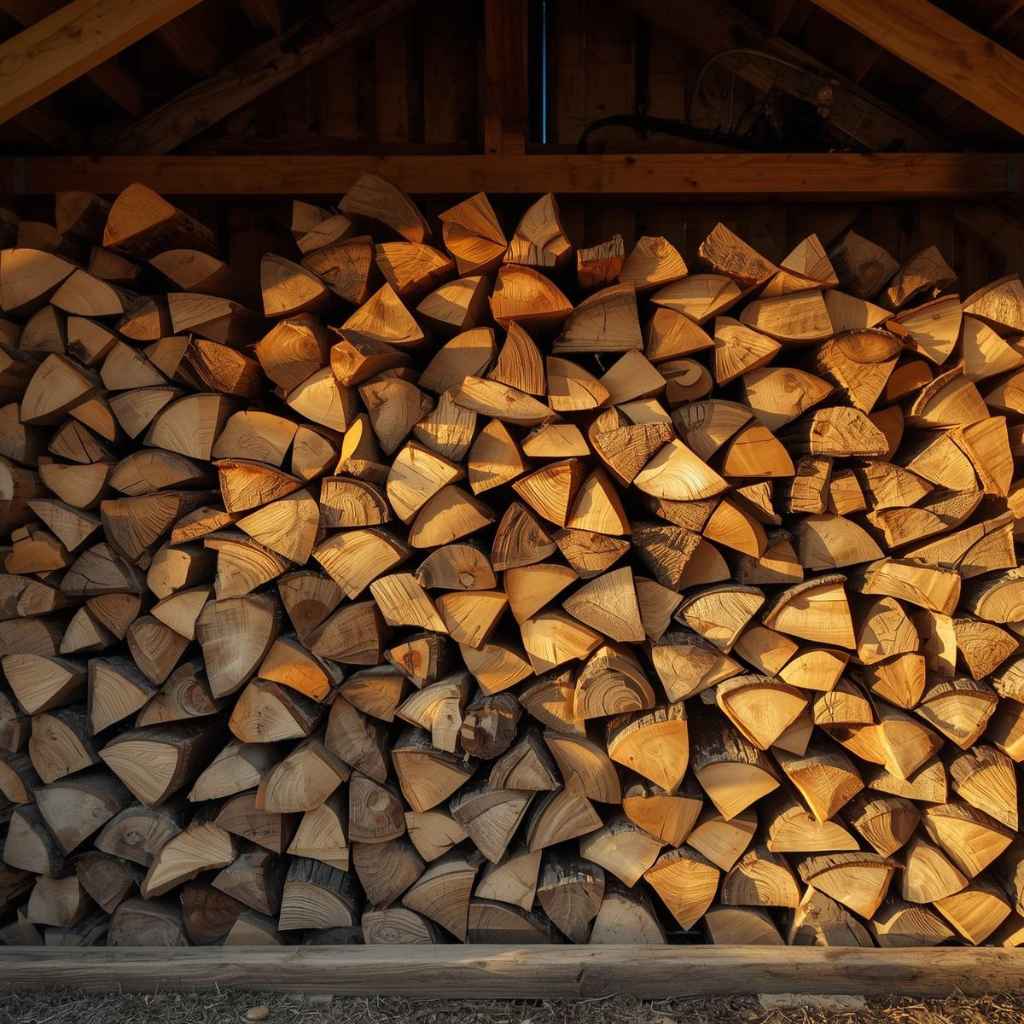
Is Oak Good Firewood Burn Quality Explained
Many people wonder, “Is Oak Good Firewood? Burn Quality Explained.” It can be a bit confusing for new folks because there are so many types of wood out there. Some burn fast, some burn slow, and some make a lot of smoke.
But don’t worry! We’re going to break it down simply, step by step, so you know exactly what to expect when you light up some oak. Get ready to learn all about oak’s burn quality.
Is Oak Good Firewood Burn Quality Explained
Oak is a popular choice for firewood, and for good reason. It’s known for its density, which translates into a long and hot burn. When considering firewood, two main factors stand out: how easily it ignites and how long it burns.
Oak excels in the latter category. Its dense structure means it releases its stored energy slowly, providing sustained heat. This makes it an excellent option for heating homes during colder months, as it requires less frequent reloading compared to lighter woods.
Understanding these burn characteristics is key to making informed decisions about your heating fuel. Many people search for information on “Is Oak Good Firewood? Burn Quality Explained” because they want to maximize their warmth and minimize their effort.
This section will break down why oak is a top contender.
Density and Burn Time
Wood density is a major factor in how well it burns. Denser woods, like oak, have more energy packed into them per volume. This means that a log of oak weighs more than a log of pine of the same size.
When oak burns, it releases this energy slowly because it takes more heat to break down its tightly packed fibers. This slow release of energy results in a longer burn time. You can expect an oak log to burn for several hours, providing consistent heat.
Lighter woods, such as pine or poplar, are less dense and burn much faster, often in an hour or less. This is why oak is often preferred for overnight burns or when you want a steady heat source for extended periods without constant attention.
The amount of heat a wood produces is measured in British Thermal Units (BTUs). Denser hardwoods generally have higher BTU ratings per cord than softwoods. For instance, a cord of red oak typically produces around 24.5 million BTUs, while a cord of pine might only yield about 15 million BTUs.
This significant difference means you’ll need less oak to generate the same amount of heat as a larger volume of pine. When you’re looking at “Is Oak Good Firewood? Burn Quality Explained,” this BTU value is a critical part of the answer.
- Oak’s high density means it burns slowly and consistently. This is because the wood fibers are packed tightly together. It takes a lot of heat to break these fibers down, so the energy stored within them is released gradually over a longer period.
- When you burn oak, you get a long-lasting heat source. This is perfect for keeping your home warm throughout the night or during long, cold days. You won’t have to rush to add more wood every hour.
- Compared to lighter woods like pine or fir, oak provides more sustained warmth. While softwoods ignite quickly and provide a fast burst of heat, they also burn out quickly. Oak offers a more stable and predictable heat output.
Heat Output
Oak is renowned for its excellent heat output. Because it is a dense hardwood, it contains a significant amount of stored energy. When burned properly, oak produces a hot, strong flame that can efficiently heat a room or an entire house.
The sustained burn time means that the heat output remains consistent over many hours. This contrasts with softer woods that might flare up quickly and then die down, leading to temperature fluctuations. For those seeking reliable and powerful heat, oak is a superior choice.
The question “Is Oak Good Firewood? Burn Quality Explained” often comes down to this powerful heat generation. Many people find that a single load of oak in their fireplace or wood stove can keep their living space comfortably warm for a significant part of the day or night.
This efficiency in heat production makes it a cost-effective option in the long run, even if the initial cost of seasoned oak might be higher than some softer woods.
The consistent heat from oak is a major advantage for home heating. You can enjoy a cozy environment without the need for constant adjustments to the fire. This reliability is a key factor in its popularity.
Unlike some woods that can sputter or burn unevenly, oak tends to provide a steady and robust burn, making it ideal for maintaining a comfortable temperature. This predictable performance is a significant part of why oak is considered such high-quality firewood.
- Oak provides a very hot burn. Its dense composition means it releases a lot of energy in the form of heat. This makes it excellent for efficiently warming up your home.
- The heat from oak is steady and consistent. You won’t experience rapid temperature drops. This is because the wood burns slowly and evenly over a long period.
- Compared to many other firewood types, oak offers a superior BTU output. This means more heat for your money and less wood to process and store.
Oak Firewood Kindling and Ignition
One area where oak can be a bit challenging, especially for beginners, is in its ignition and initial burning. Because oak is so dense, it doesn’t catch fire as easily as softer woods like pine or cedar. You can’t just toss a few oak logs into a cold fireplace and expect them to burst into flames.
This is a crucial part of the “Is Oak Good Firewood? Burn Quality Explained” conversation. To get oak burning well, you need good kindling and a well-established base of hot embers.
Once it’s burning, though, it truly shines. Understanding this initial hurdle is key to enjoying all the benefits oak has to offer.
Starting the Fire
Starting a fire with oak requires a bit more preparation than with softer woods. You’ll need plenty of dry, small pieces of wood to get things going. These are called kindling.
Things like dry twigs, small branches, or even commercially made fire starters work well. Once you have a good bed of flames from your kindling, you can gradually add small pieces of oak. As the fire grows stronger, you can then add larger oak logs.
Rushing this process can lead to a smoky fire or a fire that goes out before the oak even starts to burn properly. Patience and proper technique are essential for a successful oak fire.
The secret to a good oak fire is building up a strong base of hot coals before adding the main logs. This base of coals provides the sustained heat needed to ignite the dense oak wood. Think of it like building a solid foundation before constructing a house.
Without that foundation, the structure won’t be stable. Similarly, without hot coals, your oak logs will struggle to burn effectively.
- Oak is dense and can be hard to ignite at first. You will need very dry, small pieces of wood, called kindling, to get your fire started.
- Build a strong base of hot coals before adding oak logs. This provides the sustained heat needed for the dense wood to catch fire and burn well.
- Don’t try to rush the process. Gradually add larger pieces of wood as the fire gets stronger. This ensures a clean and efficient burn.
The Role of Seasoning
Seasoning, or drying, firewood is absolutely critical, especially for dense hardwoods like oak. Freshly cut oak contains a lot of moisture. If you try to burn it, it will smolder, produce a lot of smoke, and won’t generate much heat.
Seasoning allows this moisture to evaporate. Properly seasoned oak will have a much lower moisture content, which makes it ignite easier, burn hotter, and produce less creosote buildup in your chimney. When discussing “Is Oak Good Firewood?
Burn Quality Explained,” seasoning is non-negotiable. You should aim for firewood that has been seasoned for at least six months, and preferably a year or more for dense hardwoods like oak.
The seasoning process can be accelerated by splitting the wood. When oak is split, more surface area is exposed to the air, allowing moisture to escape more quickly. Stacking the wood off the ground and covering the top of the stack (but leaving the sides open for airflow) also helps the wood dry properly.
You can tell if oak is seasoned by looking at its color (it usually turns grayish), listening for a hollow sound when you knock two pieces together, and checking for cracks on the ends of the logs.
- Oak must be well-seasoned to burn properly. Fresh oak has too much moisture and will burn poorly, creating smoke and little heat.
- Seasoning usually takes at least six months, but a year or more is better for dense hardwoods like oak. This allows the moisture content to drop significantly.
- Properly seasoned oak will have a grayish color and will make a hollow, ringing sound when two pieces are knocked together. The ends of the logs might also show cracks.
Oak Firewood Smoke and Creosote Production
When considering if oak is good firewood, especially regarding its burn quality, the amount of smoke and creosote it produces is a key factor. Creosote is a flammable substance that builds up inside chimneys when smoke condenses. If it builds up too much, it can cause dangerous chimney fires.
While oak does produce smoke, especially if it’s not properly seasoned, it’s generally considered to be a moderate producer compared to some other woods. The way you burn your oak also plays a big role in how much smoke and creosote you get.
Smoke Considerations
Oak can produce a fair amount of smoke, particularly when it’s first lit or if the fire isn’t burning hot enough. This is because of its dense structure and the moisture it can hold if not fully seasoned. However, once an oak fire is established and burning hot with a good bed of coals, the smoke production significantly decreases.
If you’re burning seasoned oak in a well-ventilated fi
Many people associate wood smoke with unpleasant odors or irritants. However, the type of wood and its moisture content greatly influence the smoke’s characteristics. Oak smoke, when from seasoned wood, is generally considered less acrid than smoke from certain other hardwoods.
The key is to have a clean burn, which is achieved by using dry wood and maintaining adequate airflow. This not only reduces smoke but also makes the fire more efficient.
- Oak can produce smoke, especially when the fire is first started or if the wood is not fully seasoned.
- Once the fire is established and burning hot with good airflow, oak produces less smoke. This results in a cleaner and more efficient burn.
- Properly seasoned oak is crucial for minimizing smoke and preventing excessive creosote buildup in your chimney.
Creosote Buildup
Creosote is a byproduct of incomplete combustion, meaning the wood is not burning completely. This often happens when wood is too wet or when a fire is smoldering with insufficient airflow. Oak, being a dense hardwood, can contribute to creosote buildup if it is not properly seasoned.
Unseasoned oak burns at a lower temperature and releases more unburned particles, which then form creosote. However, when oak is seasoned and burned at high temperatures with good airflow, the risk of significant creosote buildup is reduced. Regular chimney cleaning is always recommended, regardless of the type of wood you burn.
The explanation for “Is Oak Good Firewood? Burn Quality Explained” includes this vital safety aspect.
The formation of creosote is a serious concern because it is highly flammable. A chimney fire can be devastating. Therefore, understanding how to minimize creosote is as important as knowing how to start a fire.
Using seasoned oak and ensuring your fireplace or wood stove has proper draft will significantly lower the risk. It’s a trade-off for the benefits of oak’s long burn time and heat output. Educating yourself on these points is a wise step for any wood-burning homeowner.
Here is a comparison of creosote production for different wood types, assuming proper seasoning and burning practices:
| Wood Type | Creosote Production (Relative) | Notes |
|---|---|---|
| Oak (Seasoned) | Low to Moderate | Moderate density; cleaner burn when seasoned and hot. |
| Pine (Seasoned) | Moderate to High | Less dense; burns fast, more resinous, can produce more creosote. |
| Maple (Seasoned) | Low | Dense hardwood; burns cleanly with good heat. |
| Birch (Seasoned) | Moderate | Burns well but can be resinous if not fully seasoned. |
- Creosote forms from smoke when wood burns incompletely. This happens with wet wood or low-temperature fires.
- Seasoned oak burns hotter and cleaner, which helps reduce creosote buildup. Unseasoned oak is a much bigger contributor to creosote.
- Regular chimney cleaning is essential to remove any accumulated creosote, regardless of the wood you use. This is a critical safety measure for any wood-burning system.
Oak Firewood vs. Other Woods
When answering “Is Oak Good Firewood? Burn Quality Explained,” it’s helpful to compare it to other common firewood types. Oak stands out as a premium choice for many reasons, but it’s not the only good option.
Different woods have different strengths and weaknesses. Some ignite faster, some burn longer, some produce more sparks, and some offer a more pleasant aroma. Understanding these differences helps you choose the best wood for your specific needs, whether you’re looking for quick warmth, long-lasting heat, or a good cooking fire.
Comparing Burn Characteristics
Oak’s primary advantage is its density, leading to a long, hot, and consistent burn. This makes it ideal for sustained heating. In contrast, softwoods like pine and fir ignite very easily and burn quickly with a bright flame.
They are excellent for starting fires but are not efficient for long burns, as they turn to ash rapidly. Fruitwoods like apple and cherry are often prized for their pleasant aroma and are good for cooking fires, offering a moderate burn time and heat. Maple is another excellent hardwood, often considered similar to oak in terms of density and heat output, though it might season a bit faster.
Hickory is known for its intense heat and is often used for smoking meats, offering a very long burn.
Here’s a look at how oak compares to some other popular firewood types in terms of burn quality:
| Firewood Type | Ignition Ease | Burn Time | Heat Output | Smoke/Creosote | Pros | Cons |
|---|---|---|---|---|---|---|
| Oak (Red/White) | Moderate | Long | High | Moderate (if seasoned) | Excellent for sustained heating, hot, consistent burn | Can be difficult to ignite, needs long seasoning time |
| Pine | Easy | Short | Moderate | High (if not seasoned) | Ignites quickly, good for kindling | Burns very fast, sparks easily, produces more creosote |
| Maple | Moderate | Long | High | Low to Moderate | Good heat, consistent burn, seasons faster than oak | Can be heavy to handle |
| Birch | Moderate | Moderate to Long | Moderate to High | Moderate | Burns well, attractive flame, peels easily | Can be more expensive, seasons quickly but can be over-dried |
When asking “Is Oak Good Firewood? Burn Quality Explained,” knowing these comparisons helps you understand oak’s place in the firewood world. It’s often seen as a benchmark for quality hardwood.
Aroma and Aesthetics
While the primary concern for many is heat and burn time, the aroma and visual appeal of a fire can also be important factors. Oak typically produces a mild, pleasant aroma that is not overpowering. It burns with steady, bright flames, offering a classic fi
The aesthetic qualities of a fire can greatly enhance the ambiance of a room. Oak provides a steady, warm glow that is visually comforting. While some woods might produce more dramatic sparks or unique flame colors, oak offers a dependable and appealing visual experience.
Its aroma is generally considered neutral to slightly pleasant, making it suitable for most indoor environments without causing olfactory fatigue or irritation.
- Oak produces a mild, pleasant aroma. It’s not as strong or distinctive as some other woods, making it a safe bet for most people.
- The flames from burning oak are typically steady and bright. This creates a classic and inviting fireplace atmosphere.
- While oak’s aroma is not as unique as some fruitwoods, its consistent and warm visual appeal is a major part of its desirability.
Preparing and Storing Oak Firewood
To get the best burn quality from oak, proper preparation and storage are essential. This involves ensuring the wood is seasoned and then keeping it protected from moisture. If you invest in good quality oak, taking care of it will ensure you get the maximum benefit when you burn it.
This is a practical step that directly impacts your experience, so it’s worth understanding the best practices. It’s a vital part of the answer to “Is Oak Good Firewood? Burn Quality Explained.”
Splitting and Stacking
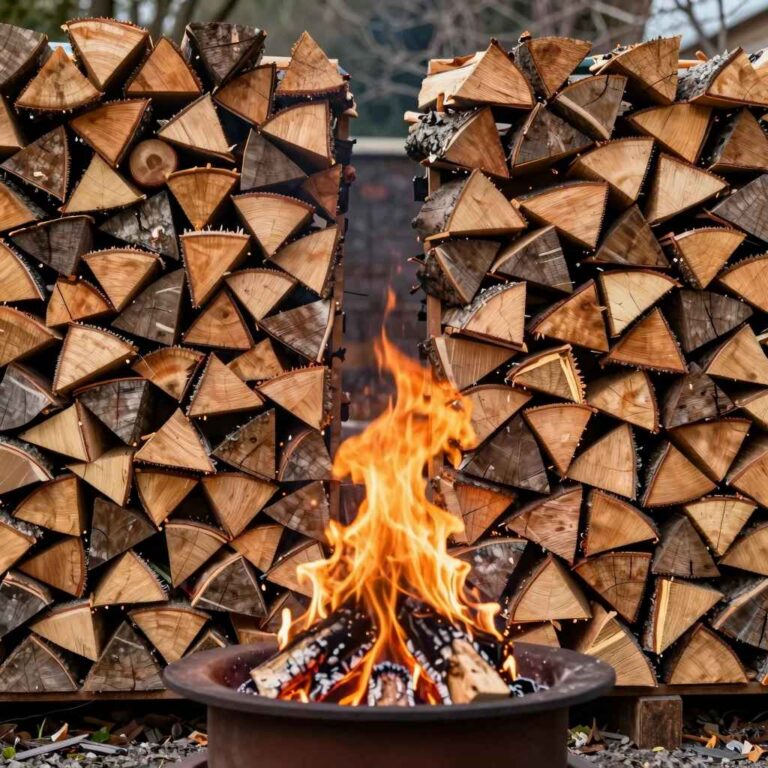
After oak logs are cut to length (often called “rounds”), they need to be split. Splitting increases the surface area exposed to air, which speeds up the drying process. It’s easier to split oak when it’s green, but it can also be split when seasoned.
The goal is to create pieces that are manageable and dry uniformly. Once split, the wood needs to be stacked. The best way to stack firewood is off the ground, typically on pallets or a dedicated rack.
This prevents ground moisture from being absorbed. The stack should be open on the sides to allow air to circulate freely. Covering the top of the stack with a tarp or roofing material will protect the wood from rain and snow, but it’s important not to cover the sides, as this will trap moisture and prevent drying.
Proper stacking is not just about aesthetics; it’s crucial for efficient seasoning. A tightly packed stack will not dry well. Airflow is key.
Think of it like a well-ventilated drying rack. Each piece of wood needs to breathe. This is why many experienced wood burners create rows of wood with gaps between the pieces, ensuring that air can move through the entire pile.
A well-stacked pile of oak is a sign of a prepared and knowledgeable wood burner.
- Split oak logs to speed up drying and increase surface area for air exposure.
- Stack firewood off the ground to prevent moisture absorption from the soil. Use pallets or a rack.
- Ensure the stack is open on the sides for good airflow but covered on top to protect from precipitation.
Moisture Content and Storage Tips
The ideal moisture content for firewood is between 15% and 20%. Anything higher than that will result in a smoky, inefficient burn. You can use a moisture meter to check your wood.
For oak, aiming for the lower end of this range is best. Store your seasoned oak in a dry, well-ventilated area. Avoid storing it directly against the side of your house, as this can promote rot and insect infestations.
A dedicated wood shed or a covered, open-air storage area is ideal. If you are storing wood outdoors without a shed, ensure it is well-covered from the top and has plenty of airflow from the sides.
It’s also a good practice to store a small supply of dry, seasoned oak inside your home, perhaps in a dedicated log basket near the fireplace. This ensures you have easily accessible wood for starting fires or for a quick top-up when needed. However, be mindful not to store too much wood indoors, as it can attract pests or create a mess.
A few days’ supply is usually sufficient. Maintaining the right moisture content is a critical part of maximizing the burn quality of oak.
- Aim for a moisture content of 15-20% in your oak firewood. A moisture meter can help you check this.
- Store seasoned oak in a dry, ventilated location, away from direct contact with the ground or buildings.
- Keep a small supply of dry oak indoors for easy access, but avoid storing large quantities inside.
Frequently Asked Questions
Question: Is oak firewood hard to split?
Answer: Oak can be moderately difficult to split, especially when it is green or has a lot of knots. As it seasons, it can become even harder to split. Using a sharp axe or a hydraulic splitter can make the process much easier.
Question: How long does oak firewood need to season?
Answer: Oak generally needs at least one to two years to season properly. Because of its dense nature, it takes longer for the moisture to evaporate compared to softer woods.
Question: Does oak produce a lot of ash?
Answer: Oak produces a moderate amount of ash. While it burns for a long time, the ash quantity is usually manageable and not excessively high compared to some other hardwoods.
Question: Can I burn oak in my outdoor fire pit?
Answer: Yes, well-seasoned oak is an excellent choice for outdoor fire pits. It provides a long-lasting and hot fire that is great for ambiance and warmth.
Question: Is white oak or red oak better firewood?
Answer: Both white oak and red oak are excellent firewoods. White oak is generally a bit denser and might burn slightly longer and hotter, and it is also more rot-resistant. Red oak is also a very good option, often more readily available.
Summary
Oak is indeed good firewood. Its density ensures a long, hot, and consistent burn, making it ideal for heating. While it requires proper seasoning and can be challenging to ignite initially, these factors are manageable with the right technique.
You get excellent heat output and moderate smoke and creosote if seasoned well. Compare it to other woods, and oak consistently ranks high for its overall burn quality.