Oak Trees in Florida: 24 Native Species (Live Oak & More)
Florida is home to 24 native oak species, according to University of Florida IFAS Extension — more than most guides mention. Mistaking a red oak for a white oak can mean planting a tree your soil can’t support, or seasoning firewood that takes twice as long to dry. This guide identifies Florida’s most common native oaks by leaf, acorn, and bark, and covers which ones are worth using in a woodworking project.
Quick Answer
Yes — Florida has 24 native oak species (UF/IFAS Extension), split into two groups: white oaks (rounded leaf lobes, acorns mature in one year) and red/black oaks (pointed, bristle-tipped lobes, acorns take two years). The most common are Live Oak, Water Oak, Laurel Oak, Willow Oak, and Turkey Oak.
White Oak vs. Red Oak: Florida’s Two Oak Groups
Best Pre-Stain Conditioner Pick
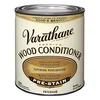
Varathane Premium Wood Conditioner, Quart
Applied before staining, this soaks into oak’s open pores evenly so the finish doesn’t blotch — especially useful on Red Oak group species with coarser, more open grain.
- Best for: Prepping Florida oak furniture and flooring builds before staining
- Why we picked it: Fast-drying water-based formula, full quart covers most furniture-scale projects
- Main drawback: Must be applied within 2 hours of staining or it loses effectiveness
Compare more pre-stain conditioner options
 Option 1 Varathane Wood Conditioner, Half Pint
|
 Option 2 Minwax Pre-Stain Wood Conditioner, Clear, 1 Quart
|
 Option 3 General Finishes Oil-Based Conditioner
|
As an Amazon Associate we earn from qualifying purchases.
Every native Florida oak belongs to one of two groups, and knowing which group you’re looking at answers most identification questions before you even reach the species level. The white oak group has leaves with rounded, finger-like lobes and no bristle tips; acorns mature in a single growing season and taste less bitter. The red oak group (sometimes called black oak group) has leaves with pointed lobes tipped in a tiny bristle; acorns take two years to mature and carry noticeably more tannin.
| Feature | White Oak Group | Red / Black Oak Group |
|---|---|---|
| Leaf lobe tips | Rounded, no bristle | Pointed, bristle-tipped |
| Acorn maturation | 1 growing season | 2 growing seasons |
| Tannin / bitterness | Lower — more palatable to wildlife | Higher — more tannic |
| Wood pore structure | Closed (tyloses) — better decay/moisture resistance | Open pores — more absorbent, less rot-resistant |
| Florida examples | Live Oak, White Oak, Post Oak, Swamp Chestnut Oak | Water Oak, Laurel Oak, Turkey Oak, Willow Oak |
That closed-pore detail matters if you’re choosing lumber: it’s why White Oak resists rot well enough for boat building and outdoor furniture, while Red Oak’s open pores make it a poor choice outdoors but let it take stain evenly indoors.
Florida’s Native Oak Species by Group
Florida’s climate, with its southern warmth and varied moisture levels, supports more native oak diversity than almost any other state — from towering coastal Live Oaks to ankle-high scrub oaks that never grow past three feet. Here are the species you’re most likely to encounter, organized by white oak and red oak lineage.
White Oak Group
Southern Live Oak (Quercus virginiana)
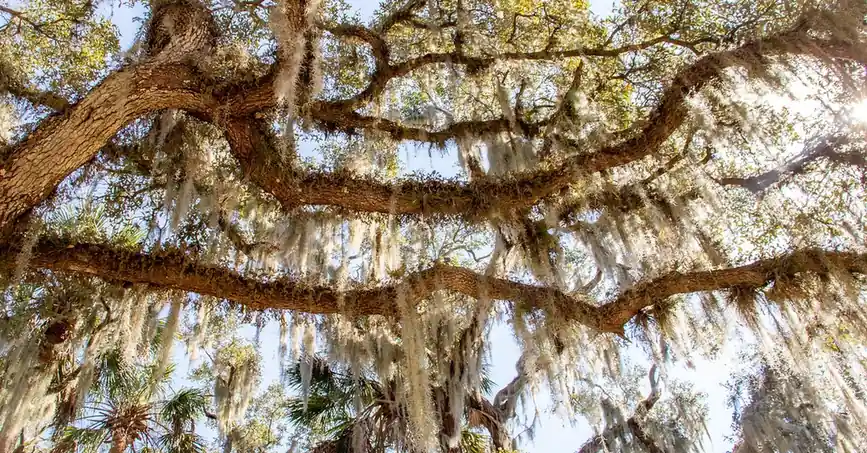
If one oak represents Florida, it’s the Southern Live Oak. Often draped with Spanish moss, these trees are symbols of the Old South and a common, breathtaking sight statewide. They’re evergreen — unusual for an oak — keeping their small, leathery, dark green leaves year-round.
- Appearance: Tremendous spread, often wider than tall, with twisting branches and dark, deeply furrowed bark.
- Habitat: Well-drained soils, highly salt-tolerant — common along coastlines and sandy uplands statewide. Can live for centuries.
- Wood: Extremely dense and strong; historically prized for shipbuilding and heavy timber framing.
Sand Live Oak (Quercus geminata)
Frequently confused with Southern Live Oak, Sand Live Oak has narrower, more cupped leaves and thrives in coastal scrub and sand dunes where Live Oak won’t establish as well. It’s also evergreen and can grow as either a tree or a dense shrub.
White Oak (Quercus alba)
True White Oak grows mainly in Florida’s panhandle and northernmost counties, at the southern edge of its national range. It’s the premium furniture and flooring species in this group — White Oak’s closed cell structure (tyloses) gives it excellent resistance to decay and moisture, which is why it’s the traditional choice for wine barrels and boat hulls.
The rest of the white oak group grows across Florida in smaller numbers: Post Oak (Q. stellata) in dry sandy uplands, Swamp Chestnut Oak (Q. michauxii) in wet bottomlands with large, sweet acorns once used for baskets, Chinkapin Oak (Q. muehlenbergii) with toothed (not lobed) leaves in the panhandle, Bluff Oak (Q. austrina) along north Florida river bluffs, Overcup Oak (Q. lyrata) in floodplains with an acorn cap that covers almost the entire nut, Chapman Oak (Q. chapmanii) as a shrubby coastal-scrub species, and Dwarf Live Oak (Q. minima), a groundcover shrub oak rarely taller than three feet in sandhill scrub.
Red / Black Oak Group
Water Oak (Quercus nigra)
Water Oak is another statewide common sight, typically found in wetter areas as the name suggests. It sheds most of its spoon- or wedge-shaped leaves in fall but often holds some through a mild winter.
- Appearance: More upright, oval shape than Live Oak’s sprawl; leaf shape varies noticeably even on the same tree.
- Habitat: Loves moist to wet soils — bottomlands, streambanks, poorly drained areas. Fast-growing and adaptable.
- Wood: Less dense than Live Oak but strong enough for crates and pallets; acorns are an important wildlife food source.
Laurel Oak (Quercus laurifolia)
Laurel Oak is semi-evergreen with narrow, glossy leaves and grows fast in wet, sandy coastal plains — often mistaken for Water Oak or the closely related Darlington Oak (Q. hemisphaerica), which prefers drier, upland sites. Laurel Oak grows quickly but has notably weaker, more storm-prone wood than Live Oak, so arborists often flag it as a higher risk near structures during hurricane season.
Turkey Oak (Quercus laevis) and Southern Red Oak (Quercus falcata)
Turkey Oak has deeply lobed leaves that resemble a turkey’s foot and thrives in dry, sandy uplands where few other trees compete. Southern Red Oak (also called Spanish Oak) is identified by sickle-shaped leaf lobes and grows in similar upland sites across the state.
Willow Oak (Quercus phellos)
Easily identified by its long, narrow, willow-like leaves with smooth (unlobed) edges, Willow Oak prefers moist, well-drained soils and is a popular deciduous street and shade tree thanks to its neat, pyramidal shape and fall color.
The remaining red oak group species are smaller or more habitat-specific: Shumard Oak (Q. shumardii) is a large, deeply lobed shade tree with rare-for-Florida fall color, popular in landscaping across north and central Florida. Bluejack Oak (Q. incana) and Myrtle Oak (Q. myrtifolia) are small-leaved, drought-tolerant scrub species. Running Oak (Q. pumila) is a low, colony-forming groundcover shrub in sandhills. Florida Scrub Oak (Q. inopina) is endemic — found nowhere else on Earth — and is critical habitat for the endangered Florida scrub-jay. Black Oak (Q. velutina) and Arkansas Oak (Q. arkansana) reach Florida only in the panhandle, at the southern edge of their range.
Complete Florida Oak Identification Table
Use this table as a field reference — group, leaf shape, and acorn timing narrow down a species faster than any single trait alone.
| Species | Group | Leaf | Habit | Typical FL Range |
|---|---|---|---|---|
| Live Oak | White | Small, leathery, unlobed | Evergreen | Statewide, coastal |
| Sand Live Oak | White | Narrow, cupped | Evergreen | Coastal dunes, scrub |
| White Oak | White | Rounded lobes | Deciduous | Panhandle, north FL |
| Post Oak | White | Cross-shaped lobes | Deciduous | Sandy uplands, statewide |
| Swamp Chestnut Oak | White | Toothed, not lobed | Deciduous | Bottomlands, statewide |
| Chinkapin Oak | White | Toothed, chestnut-like | Deciduous | Panhandle |
| Bluff Oak | White | Shallow rounded lobes | Deciduous | North FL river bluffs |
| Overcup Oak | White | Lyre-shaped | Deciduous | Floodplains, north/central FL |
| Chapman Oak | White | Small, wavy-edged | Evergreen shrub | Coastal scrub, statewide |
| Dwarf Live Oak | White | Small, leathery | Evergreen groundcover | Sandhills, central/north FL |
| Water Oak | Red | Spoon/wedge-shaped, variable | Semi-evergreen | Statewide, wet sites |
| Laurel Oak | Red | Narrow, glossy | Semi-evergreen | Statewide, coastal plains |
| Darlington Oak | Red | Narrow, wider at tip | Semi-evergreen | Upland, north/central FL |
| Turkey Oak | Red | Deep “turkey foot” lobes | Deciduous | Dry sandhills, statewide |
| Southern Red Oak | Red | Sickle-shaped lobes | Deciduous | Uplands, statewide |
| Shumard Oak | Red | Large, deep lobes | Deciduous | North/central FL, landscaping |
| Willow Oak | Red | Narrow, willow-like | Deciduous | Moist soils, statewide |
| Bluejack Oak | Red | Small, blue-green | Deciduous | Deep sandhills |
| Myrtle Oak | Red | Small, myrtle-like | Evergreen shrub | Scrub, central/south FL |
| Running Oak | Red | Small, toothed | Deciduous groundcover | Sandhills, statewide |
| Florida Scrub Oak | Red | Small, angular lobes | Evergreen shrub | Central FL ridge (endemic) |
| Black Oak | Red | Deep lobes, yellow inner bark | Deciduous | Panhandle only |
| Arkansas Oak | Red | Small, shallow lobes | Deciduous | Panhandle only, rare |
UF/IFAS Extension counts 24 native oak species statewide — this table covers the 22 you’re realistically able to identify in the field; the remaining two are extremely localized panhandle rarities most Floridians never encounter.
Identifying Oak Trees in Florida: A Beginner’s Guide
Identification gets easier once you know what to look at first. The three most useful clues, in order, are leaf shape, acorn cap coverage, and bark texture.
1. Leaves
Oak leaves are the fastest identifier. Rounded, un-bristled lobes mean white oak group (Live Oak, Post Oak). Pointed, bristle-tipped lobes mean red oak group (Turkey Oak, Southern Red Oak). Long narrow leaves with no lobes at all point to Willow Oak or Laurel Oak. And if the tree keeps its leaves through a Florida winter, you’re very likely looking at Live Oak, Sand Live Oak, Laurel Oak, or one of the small evergreen scrub oaks.
2. Acorns
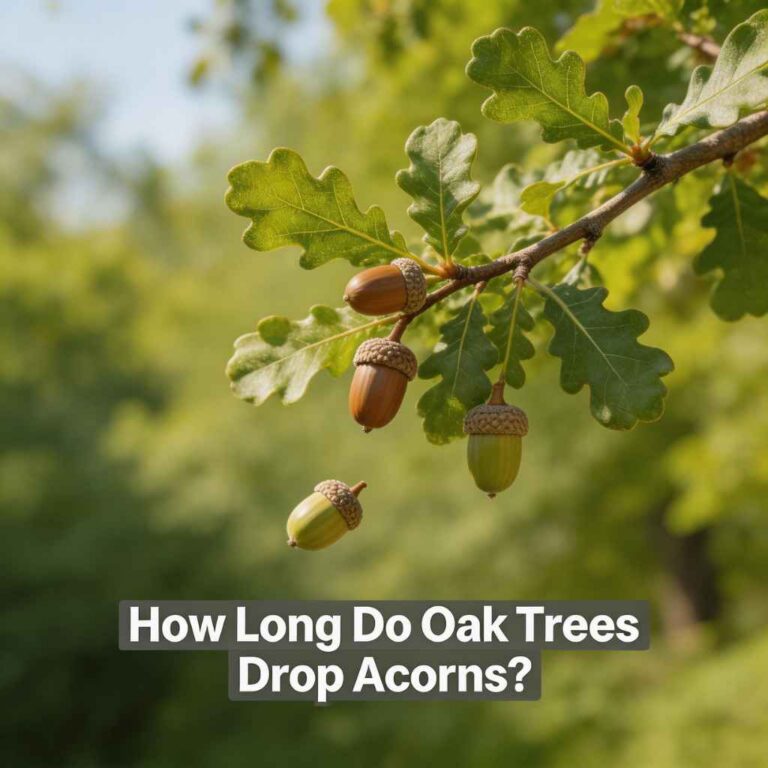
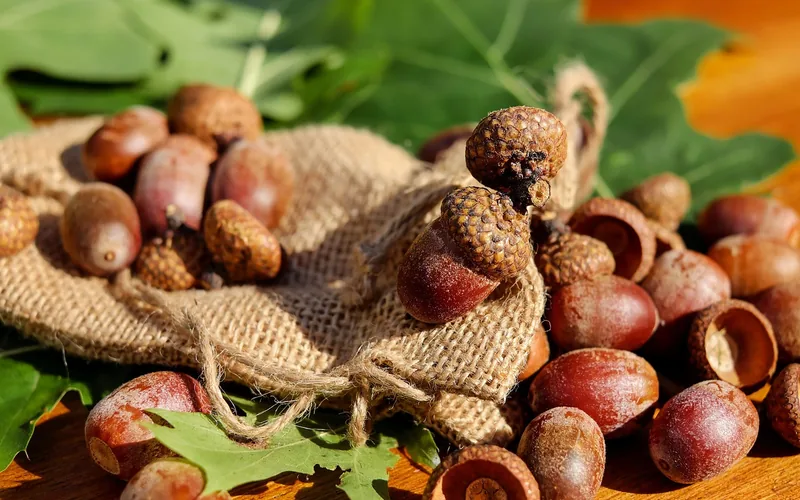
Acorn maturation timing is the most reliable group indicator: white oak group acorns mature in one growing season and taste milder; red oak group acorns take two full seasons and carry more tannin. Cap coverage also varies by species — Overcup Oak’s cap encloses almost the entire nut, while Willow Oak’s cap barely covers the base.
3. Bark
Bark changes with age, but it still narrows things down. Live Oak develops dark, deeply furrowed bark. Water Oak stays smoother and grayer when young, roughening over time. Black Oak has a distinctive yellow-orange inner bark visible if you nick it — historically used as a dye source.
4. Growth Habit
Live Oak spreads wide, often wider than it is tall. Water Oak and Laurel Oak grow more upright and oval. Dwarf Live Oak, Running Oak, and Florida Scrub Oak never reach tree height at all — they stay shrub- or groundcover-sized their entire lives, which is itself a useful identifier if the “oak” in front of you is only knee-high.
Why Oak Wood Is Great for Woodworking in Florida
Oak is a favorite among woodworkers for good reason. Its strength, durability, and grain make it a top choice for furniture, flooring, and cabinets. Florida isn’t a primary source of bulk oak lumber the way the Appalachians or Midwest are, but locally sourced oak is still a rewarding find for smaller projects.
Key Properties of Oak Wood
- Hardness and durability: Oak resists dents, scratches, and wear exceptionally well — the USDA Forest Products Laboratory confirms oak’s hardness ranks among the top domestic hardwoods, making it ideal for high-traffic pieces.
- Strength: Excellent bending strength and stiffness, suitable for structural elements like table legs or chair frames.
- Grain: Prominent grain, especially quarter-sawn, creating attractive ray fleck. Red Oak’s grain runs more open and coarse; White Oak’s ray fleck is tighter and more pronounced.
- Workability: Hardness makes it a bit more demanding to cut than softwoods, but it’s predictable and machines well with sharp tools. Takes stain, glue, and finish readily.
- Decay resistance: White Oak’s closed-cell structure (tyloses) gives it real resistance to decay and moisture — a genuine advantage for outdoor projects that Red Oak group species don’t share.
Common Uses for Florida Oak in Projects
- Furniture: From farmhouse tables to chairs, oak provides the structure and classic look that endures.
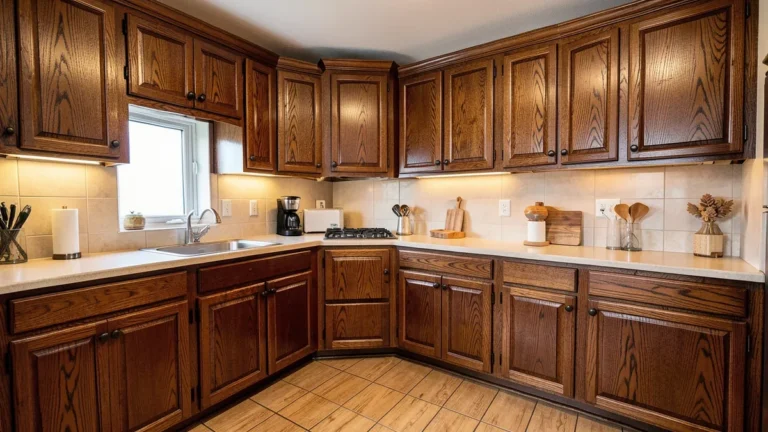
- Cabinetry: Kitchen cabinets and bookshelves made from oak are attractive and built to last.
- Flooring: Oak flooring is a timeless choice, known for its beauty and resilience in homes.
- Decorative items: Cutting boards, picture frames, and boxes showcase oak’s grain on a smaller scale.
- Outdoor projects: Well-seasoned, treated White Oak (not Red Oak group) can hold up for outdoor benches or small structures thanks to its closed-pore decay resistance.
Where to Find Oak Wood in Florida
- Local sawmills: Independent sawmills in your area may mill local lumber, including oak.
- Woodworking supply stores: Larger lumber yards and specialty stores carry red and white oak.
- Reclaimed lumber: Architectural salvage yards sometimes carry oak timbers from old barns or buildings.
- Private landowners: Some property owners have fallen oak they’ll sell or give away for milling — you’ll usually need to arrange milling and transport, and give the wood time to season properly before building with it.
Working with Florida Oak: Safety Tips for Beginners
Oak is a fantastic hardwood to learn on, but its density earns a bit more respect than pine or poplar. Here’s what to know before your first cut.
Essential Safety Precautions
- Eye protection: Always wear safety glasses — sawdust and flying chips from hardwoods like oak are a real hazard.
- Hearing protection: Saws and power tools get loud fast during extended cuts — use earplugs or earmuffs.
- Dust mask/respirator: Oak dust is harmful if inhaled. Use a quality mask or respirator when sanding or cutting.
- Tool condition: Keep blades sharp and correctly set. A dull blade on oak tears the grain and forces you to push harder — which is when accidents happen.
- Lifting: Oak lumber is heavy. Lift with your legs and get help with large pieces.
Tips for Beginners Working with Oak
- Start small: A simple box, cutting board, or small shelf teaches you the wood without overwhelming you.
- Pre-drill everything: Oak splits if you drive a screw directly into it, especially near a board’s end. Pre-drill a pilot hole slightly smaller than the screw shank.
- Condition before staining: Oak’s prominent grain absorbs stain unevenly, especially on Red Oak group species. A pre-stain wood conditioner (see above) fixes this before it becomes a problem.
- Acclimate your lumber: Let oak sit in your workshop for several days to a week before building, so it adjusts to your shop’s humidity and won’t warp after assembly.
- Work with the grain: Arrange boards so grain patterns complement each other, especially on a tabletop.
“The mistake I see most often with Florida oak, even from people who’ve built furniture before, is skipping the pre-stain conditioner on Red Oak group lumber. The open grain drinks stain unevenly and you get blotchy patches you can’t sand out after the fact — conditioning first takes twenty extra minutes and saves the whole piece.”
Florida Oak Trees in Their Natural Habitat
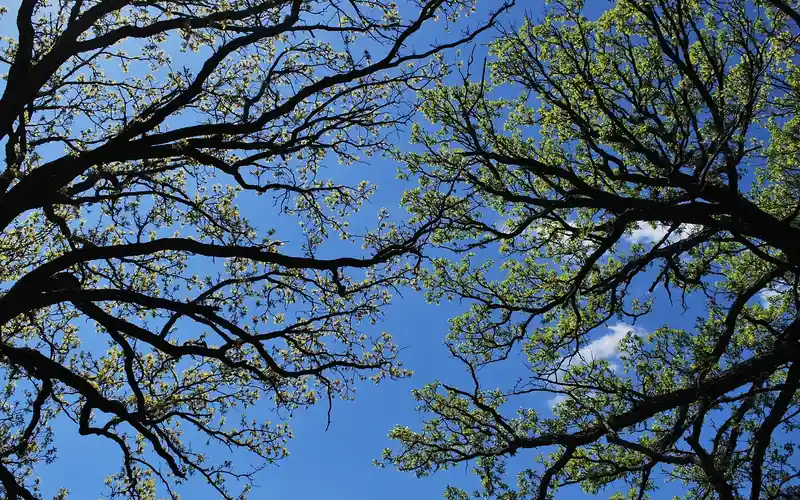
Understanding where oaks thrive in Florida explains their ecological importance — you’ll find them everywhere from coastal dunes to humid swamps to fire-adapted sandhills.
Ecological Roles of Florida Oaks
- Food source: Acorns feed squirrels, jays, deer, turkeys, and raccoons. Acorn abundance in a given year can meaningfully shift local wildlife populations.
- Habitat and shelter: Dense canopies provide shade and nesting sites; cavities in older trees shelter small mammals and reptiles. Root systems stabilize soil and prevent erosion.
- Biodiversity: Oak forests support understory plants, fungi, insects, and other invertebrates, functioning as keystone species in many Florida habitats.
Common Habitats for Florida Oaks
- Coastal areas: Southern Live Oak and Sand Live Oak tolerate sandy soils and salt spray better than nearly any other native tree.
- Upland sandhills: Turkey Oak, Bluejack Oak, and Running Oak dominate the dry, well-drained sandhills of north and central Florida, often growing alongside longleaf pine.
- Wetlands and riverbanks: Water Oak, Laurel Oak, and Overcup Oak thrive in consistently moist or water-logged soils along rivers, swamps, and low-lying areas.
- Hardwood hammocks: Dense, mixed hardwood forests on slightly elevated ground, mostly in south and central Florida, where several oak species grow alongside tropical and subtropical trees.
Which Florida Oak Handles Hurricanes Best?
Southern Live Oak and Sand Live Oak consistently come through Florida hurricanes with the least damage — their dense wood, deep root systems, and flexible branch structure let them bend rather than snap. Laurel Oak and Water Oak, by contrast, grow faster but have noticeably weaker wood and are far more prone to limb failure and uprooting in high wind, which is why arborists watch them more closely near homes.
Fastest-Growing Oak for Florida Yards
If quick shade is the goal, Water Oak and Laurel Oak grow fastest — but that speed comes with shorter lifespans and weaker wood, the same tradeoff that makes them more hurricane-prone. Shumard Oak grows at a more moderate pace but offers a better long-term balance of shade, strength, and Florida’s rare oak fall color, which is why it’s the more common landscaper recommendation for a yard tree meant to last decades rather than years.
The presence of these oaks contributes to Florida’s unique landscape character — offering shade, structure, and a home to much of the state’s wildlife.
Frequently Asked Questions About Oak Trees in Florida
How many types of oak trees grow in Florida?
University of Florida IFAS Extension counts 24 native oak species statewide, split between the white oak group (Live Oak, White Oak, Post Oak, and others) and the red/black oak group (Water Oak, Laurel Oak, Turkey Oak, and others). Species counts you’ll see elsewhere online range from 19 to 26 depending on whether closely related species like Darlington Oak and Laurel Oak are counted separately.
Are all Florida oak trees evergreen?
No. Southern Live Oak, Sand Live Oak, and most of the small scrub oaks are evergreen. Most other Florida oaks — including Water Oak, Willow Oak, Turkey Oak, White Oak, and Shumard Oak — are deciduous and lose their leaves seasonally, typically in late fall and winter. Laurel Oak sits in between as semi-evergreen.
Is the Live Oak Florida’s state tree?
No — Florida’s official state tree is the Sabal Palm, not an oak. The mix-up is common because Live Oak is so visually iconic statewide, but the palm holds the official title.
What’s the difference between white oak and red oak?
White oak group leaves have rounded, un-bristled lobes and acorns that mature in one year with lower tannin. Red oak group leaves have pointed, bristle-tipped lobes and acorns that take two years with higher tannin. White Oak’s closed wood pores also resist decay far better, which is why it’s used outdoors and Red Oak group species generally aren’t.
What is the most common oak tree in Florida?
Southern Live Oak and Laurel Oak are the two most commonly encountered native oaks statewide, with Water Oak close behind in wetter areas. Live Oak is the one most people picture when they think of a Florida oak, thanks to its evergreen leaves and Spanish moss.
Can you use Florida oak for woodworking projects?
Yes, though bulk lumber is easier to source from local sawmills and reclaimed timber than to mill yourself from a felled yard tree. White Oak group species handle outdoor use well thanks to their decay resistance; Red Oak group species (including the fast-growing, commonly available Water Oak and Laurel Oak) are better suited to indoor furniture, cabinetry, and flooring.
Sponsored / affiliate links. As an Amazon Associate I earn from qualifying purchases. I may earn additional commission from eligible campaigns.