Maple vs Oak Tree: Growth Rate, Wood Hardness & Which to Plant
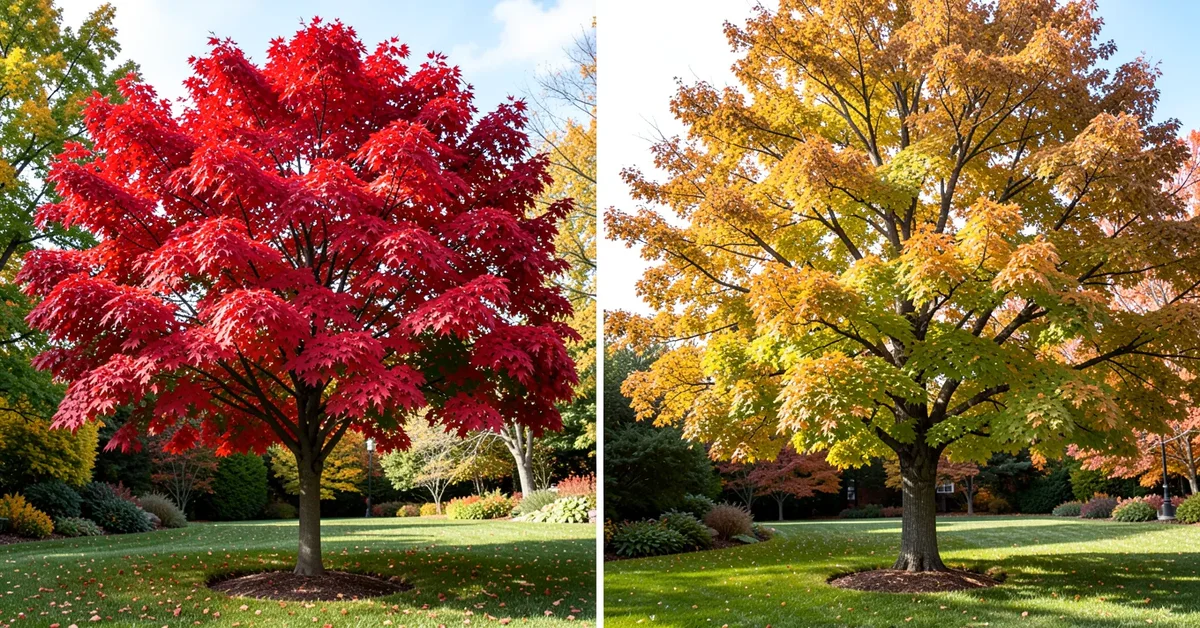
Maples generally grow faster and color up brighter in fall; oaks generally live longer, tolerate drought better once established, and produce denser wood. But both of those are generalizations across two huge genera – which specific maple and which specific oak you’re planting (or milling) matters more than the “maple vs oak” label alone.
Growth Rate And Lifespan: It Depends Which Species
Check Before You Plant Either One
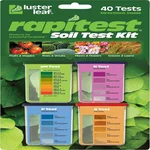 |
Luster Leaf 1601 Rapitest Soil Test Kit – $16.20 Maples want slightly acidic soil and oaks tolerate a wider pH range – a $16 test tells you which one your yard actually supports before you commit years of growth to the wrong tree.
|
Red maple is one of the fastest-growing shade trees available, often adding 2 feet or more per year in good conditions. Sugar maple grows more moderately. On the oak side, red oak keeps pace reasonably well with the faster maples, while white oak and bur oak are notably slower, often under a foot a year. So “maples grow faster than oaks” holds up as a rule of thumb, but pick red oak instead of white oak and the gap mostly disappears. Lifespan runs the other direction: maples commonly live 100-150 years, while an oak – especially a white oak – can live 300+ years, which is part of why oaks show up so often as the “heritage tree” in old landscapes.
Climate And Soil
Maples generally prefer moist, slightly acidic, well-drained soil and don’t love prolonged drought or compacted clay. Oaks are more forgiving of soil pH and, once established (usually after the first 2-3 years), handle dry spells noticeably better thanks to a deeper root system. If your yard has heavy clay or you’re in a drier climate, that alone can tip the decision toward oak regardless of growth-rate preference.
The Wood Difference (What Most Landscaping Comparisons Skip)
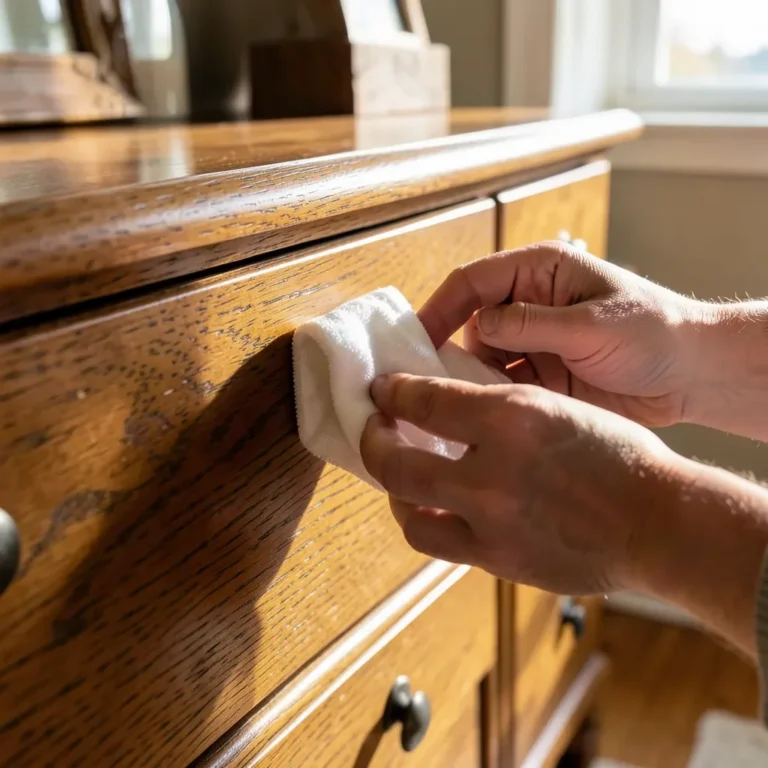
If you’re choosing between these trees with any thought toward the wood they’ll eventually produce – or comparing lumber at the store rather than trees for the yard – hardness and grain matter more than growth rate. Janka hardness (a standard test measuring resistance to denting) puts hard/sugar maple at roughly 1,450 lbf, white oak at about 1,360 lbf, red oak at about 1,290 lbf, and soft maples (red or silver maple) well below all three at around 950 lbf. That’s why hard maple, not oak, is the standard for butcher blocks and bowling alleys, while oak’s more open, pronounced grain is why it’s favored for furniture and cabinetry where visible wood figure is part of the appeal.
Maintenance And Pests
Maples benefit from earlier, more regular pruning while young to establish good branch structure, and are more prone to leaf-spot fungus and certain borers. Oaks need less routine pruning once shaped, but watch for oak wilt in regions where it’s present – a serious fungal disease that spreads through root grafts and beetle activity, and pruning oaks in the warmer months in an oak-wilt-affected region raises the actual risk of new infection. If you’re in an area with known oak wilt, prune oaks only in late fall or winter.
Which One Should You Plant?
- Pick maple if you want faster shade, standout fall color, and you have moist, well-drained, slightly acidic soil.
- Pick oak if you want a tree that will outlive you, tolerates drought and average soil better once established, and you’re willing to wait longer for full size.
- Check your soil pH first either way (see above) – it matters more to long-term tree health than most planting guides mention.
Frequently Asked Questions
Which tree is better, oak or maple?
For landscaping, it depends on what you want: maple gives you faster growth and brighter fall color, oak gives you a longer-lived, sturdier tree that tolerates drought better once established. For woodworking, oak’s more pronounced open grain suits furniture and cabinetry where you want visible figure, while hard maple‘s tight, even grain is why it’s the standard choice for butcher blocks, cutting boards, and flooring.
How can you tell the difference between a maple and an oak tree?
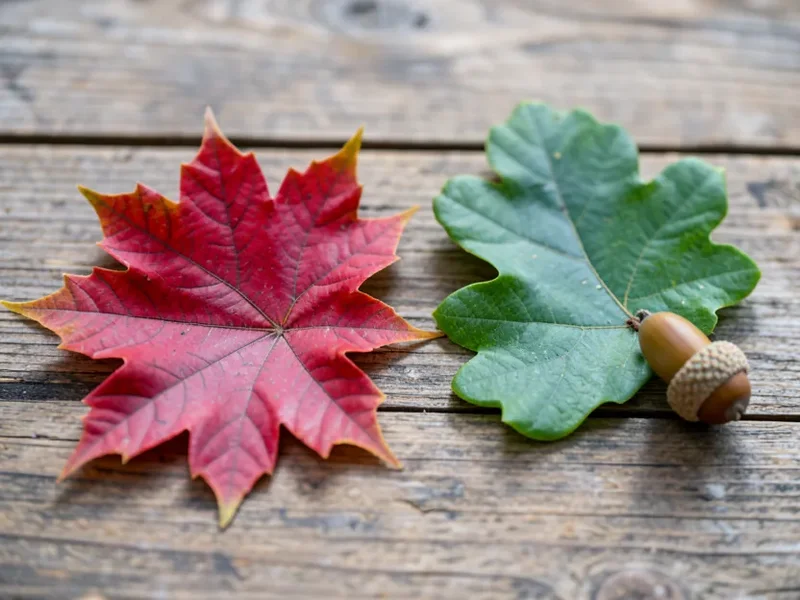
Look at the leaves: maple leaves have smooth-edged, pointed lobes, while oak leaves have rounded or bristle-tipped lobes with a rougher texture. Oaks drop acorns; maples drop the double-winged “helicopter” seeds (samaras). Maple bark stays relatively smooth longer, while oak bark is deeply ridged even on younger trees.
Do maple trees grow faster than oak trees?
Generally yes, but it varies a lot by species on both sides. A fast-growing species like red maple can put on 2 feet or more a year, while slow-growing white oak may add well under a foot annually. Red oak, though, grows at a pace closer to red maple – so “maple grows faster than oak” is a generalization, not a rule that holds for every species pairing.
Is maple or oak wood harder?
It depends which maple and which oak. Hard (sugar) maple has a Janka hardness around 1,450 lbf, which is harder than red oak (about 1,290 lbf) and close to white oak (about 1,360 lbf). Soft maples like red maple or silver maple, by contrast, are notably softer than either oak – around 950 lbf – so “maple vs oak” hardness answers depend entirely on which species of each you’re comparing.
How do I identify an oak tree?
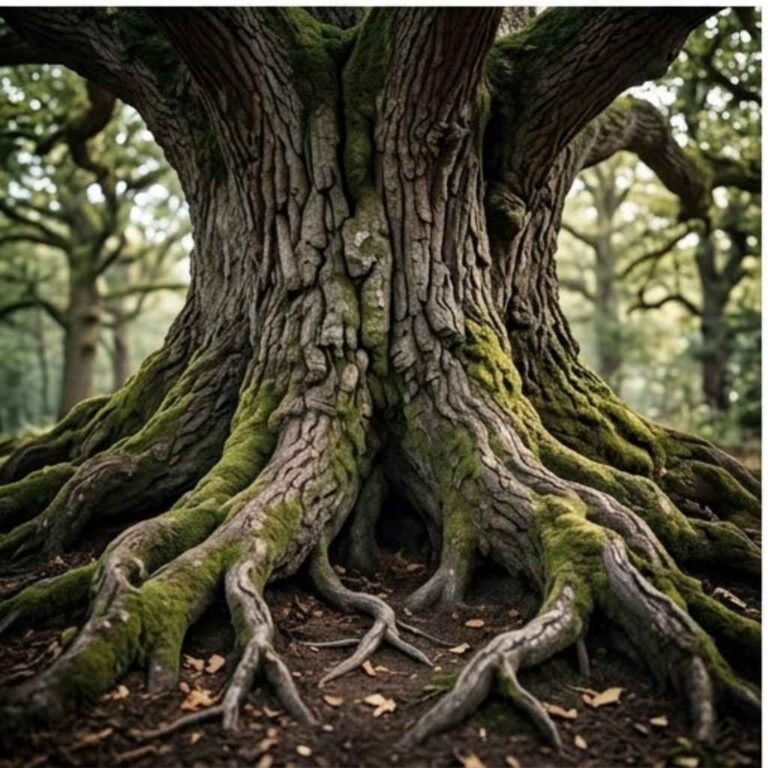
Look for lobed leaves (rounded lobes on white oaks, pointed bristle-tipped lobes on red oaks), acorns, and thick, deeply furrowed bark even on a relatively young trunk. Oaks also tend to hold some dead leaves through winter (a trait called marcescence), which is a quick way to spot one in a bare winter landscape.
Conclusion
There’s no single winner between maple and oak – it comes down to which species of each, your soil and climate, and whether you’re planting for shade, longevity, or eventual wood use. Test your soil before you plant either one, and remember that “maple” and “oak” each cover a wide range of growth rates and wood hardness depending on the exact species.
Sponsored / affiliate links. As an Amazon Associate I earn from qualifying purchases. I may earn additional commission from eligible campaigns.