J-B Welding Glue: Which J-B Weld Actually Bonds Wood?
J-B Welding Glue is the search-engine name for J-B Weld, a two-part epoxy that has nothing to do with welding. It bonds by chemical cure, not heat, and the steel in the name is a filler, not a metal-to-metal fusion. So the real question for a woodworker is not whether it is strong. It is which J-B Weld product suits wood, because the company sells dozens of products that behave very differently.
This guide compares the wood-relevant products using the numbers J-B Weld publishes on its own product pages: set time, cure time, tensile rating and heat limit. It also covers the one mistake that ruins most wood repairs with epoxy, and where to go next for sanding, removal and glue selection.
What J-B Welding Glue Really Is
Best All-Round J-B Weld Pick
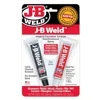 |
J-B Weld 8265S Original Cold-Weld Steel Reinforced Epoxy, 2 oz The classic two-part J-B Weld that the rest of this guide compares everything against.
|
J-B Weld calls its original product the Original Cold Weld: a two-part epoxy system with a 1:1 mixing ratio. You squeeze equal amounts from the two tubes, mix them until the color is uniform, and apply. Once cured it can be shaped, tapped, filed, sanded and drilled. J-B Weld rates it at 6220 PSI tensile strength and says it withstands up to 550°F once fully cured.
That name causes two common misunderstandings. First, “cold weld” is marketing shorthand: nothing is fused, and there is no arc or flame involved. Second, it does not bond through some special “metallic bonding” process. It is an epoxy adhesive that grips a properly cleaned and roughened surface, the same way any structural epoxy does. That is why surface prep matters more than the brand.
It is also not a wood glue. Standard PVA wood glue works by soaking into wood fibers and is meant for tight-fitting joints. Epoxy fills gaps and bonds dissimilar materials, but it cures rigid, which matters for wood that moves with humidity. For the wood-to-wood joints that wood glue handles well, see our guide to strengthening a wood glue joint.
J-B Weld Products Compared for Wood Work
These figures come straight from J-B Weld’s own product pages. The tensile numbers are the manufacturer’s ratings, and the pages do not describe the test method, so treat them as a way to rank products against each other rather than a guarantee for your joint.
| Product | Mix | Set time | Full cure | Rated strength | Heat limit | Listed for wood? |
|---|---|---|---|---|---|---|
| J-B Weld Original (twin tube) | 1:1 | 4-6 hours | 15-24 hours | 6220 PSI | 550°F | Yes |
| KwikWeld | 1:1 | 6 minutes | 4-6 hours | 4360 PSI | 250°F | Yes |
| WoodWeld syringe | 1:1 | 15 minutes | 30 minutes | 3770 PSI | Not stated | Yes, wood-specific |
| KwikWood putty | Knead by hand | 15-25 minute work life | 1 hour | 2450 PSI | Not stated | Yes, wood-specific |
| SteelStik putty stick | Knead by hand | 5 minutes | 1 hour | 4000 PSI | 350°F | Not listed (metals) |
Here is the part most comparison pages miss. The highest PSI number belongs to the slowest product, and the two products J-B Weld builds specifically for wood have the lowest ratings on the chart. That is not a flaw. In a typical wood repair the wood fibers around the joint are usually the weakest link, so a rating well above the wood’s own strength buys you little, while a 30-minute cure means you can clamp, sand and finish the same afternoon. For furniture, trim and door repairs, WoodWeld and KwikWood are the better fit. The Original earns its place when the repair spans wood and something else.
One more catch from that table: SteelStik is the only product in the list whose page does not name wood as a surface. It lists metals. If you grab a putty stick for a wood job because the stick format is convenient, you are using a product outside its listed use.
Which J-B Weld to Use for Each Wood Repair
Wood to metal or hardware
Use the Original when the cure time is not a problem, such as a metal bracket, hinge plate or stripped screw hole where you can leave the piece overnight. KwikWeld is the pick when you need to hold parts together within minutes, at the cost of a lower heat limit. Our guides on gluing wood to metal and joining metal to wood cover the joint design side.
Split, cracked or chipped wood
WoodWeld in the syringe gives you the 1:1 ratio without measuring, and J-B Weld says it cures to a light tan and can be shaped, tapped, filed, sanded and drilled. It suits furniture repair, doors, windows and trim.
Rotted or missing wood
KwikWood is a hand-kneaded putty. J-B Weld describes it as formulated to repair and rebuild wood, curing to the density of wood, with a 15 to 25 minute work life and sanding or painting after 60 minutes. Work fast: once the putty starts to stiffen you are past the window. We cover timing in more detail in how long KwikWood takes to dry.
How to Get a Strong Bond on Wood
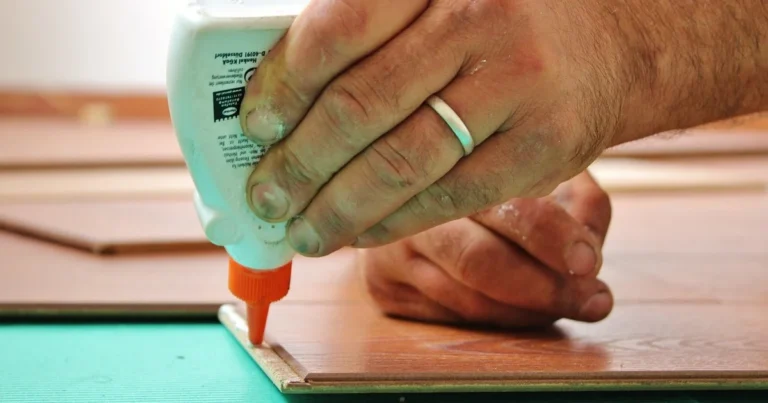
J-B Weld’s own instructions are short: clean the surface of dirt, grease, oil, paint or loose debris, preferably with a detergent or degreaser, then roughen it with a file or coarse sandpaper. Mix equal parts on a disposable surface, apply, and leave it for the stated set and cure times. For wood, three additions make the difference.
- Remove old finish and old glue. Epoxy needs bare, dry wood. Paint, varnish or leftover PVA will fail before the epoxy does.
- Keep the joint tight. Clamp lightly so a thin, even layer of epoxy remains. Squeezing every drop out starves the joint, and a gap-filling layer is the reason to use epoxy in the first place.
- Do not disturb it while it sets. A joint moved during the set window is weaker. Check the set and cure times in the table above against your room temperature, since epoxy generally cures more slowly when it is cold.
For general mixing technique and ratios that apply to any two-part epoxy on wood, see how to mix two-part epoxy for wood repairs, and for realistic strength-over-time expectations see epoxy set and strength timeline.
Sanding, Painting and Removal
Cured J-B Weld can be sanded, drilled and painted, according to the product pages, but it is hard and sands slowly compared with wood. Our page on whether J-B Weld is sandable goes through the technique. If you need to undo a repair, see how to remove J-B Weld. Fresh epoxy also bonds best to cured epoxy when the old surface is abraded first, which we explain in will epoxy stick to cured epoxy.
Safety basics
Mixed epoxy resin and hardener can irritate skin and eyes, so wear nitrile gloves and eye protection, work with ventilation, and keep it away from food surfaces. Each J-B Weld product has a Safety Data Sheet linked from its product page, and that is the document to read for the specific product you buy, including first-aid steps.
Frequently Asked Questions on J-B Welding Glue
Is J-B Welding Glue the same as welding?
No. J-B Weld is a two-part epoxy that cures chemically at room temperature. There is no heat or fusion involved, which is why J-B Weld calls the original a cold weld.
Does J-B Weld work on wood?
Yes. J-B Weld lists wood as a surface for the Original and KwikWeld, and sells WoodWeld and KwikWood specifically for wood repair. For wood-only repairs the wood-specific products cure much faster.
How long does J-B Weld take to set and cure?
The Original sets in 4 to 6 hours and fully cures in 15 to 24 hours. KwikWeld sets in 6 minutes and cures in 4 to 6 hours. WoodWeld cures in 30 minutes and KwikWood can be sanded after 60 minutes.
How strong is J-B Weld?
J-B Weld rates the Original at 6220 PSI tensile strength and KwikWeld at 4360 PSI. These are manufacturer ratings, and on wood the surrounding wood is often the limiting factor.
What heat can J-B Weld take?
J-B Weld states the Original withstands up to 550°F once fully cured and KwikWeld up to 250°F. Check the product page for the specific product before using it near a heat source.
Conclusion
J-B Welding Glue is really a family of epoxies, and picking the right one matters more than picking the strongest. Use the Original when wood meets metal and time is not tight, KwikWeld when you need a fast set, and WoodWeld or KwikWood for pure wood repairs where you want to sand and finish the same day. Prep the surface, mix equal parts, and give it the full cure time.
Sponsored / affiliate links. As an Amazon Associate I earn from qualifying purchases. I may earn additional commission from eligible campaigns.