Live Edge Ash Tables: Grain, Sapwood Contrast & What to Look For
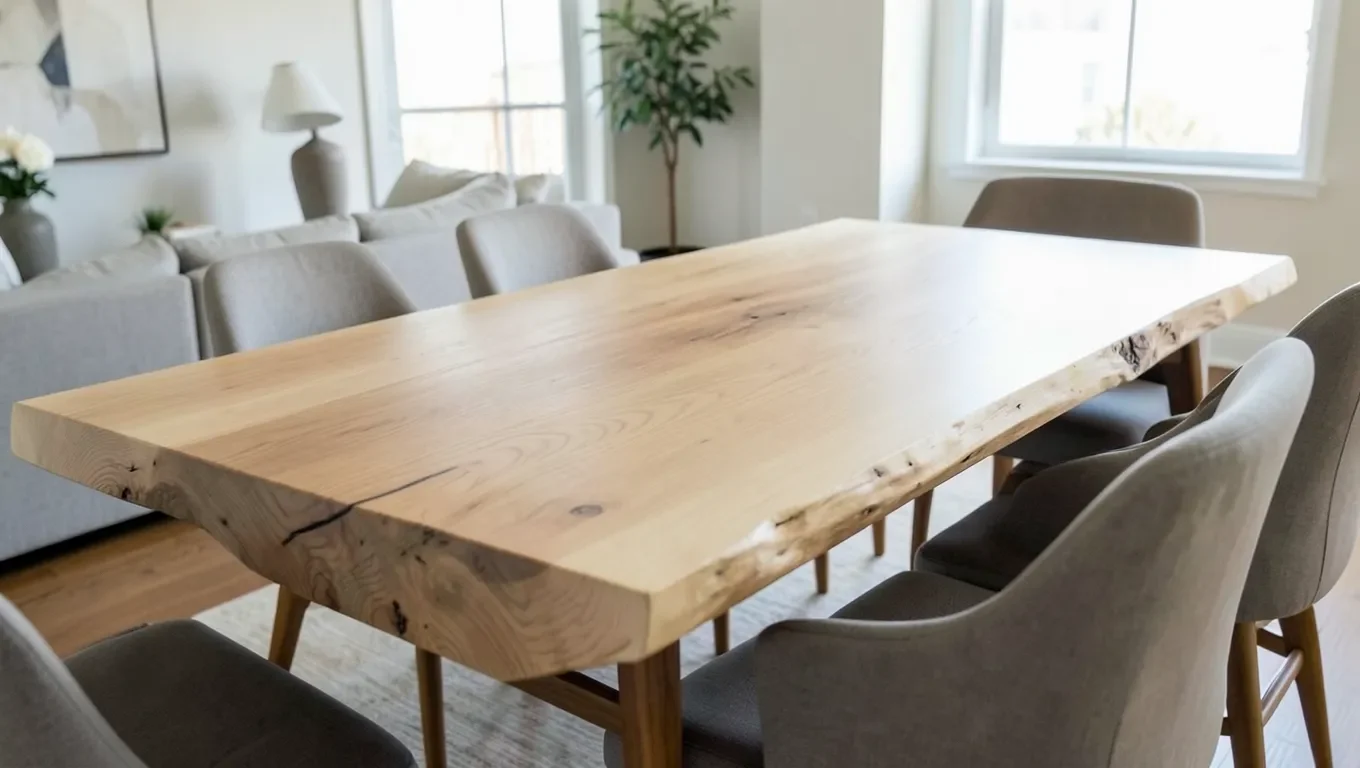
Live edge ash refers to ash slabs milled with their natural, uncut outer edge left intact rather than squared off into a standard board. What sets ash apart from other live edge species is the contrast between its pale, almost white sapwood and its slightly darker tan-to-brown heartwood – a single slab often shows both, giving the finished piece a two-tone look that species like walnut or oak don’t have.
What Makes Ash Different From Other Live Edge Species
Protect The Grain You Paid For
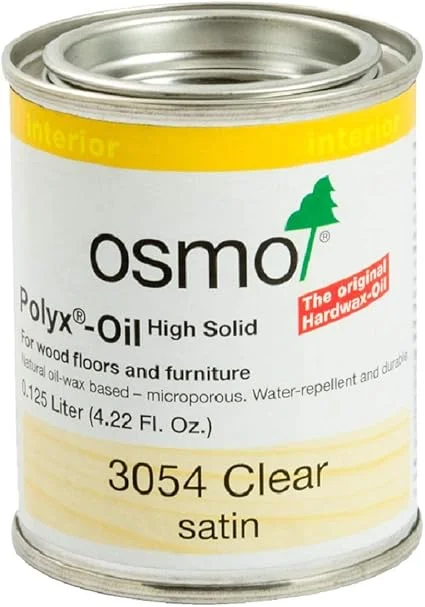 |
OSMO Polyx Hard Wax Oil, Clear Satin A hardwax oil that penetrates ash’s open grain rather than sitting on top of it, keeping the natural look while adding real water and scratch resistance.
|
Ash is a ring-porous hardwood with a straight, open grain pattern, similar in structure to oak but generally lighter in color and with less pronounced ray fleck. The sapwood-heartwood contrast is the biggest visual identifier: ash sapwood runs pale cream to white, while the heartwood is a light tan to grayish brown, and because sapwood makes up a large portion of the outer trunk, live edge ash slabs frequently show a wide band of pale wood running along part of the slab next to darker heartwood in the center or opposite edge.
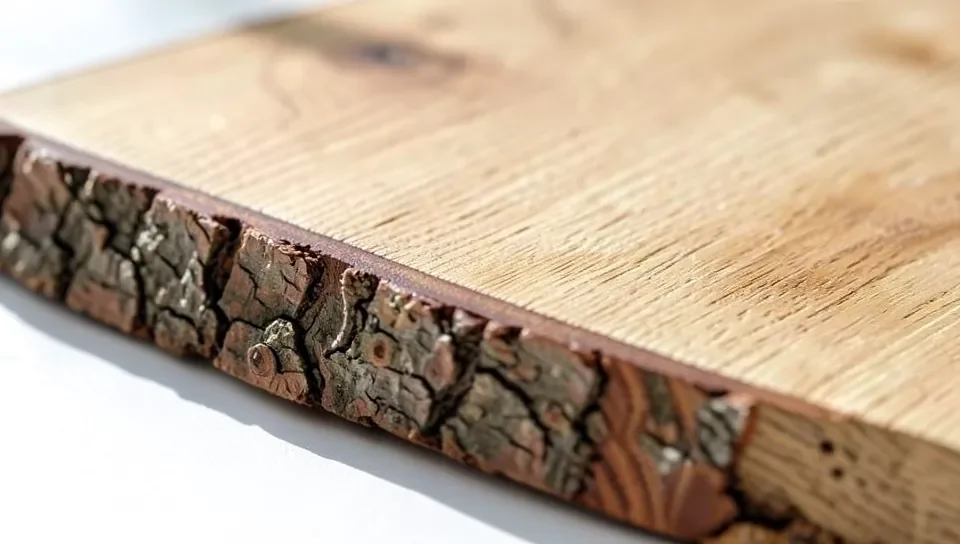
Structurally, ash is a hardwood in the same strength range as oak – it’s the traditional choice for tool handles, baseball bats, and hockey sticks precisely because it resists impact and doesn’t split easily under stress. That toughness carries over to furniture: an ash tabletop holds up to daily use, dents less easily than softer woods, and takes stain or clear finish evenly across both the pale sapwood and darker heartwood, though the two areas can absorb stain at slightly different rates, which is worth testing on an offcut before committing to a colored finish.
Where Live Edge Slabs Actually Come From
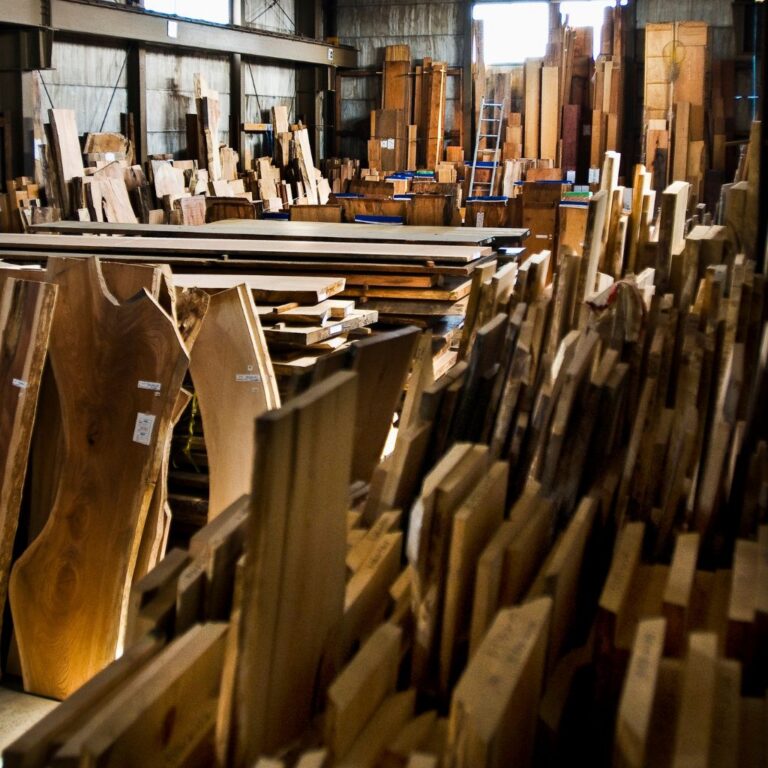
A common assumption is that live edge lumber only comes from trees that fell naturally, but that’s not how most of the supply actually works. The majority of live edge slabs on the market come from urban and salvage sourcing: trees removed for construction or development, storm-damaged trees that would otherwise be chipped, and ash trees specifically taken down because of emerald ash borer damage, which has killed a large number of ash trees across North America over the past two decades and made salvaged ash slabs relatively common. Buying from a mill or supplier that’s transparent about where a slab came from is a better indicator of responsible sourcing than assuming every live edge piece came from a tree that died of old age in a forest.
What To Look For When Buying A Slab
Moisture content matters more than almost anything else – a slab that isn’t properly kiln-dried or air-dried to somewhere around 6-8% moisture content will continue to move, crack, or cup after it’s built into furniture, regardless of how good it looks on the sawmill floor. Ask the seller directly what the moisture content is and how the slab was dried; a reputable slab dealer will know the number, not just say “it’s dry.”
Inspect the slab for checking (surface cracks that run along the grain, common at the ends) and for any live insect activity, especially in salvaged ash given the emerald ash borer’s prevalence – small emergence holes with D-shaped cross-sections are the borer’s signature and worth asking about specifically. A few structural cracks aren’t necessarily a dealbreaker; many live edge tables intentionally stabilize a crack with a butterfly (bowtie) key rather than avoiding slabs that have one, since a well-placed key can become a design feature rather than a flaw. Bring a tape measure and check the actual thickness and flatness of the slab in person or via detailed photos – slabs can cup or twist during drying even when everything else about them looks right.
Finishing And Maintaining An Ash Slab
A penetrating hardwax oil, like the one above, is the most common choice for live edge tables because it soaks into the open grain rather than forming a plastic-looking film on top of it, which keeps the natural sapwood-heartwood contrast visible rather than muting it under a thick film finish. A polyurethane or epoxy topcoat gives more scratch and heat resistance and is worth considering for a heavily used dining table, but it will change the surface’s look and feel more than an oil finish does.
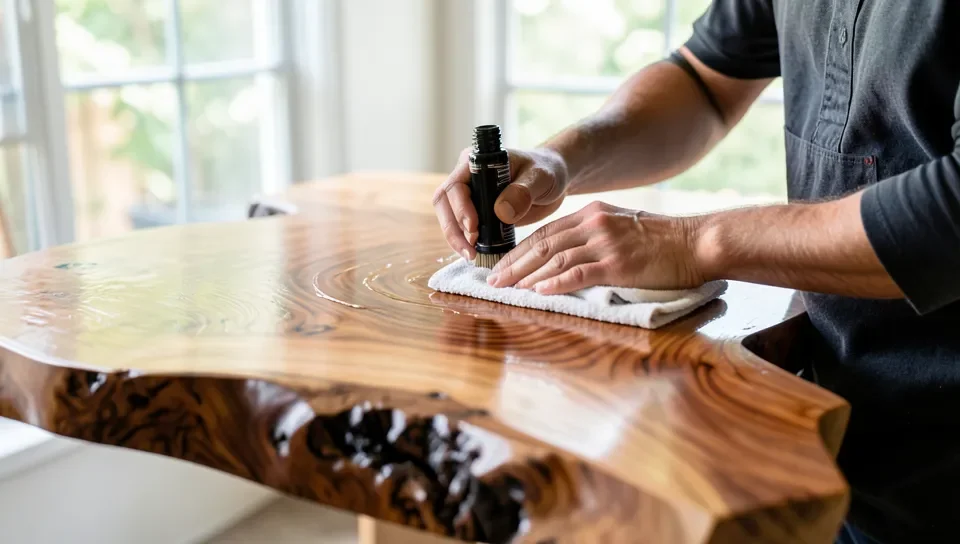
Day to day, dust with a soft, dry cloth and wipe up spills promptly rather than letting liquid sit on the finish. Keep the piece out of direct, sustained sunlight, since UV exposure fades the color contrast between sapwood and heartwood over time faster than it would on a single-tone wood. An oil finish typically needs a light reapplication every one to two years on a surface that sees regular use; a film finish like polyurethane lasts longer between applications but is harder to spot-repair if it does get damaged.
Frequently Asked Questions
Is Ash Good For Live Edge Furniture?
Yes. Ash has a straight, open grain and a distinctive light-to-medium color range that shows real contrast between the pale sapwood and the slightly darker heartwood, which is part of what makes live edge ash slabs visually interesting compared to more uniformly colored species. It’s also strong for its weight and takes finish evenly, making it a practical choice for a tabletop that will see daily use.
Why Is Live Edge Furniture So Expensive?
Live edge slabs cost more than dimensional lumber because each one requires a full log to be milled, dried, and stabilized as a single wide piece rather than cut down into standard boards – a process with a much higher failure rate from cracking or warping during drying. The wide, book-matched, or unusually figured slabs that make the best furniture pieces are also naturally rarer, and the labor to flatten, stabilize any cracks with butterfly keys or epoxy, and finish a single large slab takes longer than building the same size tabletop from glued-up boards.
Is Ash Good Wood For Furniture?
Yes, ash is a hardwood comparable to oak in strength and hardness, which is why it’s traditionally used for tool handles and baseball bats where impact resistance matters. For furniture, that same toughness means an ash tabletop resists dents and everyday wear better than many softer hardwoods, while its light color and visible grain give it a lighter, more contemporary look than darker woods like walnut.
Where Does Live Edge Wood Actually Come From?
Contrary to a common assumption, most live edge slabs don’t come from trees that fell on their own. The bulk of the supply comes from urban and salvage sources – trees removed for construction projects, storm-damaged trees, or those taken down because of disease or safety concerns – which sawmills and urban lumber programs mill into slabs instead of sending to a chipper. Buying from a mill that discloses its sourcing is a reasonable way to confirm a slab came from a legitimate salvage or sustainably managed source rather than being cut specifically for the slab market.
Conclusion
Ash earns its place among live edge species through the visual contrast between its pale sapwood and tan heartwood, backed by real hardwood strength that holds up to daily furniture use. Check moisture content and inspect for checking or insect damage before buying a slab, and choose a finish that suits how the piece will actually be used – a penetrating oil to keep the natural look, or a film finish for maximum durability on a high-traffic table.
Sponsored / affiliate links. As an Amazon Associate I earn from qualifying purchases. I may earn additional commission from eligible campaigns.