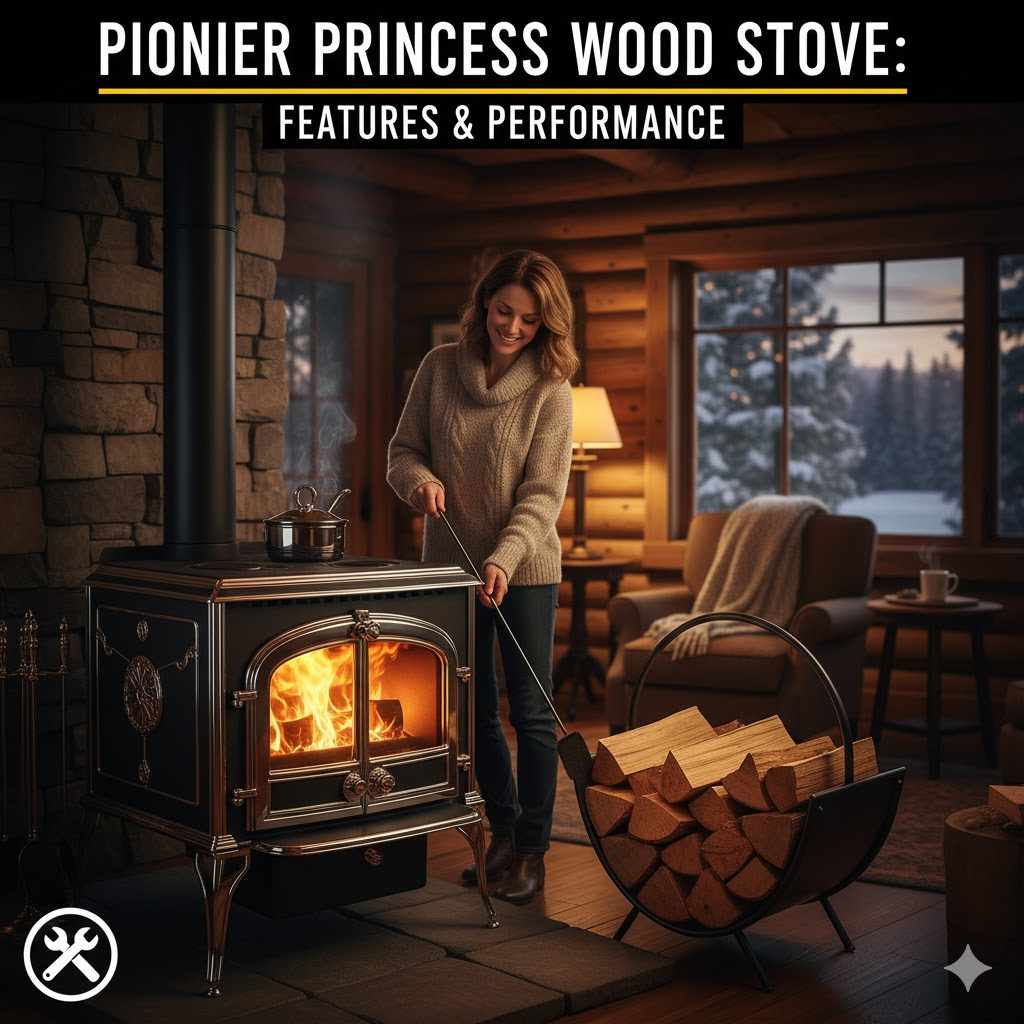
Pioneer Princess Wood Stove: Features & Performance
Getting started with a Pioneer Princess Wood Stove: Features & Performance can seem a bit tricky at first. There are many parts, and you might wonder where to begin. But don’t worry, it’s simpler than it looks!
We’ll walk through everything step-by-step. We’ll cover what makes this stove special and how well it works for you. Get ready to learn all about your stove in an easy way.
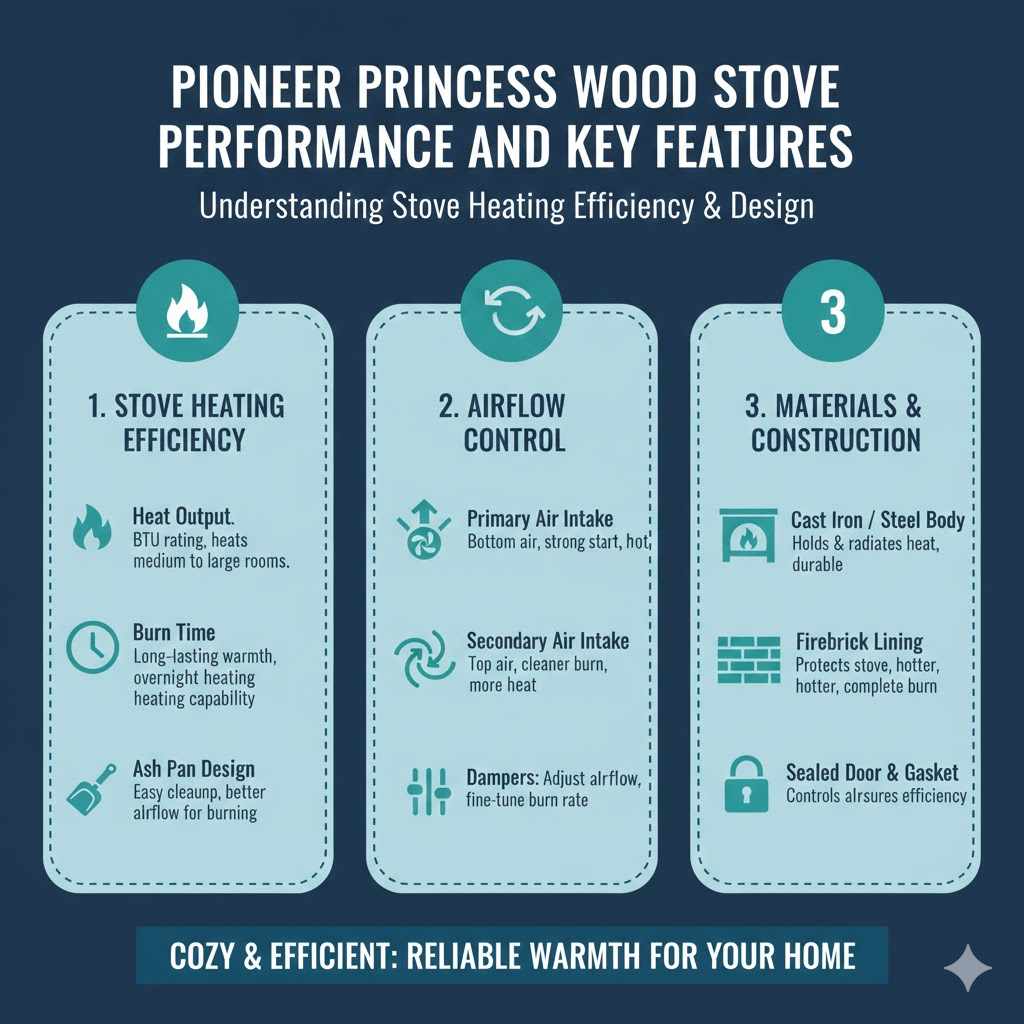
Pioneer Princess Wood Stove Performance and Key Features
Understanding the Pioneer Princess Wood Stove: Features & Performance is key to getting the most out of your heating. This stove is known for its classic design and solid construction. It aims to provide reliable warmth and a cozy atmosphere in your home.
We’ll explore its main abilities and what makes it a popular choice for many people. This section will highlight the parts that matter most for how well it heats your space and how easy it is to use daily.
Understanding Stove Heating Efficiency
Heating efficiency tells you how much of the wood’s energy actually turns into heat for your room. A more efficient stove uses less wood to produce the same amount of warmth. This saves you money and reduces how often you need to refuel.
The Pioneer Princess aims for good efficiency by using design elements that help burn wood completely.
Heat Output: This refers to how much heat the stove can generate. It’s often measured in BTUs (British Thermal Units). A higher BTU rating means it can heat a larger area.The Pioneer Princess offers a good heat output suitable for medium to large rooms.
Burn Time: Burn time is how long the stove can burn on a single load of wood. Longer burn times mean you don’t have to add wood as often, which is great for overnight heating or when you’re busy. Good stove design and proper airflow help extend burn times.
Ash Pan Design: An easy-to-access ash pan makes cleanup simpler. It collects the ash from burned wood, keeping the firebox clean for better airflow and more efficient burning. A well-designed ash pan means less mess and less effort during maintenance.
Airflow Control for Optimal Burning
Controlling the air that goes into the stove is very important. It’s like breathing for the fire. More air usually means a hotter, faster burn.
Less air means a slower, longer burn. The Pioneer Princess has specific ways to adjust this air. This lets you fine-tune the fire for different needs, like starting it up or keeping it going gently.
Primary Air Intake: This is the main air supply that helps get the fire started and burning strongly. Usually, it’s located at the bottom of the stove. Opening it more feeds the fire with oxygen, making it burn brighter and hotter, which is good for quickly warming a room or getting a fresh load of wood going.
Secondary Air Intake: This air is often preheated and comes in above the fire. It helps burn the gases that rise from the wood. This makes the stove burn cleaner and more efficiently, getting more heat from your wood and producing less smoke.It’s crucial for maximizing the energy in the wood.
Dampers: Dampers are like little doors or vents that you can open or close to control airflow. By adjusting the dampers, you can control how much air enters the stove. This allows you to set a steady, lower burn for long-lasting heat or a vigorous burn for quick warmth.
Material and Construction Quality
The materials a stove is made from greatly affect how it performs and how long it lasts. Sturdy materials mean the stove can handle high temperatures for many years. The Pioneer Princess is built with quality materials designed to last and perform reliably.
This means you can count on it for consistent warmth season after season.
Cast Iron or Steel Body: Many stoves use cast iron or heavy steel. These materials are excellent at holding and radiating heat. They also stand up well to the intense heat of a wood fire.A thick body helps distribute heat evenly into your living space, making it feel warmer.
Firebrick Lining: The inside walls of the firebox are often lined with firebricks. These bricks protect the stove’s body from extreme heat. They also help insulate the fire, keeping it hotter and burning more completely.This improves efficiency and reduces wear on the stove.
Sealed Door and Gasket: A well-sealed door prevents heat from escaping and uncontrolled air from entering. The gasket is a special seal around the door that ensures a tight fit. This seal is vital for controlling airflow and maintaining the stove’s efficiency, ensuring the fire only gets air where you want it to.
Exploring Pioneer Princess Wood Stove Features in Detail
Let’s take a closer look at the specific features that make the Pioneer Princess Wood Stove: Features & Performance stand out. These details are what make it work well and provide the comfort you expect. Knowing these parts helps you use the stove correctly and maintain it properly.
We’ll break down each key feature so you can understand its role in heating your home.
The Firebox Design
The firebox is where the wood burns. Its size and shape are very important. A well-designed firebox allows for good airflow around the logs.
This helps the wood burn completely and efficiently. The Pioneer Princess firebox is made to hold a good amount of wood and promote strong, clean burns. This means fewer refills and more heat for your home.
Size and Capacity: The firebox size determines how much wood you can load at once. A larger firebox generally means longer burn times. The Pioneer Princess offers a generous firebox that can accommodate decent-sized logs.This allows for extended heating periods without constant reloading.
Log Placement: How you arrange the wood in the firebox matters. Logs should be placed so air can reach them from all sides. This ensures even burning.The shape of the Pioneer Princess firebox supports good log placement for optimal combustion. Avoid packing logs too tightly.
Access for Cleaning: Keeping the firebox clean is essential for good performance. The design should make it easy to remove ash. The Pioneer Princess firebox is designed to allow for straightforward cleaning.Regular cleaning ensures proper airflow, which is vital for efficient burning.
The Glass Door and Viewing Window
Many wood stoves feature a glass door, allowing you to watch the fire. This adds to the cozy atmosphere. The glass is special to withstand high heat.
The Pioneer Princess often includes a good quality viewing window. It lets you enjoy the visual appeal of a wood fire while keeping the heat contained inside the stove. A clean window also lets you monitor the fire’s progress easily.
Tempered Glass: The glass used is specially treated to handle extreme temperatures. It prevents cracking or breaking from the heat of the fire. This is a safety feature and allows for direct viewing of the flames.Ensure the glass is properly sealed to prevent air leaks.
Air Wash System: Some stoves have an air wash system that directs a flow of air over the inside of the glass. This helps keep the glass clean by burning off soot and creosote buildup. A clean window means you can always see the beautiful flames.This feature helps maintain visibility over time.
Door Seal Quality: The seal around the glass door is as important as the door seal itself. It ensures that the only air entering the stove is controlled. A good seal prevents smoke from escaping into the room and helps maintain the efficiency of the burn by controlling the air supply.
Convection vs. Radiant Heat
Wood stoves produce heat in two main ways: convection and radiant heat. Convection heat warms the air, which then circulates around the room. Radiant heat is felt directly, like the warmth from a campfire.
The Pioneer Princess may use a combination of these to heat your space effectively. Understanding this helps you appreciate how it warms your home.
Radiant Heat: This is the direct heat you feel when you are near the stove. It travels in straight lines from the hot surfaces of the stove. The large metal surfaces of the Pioneer Princess radiate heat outwards, warming objects and people in its path.
Convection Heat: Some stoves are designed to circulate air more actively. They might have a fan or rely on natural convection. Cooler air enters the stove, gets heated, and then rises to warm the room.This can lead to more even temperature distribution throughout the space.
Heat Distribution: How well the stove distributes heat depends on its design and your room layout. A good distribution means no hot or cold spots. The Pioneer Princess aims for effective heat distribution, providing comfort throughout the area it’s intended to heat.
Ash Management System
Dealing with ash is a necessary part of owning a wood stove. The Pioneer Princess has systems to make this easier. A good ash management system means less mess and quicker cleanups.
This lets you spend more time enjoying the warmth and less time on chores.
Pioneer Princess Wood Stove Performance and User Experience
How a stove actually works in your home is what matters most. The Pioneer Princess Wood Stove: Features & Performance is judged by its ease of use, reliability, and the comfort it provides. We’ll look at what users experience and why this stove is chosen by many.
This section will cover practical aspects that affect your daily life with the stove.
Ease of Starting and Re-lighting
Getting a fire started should be simple. The Pioneer Princess is designed for ease of use. You won’t struggle to get a fire going, even if you’re new to wood stoves.
Re-lighting a dying fire is also made easy, so you can quickly get it going again.
Quick Ignition: With proper technique and dry wood, the Pioneer Princess lights quickly. Adjusting the air controls properly is the key to a fast start. This means less waiting time for warmth.
Maintaining a Coal Bed: A good coal bed is essential for easy re-lighting. The stove’s design helps create and maintain this bed of hot coals. This makes adding new wood and getting the fire going again very simple.It’s a sign of good heat retention.
User-Friendly Controls: The air intake controls are typically easy to find and adjust. This simplicity is a big plus for beginners. You can control the fire’s intensity with confidence.
Heating Capacity and Room Size
Every stove has a limit to how much space it can effectively heat. The Pioneer Princess is rated for certain room sizes. Knowing this helps you place the stove in the best spot for even warmth.
It’s important to match the stove’s power to your room’s needs.
Recommended Room Size: Manufacturers usually specify the square footage a stove can heat. The Pioneer Princess is often suitable for medium to large rooms, depending on insulation. Always check the specific model’s rating.
Heat Distribution in a Home: In an open-plan home, the heat can spread widely. In a house with many small rooms, heat might not reach everywhere. Strategic placement and sometimes fans can help improve distribution.The stove’s radiant heat warms objects nearby.
Insulation Matters: How well your home is insulated greatly affects how efficiently the stove heats it. A well-insulated home will hold heat longer, meaning the stove doesn’t have to work as hard. Poor insulation means heat escapes quickly.
Durability and Longevity
A wood stove is an investment. You want it to last for many years. The Pioneer Princess is known for its solid build.
This means it can withstand daily use and the high temperatures involved in burning wood for a long time. Quality materials and construction lead to a stove that stands the test of time.
Robust Construction: The use of heavy-duty materials like cast iron or thick steel ensures the stove can handle constant use. This build quality contributes to its long lifespan. It’s built to be a reliable heat source for decades.
Maintenance for Longevity: Like any appliance, regular maintenance is crucial. Cleaning the stove, checking seals, and ensuring the chimney is clear will help it last much longer. Simple upkeep makes a big difference.
Resistance to Wear and Tear: High temperatures and constant use can wear down parts. A well-made stove like the Pioneer Princess resists this wear better. This means fewer repairs and continued reliable performance over the years.
Environmental Considerations and Emissions
Modern wood stoves are designed to be more environmentally friendly. They burn wood more completely, creating less smoke and pollution. The Pioneer Princess, like many current stoves, aims to meet emission standards.
This means cleaner air both inside your home and outside.
Clean Burning Technology: Advanced stoves use features like secondary combustion to burn smoke and gases. This process extracts more heat from the fuel and reduces particulate emissions. The Pioneer Princess may incorporate these technologies for cleaner burns.
EPA Standards: Many stoves are built to meet Environmental Protection Agency (EPA) standards for emissions. This ensures they are among the cleanest burning options available. Compliance with these standards indicates a more efficient and less polluting appliance.
Fuel Efficiency and Wood Use: A more efficient stove burns less wood. This means fewer trees are harvested and less ash is produced. Choosing an efficient stove is good for your wallet and the environment.The Pioneer Princess strives for fuel efficiency through its design.
Tips for Operating Your Pioneer Princess Wood Stove
To get the best Pioneer Princess Wood Stove: Features & Performance, a few simple operating tips can make a big difference. These are practical steps that anyone can follow. They will help you get the most heat, burn wood efficiently, and keep your stove in good condition.
Learning these tricks will make using your stove a pleasure.
Selecting and Preparing Wood
The type and condition of the wood you burn are critical. Not all wood is the same. Using the right kind of wood makes your stove run better and safer.
Seasoned Hardwoods: Always use seasoned (dried) hardwood like oak, maple, or ash. Seasoned wood has a moisture content of about 20 percent. This means it burns hotter and cleaner than wet wood.Wet wood produces more creosote, which can cause chimney fires.
Moisture Content Testing: You can buy a wood moisture meter. It’s a small tool that tells you how dry your wood is. Insert the prongs into the wood to get a reading.Aim for 20% or less for best results.
Storage of Firewood: Store firewood off the ground and cover it at the top to protect it from rain and snow. This keeps it dry and ready to burn. Good airflow around the woodpile is also important for drying and preventing rot.
Starting and Maintaining the Fire
Getting a fire started and keeping it going is an art. But with a few tips, it becomes easy.
Kindling and Tinder: Start with dry tinder (like paper or cotton balls) and small pieces of kindling (small, dry twigs or split wood). Light the tinder, and let the flame catch the kindling. This builds a good base for larger logs.
Gradual Increase of Air: Once the kindling is burning well, add slightly larger pieces of wood. Gradually open the air controls as the fire grows. This provides enough oxygen for a strong burn without letting the fire get out of control too quickly.
Loading Logs: When you have a good bed of coals, load the stove with seasoned firewood. Don’t overload the firebox; leave space for air to circulate. Close the door securely and adjust air controls for the desired burn rate.
Cleaning and Maintenance Schedule
Regular cleaning keeps your stove working efficiently and safely.
Daily Checks: Empty the ash pan as needed. Make sure the air controls are clean and move freely. Check the door gasket for any signs of damage.
Weekly Cleaning: Brush out any loose ash from the firebox. Wipe down the glass door to keep it clear. Ensure the air wash system, if present, is functioning correctly.
Annual Chimney Sweep: It is crucial to have your chimney inspected and swept by a professional at least once a year. This removes creosote buildup, which is a major fire hazard. A clean chimney ensures good draft and safe operation.
Troubleshooting Common Issues
Sometimes, you might run into a small problem. Here are ways to fix them.
Smoke in the Room: This often happens if the door is opened too quickly or if the chimney draft is poor. Ensure the air controls are set correctly before opening the door. Check that the chimney is not blocked.
Poor Heating: If the stove isn’t heating well, check your wood. Wet wood burns poorly. Also, ensure the firebox is not too full or too empty, and that air controls are set for a good burn.
Glass Soot Buildup: If the glass gets very sooty, it could mean the wood is wet or the air controls are not set for an efficient burn. Try using drier wood and adjusting the air intakes to allow for more secondary air combustion.
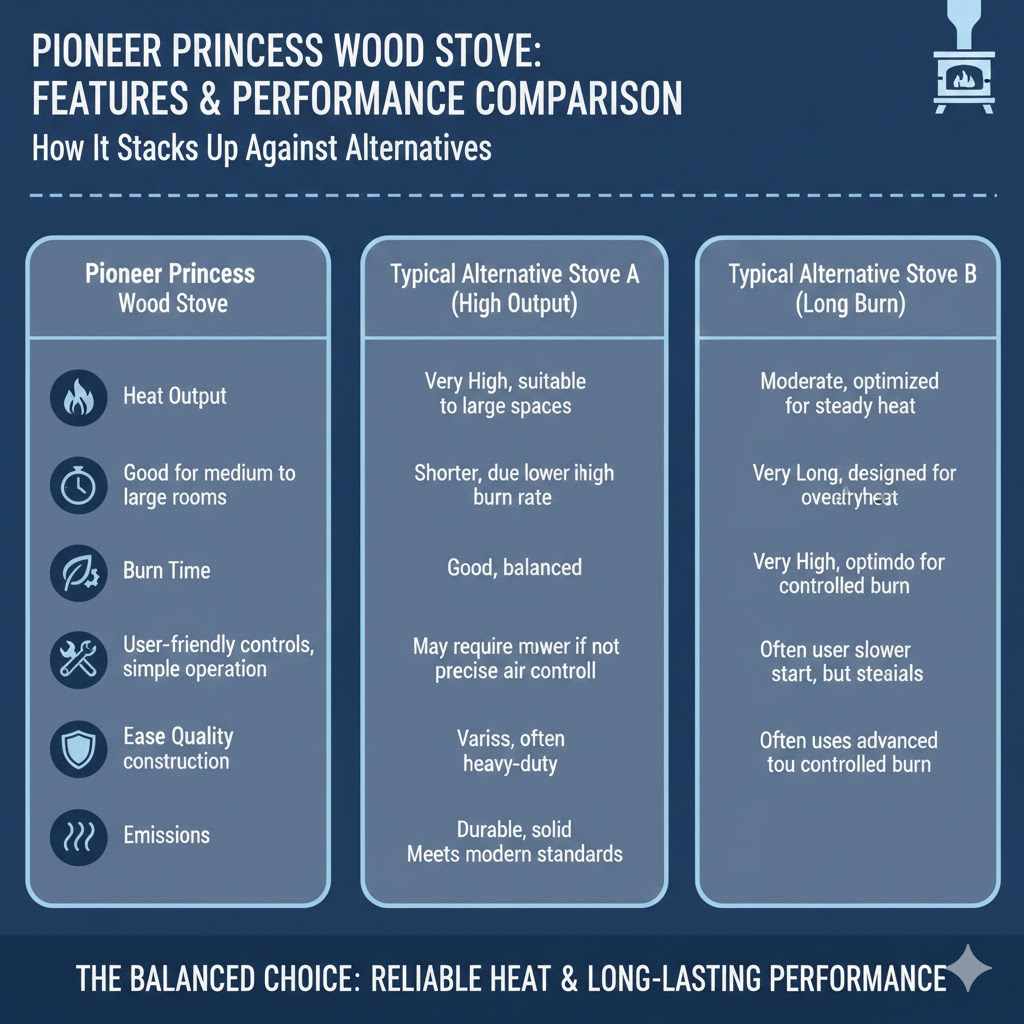
Pioneer Princess Wood Stove: Features & Performance Comparison
To help you understand the Pioneer Princess Wood Stove: Features & Performance better, let’s look at how it stacks up. Wood stoves can vary greatly. Comparing features helps highlight what makes the Pioneer Princess a good choice for many.
This section will show its strengths and where it fits among other options.
When choosing a wood stove, people look for different things. Some prioritize high heat output, while others want a very long burn time. The Pioneer Princess often balances these needs well.
It aims to be a reliable all-around performer.
| Feature | Pioneer Princess Wood Stove | Typical Alternative Stove A (High Output) | Typical Alternative Stove B (Long Burn) |
|---|---|---|---|
| Heat Output | Good for medium to large rooms | Very High, suitable for large spaces | Moderate, optimized for steady heat |
| Burn Time | Good, moderate to long | Shorter, due to high burn rate | Very Long, designed for overnight |
| Efficiency | Good, balanced | Can be lower if not managed well | Very High, due to controlled burn |
| Ease of Use | User-friendly controls, simple operation | May require more precise air control | Can be slower to start, but steady |
| Build Quality | Durable, solid construction | Varies, often heavy-duty | Often uses advanced materials |
| Emissions | Meets modern standards | Varies, newer models are cleaner | Often very low due to controlled burn |
The table shows that the Pioneer Princess often hits a sweet spot. It provides ample heat without sacrificing too much burn time. This makes it a versatile choice for many homes.
Alternative stoves might focus on one extreme, like maximum heat or longest burn, but the Pioneer Princess offers a solid balance.
For example, a home that needs to be heated quickly might prefer Stove A for its high output. However, someone looking to keep a consistent, lower heat for an entire evening might choose Stove B for its long burn capability. The Pioneer Princess offers a practical middle ground that appeals to a broad range of users.
Frequently Asked Questions
Question: How much wood can I fit in a Pioneer Princess wood stove?
Answer: The amount of wood you can fit depends on the specific model of the Pioneer Princess, but they are generally designed to hold a good quantity of logs, allowing for reasonable burn times without constant reloading.
Question: Is the Pioneer Princess wood stove easy to light?
Answer: Yes, the Pioneer Princess is designed for ease of use. With dry wood and proper airflow control, it should light up quickly and efficiently, even for beginners.
Question: How often do I need to clean the ash from my Pioneer Princess stove?
Answer: You will need to empty the ash pan whenever it becomes full, which could be daily or every few days depending on how much you use the stove and the type of wood burned. Regular ash removal is important for efficiency.
Question: Can the Pioneer Princess wood stove be used as a primary heat source?
Answer: Yes, the Pioneer Princess is designed to provide significant heat output and can serve as a primary heat source for appropriately sized and insulated living spaces.
Question: Do I need to get my chimney cleaned if I use a Pioneer Princess wood stove?
Answer: Absolutely. It is very important to have your chimney professionally inspected and cleaned at least once a year to remove creosote and prevent chimney fires, regardless of the wood stove model you use.
Summary
The Pioneer Princess Wood Stove: Features & Performance offers a reliable and efficient way to heat your home. Its well-designed firebox, quality construction, and user-friendly controls make it a great choice. You can expect good heat output, manageable burn times, and straightforward maintenance.