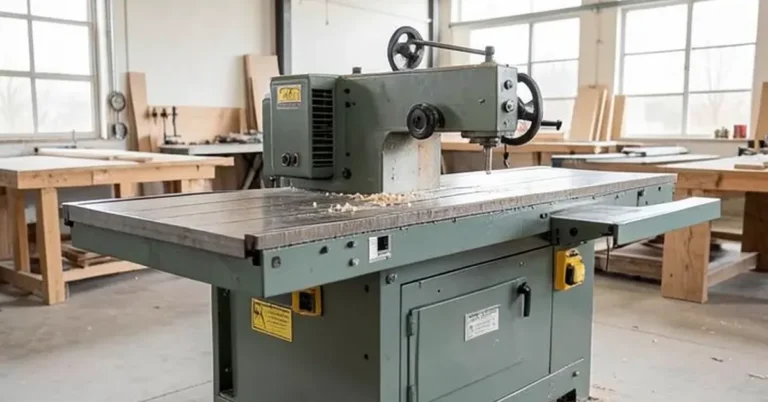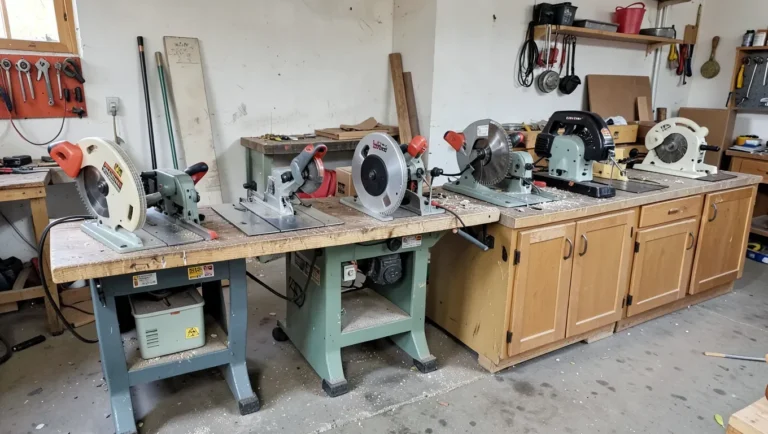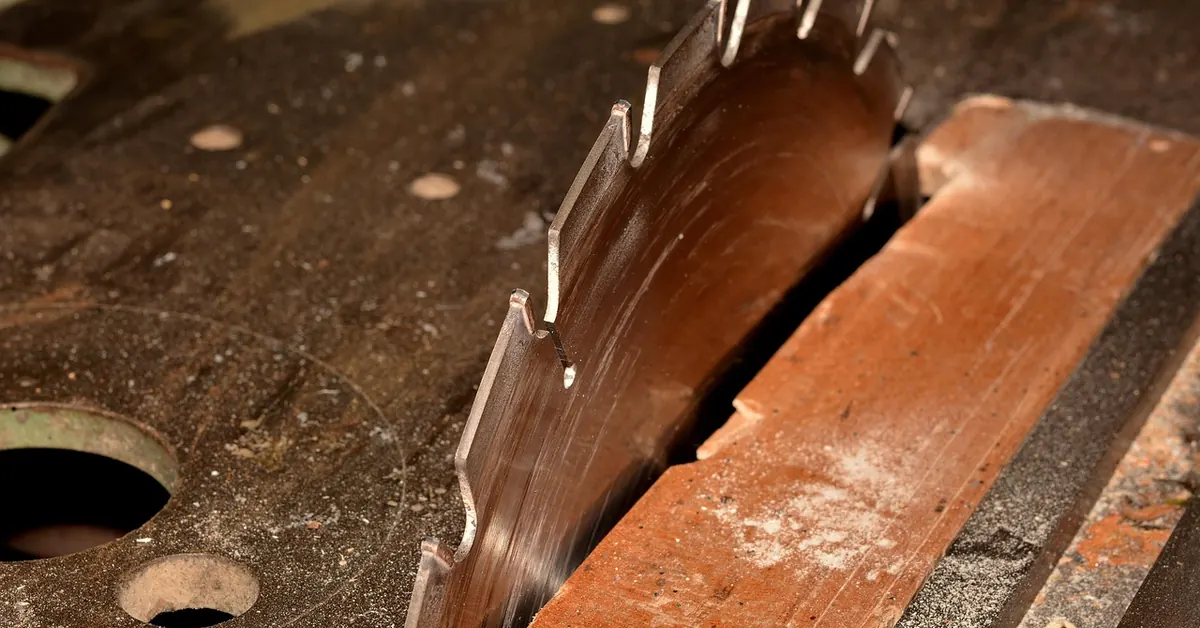
Powermatic Model 66 Table Saw: Specs, Weight & Used Price
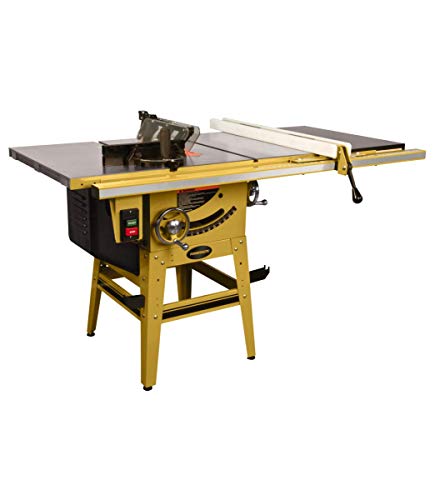
The Powermatic Model 66 is a 10-inch, left-tilt cast-iron cabinet saw built from the mid-1960s until Powermatic retired it in 2008, so every one for sale today is used. Typical specs are a 5/8-inch arbor, a 3 or 5 HP motor, and about 550 to 650 pounds of weight. The catch is that older units predate modern riving knives. This guide covers the specs, motors, used prices seen in listings, and an inspection checklist.
This post contains affiliate links. As an Amazon Associate we earn from qualifying purchases.
Powermatic Model 66 Specs and Weight
Best Push Block For An Older Saw | |
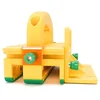 |
GRR-RIPPER+ by Microjig Push Block, $49.00 A Model 66 built before riving knives became standard relies on you and a push block to keep hands clear of the blade, which is the exact gap this tool fills on a heavy cabinet saw.
|
As an Amazon Associate we earn from qualifying purchases.
The Model 66 was a widely used heavy cabinet saw for decades. Reviewers point to its large interior castings, a trunnion that mounts the motor on the pivot shaft instead of hanging its weight on the arbor, and sealed ball bearings in the arbor. Those are the reasons used ones still sell for real money. Below are the figures that show up repeatedly across the owner, dealer, and review pages read for this guide.
| Spec | Typical Model 66 figure | Note |
|---|---|---|
| Blade and arbor | 10 in blade, 5/8 in arbor | Arbor sits in sealed ball bearings |
| Tilt | Left tilt | Arbor tilts away from the fence |
| Table size | About 28 x 38 in with extensions | Cast iron |
| Depth of cut at 90 degrees | About 3-1/8 to 3-1/2 in | Sources differ, measure your saw |
| Rip capacity | 25 in with standard rails, 50 to 52 in with Accu-Fence | Depends on fence option |
| Motor | 1.5 to 5 HP, 3600 RPM | Single or three phase |
| Weight | About 550 to 650 lb | A 5 HP unit with stand ships near 800 lb |
| Dust port | 4 in bottom cabinet port | Reviews are mixed on factory collection |
One thing the spec sheets gloss over is the drive. An older description lists three A-section belts, while a review of a 2000s-era 5 HP saw lists two 3VX belts. Belt count and type changed over the years, so match replacement belts to your saw’s serial era or take the old belts to a supplier before ordering.
About 550 to 650 lb is the typical weight of a complete Model 66 cabinet saw. Sources: Engineer Fix and WoodCentral review figures.
Powermatic 66 Motors: Single Phase vs Three Phase
Motor choice is the biggest price and usability factor on a used Model 66. Powermatic offered everything from 1.5 HP to 5 HP over the years, in both single-phase 230V and three-phase versions. A single-phase 3 HP or 5 HP saw plugs into a dedicated 230V circuit in most home shops. A three-phase saw needs help.
Owner forums describe three routes for a three-phase saw. A static phase converter is cheap but one thread reports it costs about a third of the motor’s power, so a 5 HP motor behaves more like 3 HP. A variable frequency drive can turn single-phase input into three-phase output, though most that accept single-phase input top out around 3 HP. A rotary converter makes true three-phase power. These are forum accounts, not wiring instructions.
Flag for a licensed electrician: motor voltage, breaker size, wire gauge, and any phase converter or drive installation should be decided by a licensed electrician looking at your actual motor nameplate.
Is the Powermatic 66 Still Made? What Replaced It
Powermatic retired the Model 66 in 2008. It had been in production for roughly four decades, and a woodworking retailer and several forum threads describe the PM2000 as its successor, with both models sold together until the last 66s were gone. Forum posters also note the Model 66 had a predecessor, the Model 65, built from about 1955 to 1965 with the trunnions on one side.
The PM2000 is not simply a newer paint job. Owners comparing the two on forums report the following differences.
| Feature | Model 66 | PM2000 |
|---|---|---|
| Blade guard setup | Older overarm guard and splitter design | Modern riving knife |
| Arbor lock | None reported | Arbor lock for blade changes |
| Mobility | Stationary base | Built-in casters |
| Where built | Tennessee, per forum posters | Taiwan, per forum posters |
| Availability | Used only | New with warranty |
Those are forum owner comments, not Powermatic specifications, so confirm details on any specific saw. The practical takeaway is that the 66’s reputation rests on build and fit, while the PM2000 adds the safety hardware a 2008 design lacked. If you want the 66’s heavy castings and are willing to upgrade the guarding yourself, a used 66 makes sense. If you want a riving knife and a warranty, compare it with the options in our best table saws guide.
What a Used Powermatic 66 Costs
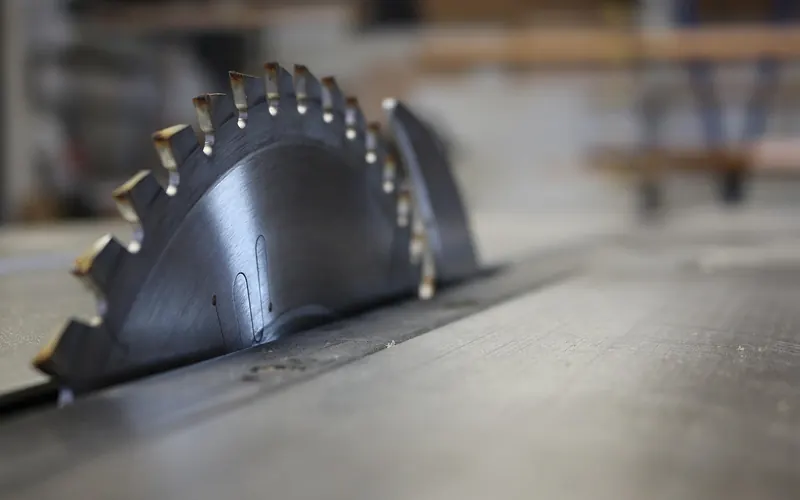
There is no fixed market price, and prices move with region and condition. As a snapshot from asking prices seen while researching this guide, eBay listings for complete Model 66 saws ranged from about $900 for a saw with a 50-inch fence to about $1,960 for a 3 HP single-phase unit, and a dealer listing for a 3 HP single-phase saw showed $1,150 as sold. Older forum threads mention $700 to $800 for single-phase saws. Treat these as asking prices, not appraisals, and check current listings before you negotiate.
- Motor phase: single-phase saws are generally more in demand for home shops, so they usually ask more than three-phase ones.
- Fence and rails: a complete, straight fence system adds value, and a replacement costs real money. See our guides to a replacement fence for a table saw and the Delta fence upgrade for what upgrades look like.
- Missing parts: a missing guard, splitter, or miter gauge is a bargaining point, and a safety to-do.
- Moving cost: at 550 to 650 lb, delivery or a rented trailer and helpers is part of the real price.
Safety on an Older Model 66: Splitter, Guard, and Push Blocks
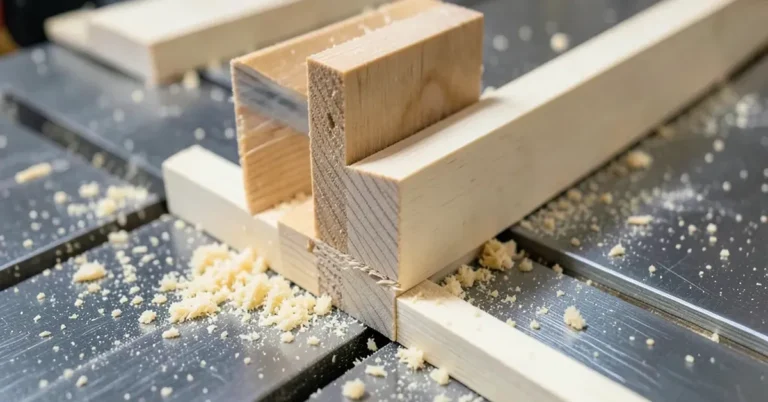
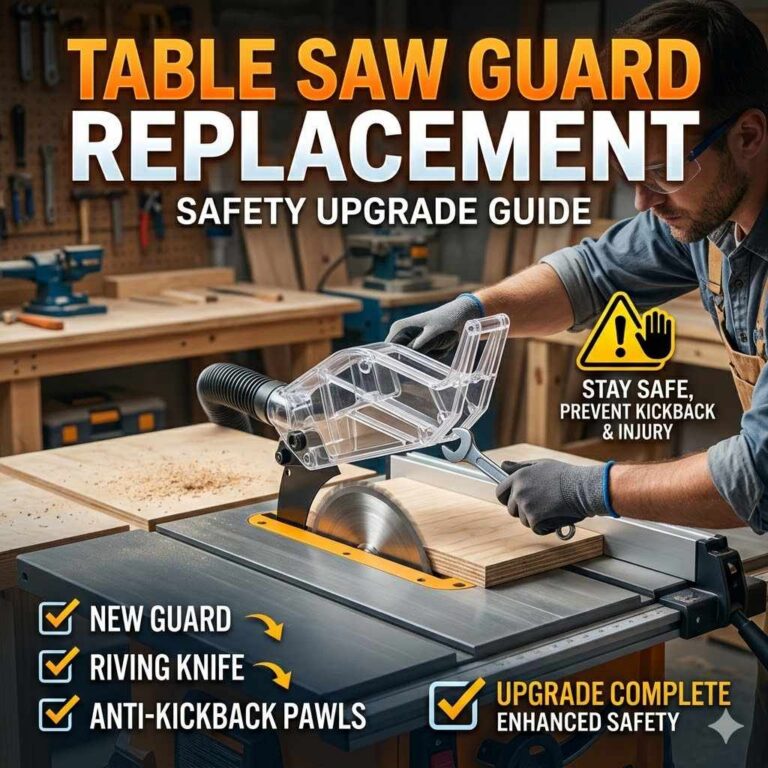
Saws like this were designed before riving knives were required on new saws, so the guarding on a used unit may be an overarm guard with a splitter, a partial set, or nothing at all. Safety guidance on used saws is consistent: confirm the guard works, confirm the splitter is present, and confirm it is aligned with the blade, because a splitter is what keeps the cut open so the board cannot pinch the blade or ride up on the rear teeth and kick back.
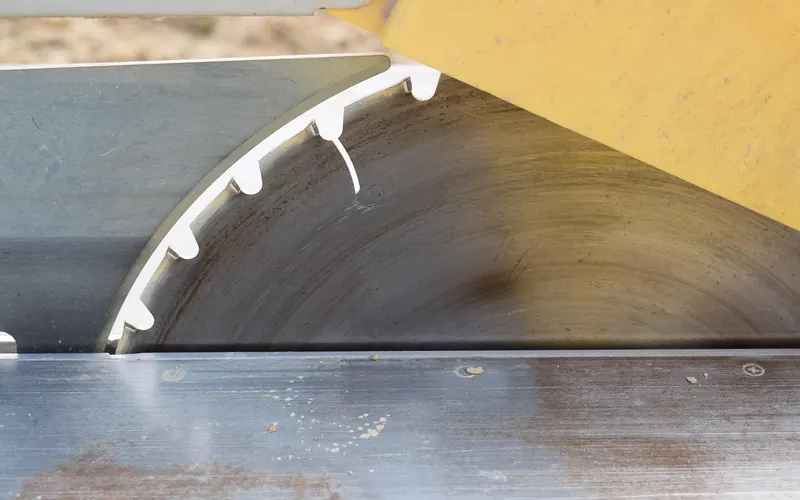
Use push blocks or a push stick for every narrow rip, keep your body out of the line of the blade, and unplug the saw before changing blades or touching the belts. If the arbor nut, blade flange, or miter slots look damaged, repair or replace parts before use. This article is not a substitute for the manufacturer’s manual, which is available for the 66 through parts and manual suppliers.
Flag for safety review: guarding and splitter alignment on a decades-old saw should be checked against the manual, and an unfamiliar saw should be test-run only by someone who understands table saw kickback.
Used Powermatic 66 Inspection Checklist
These are general used-machine checks, not Powermatic-specific procedures. Do them before you hand over money.
- Tilt and height: the hand wheels should turn smoothly through their full range with no binding. Pitch and sawdust around the elevation and tilt shafts is a common cause of sticking.
- Arbor bearings: spin the arbor by hand with the belts off if allowed and listen for roughness or play. Replacement arbor bearings are sold separately for early and later 66 models, so the part is available.
- Table and wings: look for deep rust, pitting, and flatness problems across the table and cast-iron wings. Light surface rust is usually cleaned with fine abrasive and a coat of paste wax.
- Fence and rails: check that the fence locks square to the miter slot and the rails are straight.
- Motor and nameplate: read the nameplate for phase, voltage, and HP, then plan the wiring before purchase.
- Guard and splitter: see the safety section above. Missing hardware means a purchase plus a fix.
- Belts and pulleys: look for cracked belts, glazed sides, and misaligned pulleys, and match replacements to your saw’s drive.
The table saw does not exist alone in a shop. A solid outfeed surface matters on a 600 lb saw, so see building a table for a table saw, and our guide on cutting long boards on a table saw covers support that a long fence does not provide on its own. For other saw options compare the Grizzly table saw review and the table saw ratings roundup, or browse the table saw category.
Frequently Asked Questions About the Powermatic 66
Is the Powermatic 66 table saw still made?
No. Powermatic retired the Model 66 in 2008 after roughly four decades, and the PM2000 took its place. The two were sold side by side for a while until the remaining 66 stock was gone, so any Model 66 you find today is used.
How much does a Powermatic 66 weigh?
Published figures for a complete Model 66 run from about 550 to 650 pounds depending on motor and configuration, with one listing at 576 pounds and a 5 HP version with stand shipping at about 800 pounds. Plan for at least two helpers and a proper dolly or pallet jack.
What horsepower does the Powermatic 66 have?
Over its production run the Model 66 was sold with motors from about 1.5 HP up to 5 HP, in single-phase and three-phase versions, running at 3600 RPM. The 3 HP and 5 HP single-phase 230V saws are the most common in home shops.
Does the Powermatic 66 have a riving knife?
Older units were built with an overarm guard and a splitter rather than a modern riving knife, and forum owners say the PM2000 was the model that added one. Check the specific saw in front of you, and do not run it without a properly aligned splitter or riving knife.
Can I run a three-phase Powermatic 66 in a home shop?
Only with a way to make three-phase power, such as a variable frequency drive, a phase converter, or a replacement single-phase motor. Owner forums describe all three routes, but the wiring should be done or checked by a licensed electrician.
Bottom Line
A used Powermatic 66 is a heavy, well-built cabinet saw that has no manufacturer support, no modern riving knife, and a price that moves with motor phase and condition. If you can handle the weight, plan the wiring with an electrician, and add proper guarding and push blocks, it is a strong buy. If you want new safety hardware and a warranty, look at its successor or the current options instead.
Sponsored / affiliate links. As an Amazon Associate I earn from qualifying purchases. I may earn additional commission from eligible campaigns.