Prefinished Oak Flooring: Costs, Durability & Buying Guide
Prefinished oak flooring ships already sanded, stained, and cured with a factory finish, so you can walk on it the same day it is installed instead of waiting days for stain and polyurethane to dry on-site. That convenience comes with real trade-offs that most buying guides skip past. Here is what prefinished oak actually costs installed, how red oak and white oak differ once they are prefinished, and the one place the factory finish is genuinely weaker than a site-finished floor.
What Prefinished Oak Flooring Actually Is
Prefinished oak boards are milled, sanded, and finished at the factory before they ever reach a job site. Most manufacturers apply several coats of a urethane finish infused with aluminum oxide, then cure each coat under UV lamps in a controlled environment – a process that produces a harder, more even topcoat than most contractors can achieve by hand-applying polyurethane after installation. Site-finished (unfinished) oak, by contrast, is installed raw and then sanded, stained, and sealed in place, which takes longer and fills your house with sanding dust, but leaves one continuous finish layer across every board and seam.
Best Cleaner For Prefinished Oak
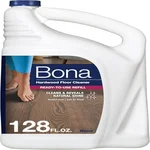 |
Bona Hardwood Floor Cleaner Refill, 128 fl oz – $19.97 A pH-neutral formula made specifically for polyurethane and aluminum-oxide finishes — exactly what factory-finished prefinished oak flooring has, so it will not dull or haze the topcoat the way an oil soap or vinegar-based cleaner can.
|
Red Oak vs. White Oak: Which Prefinished Option Actually Fits Your Room
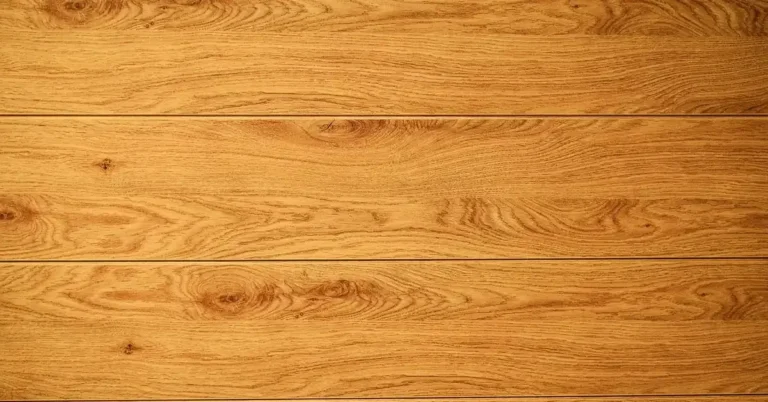
Both species get sold as “prefinished oak flooring,” but they are not interchangeable. Red oak has a warmer, slightly pink-to-reddish undertone and a more open, pronounced grain pattern – it has been the default American flooring species for decades and is usually the cheaper of the two. White oak runs cooler, with grey-to-olive-brown tones and a tighter, straighter grain.
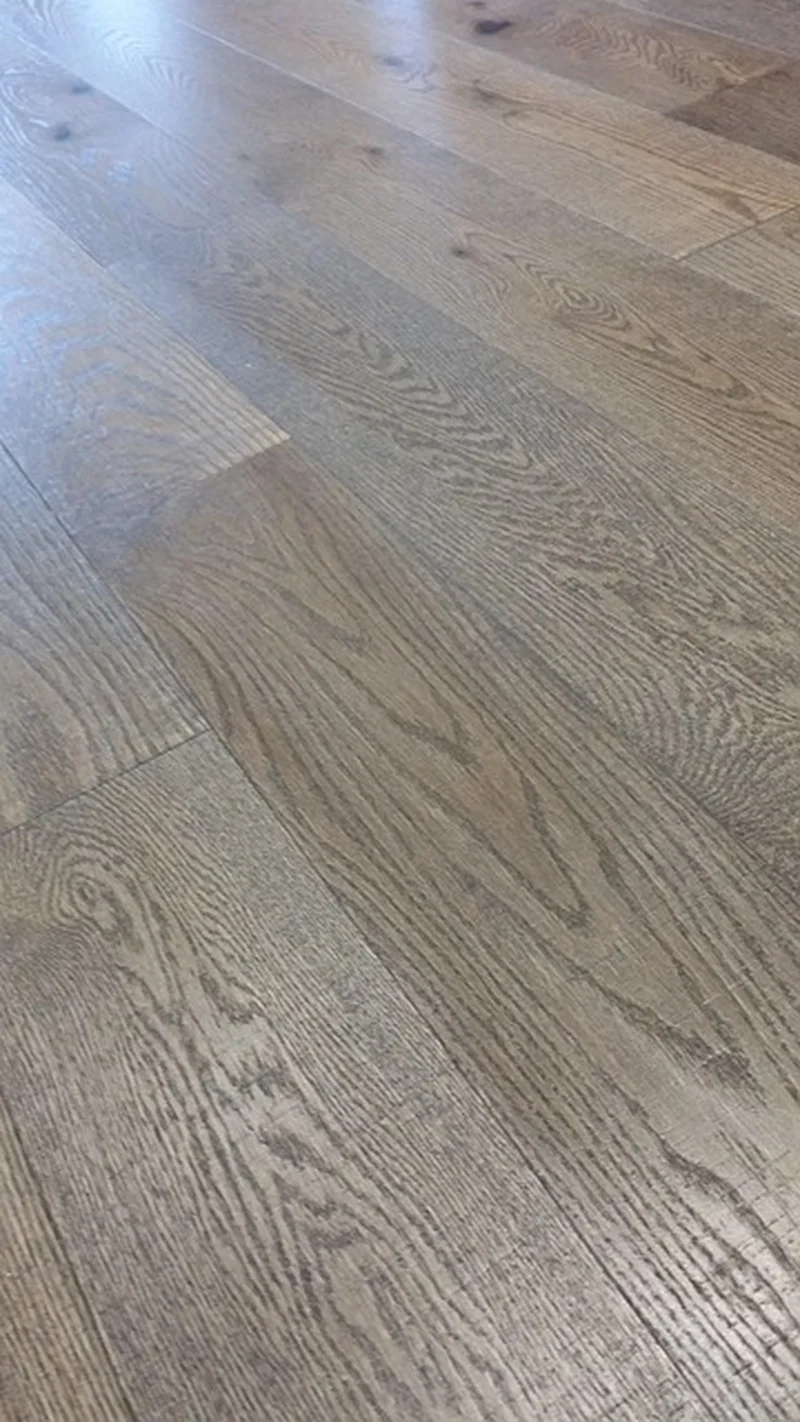
The bigger practical difference is moisture resistance at the wood level. White oak’s pores are naturally plugged by tyloses, a cell structure that blocks water from traveling through the grain – it is the reason white oak, not red oak, is used for whiskey barrels and traditional boat building. Red oak’s pores stay open end to end, so raw red oak wicks moisture faster than raw white oak. Once a board is prefinished, the factory topcoat does most of the water-resisting work either way, but white oak gives you a slightly larger margin for error in kitchens, mudrooms, or other rooms that see occasional moisture. For a bedroom, living room, or hallway, red oak’s lower price point is usually the more practical call.
What Prefinished Oak Flooring Actually Costs
Material pricing for prefinished oak generally breaks down into three tiers: basic oak runs about $6 to $8 per square foot, mid-range options (wider planks, premium stains) run $8 to $10, and premium or wide-plank lines can reach $10 to $15+ per square foot. On top of materials, professional installation typically adds $3 to $6 per square foot for a straightforward job, which puts most fully installed prefinished oak floors somewhere between $9 and $16 per square foot depending on grade, plank width, subfloor condition, and local labor rates.
That is still generally cheaper than paying for site-finishing labor on unfinished oak, since you are skipping the on-site sanding, staining, and multi-coat sealing crew entirely – often a savings of $1 to $5 per square foot on the finishing step alone, even though the raw board cost is similar.
Durability: What the Aluminum-Oxide Finish Really Buys You
Aluminum oxide is a hard mineral compound mixed into the topcoat and cured under UV light, and it is the main reason prefinished floors tend to resist surface scratches better than a site-applied polyurethane finish. Many manufacturers back this with 25- to 50-year finish warranties, which is a reasonable proxy for how confident they are in the coating’s wear resistance. What it does not protect against is denting: hardness there comes from the wood itself, not the finish. Red oak has a Janka hardness rating of about 1,290 lbf, and white oak comes in a bit harder at roughly 1,360 lbf – both solidly mid-pack for domestic hardwoods, tougher than pine or douglas fir but softer than hickory or hard maple.
The One Real Weakness: What Happens at the Seams
This is the part most prefinished flooring guides leave out. Because each board is finished individually at the factory, the coating only fully covers the top and edges of each plank – there is no continuous finish layer bridging the seams the way there is on a site-finished floor. Most prefinished boards also have a small V-groove or micro-bevel at the edges to disguise minor height differences between boards, and that groove is exactly where spills sit longest. Water or standing liquid left at a seam can wick down into the core before it evaporates, which is how prefinished floors most often develop cupping or edge swelling. The fix is not complicated – wipe spills up promptly, especially at the joints – but it is a real trade-off for the convenience of a factory finish, not a hypothetical one.
Repairs are also a bit less forgiving than on a site-finished floor. If a single prefinished board gets gouged or badly stained, you generally replace the board rather than spot-sand it, and matching the factory stain batch exactly can be difficult years after your original installation. The upside: a solid 3/4-inch prefinished oak floor can still be sanded down and fully refinished 4 to 6 times over its life, same as any solid oak floor, since the wear layer is the full thickness of the board rather than a thin surface veneer.
Installation and Edge Style: Micro-Bevel, Eased, or Square
Most prefinished oak comes with one of three edge profiles, and the choice affects both looks and cleaning. A micro-bevel (a small V-groove at each edge) is the most common; it hides slight unevenness between boards from factory tolerances and gives each plank a defined, slightly rustic outline, but those grooves collect dust and are the moisture-trap seams described above. An eased edge is a softer, shallower version of the same idea. A square edge sits flush with no groove at all, giving a smooth, nearly seamless look closer to a site-finished floor – but it shows any factory height variance between boards more visibly, so it demands tighter milling tolerances and usually costs more.
Maintenance and Cleaning
Sweep or vacuum regularly with the beater bar turned off, since a rotating brush can scratch the finish. Clean with a pH-neutral cleaner formulated for polyurethane or aluminum-oxide finishes – skip oil soaps, vinegar-water mixes, and wax-based products, all of which can dull or haze a factory finish over time. Given the seam vulnerability covered above, wipe up spills immediately rather than letting them sit, and use furniture pads and entry mats to cut down on grit that causes surface scratching.
Prefinished vs. Site-Finished: Quick Decision Guide
Choose prefinished oak if you want a faster installation, no sanding dust, and a warrantied factory finish, and you are comfortable wiping up spills promptly. Choose site-finished oak if you want a perfectly flush, seamless surface with no moisture-trapping grooves, or if you are trying to match an existing floor’s exact stain color. See our full prefinished vs. site-finished hardwood floors comparison for a side-by-side breakdown, or our wood flooring guide if you are still comparing oak against other species entirely. If you have come across a specific branded product line called “Tudor Oak,” note that it is a product name rather than a wood species – see our breakdown of what Tudor Oak flooring actually is before assuming it is the same thing covered here.
Frequently Asked Questions About Prefinished Oak Flooring
Is Prefinished Oak Flooring Better Than Unfinished?
It depends on what you are optimizing for. Prefinished oak has a harder, more consistent factory-cured finish (often aluminum-oxide infused) and can be walked on the same day it is installed, with no on-site sanding dust. Unfinished (site-finished) oak costs more in labor and takes days to cure, but the finish coat runs continuously across every seam, which makes it more moisture-resistant at the joints and easier to color-match if you ever need a spot repair.
How Much Does Prefinished Oak Flooring Cost Per Square Foot?
Basic prefinished oak typically runs about $6 to $8 per square foot for materials, with mid-grade options around $8 to $10 and premium or wider-plank lines reaching $10 to $15+. Installation labor adds roughly $3 to $6 per square foot for straightforward jobs, so a fully installed floor commonly lands between $9 and $16 per square foot depending on grade, plank width, and local labor rates.
Is Red Oak or White Oak More Water-Resistant?
White oak is more water-resistant than red oak at the wood level. White oak’s pores are plugged with tyloses, a natural cell structure that blocks water from moving through the grain, which is why it is the species used for whiskey barrels and boat building. Red oak’s pores stay open end to end, so it wicks moisture faster. Once either species is prefinished, the factory topcoat is the main defense, but white oak gives you a bit more of a safety margin in kitchens, entries, or other moisture-prone rooms.
How Many Times Can You Refinish Prefinished Oak Flooring?
A solid 3/4-inch prefinished oak floor can generally be sanded and refinished about 4 to 6 times over its lifespan, the same as any solid oak floor, since the wear layer is the full thickness of the board. If you bought engineered prefinished oak instead, check the veneer’s wear-layer thickness first; a thin veneer (around 2mm or less) may only tolerate one or two light refinishes before you hit the plywood core.
Conclusion
Prefinished oak flooring trades a small amount of seam durability and repair flexibility for a faster, dust-free installation and a factory-cured finish that is genuinely hard to match on-site. Budget roughly $9 to $16 per square foot installed, pick white oak if the room sees occasional moisture and red oak if it does not, and keep spills off the seams and you will get decades of use with a few refinishing cycles along the way.
Sponsored / affiliate links. As an Amazon Associate I earn from qualifying purchases. I may earn additional commission from eligible campaigns.