Porter Cable Router Edge Guide 42690: Setup & Compatible Routers
The Porter Cable Router Edge Guide (model 42690) bolts to 690- and 890-series router bases and rides the workpiece’s own straight edge instead of a bearing, but it only reaches about 6 inches from that edge and won’t follow a curve. Set it too loose and the bit wanders off-line; too tight and the router binds mid-cut. This guide covers setup, bit changes, common mistakes, and when a shop-made straight-edge jig works better.
This post contains affiliate links. As an Amazon Associate, WoodworkingAdvisor.com earns from qualifying purchases.
Quick Answer
The Porter Cable 42690 edge guide clamps to the 690- and 890-series router base with two rods, and a fine-adjust knob sets the exact distance from the workpiece edge. It works for straight cuts within about 6 inches of an edge and costs roughly $50–$60 new. For curved edges or cuts farther from the edge, use a template guide or router table fence instead.
Which Routers the 42690 Edge Guide Fits
Best Genuine Porter Cable Pick
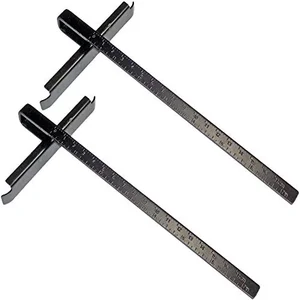
Porter Cable PCE381K Genuine Edge Guides (2-Pack)
The factory-spec replacement guide for Porter Cable’s compact trim routers, sold as a 2-pack so you always have a spare on hand.
- Best for: Porter Cable trim router owners who need an exact factory-fit replacement
- Why we picked it: genuine Porter Cable part, no compatibility guesswork, and the 2-pack means a backup if one rod bends
- Main drawback: only fits Porter Cable’s compact trim router line, not the full-size 690/890-series bases
Compare more router edge guide options
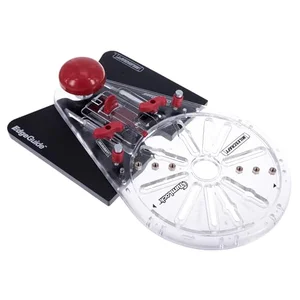 Option 1 Milescraft 1224 Edge & Mortise Guide
|
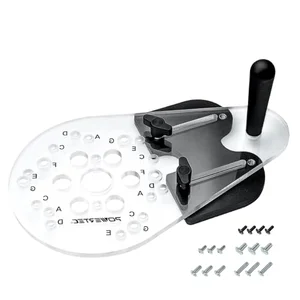 Option 2 POWERTEC Universal Offset Base w/ Edge Fence
|
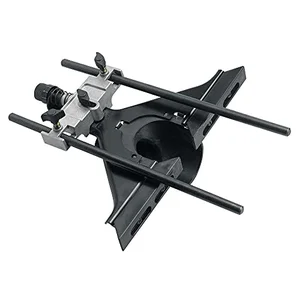 Option 3 DEWALT DW6913 Universal Edge Guide
|
As an Amazon Associate we earn from qualifying purchases.
Porter Cable makes the edge guide in a few part numbers, and they are not interchangeable across every router line. The full-size 42690 guide is built for the Porter Cable 690- and 890-series fixed and plunge bases — model numbers 100, 690, 691, 693, 891, 892, and 893. If you own a compact trim router in the 450 or 451 line, or one of the newer PCE-series routers, you need the smaller PCE381K guide instead; it will not swap onto a 690-series base.
- Body: anodized, extruded aluminum — not cast, so it resists warping if it gets knocked off the bench
- Adjustment: dual sliding, lockable mounts for coarse position plus a fine-adjust knob for the final 1/16″ or so
- Scale: marked in both fractional inches and metric, useful if you’re matching a metric plan
- Typical price: around $50–$60 new for the full-size 42690; the compact PCE381K 2-pack runs closer to $12
If you’re deciding between Porter Cable and another brand for your next router, our Porter Cable vs. DeWalt comparison covers how their edge guides and base compatibility differ.
What’s Actually in the Box
The 42690 edge guide is three main parts working together: the adjustment rod, the guide assembly, and the lock nut. The adjustment rod connects the guide assembly to the router base and sets how far the fence sits from the bit. The guide assembly itself is a pair of steel rods, a pivot plate, and a removable sub-base that the router bit passes through. The lock nut clamps the whole assembly in position so it can’t creep during a cut.
How It Rides the Edge
Unlike a bearing-guided bit, the edge guide never touches the wood at the bit itself — it references off the flat face of the workpiece several inches away. That means a small dent or void right at the cutting edge won’t throw the bit off, which is the edge guide’s real advantage over a piloted bit or a template bushing for straight work.
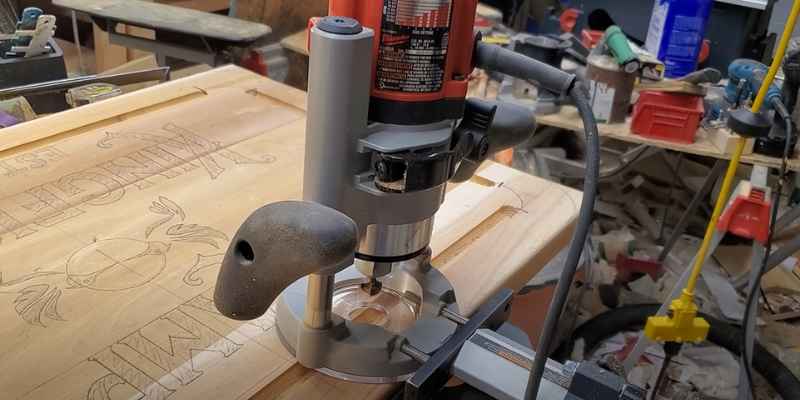
Setting Up the Edge Guide and Making the First Cut
Installing the guide is a five-minute job the first time and under a minute once you’ve done it a few times.
- Install the bit: mount the router bit you’ll use for the cut before attaching the guide — it’s easier to reach the collet with the guide off.
- Attach the guide: slide the two rods through the holes in the router’s sub-base and snug the mounting screws so the guide can still slide.
- Set the distance: loosely position the guide against the workpiece edge, then use the fine-adjust knob to dial in the exact distance from the bit to the fence.
- Lock the nut: tighten the lock nut fully. A guide that’s snug but not locked will creep sideways mid-cut and ruin the line.
- Make a test pass: run the router a few inches on scrap before committing to the real workpiece, and check the cut depth and edge distance match the plan.
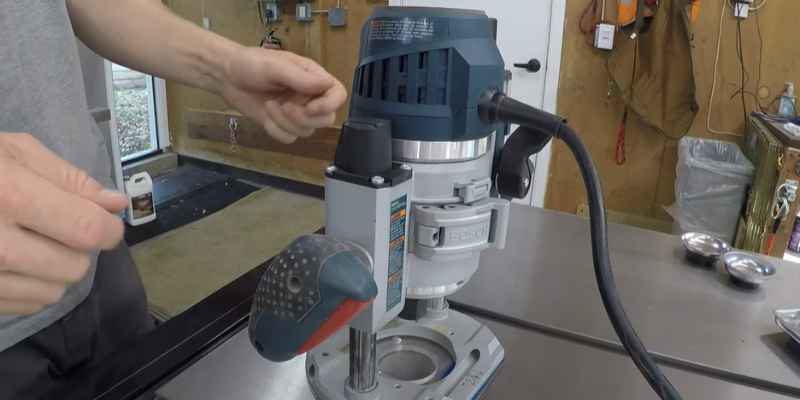
Changing Bits on a Porter Cable Router
You don’t need to remove the edge guide to swap bits on most 690-series bases, but it’s easier with it off if the new bit has a larger shank collar.
- Unplug the router, then insert the supplied spanner into the two holes on the collet and turn it counterclockwise to loosen.
- Pull the old bit free and insert the new one, seating it fully in the collet before tightening.
- Turn the spanner clockwise until the collet is secure — snug, not over-torqued.
- Reset the cutting depth on the router’s depth stop, since a different bit length changes where zero is.
Bits wear out and different profiles need different bits, so this is a skill worth having down cold — a loose collet is one of the more common causes of a wandering cut that gets blamed on the edge guide instead.
Routing Edges the Right Way
A roundover bit is the most common first project with an edge guide. Set the guide per the steps above, choose the roundover bit for your project, and set the cutting depth on the router itself. Feed the router counterclockwise around outside edges to avoid climb-cutting and chip-out; for an inside cutout, that direction reverses to clockwise. Rout the end-grain passes first, then the long-grain sides — that order means any chip-out at the very end of a pass gets cleaned up when you rout the adjoining side.
- Feed direction matters more than feed speed for a clean edge — going the wrong way causes the bit to grab and tear rather than shear cleanly.
- Hold narrow strips against the guide’s stops, or clamp them, rather than trying to hand-hold a thin piece against the fence.
- A shop vac or dust collector at the bit keeps the cut line visible, which matters more with an edge guide than with a bearing-guided bit since you’re watching the fence, not the bit.
Common Mistakes That Ruin an Edge-Guided Cut
Most edge guide problems trace back to setup, not the tool itself.
- Feeding the wrong direction: pushing the router the wrong way around the workpiece lets the bit climb-cut, which grabs the wood and can pull the whole router off-line.
- Locking the nut before the test pass: if you lock down the distance before confirming it on scrap, a miscalculation gets routed straight into the real workpiece.
- Using it on a rough or bowed edge: the guide only cuts as straight as the edge it’s referencing — joint or plane the reference edge first, or the guide will faithfully copy every bow into your cut.
- Trying to reach past its range: the 42690 only reaches about 6 inches from the edge. For cuts farther in, a router table with a fence or a shop-made straight-edge jig is the right tool, not this guide stretched to its limit.
“The edge guide’s adjustment scale reads in both fractional inches and metric, and the fine-adjust knob is meant for the last small correction after the coarse slide gets you close — not for setting the whole distance.”
Edge Guide vs. Straight-Edge Jig vs. Router Table Fence
An edge guide isn’t the only way to get a straight router cut, and it isn’t always the best one. A shop-made straight-edge jig or template clamped across the workpiece can reach any distance from the edge, works on pieces too large for a router table, and costs nothing but scrap plywood — but it takes longer to set up for a one-off cut and needs to be re-clamped for every new line. A router table fence is the fastest option once it’s dialed in, but the workpiece has to be small enough to maneuver safely across the table.
| Method | Reach from Edge | Best For |
|---|---|---|
| Porter Cable 42690 edge guide | ~6 inches | Repeatable cuts near a straight factory edge |
| Shop-made straight-edge jig | Unlimited | Large panels, one-off lines anywhere on the workpiece |
| Router table fence | Fence-dependent, typically several inches | Repetitive cuts on small-to-medium parts |
Making Your Own Edge Guide (and Swapping Accessories)
A shop-made edge guide is worth building when a cut needs more reach than the factory 42690 offers, or when you don’t own one yet and need a straight cut today. Measure the offset you need from bit to reference edge, cut a straight fence from plywood or MDF, and clamp or screw it to a base plate that mounts to your router. The tolerance that matters is the fence itself being dead straight — any bow in the fence transfers directly into the cut.
To remove the factory guide, loosen the lock nut and slide the rods out of the base; installing a replacement is the same process in reverse. A few accessories extend what the guide can do: a dovetail kit for angled joints, a roundover bit for softened edges, and a template guide bushing for curves and cutouts the edge guide itself can’t follow. If you’re shopping for a different router entirely, our Bosch 1617EVSPK combo kit review covers a full-size alternative with its own edge-guide compatibility.
Frequently Asked Questions
Is a Porter Cable router edge guide worth it?
Yes, for straight cuts within about 6 inches of a workpiece edge — it’s faster to set up than a clamped straight-edge jig and more repeatable for multiple identical cuts. For cuts farther from the edge or on curves, a router table fence or a shop-made template is the better tool instead.
Which Porter Cable routers work with the 42690 edge guide?
The full-size 42690 fits Porter Cable models 100, 690, 691, 693, 891, 892, and 893 — the 690- and 890-series fixed and plunge bases. Compact trim routers in the 450, 451, and PCE-series lines use the smaller PCE381K guide instead; the two are not interchangeable.
What’s the difference between a router edge guide and a straight-edge jig?
An edge guide bolts directly to the router base and rides the workpiece’s own edge, reaching only a few inches in. A straight-edge jig is a separate fence clamped across the workpiece that can be positioned anywhere, at any distance from the edge, but has to be re-clamped for each new cut line.
Can you use a router edge guide on curved edges?
No. An edge guide only produces a straight line parallel to the reference edge. For curved cuts, use a template and guide bushing, or a bearing-guided bit that follows the actual curved profile of the workpiece or a pattern.
How much does a Porter Cable router edge guide cost?
The full-size 42690 typically runs $50 to $60 new. The smaller PCE381K guide for compact trim routers, sold as a 2-pack, runs closer to $12 — check current pricing before buying since both fluctuate with retailer stock.
Conclusion
The Porter Cable 42690 edge guide earns its place in the shop for exactly the job it’s built for: fast, repeatable straight cuts within a few inches of a workpiece edge, on the 690- and 890-series router bases it fits. Confirm your router model before buying, lock the nut after every distance change, and test on scrap before the real cut. For anything farther from the edge or on a curve, reach for a straight-edge jig or a template guide instead — the right tool for that cut isn’t this one.
Sponsored / affiliate links. As an Amazon Associate I earn from qualifying purchases. I may earn additional commission from eligible campaigns.