Should Japanese Maple Branches Touch The Ground
Many gardeners wonder, Should Japanese Maple Branches Touch the Ground? It’s a common question, especially for those new to these beautiful trees. Sometimes, branches might droop lower than expected, and knowing what to do can feel tricky. Don’t worry!
This guide will make it simple. We’ll walk through it step-by-step. Let’s find out what’s best for your Japanese maple.
The Ground Clearance Debate For Japanese Maples
Deciding if Japanese maple branches should touch the ground is a frequent point of discussion among plant lovers. It impacts how the tree looks and how healthy it stays. For new gardeners, this question often pops up as their young trees grow and start to spread out.
The natural growth habit of a Japanese maple can lead to branches reaching towards the earth. This can be aesthetically pleasing, creating a flowing, weeping look. However, it can also raise concerns about the tree’s well-being and maintenance needs.
We will explore the different viewpoints and practical considerations to help you make the right choice for your specific tree and garden.
Understanding Branch Structure And Growth Patterns
Japanese maples have a wide range of shapes, from upright and vase-like to weeping and spreading. Understanding this natural variation is key. Some varieties are bred to have a pendulous form, where branches naturally fall downwards.
Other types are more upright but can develop low-hanging branches as they mature. The age and health of the tree also play a role in its branch structure. Younger trees may have branches that are more flexible and can be trained.
Older trees have more rigid structures that are harder to alter.
The way a Japanese maple grows is influenced by its genetics. Some cultivars, like Acer palmatum ‘Crimson Queen’, are known for their graceful, cascading branches that often reach the ground. These varieties are deliberately planted for their dramatic, flowing appearance.
In contrast, a cultivar like Acer palmatum ‘Bloodgood’ typically has a more upright habit, but even these can develop lower branches that might brush the soil as the tree ages and its canopy expands. Observing your specific tree’s natural tendency will give you the best clue as to what is normal for it.
Factors like sunlight, water, and soil conditions can also affect branch growth. A tree growing in a very windy spot might develop a more compact, lower branch structure. Conversely, a tree with ample space and ideal conditions might stretch out more.
Looking at how your tree is growing naturally is the first step in deciding about ground clearance.
Aesthetic Considerations And Visual Appeal
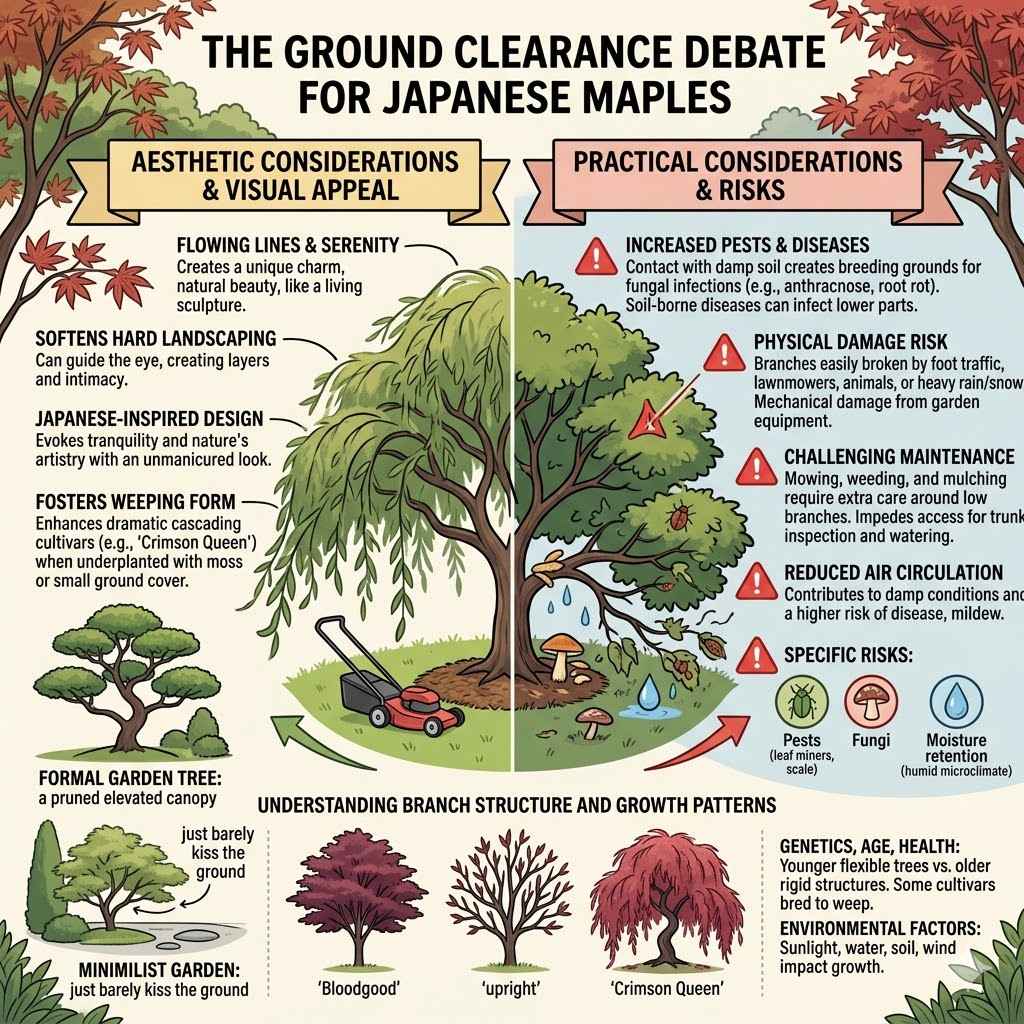
The decision of whether to let Japanese maple branches touch the ground is largely driven by aesthetics. For many, the soft, flowing lines created by low-hanging branches add a unique charm to a garden. It can create a sense of serenity and natural beauty, like a living sculpture.
This is especially true for weeping varieties, where the branches are meant to cascade. The visual effect can soften hard landscaping features and create a focal point.
The way branches interact with the ground can also influence the perceived scale of the tree and garden. Low-hanging branches can make a garden feel more intimate and enclosed. They can guide the eye and create layers within the landscape design.
When branches sweep the ground, they often create a natural, unmanicured look that many find appealing. This can contribute to a Japanese-inspired garden design, evoking a sense of tranquility and nature’s artistry.
However, some gardeners prefer a tidier, more structured look. In these cases, branches touching the ground might be seen as messy or difficult to maintain. The choice often comes down to personal preference and the overall garden style.
A formal garden might benefit from a more pruned and elevated canopy, while a naturalistic garden might embrace the wilder look of ground-grazing branches.
Examples of Aesthetic Choices
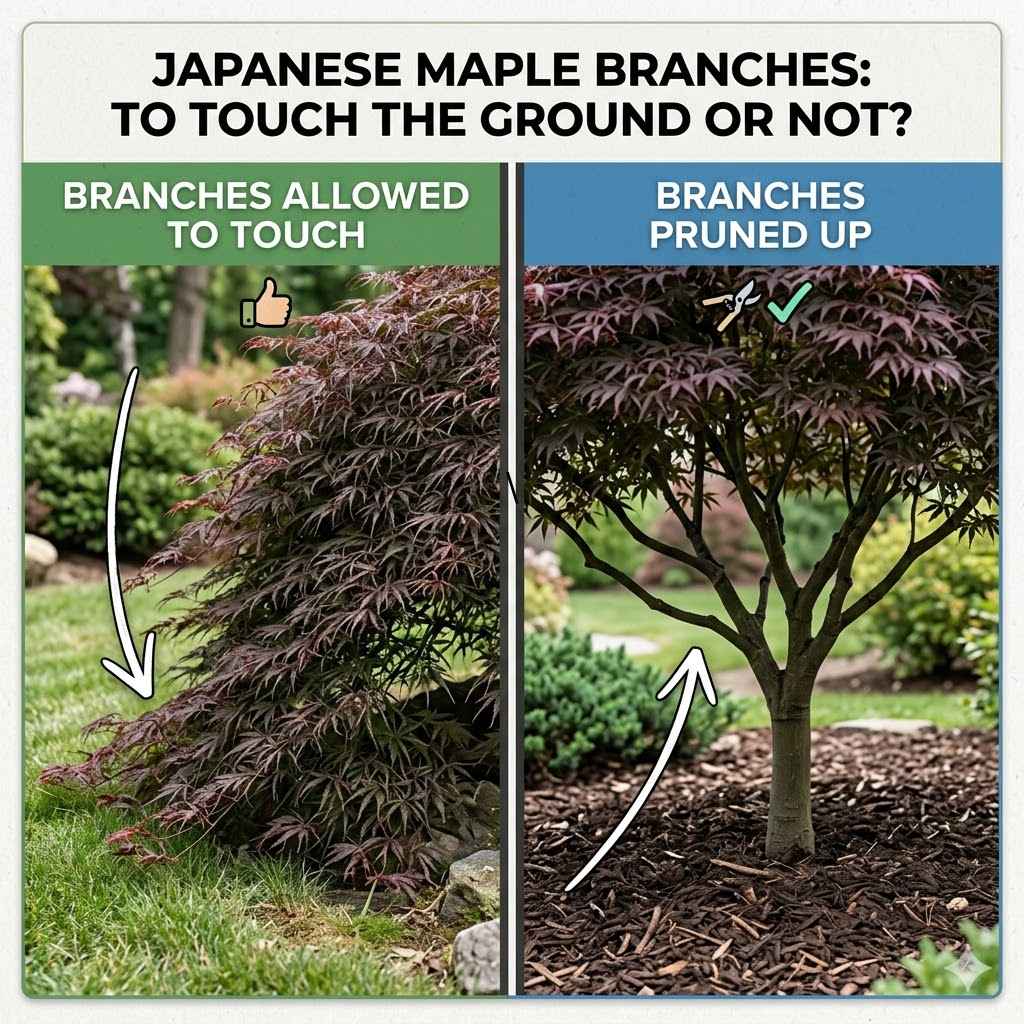
- A weeping Japanese maple with branches that elegantly sweep the ground creates a dramatic focal point, especially when underplanted with moss or small ground cover plants. This enhances its weeping form.
- An upright Japanese maple where lower branches are pruned to maintain a clear space between the canopy and the ground offers a more open and airy feel, allowing for the placement of garden furniture or walkways beneath the tree.
- A specimen tree in a minimalist garden might have its branches allowed to just barely kiss the ground, providing a subtle, naturalistic touch without appearing unkempt.
Potential Problems With Ground-Touching Branches
While letting branches touch the ground can look beautiful, there are some practical issues that can arise. One of the main concerns is increased susceptibility to pests and diseases. When branches are in constant contact with soil and moisture, they can become a breeding ground for fungal infections.
Certain soil-borne diseases can also more easily infect the lower parts of the tree.
Another issue is physical damage. Branches that are constantly touching the ground are more prone to being broken by foot traffic, lawnmowers, or even animals. Lawn equipment can easily nick or scrape the bark, creating entry points for pests and diseases.
This damage can weaken the branch and, in severe cases, affect the overall health of the tree. Heavy rain or snow can also weigh down these branches, increasing the risk of breakage.
Furthermore, ground-level branches can make routine garden maintenance more challenging. Mowing the lawn around a tree with sweeping branches requires extra care. Weeding and mulching can also be more difficult.
If the branches are too low, they might impede access to the trunk for watering or inspection. This can lead to neglect of the tree’s base, potentially causing further problems down the line.
Specific Risks and Challenges
- Fungal Infections: Constant contact with damp soil can encourage the growth of various fungi, leading to issues like anthracnose or root rot. These can spread up into the main branches and trunk.
- Pest Infestations: Insects that live in or travel through the soil may find it easier to access branches that are at ground level. This can lead to leaf miners or scale infestations.
- Mechanical Damage: Accidental bumps from lawnmowers, trimmers, or even pets can cause physical wounds to the bark. These wounds heal slowly and can invite further problems.
- Moisture Retention: Soil moisture retained on lower branches can create a humid microclimate that is ideal for mildew and other fungal issues, especially in humid or shaded conditions.
- Reduced Air Circulation: When branches are too close to the ground, airflow around the base of the tree can be reduced. This can contribute to damp conditions and a higher risk of disease.
Maintenance And Care For Low Branches
If you choose to let your Japanese maple’s branches touch the ground, or if they naturally grow that way, some specific care is needed. The primary goal is to keep these branches healthy and to prevent problems. Regular inspection is key.
You need to look for any signs of disease, pests, or damage on the branches and the trunk where they meet the ground.
Keeping the area around the trunk clear of debris is also important. Fallen leaves or mulch can hold moisture and promote fungal growth. A well-drained soil is crucial for preventing root rot, which can affect branches that are close to the soil surface.
If the branches are touching moist soil, consider raising them slightly with a well-draining mulch or gravel base.
Pruning can still be a part of maintaining low branches. If a branch becomes weak, diseased, or is causing an obstruction, it can be selectively removed. The idea is to prune for health and good air circulation, rather than solely for shape.
Strategic pruning can help manage the spread and prevent issues from developing.
Pruning Techniques For Ground-Touching Branches
When dealing with branches that touch the ground, pruning becomes a delicate act. The primary aim is to maintain the tree’s health and shape without compromising its natural beauty. For weeping varieties, you want to encourage that cascading effect.
This means selectively removing branches that might become overcrowded or that are growing in awkward directions.
Start by identifying any dead, damaged, or diseased branches. These should always be removed first. Use clean, sharp pruning shears or a small saw for larger branches.
Make cuts just outside the branch collar, which is the slightly swollen area where the branch meets the trunk. This helps the tree heal properly.
If branches are becoming too dense, thinning them out can improve air circulation. This means removing some of the smaller, weaker branches within the canopy. This helps light penetrate and reduces the risk of fungal diseases.
For branches that are touching the ground and showing signs of stress or damage, consider a selective trim. You don’t need to remove the entire branch; sometimes, just trimming off the lowest few inches can make a difference.
Specific Pruning Steps
- Inspection: Before pruning, carefully examine all low-hanging branches. Look for any signs of disease, insect damage, or physical injury.
- Sanitize Tools: Always clean your pruning tools with rubbing alcohol or a bleach solution to prevent spreading diseases from one branch to another or from other plants.
- Remove the Dead and Diseased: Start by cutting away any branches that are clearly dead, broken, or showing signs of fungal infection. Cut these back to healthy wood or to the main branch.
- Thinning for Airflow: If the canopy of low branches is very dense, remove some smaller, twiggy branches. This improves air circulation and light penetration, reducing disease risk.
- Selective Trimming: If a branch is just touching the ground and seems healthy, you can trim off the lowest few inches. This reduces contact with soil moisture while maintaining the overall cascade effect. Make the cut just above a bud facing outward.
- Proper Cut Location: When removing a branch, cut at a slight angle just outside the branch collar. Do not cut flush with the trunk, as this can damage the tree’s bark and delay healing.
Managing Pests and Diseases
Keeping Japanese maples healthy involves being vigilant about pests and diseases, especially when branches are near the ground. The moist environment created by soil contact can be an invitation for many problems. Fungal diseases like powdery mildew, anthracnose, and leaf spot are common.
Pests such as aphids, scale insects, and spider mites can also infest the leaves and twigs.
Prevention is the best approach. Ensure your tree is planted in well-draining soil and receives adequate sunlight. Proper watering techniques, avoiding overhead watering that keeps leaves wet, can also help.
If you notice signs of disease, such as discolored leaves or spots, act quickly. You may need to prune away affected branches and dispose of them properly, away from the tree.
For pest infestations, identification is key. Different pests require different treatments. For example, aphids can often be washed off with a strong spray of water or treated with insecticidal soap.
Scale insects may require horticultural oil. Always read and follow the instructions on any pesticide you use. Sometimes, beneficial insects like ladybugs can help control pest populations naturally.
Common Issues and Solutions
- Powdery Mildew: This appears as white, powdery spots on leaves. Improve air circulation by pruning. Fungicides can be used if the problem is severe.
- Aphids: Small, soft-bodied insects that cluster on new growth. Blast them off with water or use insecticidal soap.
- Scale Insects: Small, immobile bumps on stems and leaves. Treat with horticultural oil during the dormant season or insecticidal soap during the growing season.
- Leaf Spot: Fungal spots on leaves. Remove fallen leaves and prune out infected branches.
- Root Rot: Caused by overwatering and poor drainage. Ensure the soil drains well and avoid watering the soil around the base too frequently.
Weed Control And Mulching Strategies
When Japanese maple branches reach the ground, managing weeds and applying mulch requires a slightly different approach. Weeds compete with your tree for water and nutrients, so keeping them under control is important. However, you want to avoid damaging the low-hanging branches or the tree’s trunk with your weeding tools.
Mulching is highly beneficial. A layer of organic mulch, such as shredded bark or compost, helps retain soil moisture, suppress weeds, and regulate soil temperature. It also adds nutrients to the soil as it decomposes.
When applying mulch around a tree with low branches, create a mulch ring that extends from the trunk out to the drip line, but keep the mulch a few inches away from the trunk itself.
For branches that are very close to the ground, you might need to use a finer mulch material or be extra careful when spreading it. Avoid piling mulch high against the trunk, as this can lead to rot and attract pests. If weeds are persistent, hand-pulling is often the safest method in these areas.
Be gentle so you don’t damage the delicate lower branches or the tree’s bark.
Mulching Best Practices
- Material Choice: Use organic mulches like wood chips, shredded bark, or compost. Avoid dyed mulches or materials that can compact easily.
- Depth: Apply mulch 2-3 inches deep. Too much can smother the roots and retain too much moisture.
- Distance from Trunk: Keep mulch a few inches away from the base of the trunk. This prevents moisture buildup against the bark, which can cause rot and attract pests.
- Extent of Mulch Ring: Extend the mulch ring to the tree’s drip line (the outer edge of its canopy) to benefit the entire root zone.
- Weed Prevention: A good layer of mulch naturally suppresses many weeds. For any that do sprout, hand-pulling is best to avoid damaging low branches or the trunk.
Benefits Of Letting Branches Touch The Ground
Allowing Japanese maple branches to touch the ground offers several distinct advantages, primarily centered around natural aesthetics and ecosystem support. For many gardeners, this choice enhances the tree’s beauty, giving it a more mature, established, and artful appearance. Weeping varieties, in particular, are designed to create this flowing, cascading effect, and letting their branches reach the ground completes their intended form.
Beyond looks, these low-hanging branches can provide microhabitats for small garden creatures. Insects can find shelter, and birds might use the lower foliage for nesting or protection. This can contribute to a more biodiverse garden ecosystem.
The sweeping branches can also create a sense of privacy or enclosure in a garden space, softening edges and making the area feel more intimate and cozy.
Furthermore, in certain naturalistic garden designs, branches that touch the ground contribute to a wilder, more untamed look. This can be a deliberate choice to mimic nature and create a serene, contemplative atmosphere. It requires less intervention in terms of pruning for height, allowing the tree to express its full, natural form.
This can be particularly appealing for those seeking a low-maintenance yet visually stunning plant.
Enhanced Natural Beauty And Form
The primary allure of letting Japanese maple branches touch the ground lies in their inherent beauty. This is especially true for cultivars with naturally weeping or spreading habits. The branches drape downwards, creating a soft, flowing silhouette that adds a sense of elegance and artistry to any landscape.
This visual appeal can transform a garden into a tranquil sanctuary.
When branches reach the ground, they can frame garden beds, pathways, or seating areas, drawing the eye and creating a natural focal point. This ground-level interaction with the landscape can make the tree appear larger and more established, as if it has been a part of the garden for many years. The texture and color of the leaves brushing against the soil add a unique visual dimension.
This natural growth habit can also be an integral part of a Japanese-inspired garden design. The gentle sweep of branches towards the earth evokes a sense of peace and harmony, connecting the tree visually with the ground and its surroundings. It’s a celebration of the tree’s natural form, allowing it to express its full, unhindered grace.
The effect is often described as sculptural and deeply calming.
Visual Impact Examples
- Weeping Varieties: For trees like Acer palmatum ‘Lace Leaf’ or ‘Viridis’, branches touching the ground accentuate their dramatic weeping form, creating a cascade of foliage that reaches down to frame the earth.
- Framing Elements: Low branches can act as natural borders for garden paths or seating areas, guiding visitors and creating intimate, defined spaces within the garden.
- Ground Cover Integration: Allowing branches to rest on the ground can allow for unique planting combinations, where low ground covers or mosses can grow right up to and slightly under the branches, creating a seamless integration with the soil.
Creation Of Microhabitats For Wildlife
When Japanese maple branches extend to the ground, they can inadvertently create valuable microhabitats for various small creatures. The dense foliage and sheltered spaces beneath these low-hanging branches offer protection from predators and the elements for insects, small amphibians, and even ground-dwelling birds. This contributes positively to the garden’s overall biodiversity.
Insects like ladybugs, lacewings, and various beneficial beetles can find refuge in the leaf litter and sheltered areas near the ground. These insects not only benefit from the habitat but also play roles in pollination and pest control within the garden. Small amphibians, such as certain species of frogs or toads, might also find the moist, shaded conditions beneath the canopy attractive for moisture and shelter.
For birds, the lower branches can serve as a safe haven. They provide cover from aerial predators and can be a convenient spot for foraging. In some cases, the dense, low foliage might even be utilized for nesting.
By allowing branches to touch the ground, you are essentially adding layers of habitat that support a more vibrant and balanced garden ecosystem, making your yard a more welcoming place for nature.
Encouraging A Natural Garden Aesthetic
For gardeners aiming for a naturalistic or wild garden style, letting Japanese maple branches touch the ground is a perfect fit. It aligns with the principle of allowing plants to grow in a way that mimics their natural behavior in the wild, creating a more organic and less manicured look. This approach embraces the tree’s inherent form without imposing strict, artificial shapes.
This aesthetic choice can help blur the lines between the cultivated garden and the surrounding natural landscape. It contributes to a sense of timelessness and allows the tree to integrate more seamlessly with its environment. The visual of branches gently resting on the earth or intermingling with ground covers creates a soft, flowing effect that is both beautiful and calming.
Achieving this look requires embracing a less interventionist approach to pruning. Instead of constantly shaping the tree, the focus shifts to maintaining its health and allowing its natural growth patterns to dominate. This can lead to a more relaxed and authentic garden experience, where the beauty of nature is allowed to unfold organically.
It’s about working with the tree, not against it, to create a harmonious outdoor space.
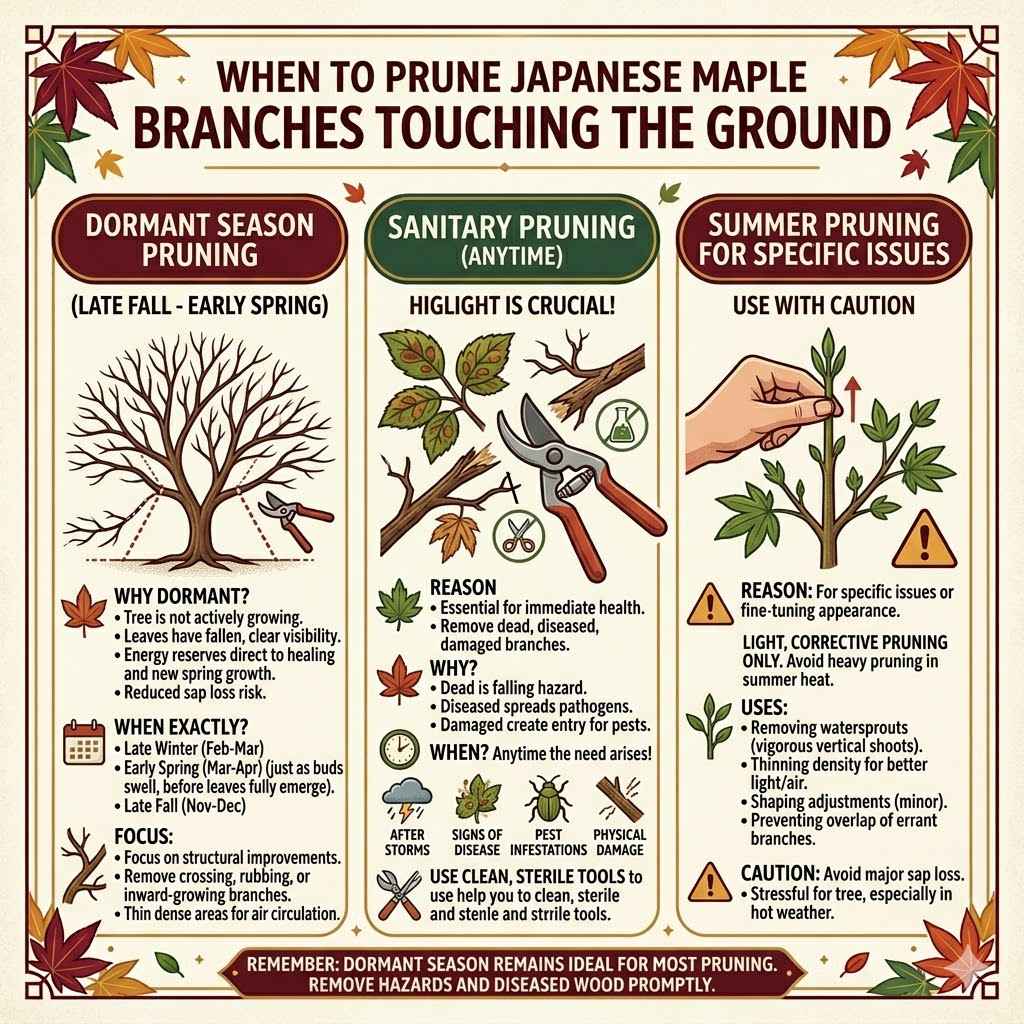
When To Prune Branches Touching The Ground
The question of when to prune branches touching the ground is as important as the decision to prune at all. For Japanese maples, the best time for significant pruning is typically during their dormant season. This is usually in late winter or early spring, before new growth begins.
During this period, the tree’s energy is stored in its roots, and pruning wounds will heal more effectively when growth starts again.
However, there are exceptions. You can remove dead, damaged, or diseased branches at any time of year. If a branch is causing an immediate problem, such as breaking or significantly obstructing a pathway, don’t wait for the dormant season.
Make the necessary cut promptly to prevent further damage or hazards.
Light, corrective pruning can also be done in mid-summer, but only sparingly. This is usually for shaping or removing small, unwanted shoots. Major pruning in summer can stress the tree, especially in hot weather, as it can lead to excessive sap loss.
Therefore, the dormant season remains the ideal window for most pruning activities concerning low-hanging branches.
Dormant Season Pruning
The dormant season, typically from late fall through early spring, is the prime time for most Japanese maple pruning, including addressing branches that touch the ground. During this period, the tree is not actively growing. Its leaves have fallen, exposing the branch structure clearly, making it easier to assess what needs to be pruned.
This visibility is crucial for making informed decisions about which low branches to trim.
Pruning during dormancy allows the tree to direct its energy reserves towards healing the cuts and initiating new growth in the spring. The risk of sap loss, which can weaken the tree and attract pests, is significantly reduced. Furthermore, the cooler temperatures of the dormant season are less stressful for the tree when it undergoes pruning.
When pruning low-hanging branches during dormancy, focus on structural improvements. This could involve removing branches that are crossing, rubbing against each other, or growing inward. It’s also the ideal time to thin out dense areas to improve air circulation within the canopy.
By carefully selecting which low branches to remove or shorten, you can maintain the tree’s aesthetic while ensuring its long-term health and vigor.
Timing For Dormant Pruning
- Late Winter (February-March): This is often considered the optimal time. The worst of the winter cold has passed, and the tree is preparing for spring growth.
- Early Spring (March-April): Just as buds begin to swell but before leaves fully emerge is also acceptable. Be mindful of potential sap flow.
- Late Fall (November-December): Pruning can be done after leaves have fallen, but avoid periods of extreme cold that could damage fresh cuts.
Sanitary Pruning Anytime
Regardless of the season, certain types of pruning should be performed whenever the need arises. This is known as sanitary pruning, and it’s essential for the immediate health of your Japanese maple. The most critical categories here are dead, diseased, or damaged branches.
Dead branches offer no benefit to the tree and can become brittle, posing a falling hazard. Diseased branches can spread pathogens to other parts of the tree or to nearby plants. Damaged branches, perhaps from storms or accidental impacts, create openings for pests and diseases.
Promptly removing these problematic branches prevents further issues and keeps the tree healthy.
When performing sanitary pruning, it’s vital to use clean, sharp tools. After each cut, especially when removing a diseased branch, sterilize your tools to avoid transferring any pathogens. Make clean cuts that encourage proper healing.
This type of pruning is not about aesthetics; it’s about immediate health and safety for the tree and its surroundings. It can be done throughout the year.
When to Perform Sanitary Pruning
- After Storms: Inspect the tree for broken or hanging branches following high winds or heavy snow.
- Signs of Disease: If you notice unusual spots, wilting, or dieback on a branch, remove it immediately.
- Pest Infestations: If a specific branch is heavily infested with pests that are difficult to control, removing it might be the best solution.
- Physical Damage: Branches that have been split, cracked, or scraped should be assessed and potentially removed to prevent further complications.
Summer Pruning For Specific Issues
While major pruning is best left for the dormant season, light pruning in summer can be beneficial for addressing specific issues or for fine-tuning the tree’s appearance. This type of pruning should be done with caution and should not involve removing large branches or a significant portion of the canopy.
One common reason for summer pruning is to remove watersprouts. These are fast-growing, often vertical shoots that emerge from the trunk or main branches. They tend to be weaker than the main branches and can detract from the tree’s natural shape.
Removing them while they are still small is easy and prevents them from becoming a larger problem.
Another reason for light summer pruning is to manage branches that are growing too vigorously in a particular direction or becoming overly dense. You can thin out some of the smaller, less important shoots to improve light penetration and air circulation. However, avoid heavy pruning during the heat of summer, as it can stress the tree.
Aim for selective removal of just a few key branches or shoots.
Uses for Summer Pruning
- Removing Watersprouts: These vigorous, upright shoots can be pinched off or cut back in summer.
- Thinning Density: Removing a few small, overcrowded twigs can improve airflow without stressing the tree.
- Shaping Adjustments: Minor adjustments to shape can be made by removing errant small branches.
- Preventing Overlap: Trim back branches that are growing into unintended areas or crossing other branches significantly.
Should Japanese Maple Branches Touch The Ground FAQs
Question: Is it okay for my weeping Japanese maple to have branches touching the ground?
Answer: Yes, it is perfectly fine and often desirable for weeping Japanese maple varieties to have branches that touch the ground. This is part of their natural, cascading growth habit and contributes to their aesthetic beauty. Just be mindful of potential issues like pests or damage.
Question: What are the risks if my Japanese maple branches touch the ground?
Answer: The main risks include increased susceptibility to soil-borne fungal diseases, potential damage from lawn equipment or animals, and difficulty with garden maintenance around the base of the tree. Always inspect low branches regularly.
Question: When is the best time to prune Japanese maple branches that are touching the ground?
Answer: The best time for significant pruning is during the tree’s dormant season, which is typically late winter to early spring. However, dead, diseased, or damaged branches can be removed at any time of year.
Question: How do I prevent pests and diseases on branches that touch the ground?
Answer: Ensure good drainage, adequate airflow, and avoid overwatering. Inspect branches regularly for any signs of trouble and prune affected areas promptly. Using mulch correctly also helps.
Question: Should I prune branches that are just slightly brushing the ground?
Answer: If the branches are healthy and you like the aesthetic, you don’t need to prune them. If you prefer a cleaner look or are concerned about potential issues, you can selectively trim just the very tips that touch the ground, or remove them entirely if they are weak or damaged.
Conclusion
Deciding if Japanese maple branches should touch the ground involves balancing beauty with practicality. For many, the flowing look is a key appeal. Allowing branches to sweep the ground enhances the tree’s natural elegance, especially with weeping varieties.
This can also support garden biodiversity by creating small habitats. However, it’s important to monitor these low branches for any signs of pests, diseases, or physical damage.
If you choose to let branches touch the ground, regular inspections are vital. Pruning should focus on maintaining health, improving air circulation, and removing any problematic branches. The dormant season is ideal for most pruning, but sanitary pruning can happen anytime.
With thoughtful care, your Japanese maple can display its ground-touching branches beautifully and healthily.