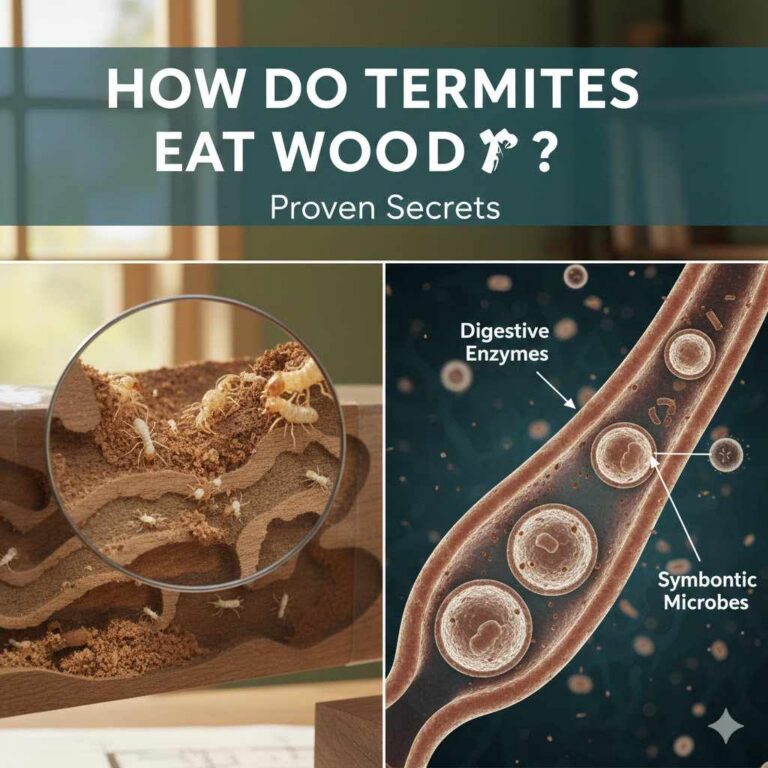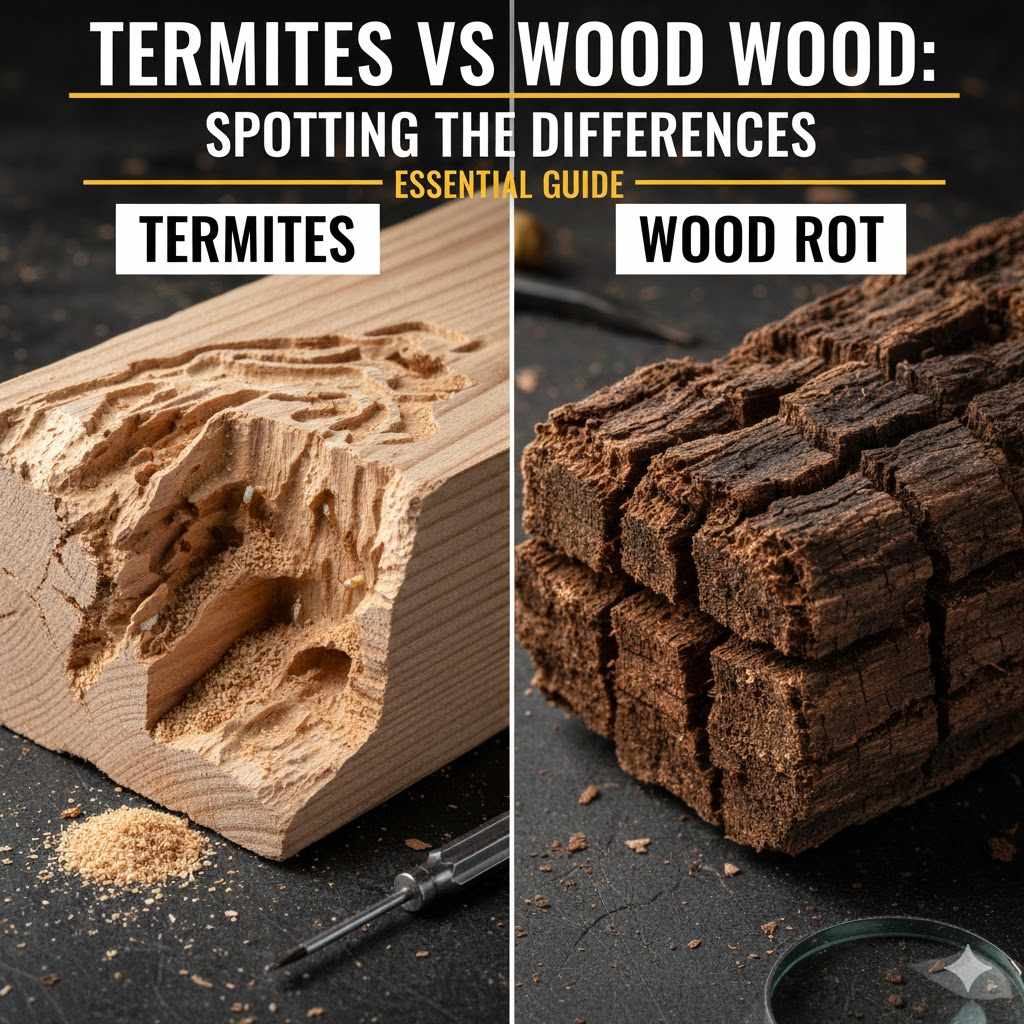
Termites vs Wood Rot: Spotting the Differences
Figuring out the difference between Termites vs Wood Rot: Key Signs Compared can be tricky, especially if you’re new to home maintenance. It’s common to feel a little lost when you’re facing potential wood damage. This guide is here to help! We’ll explore the main clues that point to termites or wood rot, making it easier to identify the problem. We’ll break everything down step-by-step so you can spot the signs and take action. Let’s get started!
What Are Termites and Why Should You Care?
Termites are tiny insects that love to eat wood. They’re like nature’s tiny recyclers, but in your house, they can become a serious problem. Termites cause billions of dollars in damage to homes and buildings across the country each year. The damage can be slow and hidden, which makes it even more important to know how to spot the early warning signs. Catching them early can save you a lot of money and headaches. By learning about termites, you’ll be able to protect your home. Keep in mind that detecting these pests is key to stopping them.
The Different Types of Termites
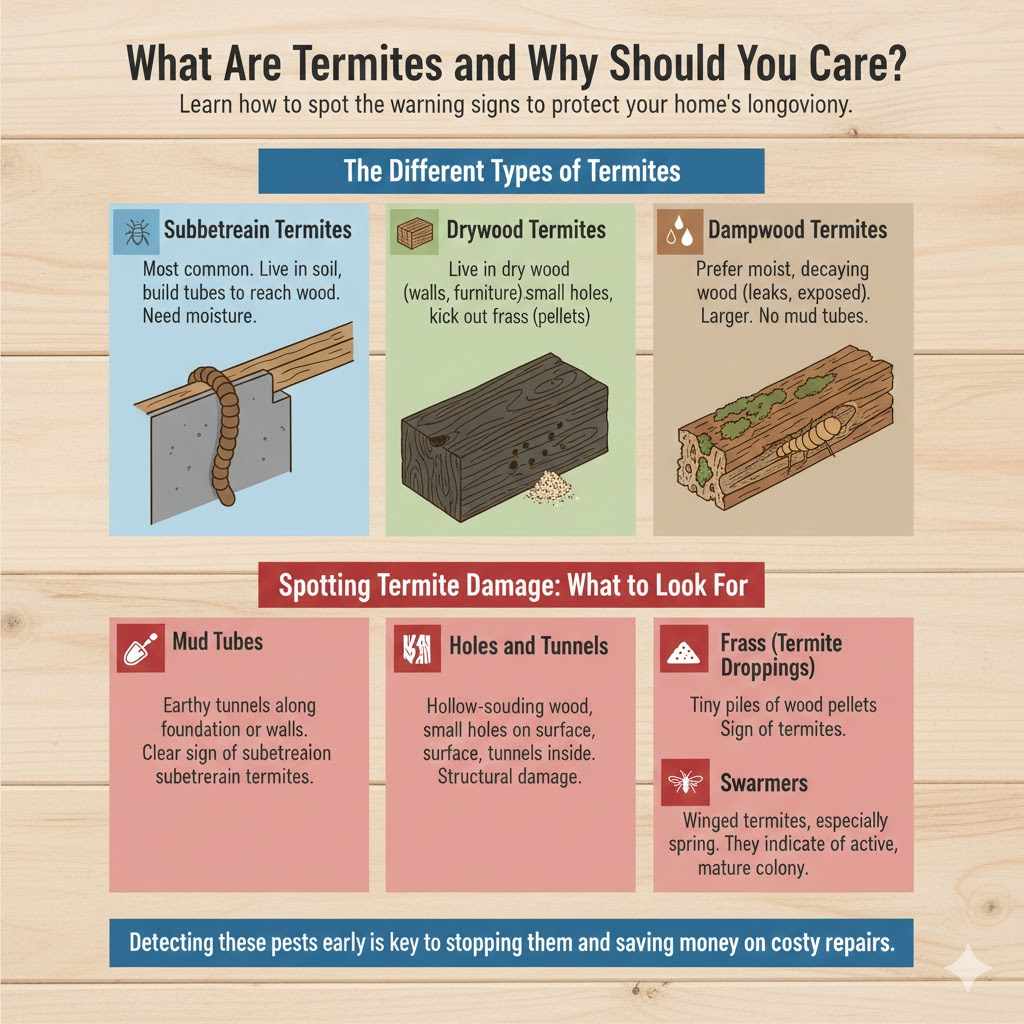
There are several types of termites, and knowing the differences can help you understand the damage they cause. Each type has its own habits and preferences. The three main types are subterranean, drywood, and dampwood termites.
Subterranean Termites: These are the most common type. They live in the soil and build mud tubes to reach wood. They need moisture and prefer areas near the ground. They eat the soft parts of the wood first. Their activity is often seen in crawl spaces, basements, and around foundations.
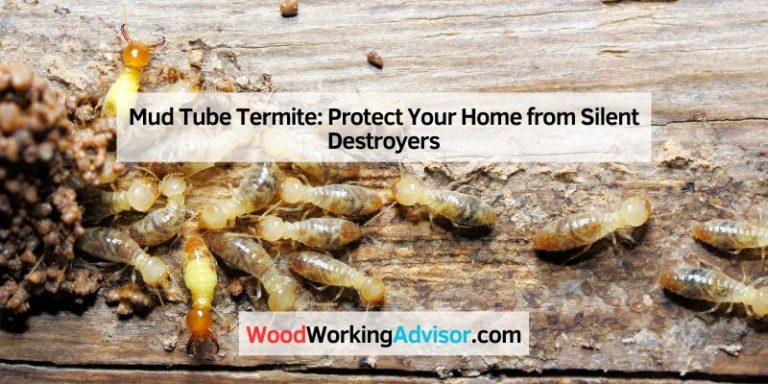
Subterranean termites require constant moisture, so they nest in the soil and build shelter tubes (also called mud tubes) from the ground to the wood source. These tubes protect the termites from predators and help them maintain the humidity they need to survive. These mud tubes are an easy-to-spot visual sign of infestation.
Drywood Termites: Unlike subterranean termites, drywood termites don’t need contact with the soil. They live directly in dry wood, such as attics, walls, and furniture. They create small, round holes where they kick out their frass (termite droppings). They can be found in coastal regions and in areas with dry climates.
Drywood termites are known for infesting dry wood, living completely within the wood they consume. They create galleries within the wood and produce frass pellets, which are small, dry fecal pellets that accumulate near the infested areas. Identifying these pellets is an indication of infestation. Drywood termites can be difficult to detect because they often infest wood deep within a structure, making early detection a challenge.
Dampwood Termites: Dampwood termites prefer wood that is moist and often decaying. They are larger than other types of termites and can be found in areas with high humidity, like near leaky pipes or in wood that is exposed to the elements. They don’t usually infest dry wood.
Dampwood termites thrive in moist environments. They are typically larger than other termite species and are often found in wood with high moisture content, like wood exposed to rain or near leaky pipes. They do not typically build mud tubes, but their presence often means that there’s a problem with excess moisture in the structure. These termites excavate tunnels and galleries within the wood. Wood infested by dampwood termites often has a spongy or water-damaged texture.
Spotting Termite Damage: What to Look For
Termite damage can be difficult to see at first. Termites often eat wood from the inside out, leaving the outside surface intact. This makes it challenging to identify an infestation early. Being able to recognize the signs is important to catch a problem before it gets too big.
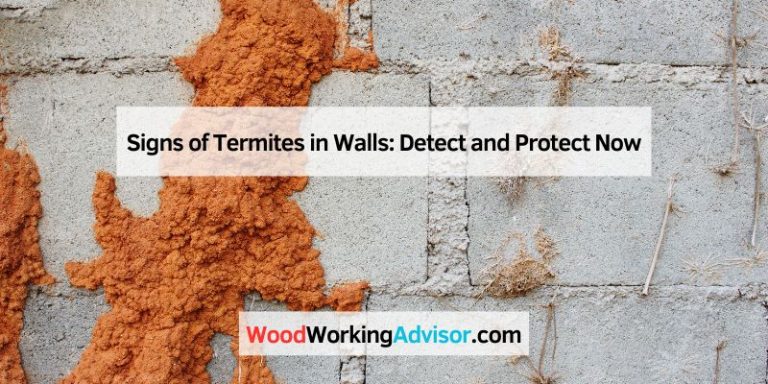
Mud Tubes: Subterranean termites build mud tubes. These look like small, earthy tunnels. They are a clear sign of an active infestation. Look for them along foundations, walls, and other surfaces that touch the ground.
Mud tubes are one of the most visible indicators of subterranean termite activity. These tubes are constructed from soil, wood, and termite saliva. They act as pathways for the termites to travel from their nests in the soil to their food source (wood). The presence of mud tubes is a definite indication that your home may have an active termite infestation, and it calls for immediate inspection.
Holes and Tunnels: Termites create tunnels inside the wood. Sometimes you can see small holes on the surface of the wood. These holes may also look like they were punctured. This damage is particularly obvious on wooden furniture or wooden support beams in your home.
Termites consume the wood from the inside out, leaving hollow areas and tunnels within the wood’s structure. These tunnels can compromise the structural integrity of the affected wood over time. Look for areas where the wood feels weak or sounds hollow when tapped. In some cases, you may observe small holes or openings on the surface, which is a sign of termite activity.
Frass (Termite Droppings): Drywood termites create small, dry droppings called frass. This frass looks like tiny piles of wood pellets. You might find these droppings near the termite holes. Finding frass is a strong clue that you have drywood termites.
Frass is a telltale sign of drywood termite activity. Unlike subterranean termites, drywood termites do not use the droppings in their nests. Instead, they kick these small pellets out of their galleries through tiny holes in the wood. The presence of frass often indicates a drywood termite infestation, requiring inspection and possible treatment.
Swarmers: Swarmers are winged termites. They leave their nests to start new colonies. You might see swarmers flying around your home during certain times of the year. This often happens in the spring. Swarmers are a sure sign that termites are present.
Swarmers are the reproductive termites, responsible for establishing new colonies. These winged termites emerge from existing colonies to mate and find new locations for their nests. The appearance of swarmers inside your home is a major indication that you likely have an active termite infestation. Their presence often signals that the colony is mature and actively expanding.
Understanding Wood Rot and Its Impact
Wood rot is damage to wood caused by fungi. These fungi need moisture to grow and break down the wood. Wood rot can weaken the structure of your home, just like termites. It is very important to address wood rot promptly. The longer it is left untreated, the more damage it can cause.
Types of Wood Rot
There are different types of wood rot, each with its own effects on wood. Knowing about the different types helps you understand how the wood is damaged and what can be done to fix it.
Brown Rot: This type of wood rot is known for causing the wood to turn brown and crumbly. The wood often looks like it has been broken into small cubes. Brown rot is common in areas with high humidity or where wood is in contact with the ground.
Brown rot primarily affects the cellulose in wood, leaving the lignin, which gives wood its color. This leaves behind a brown, crumbly material that crumbles easily. The wood loses its strength and can crumble into small, cubical pieces. This type of wood rot is often found in areas that are repeatedly wet, such as around leaky roofs, plumbing leaks, or wood in contact with the ground.
White Rot: White rot causes the wood to become lighter in color and often stringy. The fungi break down both the lignin and the cellulose. White rot can occur in various types of wood and is commonly found in hardwood.
White rot attacks both the lignin and cellulose components of the wood. This results in the wood becoming lighter in color, often appearing bleached or fibrous. The wood’s texture may become stringy or soft. White rot is commonly found in hardwood and often affects wood that is exposed to moisture over a long period. This type of rot can seriously weaken the structural integrity of the wood.
Soft Rot: Soft rot typically affects the surface of the wood. It can cause it to become soft and spongy. Soft rot is most common in wood that is constantly wet, like wood that’s submerged in water. This is a common problem for wooden docks and fences.
Soft rot mainly attacks the cellulose in wood. This results in the wood becoming soft, spongy, and often displaying cracks. This is commonly found in wood that remains wet for extended periods, such as wood in contact with soil, submerged wood, and wood exposed to constant moisture. The affected areas often appear waterlogged and can easily be penetrated by the fungi.
Identifying Wood Rot: Signs to Look For
Detecting wood rot early can prevent serious problems. Since the damage can be hidden, it is important to pay close attention to your home. Knowing the signs of wood rot helps you catch it quickly.
Discoloration: Wood rot can change the color of the wood. It can appear darker, lighter, or even have a mottled appearance. The change in color can be a strong indication that fungi are growing in the wood.
One of the first signs of wood rot is often a change in the color of the wood. The wood may darken, lighten, or develop a mottled appearance. This discoloration is the result of the fungi breaking down the wood’s natural pigments. Keep an eye out for unusual color changes in your wooden structures.
Soft or Spongy Wood: Wood rot can make the wood soft and spongy to the touch. The wood will lose its firmness. This happens because the fungi are breaking down the wood fibers. Any wood that feels soft or spongy could be affected by wood rot.
Wood that is afflicted with wood rot often loses its structural integrity and becomes soft and spongy. This happens because the fungi break down the cell walls of the wood fibers. You can check for this by pressing on the wood. If it gives way easily or feels soft, there is a risk of wood rot. This damage can be a sign of a larger issue.
Cracking and Crumbling: As wood rot progresses, the wood may crack, split, or crumble. This can be especially true for brown rot, which breaks the wood into small cubes. Cracking and crumbling is a sign of advanced rot.
As the wood rot progresses, it can lead to cracking and crumbling. The fungi break down the wood’s structure, causing it to weaken and break apart. Cracks, splits, and crumbling are all signs of advanced wood rot, which demands attention. In the case of brown rot, the wood may break into small, cubical pieces. If you notice cracking, crumbling, or cubical breakdown in your wooden structures, there may be a serious problem.
Musty Odor: Wood rot can create a musty, moldy smell. This smell comes from the fungi that are breaking down the wood. If you notice a musty odor near your wood, it could be a sign of wood rot.
Fungi that cause wood rot often produce a distinct musty or moldy odor as they break down the wood. This scent is typically noticeable in areas with damp wood. If you detect a musty smell, particularly in damp or poorly ventilated areas, it is important to inspect the wood for signs of rot. The smell is often the first sign of an ongoing problem.
Comparing Termite Damage and Wood Rot
It can be tough to tell the difference between termites and wood rot. Both cause damage to wood, but they do it in different ways. Knowing the differences can help you identify the real problem and find the right solution.
Key Differences in Appearance
The appearance of termite damage and wood rot can give you important clues. Paying attention to these differences can help you tell them apart.
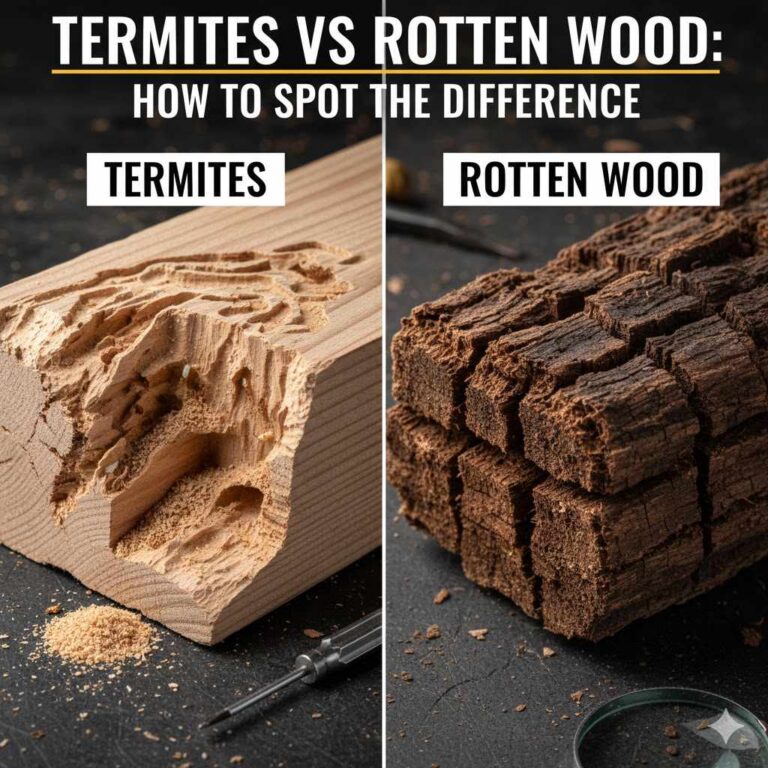
| Feature | Termite Damage | Wood Rot |
|---|---|---|
| Appearance | Hollowed-out wood, tunnels often following the grain; mud tubes may be present; small holes | Discoloration (darkening or lightening); soft, spongy wood; cracking or crumbling wood |
| Texture | Wood can feel papery or thin; may have a hollow sound when tapped | Wood feels soft and spongy; can be stringy or cubical |
| Presence of Waste | Frass (termite droppings) from drywood termites; mud tubes from subterranean termites | No droppings; may have a musty smell |
These features give you a general idea of the differences. Use these as a guide to examine the wood in your home. The next section will offer more detailed ways to tell them apart.
How to Tell Them Apart: A Side-by-Side Comparison
To help you compare, here’s a detailed comparison. This will offer some deeper insight on the most important points.
Damage Pattern: Termites often eat wood from the inside out, leaving a thin outer layer. Wood rot usually causes damage to the surface of the wood. This often causes it to change color or soften.
Termites typically consume wood from the interior, leaving the exterior surface intact initially, making the damage hard to detect until it becomes severe. In contrast, wood rot affects the surface of the wood. This leads to changes in texture and color, along with structural breakdown. This is a very useful way to distinguish between these problems.
Presence of Mud Tubes/Frass: Subterranean termites build mud tubes. Drywood termites leave frass (droppings). Neither of these things happen with wood rot.
The presence of mud tubes is a definite indicator of subterranean termite activity. The absence of these structures points to an issue other than termites. Drywood termites create frass, small, dry pellets of droppings. If you see them, you probably have a drywood termite infestation. The presence of these specific things gives you a strong clue as to what is occurring.
Wood Texture: Termite-damaged wood can feel papery or thin. Wood rot makes the wood soft and spongy, or possibly stringy.
When termites eat the interior of the wood, it often leaves a weakened, papery shell. The outer layer might still look strong, but the inside is gone. Wood that is affected by rot becomes soft and spongy because of the fungal activity. The texture is usually the most important way to tell the difference. By comparing the feel of the wood, you can find the right solution.
Odor: Termites don’t usually cause any distinct odor, except maybe a musty smell near a nest. Wood rot often produces a musty, moldy smell.
Termites themselves do not usually produce a strong odor that is detectable. However, the presence of their nests or the decomposition process can result in a faint, musty smell. Wood rot is often accompanied by a musty, moldy odor. The scent is produced by the fungi that are breaking down the wood. Identifying this odor is an important part of making a diagnosis.
Droppings: Drywood termites leave small droppings called frass. Wood rot doesn’t produce any droppings.
Frass is a key indicator of a drywood termite infestation, as these insects kick out small droppings. If you see these droppings, you can be more certain about what’s occurring. Wood rot does not produce droppings, so this is another important distinguishing factor.
Real-Life Scenarios and Examples
Let’s consider some examples to illustrate these points further:
-
- Scenario 1: You find a mud tube running up the foundation of your home. You break open the tube and find termites inside. This indicates a subterranean termite infestation. You will need to treat the termites and make sure that there isn’t any standing water near your house.
Real-life example: A homeowner in Florida noticed small mud tubes. After breaking them open, they discovered live termites. A professional inspection confirmed subterranean termites. The homeowner called a pest control specialist for treatment.
- Scenario 2: You notice the wood around your window frames is soft and discolored. When you tap the wood, it feels spongy. This suggests wood rot, likely caused by moisture leaking around the window. This problem will require professional carpentry and moisture control.Real-life example: In the Pacific Northwest, a homeowner found spongy wood around a window. The wood also had a musty smell. A professional contractor confirmed wood rot. The homeowner replaced the affected wood and fixed the window seal.
- Scenario 3: You discover tiny piles of wood pellets near a piece of furniture in your attic. This suggests you have drywood termites. You will have to call a pest control service to assess the damage and offer treatment.Real-life example: A homeowner in California found small piles of frass near a piece of furniture. A pest control professional found drywood termites. The homeowner had the wood treated.
Prevention and Treatment: Protecting Your Home
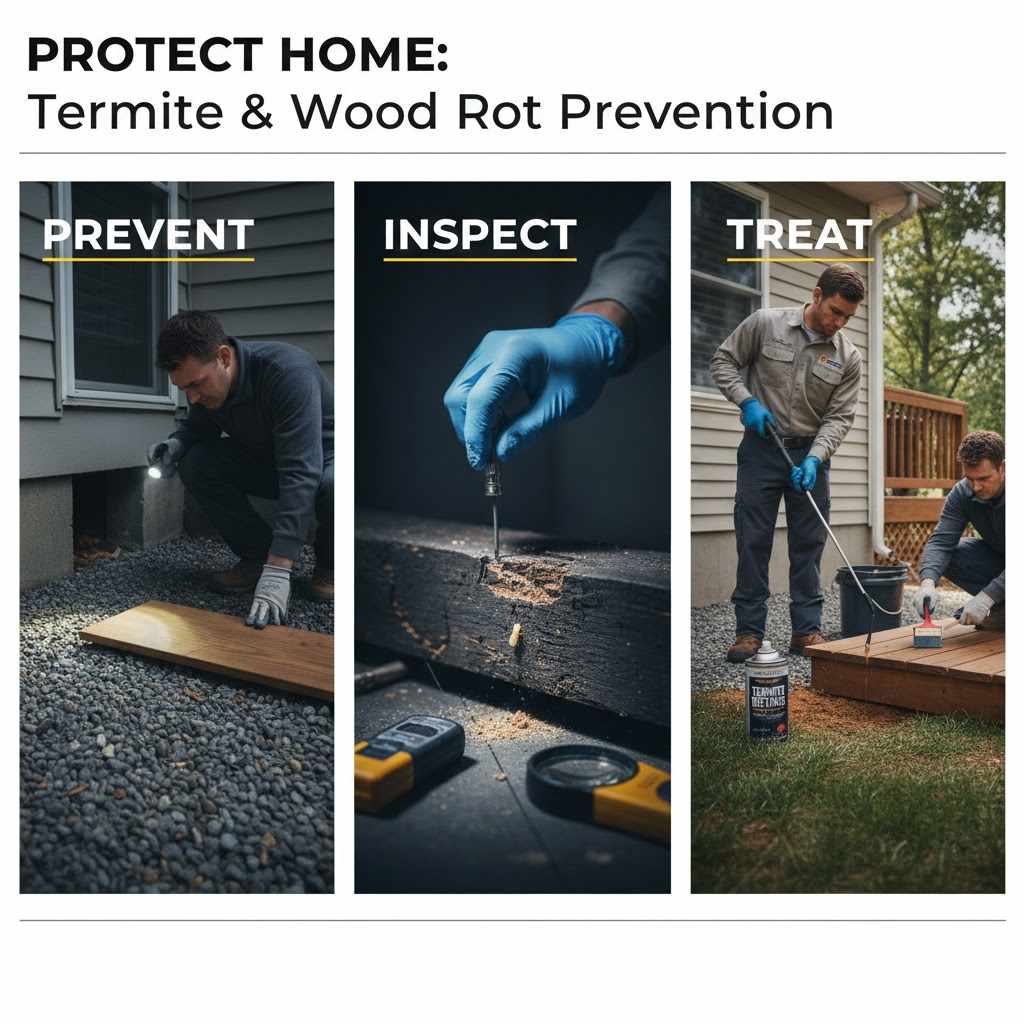
Knowing the signs of termites and wood rot is only part of the solution. You also need to take action to protect your home. Preventive measures and the right treatments can keep your home safe from damage.
Preventive Measures
The best way to deal with termites and wood rot is to prevent them in the first place. You can do this with simple steps.
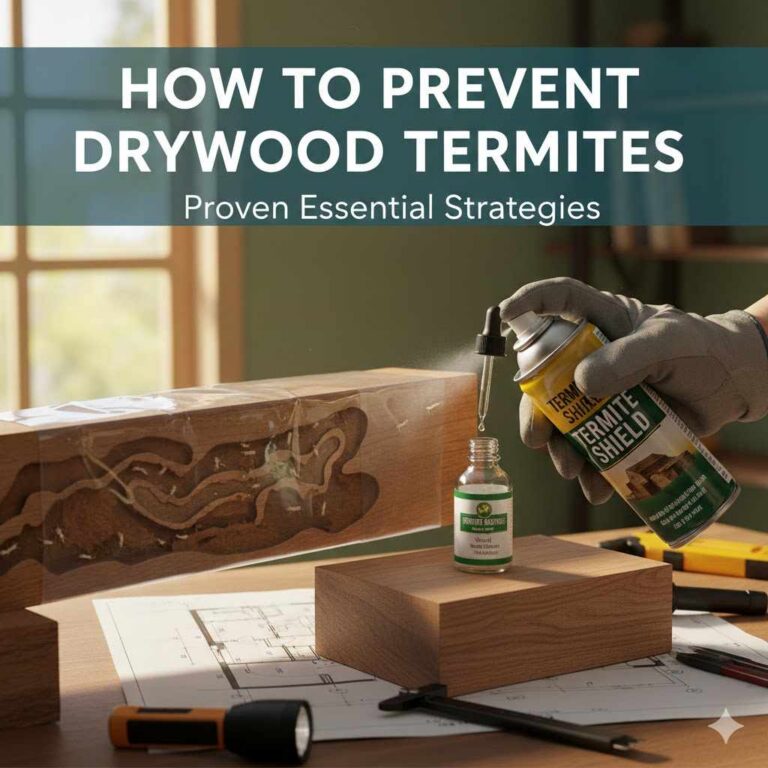
Control Moisture: Keep your home dry. Fix leaky pipes and gutters. Make sure your yard has good drainage. Avoid having standing water around your home. Proper moisture management is a solid protection strategy.
Moisture control is key to preventing both wood rot and termite infestations. Check pipes and gutters frequently and make sure your yard slopes away from your foundation. Take special care when dealing with areas that are constantly wet, such as basements and crawl spaces. These strategies are all about reducing the risk of water damage.
Regular Inspections: Inspect your home regularly for signs of termites and wood rot. This includes checking the foundation, crawl spaces, attics, and any wooden structures. Early detection can save you money. These routine checks are a great idea for any homeowner.
Regular inspections are essential. Check your home on a regular basis for any signs of damage. Keep an eye out for mud tubes, droppings, or any indication of wood damage. Consider having a professional inspect your home at least once a year. Catching any issues early can make a big difference.
Use Treated Wood: When building or repairing, consider using wood that is treated to resist termites and wood rot. This wood is pre-treated with chemicals that make it harder for pests to attack. Using treated wood can extend the life of your building. This small step can make a big impact.
Consider using treated wood. This wood has been processed with chemicals that are designed to deter pests and protect against wood rot. Treated wood is especially helpful in areas that are prone to moisture or come into contact with the ground. This method can offer long-term protection.
Proper Ventilation: Ensure your home has good ventilation in crawl spaces, basements, and attics. Proper ventilation helps prevent moisture buildup. This in turn reduces the risk of wood rot and termite infestations. These practices are very important for preventing problems.
Proper ventilation is a key factor in keeping your home safe. It helps to prevent moisture buildup. Make sure that air can circulate freely in areas like crawl spaces, basements, and attics. Good air flow can reduce the chances of wood rot and termite infestation, making your home more resilient.
Treatment Options
If you find termites or wood rot, you’ll need to treat the problem. The specific treatment will depend on the type of problem you’re dealing with.
Termite Treatment: Termite treatments often involve using chemicals to kill termites and prevent them from returning. This includes soil treatments, bait systems, and wood treatments. The treatment plan varies, depending on the type of termites and the severity of the infestation. It’s often best to call a professional for this.
The best treatment for termites usually includes chemical methods. Soil treatments involve applying chemicals to the soil around your home. Bait systems utilize termite-attracting bait stations to eradicate the colony. Wood treatments directly treat infested wood. It’s always best to call a professional pest control service for treatment.
- Wood Rot Treatment: Wood rot treatment usually involves removing the affected wood and replacing it with new, treated wood. You may also need to address the source of the moisture. In some cases, you can use wood preservatives to treat the existing wood. The best solution will vary.Treatment for wood rot usually involves removing and replacing the decayed wood. You may have to deal with the source of the moisture, such as a leaky pipe. Some treatments may involve the use of wood preservatives to treat existing wood and prevent future problems. The most effective method will depend on the extent of the damage.
- Professional Help: Both termite and wood rot problems can require professional help. A pest control professional can help to identify the type of termites and apply the proper treatment. A contractor can fix any damage and address any structural issues. Professional expertise is a good idea.
- Professional help is often the best choice for both termite and wood rot problems. A licensed pest control specialist can identify the type of infestation and apply the appropriate treatments. A licensed contractor can assess and repair any structural damage caused by wood rot. Getting expert advice and assistance will help ensure your home is protected.
Frequently Asked Questions
Question: Can I tell if it’s termites or wood rot just by looking?
Answer: It can be tricky. Look for mud tubes (termites), frass (drywood termites), or a musty smell (wood rot). Check for soft, spongy wood (wood rot) or a papery texture (termites).
Question: Are termites dangerous to my health?
Answer: Termites do not directly harm humans, but their presence can cause structural damage to your home, which may create some safety issues. They can also trigger allergies in some people due to the droppings.
Question: How often should I have my home inspected for termites and wood rot?
Answer: It’s wise to have your home inspected for termites and wood rot at least once a year, or more frequently if you live in an area with a high risk of infestation or moisture.
Question: What’s the best way to prevent wood rot?
Answer: Control moisture by fixing leaks, improving drainage, and ensuring proper ventilation. Use treated wood, and inspect your home regularly.
Question: How do I know if the termite treatment worked?
Answer: You can watch for a few signs. These include a lack of termite activity, no new mud tubes, and no swarmers. You should also check the affected areas regularly.
Final Thoughts
Identifying the signs of Termites vs Wood Rot: Key Signs Compared is key to keeping your home safe. Termites eat away at wood from the inside, while wood rot comes from fungi that love moisture. You’ll want to watch for mud tubes or frass (termites) versus soft, spongy wood or a musty smell (wood rot).
Taking steps to prevent problems, like controlling moisture and getting inspections, is a great strategy. If you spot damage, the best option is to seek professional help. Early detection and taking action will help keep your home in good shape. Protect your home and enjoy the peace of mind that comes from knowing it’s well-cared for!