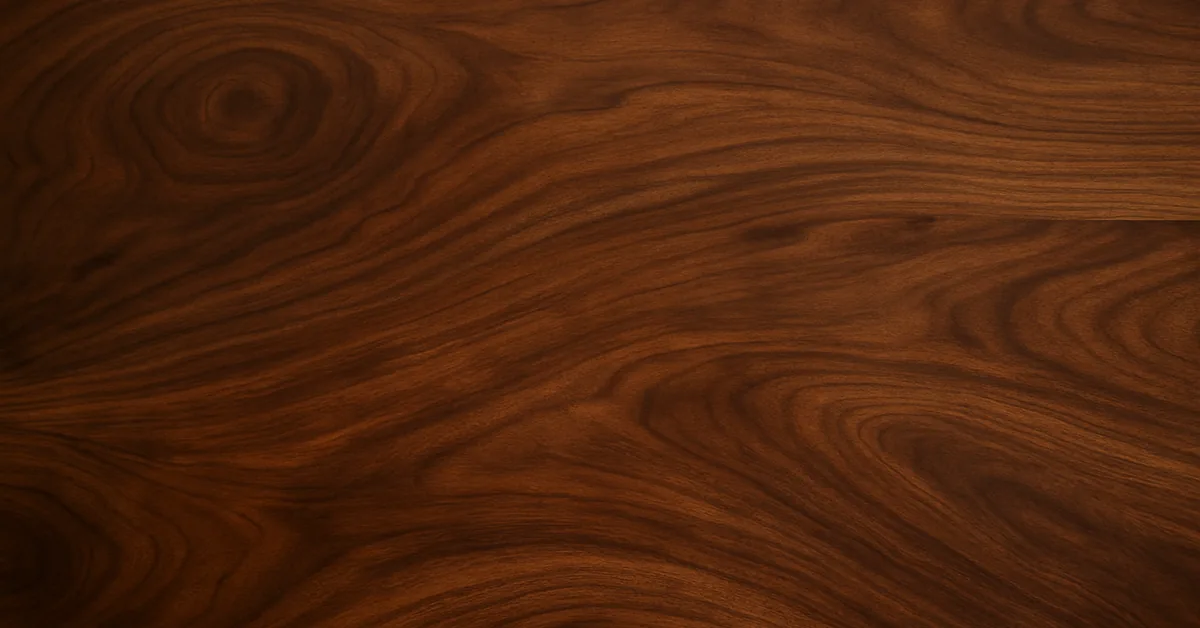
Walnut Wood Grain Types: 7 Patterns Explained (+ Furniture Pairing)
Walnut wood grain comes in seven recognizable patterns — straight, wave, burl, crotch (cathedral), bird peck, mountain, and raindrop — and each one suits a different furniture style, from a calm straight-grain dining table to a dramatic burl accent piece. Walnut also rates 1,010 on the Janka hardness scale, harder than cherry but softer than hard maple, which affects how it holds up in daily use. This guide covers all seven grain types, how walnut compares on hardness and cost, and how it actually ages.
Quick Answer
Walnut wood has 7 grain patterns: straight (classic, calm), wave, burl (dramatic swirls), crotch/cathedral, bird peck, mountain, and raindrop. It rates 1,010 Janka hardness and costs $2–$38 per board foot depending on grade. Contrary to common belief, walnut lightens with age rather than darkening.
What Are the Different Types of Walnut Wood Grain?
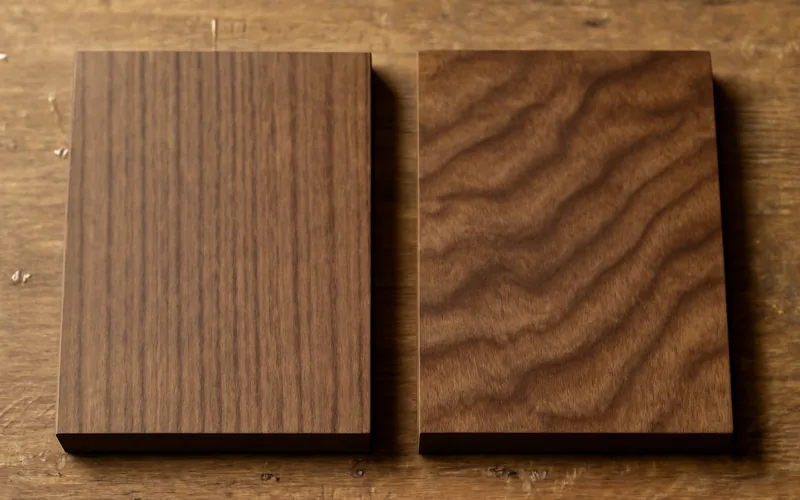
Seven grain patterns cover nearly all walnut lumber, each cut from a different part of the tree or shaped by how the tree grew.
| Grain Type | Look | Best Furniture Use |
|---|---|---|
| Straight | Calm, parallel lines | Dining tables, cabinetry — understated modern pieces |
| Wave | Gentle rippling curves | Tabletops, panels where subtle movement adds interest |
| Burl | Dense swirling knots | Accent tables, bowls, statement pieces |
| Crotch (Cathedral) | Flame/arch pattern from tree fork | Veneer panels, feature drawer fronts |
| Bird Peck | Small dark pin-sized marks | Rustic-style furniture, character pieces |
| Mountain (Parabolic) | Layered peak shapes | Bold headboards, feature walls |
| Raindrop | Small teardrop figure clusters | Small decorative items, jewelry boxes |
How Hard Is Walnut Wood Compared to Other Species?
Walnut rates 1,010 on the Janka hardness scale — harder than cherry (995) but noticeably softer than hard maple (1,450). That places it in a comfortable middle ground: durable enough for tables and cabinetry, but easier to hand-tool and finish than harder species.
| Species | Janka Hardness (lbf) |
|---|---|
| Hard maple | 1,450 |
| Walnut | 1,010 |
| Cherry | 995 |
How Much Does Walnut Wood Cost?
Walnut runs $2 to $38 per board foot depending on grade and figure — plain straight-grain stock sits at the low end, while highly figured burl or crotch-cut boards command the premium. A mature walnut tree needs 50 or more years of growth before it’s ready to harvest, which is part of why figured, old-growth boards cost significantly more than standard-grade lumber.
Does Walnut Wood Get Darker or Lighter With Age?
Walnut lightens with age, not darkens — a common misconception. Fresh-cut walnut heartwood starts a deep chocolate brown and mellows to a lighter, warmer brown over months of light exposure, the opposite of woods like cherry that darken with age. See our dedicated breakdown of how walnut wood ages for the full timeline.
What Furniture and Decor Ideas Work Best With Walnut?
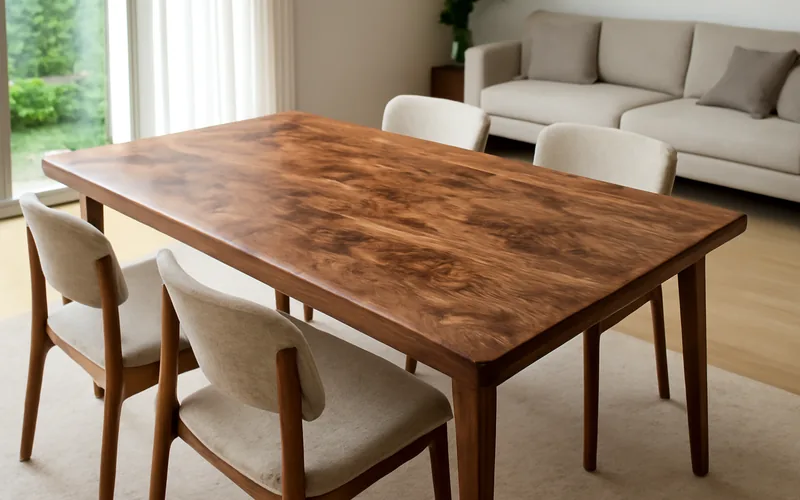
Straight and wave-grain walnut suits clean-lined modern furniture — dining tables, credenzas, minimalist cabinetry — where the wood’s deep, rich color is the main visual interest rather than the grain pattern itself. Burl, crotch, and mountain-grain walnut work better as a single statement piece — an accent table, a headboard, or a feature wall panel — since their dramatic figure competes with other busy elements in a room if overused.
How Do You Combine Walnut With Other Materials?
Walnut pairs well with brass and matte black metal hardware, which complement its warm brown tone without competing with it, and with lighter stone or marble surfaces for contrast in a mixed-material piece. For a wood-to-wood pairing, see our comparison of walnut vs oak for how the two look and perform side by side.
How Do You Maintain Walnut Wood Furniture?
- Dust regularly with a soft, dry cloth to prevent grit from scratching the surface.
- Apply Danish oil or a similar penetrating oil finish yearly to keep the wood conditioned and the color even.
- Keep walnut furniture out of direct, prolonged sunlight — UV exposure accelerates the natural lightening process unevenly.
- Wipe spills promptly; walnut is durable but not immune to water staining if liquid sits on unsealed wood.
Can Walnut Wood Furniture Be Used Outdoors?
Not recommended for permanent outdoor exposure — walnut isn’t naturally as rot- and moisture-resistant as species like teak or cedar, and sustained weather exposure will degrade it faster than indoor use. It’s fine for covered patios or occasional outdoor use with a protective finish, but not as a primary material for furniture left outside year-round.
Frequently Asked Questions
What does the grain pattern of walnut wood look like?
Walnut grain ranges from calm, straight parallel lines to dramatic swirling burl figure, with wave, crotch/cathedral, bird peck, mountain, and raindrop patterns in between. The specific look depends on which part of the tree the board was cut from.
How can you tell if furniture is real walnut wood?
Check for walnut’s characteristic deep chocolate-brown heartwood with a lighter sapwood edge, and grain that shows genuine natural variation rather than a repeating printed pattern. See our full walnut identification guide for the complete test.
Does walnut wood get darker or lighter with age?
Walnut lightens with age, mellowing from a deep chocolate brown to a warmer, lighter tone with light exposure — the opposite of what many people expect.
What is the Janka hardness of walnut wood?
Walnut rates 1,010 on the Janka hardness scale, harder than cherry (995) but softer than hard maple (1,450) — durable enough for everyday furniture while still being workable with hand tools.
Can walnut wood furniture be used outdoors?
Not for permanent outdoor exposure — walnut lacks the natural rot resistance of species like teak or cedar. It’s fine for covered or occasional outdoor use with a protective finish.
What colors pair best with walnut wood furniture?
Brass and matte black metal accents, plus lighter stone or marble surfaces, complement walnut’s warm brown tone without competing with it.
Match the grain type to the role it plays in the room — calm straight grain for everyday furniture, dramatic burl or crotch grain for a single statement piece — and you get walnut’s full range without it fighting itself. For general walnut buying guidance, see our walnut wood color guide.
Sponsored / affiliate links. As an Amazon Associate I earn from qualifying purchases. I may earn additional commission from eligible campaigns.