Termite Wings Everywhere: What They Look Like, Mean & What to Do
Termite wings are equal-length, translucent, and shed immediately after swarming — unlike ant wings, which are unequal and stay attached. Finding a pile of shed wings near a door, window, or baseboard means a swarm has already occurred, and a mature colony is almost certainly nearby. This guide covers how to identify termite wings, what finding them at entry points means, and which treatments actually stop an established infestation.
Quick Answer
Termite wings are equal-length, translucent pairs shed immediately after swarming. Finding them near doors, windows, or baseboards means a mature colony is nearby — indoors almost always means an active infestation. Call a pest professional within 48 hours.
What Do Termite Wings Look Like?
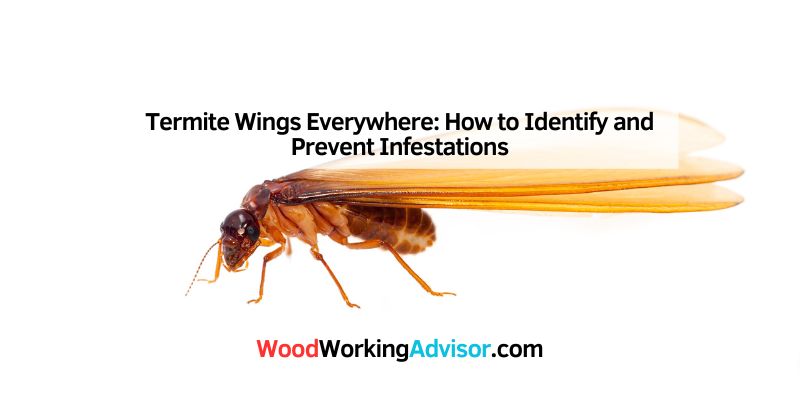
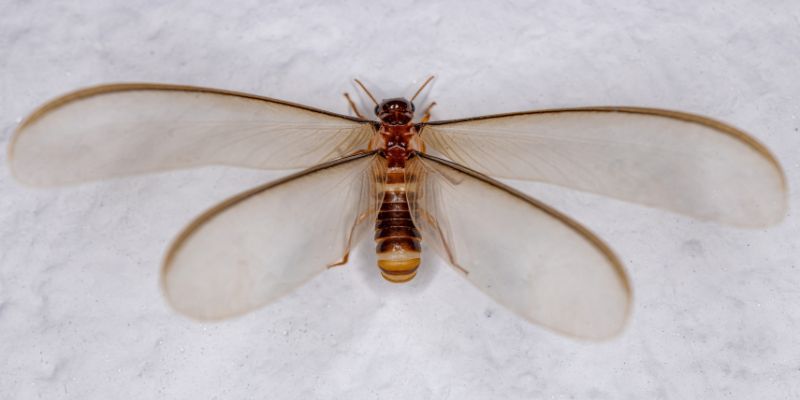
Termite wings are a defining feature of reproductive termites (called alates or swarmers) — the only caste in a colony that develops wings. They come in two equal-length pairs that are longer than the termite’s body, with a milky-white to translucent appearance and no tint or color. This equal-length trait is the single fastest way to identify termite wings on sight.
After landing and finding a mate, termites deliberately shed their wings by breaking them off at a weak base joint. This is why you find piles of wings — not whole insects — near windowsills, baseboards, and door frames. According to Orkin, US homeowners spend $5 billion per year repairing termite damage, with an estimated 600,000 homes affected annually.
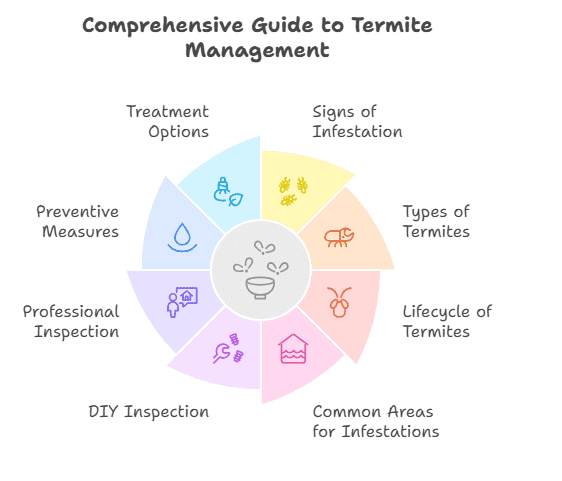
Signs Of Termite Infestation
Wing Shedding
One of the first signs of termites is finding wings near windows or doors. Termite wings are small and transparent — often described as resembling fish scales. If you see piles of equal-length wings near light sources and entry points, begin a full inspection immediately.
- Look for small, transparent wings of equal length.
- Check around light sources and entry points.
- They often look like fish scales in a pile.
Mud Tubes
Termites build mud tubes to travel and stay moist. These tubes are usually found on walls, foundations, or crawl spaces, protecting termites from predators and dry air.
| Location | Description |
|---|---|
| Walls | Small, muddy lines running vertically |
| Foundations | Brown, muddy paths near the base |
| Crawl spaces | Visible near the ground level |
Wood Damage
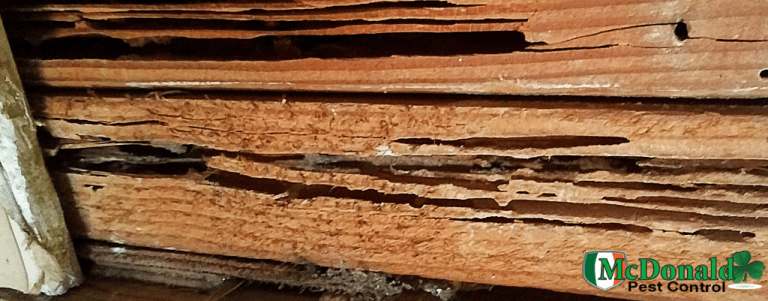
Termites eat wood from the inside out, leaving a shell behind. Tap on wooden surfaces — if they sound hollow, you may have an active infestation. Check structural beams, window frames, and subfloor areas first.
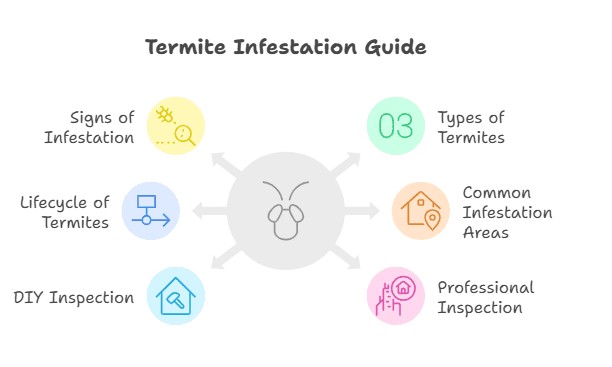
Types Of Termites
Subterranean Termites
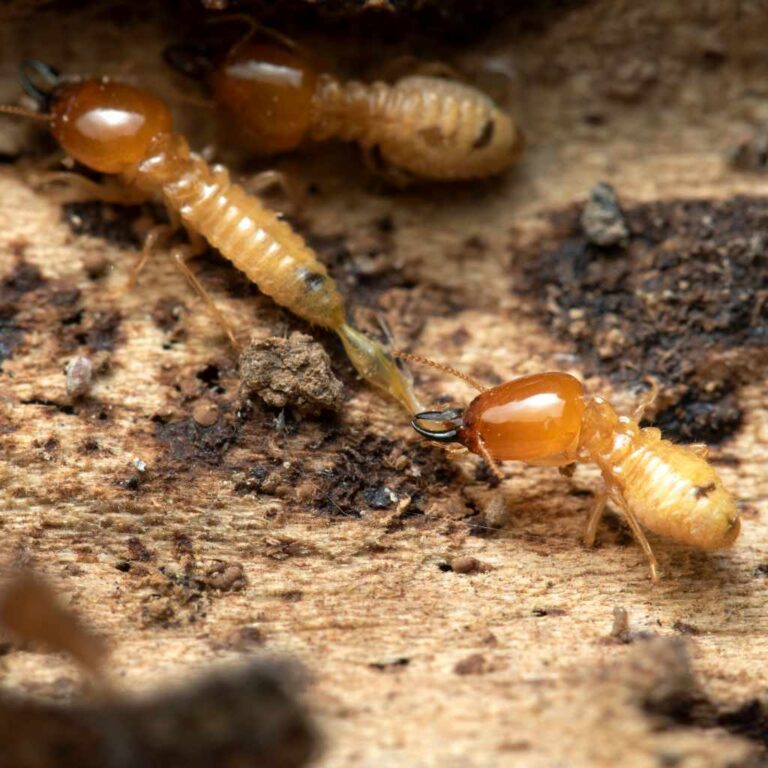
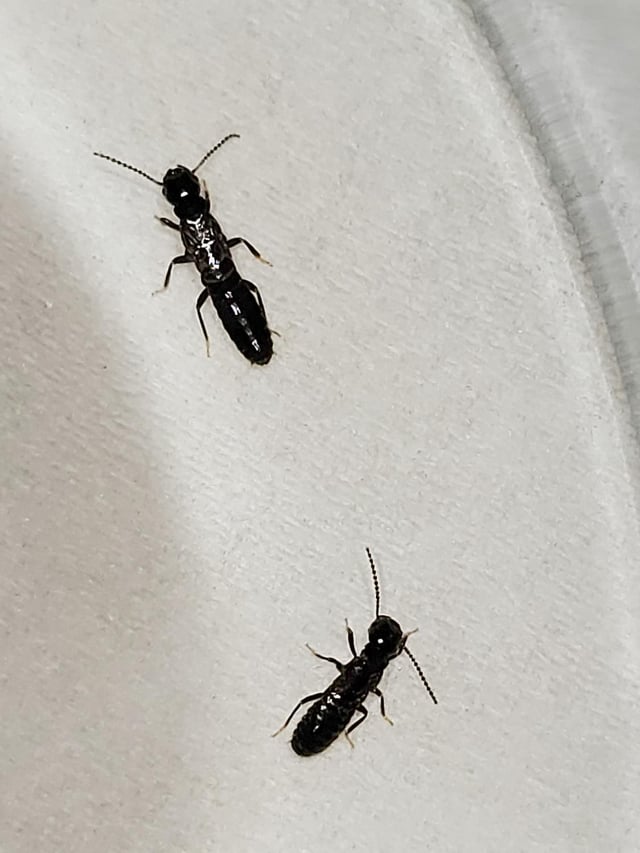
Subterranean termites are the most common and destructive species in the US. They live underground and build mud tubes to access above-ground wood sources. Their swarmers are dark brown to black with translucent wings.
Drywood Termites
Drywood termites live inside the wood they eat and don’t require soil contact. They swarm in warm weather and leave distinct “frass” (sawdust-like droppings) near entry holes. Common in coastal and southern states.
Dampwood Termites
Dampwood termites target wood with high moisture content — leaky pipes, poorly drained crawl spaces, and wood-to-ground contact are primary entry points. Fixing moisture problems is the first step in prevention.
Termites With Wings vs. Flying Ants: How to Tell the Difference
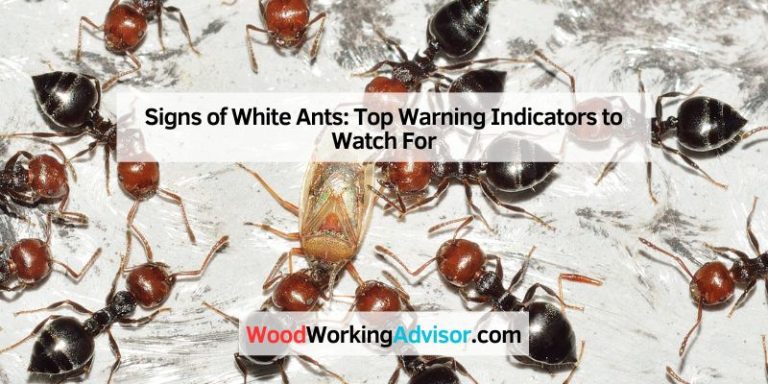
Termites with wings are frequently confused with flying ants — but one look at the wings settles it: termite wings are equal in length, flying ant wings are not.
| Feature | Winged Termites | Flying Ants |
|---|---|---|
| Waist shape | Straight, no pinch | Pinched (3 segments) |
| Antennae | Straight, beaded | Elbowed/bent |
| Wings | Equal length, translucent | Unequal — front pair larger, brownish |
| Wing shedding | Drop off easily after landing | Stay attached to insect |
| Swarm season | Spring: March–May | Summer: May–August |
Lifecycle Of Termites
Egg Stage
The queen lays eggs continuously. A mature subterranean termite queen can lay up to 10,000 eggs per day. Termite eggs on wall surfaces are a sign the colony is already well-established indoors.
Nymph Stage
Nymphs develop into workers, soldiers, or reproductives (swarmers). Workers do the damage; reproductives are the ones you see swarming with wings.
Adult Stage
Adult reproductive termites grow wings and swarm when the colony reaches maturity — typically 3–5 years after establishment. After swarming, they shed their wings and attempt to start new colonies.
Termite Wings at Your Door: What It Means
Finding termite wings piled at an exterior door, doorframe, or window ledge is not a random occurrence — it means a swarm just ended nearby. Termite swarms happen when a mature colony releases reproductive alates to find new nesting sites. They are attracted to light, which is why wings concentrate at doors, windows, and light fixtures.
The critical distinction: wings found outdoors near entry points indicate a colony is active in the immediate area of your home. Wings found indoors — near baseboards, inside rooms, or at interior doors — almost always mean termites have already established a colony within your home’s structure. Swarm season runs February through June in most of the US (year-round in Florida), with swarms most likely on warm, humid days following rain.
Do not sweep up the wings and ignore them. Finding termite eggs on walls or discovering wings at multiple entry points means the infestation may already be advanced. Contact a licensed pest professional within 48 hours of finding indoor wing deposits.
Common Areas For Infestations
Foundations
Subterranean termites enter through cracks in foundations and concrete slabs. Any wood-to-soil contact at the foundation is a primary entry risk. Check for mud tubes along the foundation line at least twice yearly.
Attics
Drywood termites target attic framing, especially in warm climates. Look for frass (droppings resembling fine sawdust) near rafters and roof supports.
Basements
Damp basements attract dampwood and subterranean termites. Address any moisture intrusion before treating for termites — a wet environment will undermine any treatment.
DIY Termite Inspection
Tools Needed
You need a flashlight, a screwdriver (for probing wood), and a moisture meter. A moisture meter helps identify damp wood zones that attract termites before visible damage appears.
Inspection Steps
- Check the exterior foundation line for mud tubes, cracks, or wood-to-soil contact.
- Probe exposed wood in crawl spaces and basements — soft or hollow areas indicate internal feeding.
- Inspect attic rafters and fascia boards for frass or wing deposits.
- Check windowsills, door frames, and any expansion joints where termites can enter.
- Document any findings with photos and mark the date for comparison at the next inspection.
Safety Precautions
Wear gloves and a dust mask in enclosed crawl spaces. Do not disturb active mud tubes with your bare hands — this alerts the colony and can scatter workers deeper into the structure.
★ Recommended product
Termite Detection Kit
A termite detection kit lets you inspect for active colonies before calling a professional. Includes probes, detection cards, and moisture indicators for crawl spaces and foundations.
- Detects subterranean and drywood termite activity
- Includes moisture meter for identifying high-risk zones
- Used by homeowners for annual preventive inspections
As an Amazon Associate we earn from qualifying purchases.
Professional Termite Inspection
When To Call A Professional
Call a licensed pest professional immediately if you find: wings indoors, active mud tubes, hollow-sounding structural wood, or any visible termite activity. DIY detection is useful for monitoring — treatment of an established colony almost always requires professional-grade termiticides.
What To Expect
A professional inspection covers the full perimeter, all crawl spaces, the attic, and any accessible wall voids. Inspectors use moisture meters and acoustic probes to detect activity behind walls without demolition. The inspection report will identify species, infestation extent, and recommended treatment type.
Cost Factors
Professional termite treatment costs range from $300 to $2,500 depending on infestation severity, home size, and treatment method. Liquid termiticide barrier treatments average $1,000–$2,500; bait station programs run $300–$900 per year. Average repair cost after confirmed damage is $3,000 according to Orkin.
Preventive Measures
Moisture Control
Moisture is the primary environmental factor that enables termite infestations. Fix all plumbing leaks, improve crawl space drainage, and use vapor barriers under the house. Dampwood termites cannot survive in properly dried environments — moisture control alone eliminates this species risk.
Wood Treatment
Treating structural wood with borate-based solutions creates a chemical barrier termites cannot cross. Apply to exposed framing in crawl spaces, attics, and garages. Pressure-treating wood yourself with borate is a cost-effective preventive measure for new construction and renovation work. For outdoor structural wood, using a quality wood sealer also slows moisture absorption that attracts termites. For posts set in soil, see how to keep wood posts from rotting in the ground — rot and termite damage often occur together.
Regular Inspections
Schedule a professional termite inspection every 1–3 years depending on your region. High-risk zones (Gulf Coast, Southeast, Southern California) warrant annual inspections. Keep inspection records — early detection reduces average repair costs from thousands to hundreds.
Treatment Options
Chemical Treatments
Liquid termiticide barrier treatments (imidacloprid, fipronil, bifenthrin) are injected into the soil around the foundation, creating a chemical barrier termites cannot cross. These treatments last 5–10 years and are the most effective option for subterranean termites.
Non-chemical Treatments
Heat treatment and fumigation are effective for drywood termites. Heat treatment raises the internal temperature of affected wood to 120°F — lethal to all termite life stages without chemicals. Effective for localized infestations in attic or wall sections.
Integrated Pest Management
Integrated Pest Management (IPM) combines bait stations, moisture control, structural repairs, and targeted chemical applications. Bait stations use slow-acting toxicants that worker termites carry back to the colony — eliminating the queen is the only way to fully stop a subterranean colony.
★ Recommended product
Termite Bait Station System
In-ground termite bait stations intercept foraging workers and deliver slow-acting bait to the colony. Effective against subterranean termites without full-perimeter chemical treatment.
- Installed around the perimeter — no drilling required
- Worker termites carry bait back to kill the queen
- Reloadable stations last for years
As an Amazon Associate we earn from qualifying purchases.
Frequently Asked Questions
What Do Termite Wings Look Like?
Termite wings are translucent to milky white, equal in length (both pairs the same size), and longer than the termite’s body. They have no color tint — brown-tinted wings indicate flying ants, not termites. You’ll typically find them shed in small piles near light sources, windowsills, and door frames rather than still attached to an insect.
How Do You Tell Termite Wings From Ant Wings?
The fastest check: are both wing pairs the same length? Termite wings are equal in length; ant wings have a noticeably larger front pair. Termite wings are also fully translucent with no tint, while ant wings are slightly brownish. Finally, termite wings detach easily and are found in piles — ant wings typically stay attached to the insect.
Should I Worry About Winged Termites?
Yes. Winged termites (swarmers) indicate a mature colony is nearby — colonies typically take 3–5 years to produce swarmers. Finding them indoors is a strong indicator of an established infestation within your home’s structure. Contact a pest control professional immediately rather than waiting for visible damage to appear.
How To Get Rid Of Swarming Termites With Wings?
You cannot eliminate an infestation by killing swarmers. Use sticky traps or a vacuum to remove them from your home, then close windows and doors. The real problem is the colony — contact a licensed pest control professional for inspection and treatment within 48 hours of finding swarmers indoors.
What To Do If You See Flying Termites Outside Your House?
Act within 24–48 hours. Inspect the perimeter for mud tubes and wood-to-soil contact. Seal any visible entry points at the foundation. Remove wood debris, mulch, or firewood stored against the house. Contact a pest professional — outdoor swarmers near your home means an active colony within 50–100 feet.
Do Swarming Termites Mean Infestation?
Swarming termites outdoors mean a mature colony is present nearby. Swarmers indoors — especially more than one or two — almost always indicate the colony is already established within your home’s structure. Immediate professional inspection is necessary. Do not wait for structural damage to confirm infestation.
Conclusion
Termite wings are an early warning, not just a nuisance. Equal-length, translucent wings near doors or windows mean a swarm occurred — a mature colony is nearby. Indoors, it almost always means active feeding on your structure. Identify the species, fix moisture sources, treat exposed wood, and call a professional before damage spreads. A single colony of 60,000 termites can eat through a 2″×4″ in five months — early action is the only cost-effective defense.