Vinyl Flooring Cutting Tool Best Options Explained
When you’re putting down new vinyl floors, cutting the pieces just right can feel tricky. It’s easy to get confused about which tool is best. Lots of people wonder if they need something fancy or if a simple cutter will do the job.
Don’t worry! We’re here to make it super easy. We’ll show you exactly what tools work great and how to use them.
Get ready to see just how simple cutting vinyl can be.
Best Vinyl Flooring Cutting Tool Options
Choosing the right tool makes cutting vinyl flooring much simpler and cleaner. This guide explains the best options available for cutting vinyl planks and tiles. We’ll look at what makes each tool unique and when it’s the best choice for your project.
This will help you save time and get professional-looking results without a lot of hassle.
Vinyl Flooring Cutters
Vinyl flooring cutters are specialized tools designed specifically for cutting vinyl materials. They offer a clean and precise cut, which is essential for a good finish. Unlike general cutting tools, these are made to handle the specific density and flexibility of vinyl without bending or tearing it.
They often have a long handle and a sharp blade that makes a single pass for a clean cut.
Types of Vinyl Flooring Cutters
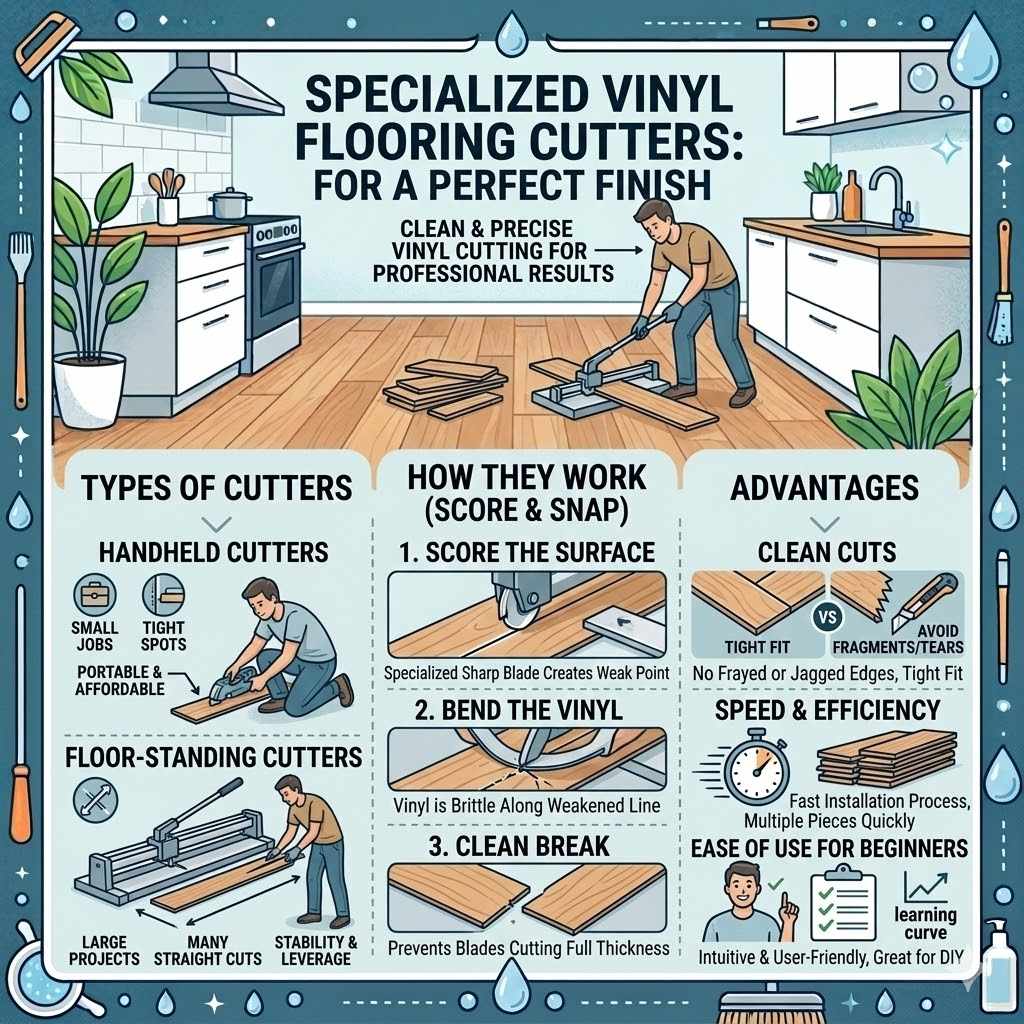
There are a few main types of vinyl flooring cutters you’ll find. Some are simple handheld units, while others are larger, floor-standing models. Handheld cutters are great for smaller jobs or for making quick cuts in tight spots.
Larger cutters are better for making many straight cuts quickly and efficiently. Each type has its advantages depending on the size of your project and the type of vinyl you are working with.
Handheld vinyl cutters are usually very portable and easy to use. They work by scoring the vinyl with a blade and then snapping it. This is similar to how you might cut a piece of glass.
They are often more affordable than larger machines.
Floor-standing cutters offer more stability and leverage. This can result in straighter cuts and is less tiring for larger projects. Some have adjustable guides to help you make perfectly straight lines.
They can also handle thicker or tougher vinyl materials more easily.
How Vinyl Cutters Work
Vinyl cutters typically use a sharp blade to score the surface of the vinyl. Once scored, the material is brittle along that line. You then apply pressure, often by snapping the vinyl over the scored line, to break it cleanly.
This scoring and snapping method prevents the blade from having to cut through the entire thickness of the vinyl in one go. This is key to avoiding jagged edges or damage to the vinyl.
The scoring action creates a weak point. When you bend the vinyl, it breaks precisely along this weakened line. Many cutters have a ruler guide to ensure your scores are straight and consistent.
This precision is vital for fitting pieces together perfectly around walls or obstacles.
Advantages of Using Vinyl Cutters
- Clean Cuts
Vinyl cutters produce very clean edges on your vinyl flooring. This means you won’t have to worry about frayed or rough edges. Clean cuts make it easier to get a tight fit against walls and other pieces of flooring. This leads to a much more professional and polished final look for your room. - Speed and Efficiency
For projects involving many cuts, vinyl cutters can be very fast. Once you get the hang of it, you can cut pieces quickly. This speeds up the entire installation process. It’s much faster than trying to measure and cut with a utility knife and straightedge for every single piece. - Ease of Use for Beginners
While there’s a slight learning curve, vinyl cutters are generally user-friendly. They are designed to be intuitive. This makes them a great choice for DIYers who are new to flooring installation. Most users can learn to make accurate cuts within a few tries.
Utility Knives and Blades
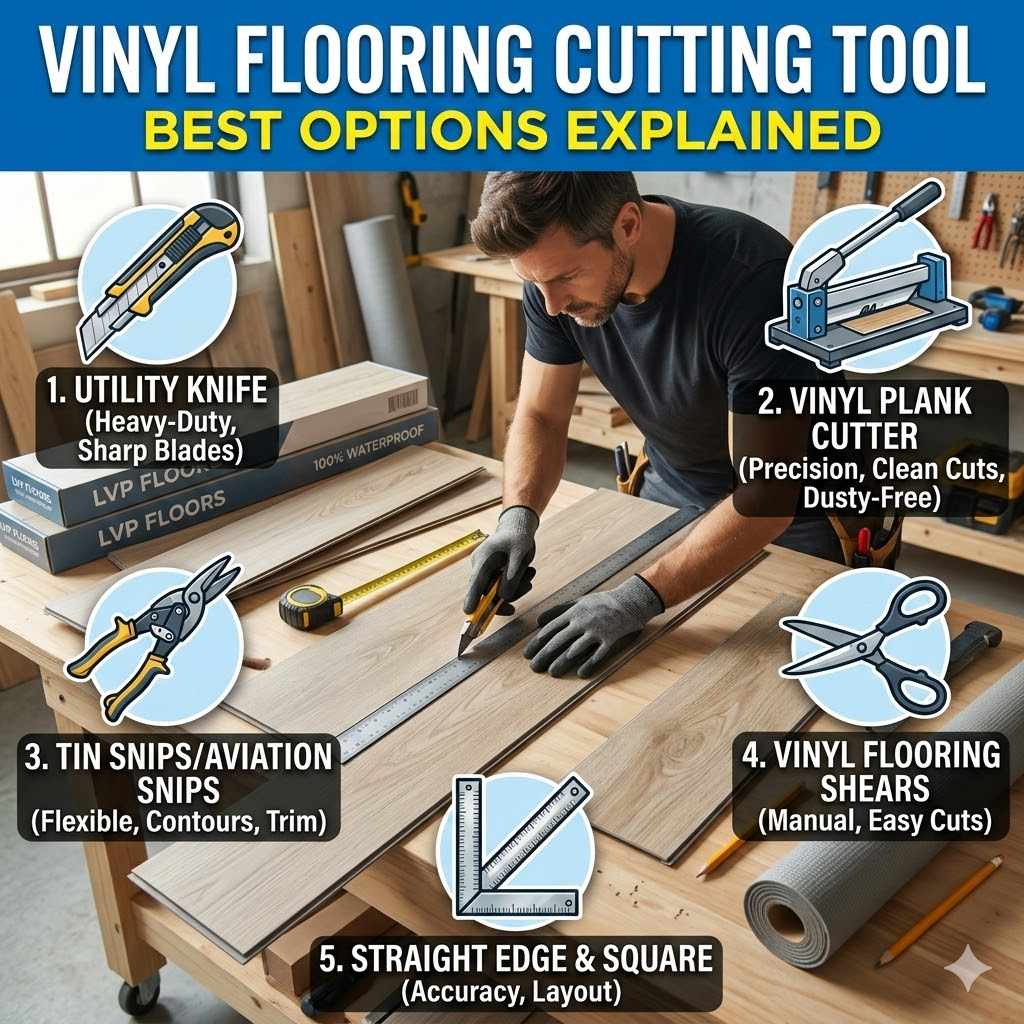
A sharp utility knife is another popular option for cutting vinyl flooring. It’s a versatile tool that many people already have at home. When used with a good straightedge, it can deliver accurate cuts for your vinyl project.
It’s especially handy for small touch-ups or for making cuts that are hard to reach with a larger cutter.
Choosing the Right Utility Knife and Blades
For cutting vinyl flooring, you’ll want a utility knife with a sturdy handle and a reliable blade locking mechanism. The blades need to be extra sharp. For vinyl, it’s best to use a fresh blade for each section or even each cut if the vinyl is thick.
Dull blades can tear the vinyl, leading to a messy edge.
Consider using snap-off blades. These blades have multiple sections, and you can snap off a dull section to reveal a fresh, sharp edge. This is a cost-effective way to always have a sharp blade ready.
For vinyl, blades designed for cutting cardboard or flooring work well.
Technique for Cutting with a Utility Knife
To cut vinyl flooring with a utility knife, you’ll need a straightedge, like a metal ruler or a carpenter’s square. Place the vinyl where you want to cut it. Lay the straightedge firmly along your cut line.
Then, use the utility knife to score the vinyl. You might need to make several passes with the knife to cut all the way through.
Press down firmly but try to keep your strokes even. After scoring, place the vinyl over an edge, like a workbench or a piece of scrap wood, with the score line overhanging. Then, snap the vinyl downwards.
This should result in a clean break. Practice on a scrap piece first to get the feel for it.
Pros and Cons of Utility Knives
- Pros
Utility knives are very affordable and widely available. They offer flexibility for making small cuts or intricate shapes. If you already own one, it’s a low-cost way to start cutting your vinyl. They are also easy to maneuver for cuts in awkward corners or around pipes. - Cons
Cutting vinyl with a utility knife can be time-consuming, especially for large areas. It requires more physical effort to get a clean cut through thicker vinyl. There’s also a higher chance of making a mistake or getting a jagged edge if the blade isn’t sharp enough or the pressure isn’t consistent.
Rotary Cutters
Rotary cutters are another excellent option, especially for softer vinyl materials like luxury vinyl tile (LVT). These tools use a circular blade that spins as you roll it across the material. They provide a smooth and continuous cutting action.
This can lead to very clean, burr-free edges. They are often used in sewing and crafting but work well for flooring too.
How Rotary Cutters Work on Vinyl
A rotary cutter has a sharp, circular blade that rotates. When you press down and roll the cutter along a straightedge, the spinning blade slices through the vinyl. It’s like a pizza cutter, but with a much sharper blade designed for tougher materials.
The continuous motion helps to avoid the start-and-stop tearing that can happen with a utility knife.
For best results, you need a cutting mat underneath your vinyl to protect your work surface and keep the blade sharp. Using a quilting ruler or a metal straightedge guides the cutter and ensures a straight line. The blade cuts by shearing the material as it spins.
Benefits of Rotary Cutters for Vinyl
- Smooth, Precise Cuts
Rotary cutters excel at making smooth, clean cuts. The spinning blade action minimizes the chance of snagging or tearing the vinyl. This is especially beneficial for vinyl that has a printed design or a textured surface. It helps maintain the integrity of the material’s finish. - Good for Intricate Shapes
While they require a straightedge for straight cuts, rotary cutters can also be used to cut curves or more complex shapes if needed. Their maneuverability allows for detailed work that might be difficult with other tools. This is useful when working around curved features in a room. - Ergonomic Design
Many rotary cutters are designed with comfort in mind. They often have ergonomic handles that reduce hand fatigue, especially during longer cutting sessions. This can make the cutting process more pleasant and less physically demanding for the user.
Heavy-Duty Scissors or Shears
For thinner vinyl materials, particularly vinyl tiles or some types of flexible vinyl planks, heavy-duty scissors can be surprisingly effective. These are not your average household scissors. They are built with stronger blades and a more robust design to handle thicker materials.
When to Use Heavy-Duty Scissors
Heavy-duty scissors are best for cutting softer, more pliable vinyl. They are excellent for cutting straight lines and making quick trims. If you’re installing vinyl tiles, scissors can be a quick way to cut pieces to fit around the edges of a room.
They are also useful for making small adjustments or for cutting around minor obstacles.
Make sure the scissors you choose are specifically designed for cutting tough materials like plastic or vinyl. Regular fabric scissors will dull quickly and won’t provide clean cuts. Look for tools labeled as “shears” or “tin snips” if you’re unsure.
Technique and Limitations
Using heavy-duty scissors involves a simple cutting motion. You place the vinyl between the blades and squeeze. For best results, use a straightedge to guide your cut.
You can score the vinyl first with a utility knife or a scissor edge to create a starting point for the cut. This can help initiate the cut more cleanly.
The main limitation of scissors is that they can sometimes crush or bend the vinyl, especially thicker planks, leading to a less precise edge. They are generally not recommended for very thick or rigid vinyl flooring. The quality of the cut can also vary greatly depending on the sharpness and sturdiness of the scissors.
Table Saws and Circular Saws (with caution)
For very large projects or for making many precise, straight cuts on thicker vinyl, some professionals might use power saws like table saws or circular saws. However, this comes with significant risks and requires extreme caution. These tools are designed for wood and can be dangerous if not used properly with vinyl.
Safety Precautions for Power Saws
If you consider using a power saw for vinyl, safety is paramount. Always wear safety glasses and hearing protection. Ensure the vinyl is securely clamped down to prevent it from moving during the cut.
Use blades specifically designed for cutting plastic or laminate, as wood blades can melt the vinyl and cause dangerous fumes.
Never force the saw through the material. Let the blade do the work. Make sure you have excellent ventilation in the area, as cutting vinyl can release fumes.
It is generally recommended that beginners avoid using power saws for vinyl flooring.
When Power Saws Might Be Considered
Power saws are usually reserved for professional installers working with specific types of vinyl that are thicker or more rigid. They can achieve very fast and accurate cuts when set up correctly. For instance, making repetitive cuts for a large room or cutting vinyl planks to a precise size for a complex pattern.
However, the risk of damage to the material or injury is much higher.
For the average DIYer, the cost and risk associated with using these tools for vinyl flooring outweigh the benefits. Specialized vinyl cutters are a much safer and more effective alternative. The key is that the vinyl must be stable and supported to prevent binding and kickback.
Choosing the Right Tool for Your Project
Selecting the best vinyl flooring cutting tool depends on several factors. The type of vinyl you’re working with, the size of your project, and your own comfort level with different tools all play a role. We’ll explore how to make the smartest choice for your specific needs.
Consider the Type of Vinyl Flooring
Different types of vinyl flooring require different cutting approaches. Luxury Vinyl Plank (LVP) and Luxury Vinyl Tile (LVT) are popular choices. LVP often comes in interlocking planks that can be cut with a scoring knife or a specialized cutter.
LVT tiles can also be cut with scoring tools, but some thicker tiles might need a more robust method.
Sheet vinyl, which comes in large rolls, needs a different approach. For sheet vinyl, a sharp utility knife and a long straightedge are often the best bet for straight cuts. Intricate cuts around obstacles with sheet vinyl can be challenging and may require careful scoring and repeated passes with a sharp blade.
Rigid core vinyl planks offer more stability during cutting. They can often be scored and snapped more easily than flexible vinyl. The thickness and backing material of the vinyl will also influence which tool works best.
Always check the manufacturer’s recommendations for cutting the specific product you’ve chosen.
Project Size and Complexity
For small areas, like a single bathroom or a small entryway, a basic vinyl cutter or a sharp utility knife might be sufficient. These tools are easy to handle and don’t require much setup. You can make the necessary cuts without much trouble.
If you’re tackling a large room or an entire house, investing in a more efficient tool is wise. A high-quality vinyl flooring cutter can save you a significant amount of time and effort. For very complex patterns or cuts that require extreme precision, a specialized cutter might be necessary to achieve the desired result.
Think about how many cuts you’ll be making overall.
Projects involving many doorways, closets, or irregular shapes will require more cuts. In such cases, speed and accuracy become more important. A tool that allows for quick, clean cuts will make the job much more manageable.
Consider if you need to cut many straight lines or if you’ll also be doing curved cuts.
Beginner vs. Experienced DIYer
For beginners, simplicity and safety are key. A good vinyl flooring cutter designed for ease of use is highly recommended. These tools are made to be intuitive, reducing the chance of errors.
They help ensure clean, professional-looking results even for those with no prior experience.
An experienced DIYer might already have preferred tools or might be comfortable using a utility knife for most tasks. They may also have access to power tools and understand the risks involved. However, even experienced installers often find that specialized vinyl cutters offer a superior combination of speed, accuracy, and ease of use.
The goal for any DIYer, regardless of experience, is to achieve a beautiful and durable floor. Choosing a tool that fits your skill level and project demands will make the process more enjoyable and less stressful. Don’t be afraid to try a tool that seems simple at first; it might be exactly what you need.
Maintaining Your Cutting Tools
Keeping your cutting tools in good condition is essential for consistent, clean cuts. Even the best tools will perform poorly if their blades are dull or damaged. Proper maintenance ensures your tools last longer and make your work easier.
Blade Care and Replacement
The most critical part of any cutting tool is its blade. For utility knives, always use fresh, sharp blades. If you notice the blade is starting to drag or tear the vinyl, it’s time for a new one.
Snap-off blades are great because you can easily expose a fresh edge. For rotary cutters, blades can be sharpened, but replacement is usually more cost-effective and provides a better result.
For specialized vinyl cutters, the blades are often
Cleaning Your Tools
After each use, it’s a good idea to clean your cutting tools. Vinyl can leave behind small bits of residue or dust. Use a soft cloth to wipe down the blades and any other parts of the tool.
For more stubborn residue, you might use a mild cleaning solution, but make sure to dry the tool thoroughly afterward to prevent rust.
For specialized vinyl cutters, there might be specific cleaning instructions. Keeping the cutting surfaces clean ensures smooth operation and prevents any buildup that could affect the cut quality. A clean tool is a safe tool and a more effective tool.
Storage Recommendations
Proper storage protects your tools from damage and keeps them ready for your next project. Store sharp blades in protective covers or cases to prevent accidental cuts and to keep them from becoming dull against other objects. Keep your tools in a dry place to avoid rust, especially for metal parts.
A toolbox or a dedicated storage area for your tools is ideal. This prevents them from getting lost or damaged. For specialized cutters, original packaging or a custom case can offer the best protection.
Good storage habits help extend the lifespan of your tools considerably.
Real-Life Examples and Scenarios
To help you visualize how different tools are used, let’s look at some real-world situations. These examples show how the right tool can make a big difference in achieving a great flooring finish.
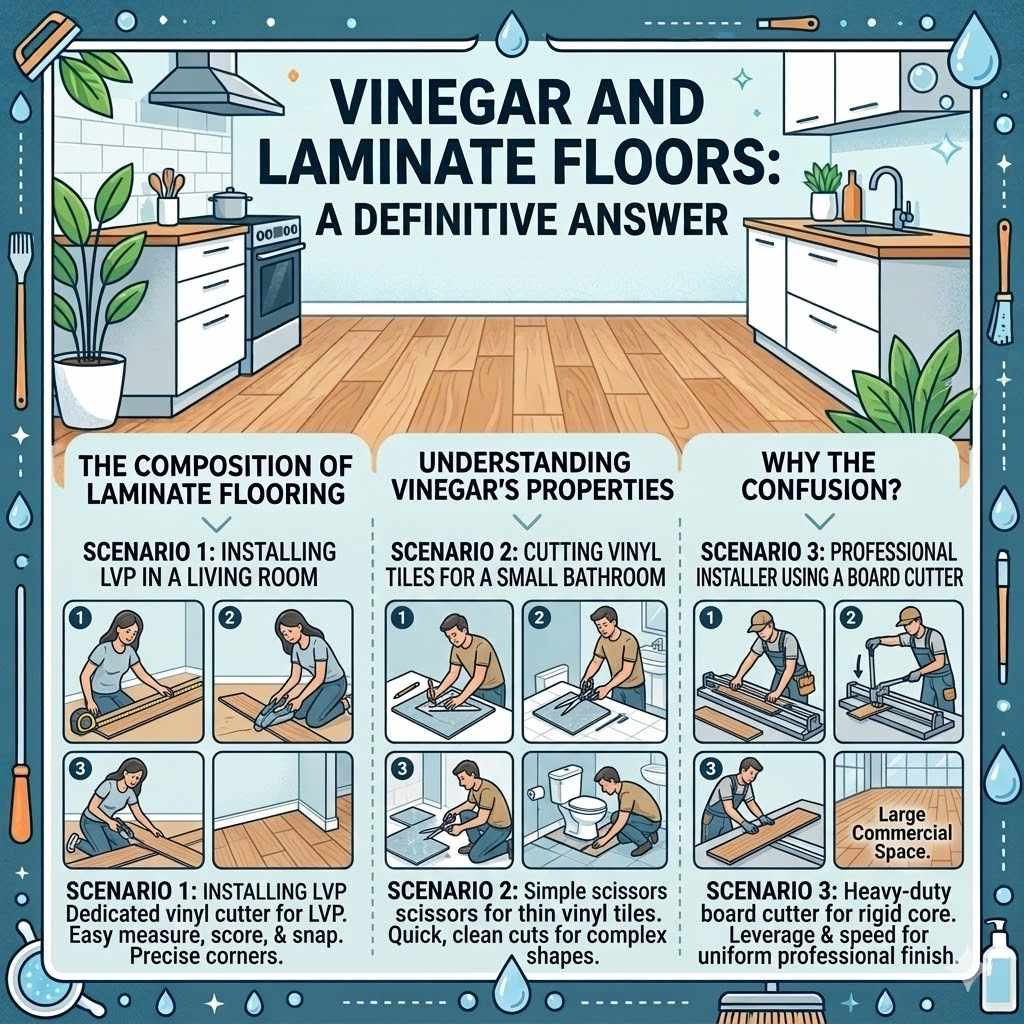
Scenario 1 Installing LVP in a Living Room
Sarah was installing luxury vinyl planks (LVP) in her living room. The room had many straight walls and a few tricky corners. She decided to use a handheld vinyl flooring cutter.
She found it easy to measure each plank, score it with the cutter, and then snap it cleanly. For the corners, she used the scoring feature to make a precise cut. Her LVP installation went smoothly, and the clean edges made the planks fit together perfectly.
This scenario highlights how a dedicated vinyl cutter is ideal for common LVP installations. The scoring and snapping method is efficient for straight cuts and allows for some adjustment for corners. Sarah avoided the mess and potential jagged edges she might have gotten with a utility knife.
Scenario 2 Cutting Vinyl Tiles for a Small Bathroom
Mark had to install vinyl tiles in his small bathroom. He had a pack of 12×12 inch tiles. He discovered that heavy-duty scissors worked perfectly for cutting the tiles to fit along the walls and around the toilet.
He used a measuring tape and a pencil to mark the cut lines, then carefully trimmed the tiles. The scissors provided quick and clean cuts for the relatively thin tiles.
This shows that for some materials, like thinner vinyl tiles, simpler tools can be highly effective. Mark’s project was small, so the speed and ease of using scissors were a big plus. He didn’t need a more expensive or complex tool for this specific job.
Scenario 3 Professional Installer Using a Board Cutter
A professional flooring installer named David was working on a large commercial space with rigid core vinyl planks. To save time and ensure maximum accuracy across hundreds of planks, David used a heavy-duty board cutter. This floor-standing tool allowed him to quickly score and snap planks of various thicknesses with consistent straightness.
It significantly sped up his workflow and ensured a uniform finish throughout the vast area.
This example illustrates the benefit of industrial-grade tools for large-scale projects. The board cutter’s leverage and precision allowed David to work faster and more accurately than he could have with smaller tools, which is crucial for professional jobs with tight deadlines.
Frequently Asked Questions
Question: What is the best tool for cutting vinyl plank flooring
Answer: For luxury vinyl plank (LVP) flooring, a specialized vinyl flooring cutter is generally the best option. These tools score and snap the planks, providing clean, straight cuts efficiently.
Question: Can I use a utility knife to cut vinyl
Answer: Yes, you can use a sharp utility knife with a fresh blade and a straightedge to cut vinyl flooring. It’s a cost-effective option, especially for smaller projects or touch-ups, but it requires more effort and precision than a dedicated cutter.
Question: How do I get clean cuts on vinyl flooring
Answer: To get clean cuts, always use a sharp blade. For most vinyl, scoring the material first and then snapping it is a reliable method. Ensure your straightedge is firmly in place and your strokes are consistent.
Question: Are rotary cutters good for vinyl
Answer: Rotary cutters can be very effective for softer vinyl materials, like some types of luxury vinyl tile (LVT). They offer a smooth, continuous cut that results in clean edges, especially when used with a straightedge.
Question: Should I use power saws for vinyl flooring
Answer: Using power saws like circular saws or table saws for vinyl flooring is generally not recommended for beginners due to safety risks and the potential for melting the vinyl. Specialized vinyl cutters are a much safer and more appropriate choice.
Summary
Choosing the right tool for cutting vinyl flooring makes a big difference. From simple utility knives to specialized cutters, options exist for every need and skill level. Prioritizing sharpness, safety, and the type of vinyl will help you achieve clean, professional results.
Happy cutting!