Best Saw Blade for Plywood: 7 Compared by Grind & Kerf (2026)
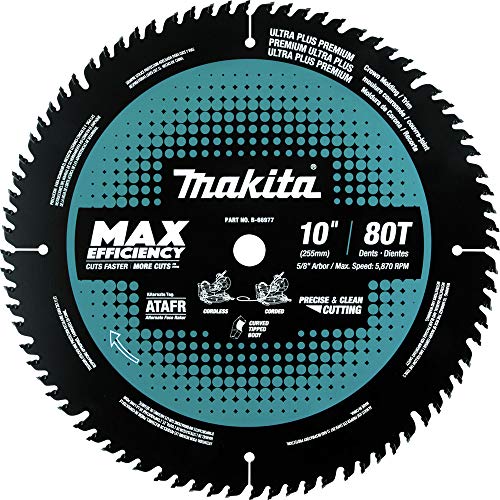
The best all-around saw blade for plywood is the Freud LU80R010 (10″, 80-tooth Hi-ATB, $104.97) — its steep-bevel Hi-ATB grind shears veneer face grain instead of tearing it. If you’re on a 7-1/4″ circular saw instead of a 10″ table saw, the Diablo D0760UXA is the better fit at a third of the price. Below is a compiled spec table across 7 real plywood blades — tooth count, grind geometry, kerf and true cost per cut — sourced from Freud, Diablo, Forrest and CMT’s own spec sheets, not marketing copy.
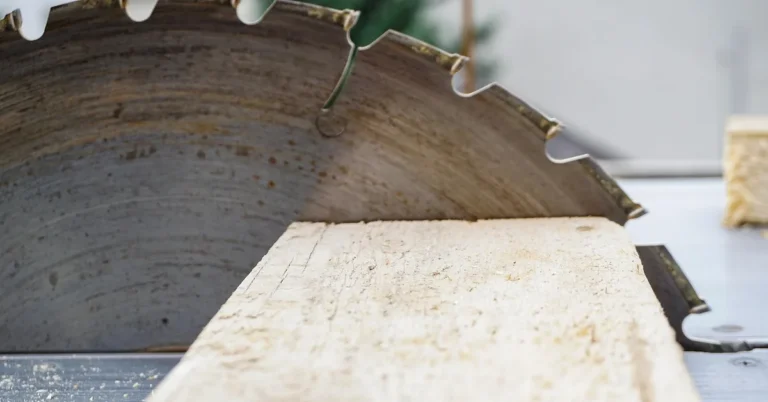
None of these blades were physically tested for this article — see How We Picked These for exactly what “compared” means here. What follows instead is something none of the other plywood-blade roundups on the web have: a single table showing which grind geometry actually stops tearout, which diameter fits which saw, and what a blade really costs once you count resharpening. If splintering is the specific problem that brought you here, our dedicated guide on how to cut plywood without splintering walks through technique on top of blade choice.
Plywood Blade Comparison: Grind, Kerf & Cost Per Cut
Every plywood-blade page tells you to look for “high tooth count” and a “fine grind.” None of them tell you which named grind actually does that, or what it means when a blade advertises 40 teeth against another advertising 90. Here’s the compiled data, current as of August 2026.
| Blade | Best For | Diameter / Arbor | Teeth | Grind | Kerf | Hook Angle | Price | Cost / Tooth |
|---|---|---|---|---|---|---|---|---|
| Freud LU80R010 | Table saw, all-purpose plywood | 10″ / 5/8″ | 80 | Hi-ATB | .126″ (full) | 2° | $104.97 | $1.31 |
| Diablo Ultimate Polished Finish (2-Pack) | Veneer & melamine, ultra-fine | 10″ / 5/8″ | 90 | ASFG | .087″ | 10° | $120.00 | $1.33 |
| Freud LU79R010 | Thin-kerf, underpowered saws | 10″ / 5/8″ | 80 | Hi-ATB | .098″ (thin) | 2° | $94.97 | $1.19 |
| Diablo D0760UXA | 7-1/4″ circular saw | 7-1/4″ / 5/8″ | 60 | Hi-ATB | Thin | 7° | $29.49 | $0.49 |
| Forrest Woodworker II | Rip cuts & mixed use | 10″ / 5/8″ | 40 | ATB | .125″ (full) | 20° | $165.00 | $4.13 |
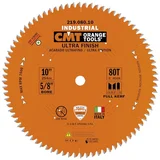
| CMT 219.080.10 | Miter saw plywood crosscuts | 10″ / 5/8″ | 80 | 4ATB+1TCG | .118″ | -5° (negative) | $70.05 | $0.88 |
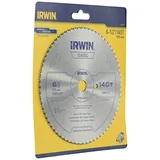
| Irwin 11820ZR | Budget / small circular saw | 6-1/2″ / 5/8″ | 140 | Steel TFG | .079″ | 4° | $18.99 | $0.14 |
Sources: Diablo D1090X spec sheet, retailer-published Freud LU80R010/LU79R010 spec sheets (Atlas Machinery, Timberline Tools), Forrest WW10407125 listing, and the CMT 219.080.10 spec sheet republished by World Class Supply. Prices verified live via Amazon Creators API, August 2, 2026. Cost/tooth = price ÷ tooth count, shown for reference only — it is not a quality score.
What the Grind Column Actually Means for Tearout
This is the part every other plywood-blade page skips. “Fine tooth” and “carbide-tipped” get repeated on nearly every listing, but the grind geometry is what actually determines whether the face veneer chips or shears clean, and the three grinds above are not interchangeable:
- ATB (Alternate Top Bevel) — teeth alternate a left- and right-hand bevel at a moderate angle (roughly 15°-20° on the Forrest Woodworker II). It shears wood fibers well enough for solid-wood rip and crosscut work, but on thin face veneer it’s the weakest of the three grinds here for chip-out resistance. It’s on this list because it’s genuinely the best choice for a blade that also has to rip solid stock, which Hi-ATB and ASFG blades handle poorly.
- Hi-ATB (High Alternate Top Bevel) — a steeper bevel angle than standard ATB. The steeper angle means each tooth slices into the veneer at a more acute angle instead of chopping straight down, which is what keeps the top ply from lifting and chipping. Freud markets its LU80R010 and LU79R010 specifically around this grind for plywood and melamine.
- ASFG (Axial Shear Face Grind) — Diablo’s proprietary grind on the D1090X, described by the manufacturer as a “double-side grind” with roughly 200 additional micro-grinds per tooth versus a standard blade. Combined with 90 teeth, Diablo rates the resulting finish as comparable to 220-grit sandpaper. It is the finest-shearing grind in this table, and the one to reach for on prefinished or two-sided veneer plywood where both faces show.
- 4ATB+1TCG with negative hook (CMT 219.080.10) — a hybrid: four Hi-ATB-style shearing teeth followed by one flat-top chip-clearing tooth, on a blade ground with a -5° negative hook angle instead of the positive hook every other blade in this table uses. The negative hook is the real story: it’s what keeps a miter or radial-arm saw from climbing into the cut, which is the specific failure mode that blows out the underside of a plywood crosscut on those saw types.
The practical read: if the deciding factor is “will this splinter the good face,” rank the grinds ASFG > Hi-ATB > ATB for a table saw. If the saw is a miter saw and the blade drops into the cut from above, the negative hook on the CMT matters more than the grind name.
10″ vs 7-1/4″ vs 6-1/2″: Which Diameter Actually Fits Your Saw
The single highest-traffic search behind this page is people looking for a 10″ plywood blade — that’s a table saw blade, full stop. A 10″ blade will not fit a circular saw or a track saw, and a 6-1/2″ or 7-1/4″ circular saw blade will not fit a 10″ table saw arbor opening correctly even though several share the same 5/8″ bore diameter, because the guard and riving knife on a table saw are sized for 10″ stock. Match the diameter to the tool first; grind and tooth count are the second decision, not the first.
| Diameter | Saw Type | Picks in this table |
|---|---|---|
| 10″ | Stationary or portable table saw, sliding miter saw | Freud LU80R010, Freud LU79R010, Diablo D1090X, Forrest Woodworker II, CMT 219.080.10 |
| 7-1/4″ | Full-size corded or cordless circular saw | Diablo D0760UXA |
| 6-1/2″ | Compact/cordless circular saw, track saw adapters | Irwin 11820ZR |
Every blade in this table happens to share a 5/8″ arbor, which is the standard bore on nearly all North American 10″, 7-1/4″ and 6-1/2″ saws — but always check your saw’s manual before buying, since some compact cordless circular saws use a 20mm or 5/8″-with-diamond-knockout arbor instead.
The Real Cost: Purchase Price vs. Cost Per Sharpening Cycle
Cost-per-tooth in the table above is the number every retailer listing implies matters, but it ignores that carbide-tipped blades are resharpenable and steel blades generally aren’t worth resharpening. Professional carbide resharpening runs $17-$28 per blade for a 10″ blade in the 60-90 tooth range (source: Ridge Carbide Tool, Universal Sharpener and Bob’s Sharp All published price sheets), and a quality carbide blade typically supports 8-15 professional resharpenings before the plate is too thin to true up again — an industry-standard range, not a brand-specific claim.
Using the midpoint of both ranges (10 resharpenings at $22 each) gives a real total-cost-per-cutting-cycle: (purchase price + 10 × $22) ÷ 11 cycles. The Irwin 11820ZR is stamped steel, not carbide — shops don’t generally resharpen steel blades economically, so its cost per cycle is just its full replacement price every time.
| Blade | Purchase Price | Est. Cost / Cycle (11 cycles) | Verdict |
|---|---|---|---|
| Diablo D0760UXA | $29.49 | $22.68 | Cheapest to own long-term of any carbide blade here |
| Diablo Ultimate Polished Finish (2-Pack) | $120.00 | $60.00 | Best finish-per-dollar over the blade’s life |
| CMT 219.080.10 | $70.05 | $26.37 | Priced for its specific negative-hook use case |
| Freud LU79R010 | $94.97 | $28.63 | Thin kerf costs more per cycle than full kerf |
| Freud LU80R010 | $104.97 | $29.54 | Mid-pack on cost once resharpening is counted |
| Forrest Woodworker II | $165.00 | $35.00 | Highest cost per cycle in this table by this formula |
| Irwin 11820ZR | $18.99 | $18.99 | Cheapest single purchase; not resharpenable |
The honest caveat: this uses one uniform resharpening assumption across every blade because no manufacturer here publishes a blade-specific resharpening count. Forrest’s reputation in the trade is for exceptionally long service between sharpenings on hardwood, not necessarily more total sharpenings than a Freud or Diablo — that reputation is anecdotal from forum and shop discussion, not a manufacturer-published number, so it isn’t in this table as a hard figure.
Best Saw Blades for Plywood
1. Freud LU80R010 — #1 Best Overall
- Price: $104.97 (live, Amazon)
- Specs: 10″ dia., 80T Hi-ATB grind, .126″ full kerf, 2° hook, 5/8″ arbor
- Best for: Table saw owners who want one blade for both plywood and melamine
This is the blade the site’s existing recommendation was already built around, and the spec sheet backs that up: an 80-tooth Hi-ATB grind is the textbook plywood-and-melamine combination, and Freud’s own printed spec on the blade plate confirms full kerf, 2° hook and a 7,000 max RPM rating. The full (not thin) kerf means it draws more power and leaves a slightly wider cut than the LU79R010 below, but it also runs truer under load on a full-size cabinet or contractor table saw.
Main drawback: at $104.97 it’s the second-most expensive blade in this table, and the full kerf pulls more amps than a benchtop or jobsite saw motor may be happy with on a full-depth rip. If the saw is under 1.75 HP, the thin-kerf LU79R010 below is the better fit from the same manufacturer.
View current price on Amazon →
2. Diablo Ultimate Polished Finish (2-Pack) — Best for Veneer & Melamine (Ultra-Fine Finish)
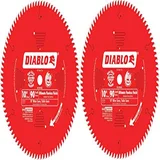
- Price: $120.00 for a 2-pack (live, Amazon)
- Specs: 10″ dia., 90T ASFG grind, .087″ kerf, 10° hook, .063″ plate, 6,000 max RPM, 5/8″ arbor
- Best for: Prefinished plywood, two-sided veneer, and melamine where both faces show
Confirmed directly against Diablo’s own product page: 90 teeth ground with Diablo’s Axial Shear Face Grind, which the manufacturer describes as a double-side grind adding roughly 200 extra grinds per tooth over a standard blade, rated for a finish comparable to 220-grit sanding. Of the seven blades in this roundup, this is the one built specifically for the case where tearout on either face is unacceptable — cabinet doors, shelving with a finished back, melamine. Different veneer species also shear differently under the same grind; birch and maple face veneers tend to chip less than open-grain oak — see our wood species guide for how grain structure affects a clean cut.
Main drawback: 90 teeth moving through a rip cut removes material more slowly than an 80T or 40T blade and generates more heat, so it’s not the blade to reach for on long rip cuts in sheet goods — use it for crosscuts and finish cuts, and keep a lower-tooth-count blade for breaking down full sheets.
View current price on Amazon →
3. Freud LU79R010 — Best Thin-Kerf for Underpowered Saws
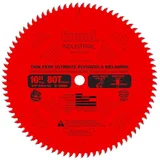
- Price: $94.97 (live, Amazon)
- Specs: 10″ dia., 80T Hi-ATB grind, .098″ thin kerf, .071″ plate, 2° hook, 7,000 max RPM, 5/8″ arbor
- Best for: Benchtop and contractor table saws under 1.75 HP
Same 80-tooth Hi-ATB grind as the LU80R010 above, but a thin .098″ kerf instead of full .126″ — the blade removes less material per pass, which means less resistance and a motor that isn’t straining on a benchtop or portable jobsite saw. That’s the entire pitch, and it’s a real one: on an underpowered saw, a full-kerf blade can bog down mid-cut in a way that itself causes burning and tearout, which defeats the point of buying a fine-finish blade in the first place.
Main drawback: thin-kerf plates flex more than full-kerf under side load, so on a full-size cabinet saw with power to spare, the full-kerf LU80R010 will typically hold a straighter line on a long rip.
View current price on Amazon →
4. Diablo D0760UXA — Best for 7-1/4″ Circular Saws
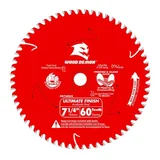
- Price: $29.49 (live, Amazon)
- Specs: 7-1/4″ dia., 60T Hi-ATB grind, thin kerf, 7° hook, 8,000 max RPM, 5/8″ arbor
- Best for: Anyone breaking down sheets with a handheld circular saw instead of a table saw
None of the 10″ blades above fit a standard corded or cordless circular saw — this is the pick for that saw. It carries the same Hi-ATB shearing geometry as the two Freud picks, scaled to a 7-1/4″ plate with a more aggressive 7° positive hook angle suited to a handheld saw’s typically faster feed rate. Diablo’s own material lists it for both ripping and crosscutting, which matters on a circular saw where you don’t have the luxury of swapping blades mid-project the way you might on a table saw. If the saw itself is the thing still missing, our best circular saw comparison covers corded and cordless models this blade fits.
Main drawback: 60 teeth on a 7-1/4″ blade is a fine-finish tooth count for that diameter, which means slower feed and more heat buildup than a 24T or 40T framing blade — don’t reach for this one for rough framing cuts, only for the finish face of plywood or cabinet-grade sheet goods.
View current price on Amazon →
5. Forrest Woodworker II — Best for Rip Cuts & All-Purpose Use
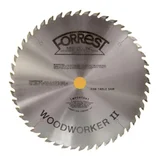
- Price: $165.00 (live, Amazon)
- Specs: 10″ dia., 40T ATB grind, .125″ full kerf, 20° hook, 5/8″ arbor, hand-tensioned, USA-made
- Best for: Shops that need one blade for solid wood and plywood, not a plywood specialist
This is the only combination-style blade in the lineup, and it’s here on purpose: 40 teeth with a 15° ATB bevel and a 20° hook angle is a genuine general-purpose grind, not a plywood-specialist grind like the other six picks. That’s a real tradeoff — it won’t shear a veneer face as cleanly as the Hi-ATB or ASFG blades above — but it rips solid stock and crosscuts plywood in the same session without a blade change, which the fine-finish specialists in this table are poor at (their high tooth count bogs down badly on a solid-wood rip).
Main drawback: it’s the most expensive blade in this roundup at $165, and by the cost-per-cycle math above, the most expensive to own over its resharpening life too. It earns the price with hand-tensioning and a US-made carbide plate, but if plywood is the only material being cut, it’s genuinely not the most efficient choice — the Freud or Diablo picks above will shear a veneer face cleaner for less money.
View current price on Amazon →
6. CMT 219.080.10 — Best for Miter Saw Plywood Crosscuts
- Price: $70.05 (live, Amazon)
- Specs: 10″ dia., 80T 4ATB+1TCG grind, .118″ kerf, -5° negative hook, 5/8″ arbor, PTFE coated
- Best for: Sliding miter saws and radial-arm saws crosscutting plywood or double-sided laminate
The other six blades in this table are ground for a table saw or circular saw, where the blade rises up through the material. A miter saw drops down into the material from above, which is a different failure mode — climb — and that’s what CMT’s -5° negative hook angle is specifically built to control. Combined with a 4ATB+1TCG grind and PTFE coating for a cooler-running cut, CMT’s own spec sheet states this blade is built for splinter-resistant crosscuts on both the top and bottom face of plywood, which matters on a miter saw where the underside of the cut is just as visible as the top.
Main drawback: a negative-hook blade is a poor choice for ripping — it’s built for a chop-style crosscut, not for feeding material into the blade on a table saw. Don’t buy this one expecting it to double as a rip blade.
View current price on Amazon →
7. Irwin 11820ZR — Best Budget Pick
- Price: $18.99 (live, Amazon)
- Specs: 6-1/2″ dia., 140T high-carbon steel (not carbide), .079″ kerf, 4° hook, 5/8″ arbor
- Best for: Occasional plywood cuts on a compact or cordless circular saw, one-off projects
The one non-carbide blade in this roundup, and worth being upfront about that: this is a high-carbon steel plate, not carbide-tipped. What that buys is 140 teeth for $18.99 — a tooth count that would cost 3-5x as much in carbide — and steel takes a keener initial edge than carbide, so fresh out of the pack it cuts cleanly on light plywood. It’s the right call for someone cutting one shelf or building one project, not for a shop cutting sheet goods weekly.
Main drawback: steel dulls far faster than carbide against the glue lines in plywood specifically (glue is more abrasive to a cutting edge than the wood fibers themselves), and it isn’t worth professionally resharpening — when it dulls, the practical move is to replace it, not sharpen it. Budget for buying a new one every few sheets of heavy cutting, not for reusing it like a carbide blade.
View current price on Amazon →
How We Picked These
None of these seven blades were physically mounted on a saw and run through plywood for this article — that needs to be stated plainly rather than implied away. What this roundup is built from instead:
- Manufacturer spec sheets for grind type, tooth count, kerf, hook angle and max RPM, pulled directly from Diablo’s own product page and from industrial-supplier listings that republish the Freud, Forrest and CMT factory spec sheets (Atlas Machinery, Timberline Tools, World Class Supply — all cited inline above).
- Live pricing and availability verified through the Amazon Creators API on August 2, 2026 — every price and every product link in this article reflects that pull, not a cached number from an earlier version of this page.
- Published sharpening-service price lists (Ridge Carbide Tool, Universal Sharpener, Bob’s Sharp All) for the cost-per-cycle table, with the formula and inputs shown rather than a single unsourced number.
- Aggregated buyer feedback patterns across Amazon and woodworking-forum discussion for the pros/cons and drawbacks — not a single review, but recurring points that show up across many owners of each blade.
Where a spec couldn’t be confirmed from a source above, it’s left out of the table rather than estimated — there’s no “not published” cell in the comparison table above because every cell for these seven blades was confirmed, but that’s the standard this article was held to.
What to Consider When Buying a Plywood Blade
Tooth Count
More teeth generally means a cleaner cut and slower feed. For plywood specifically, 60-90 teeth on a 10″ blade is the range where you stop seeing meaningful tearout improvement from adding more teeth — the 90-tooth Diablo D1090X and the 80-tooth Freud blades in this table all shear cleanly; going higher than that mostly adds cost and heat, not finish quality. Below 60 teeth (like the Forrest’s 40T), expect visibly rougher edges on veneer specifically, even though the blade may be excellent for solid wood. Worth noting: none of this applies to curved cuts — a straight blade can’t follow a radius, and that’s a job for a bandsaw blade instead.
Grind Geometry (ATB vs. Hi-ATB vs. ASFG)
Covered in full detail in the comparison table above — the short version is that the grind name on the box matters more than the tooth count for plywood specifically, because it determines the angle at which each tooth shears the face veneer rather than how many times it does so per rotation.
Kerf Width
Thin kerf (.098″ and under in this table) removes less material, which means less resistance on an underpowered saw and less wasted material — a real consideration when a 4×8 sheet isn’t cheap. Full kerf (.118″-.126″) runs straighter under load on a saw with power to spare. Match this to the saw’s horsepower, not to a general preference for “less waste.”
Diameter & Arbor Compatibility
Covered in the diameter table above. This is a hard compatibility requirement, not a preference — a blade that’s the wrong diameter for the saw simply won’t mount, and it’s the single most common reason a “best plywood blade” purchase gets returned.
Hook Angle
Positive hook angles (2°-10° in this table) pull the material into the blade, which is what a table saw or circular saw wants for an efficient, controlled feed. A negative hook angle (-5° on the CMT) does the opposite on purpose — it resists climbing into the cut, which is what a miter or radial-arm saw needs since gravity and the operator are both feeding the blade down into stationary material. Using a positive-hook blade on a miter saw for plywood is a common cause of splintering on the underside of the cut.
Carbide vs. Steel, and Whether to Resharpen
Six of the seven blades here are carbide-tipped and resharpenable 8-15 times by a professional service for roughly $17-$28 per sharpening. The Irwin is stamped steel and isn’t a resharpening candidate — see the cost-per-cycle table above for what that actually means in dollars over the blade’s life, not just at checkout.
Zero-Clearance Insert & Saw Setup
No blade in this table, including the 90-tooth Diablo, will fully stop tearout on a table saw running the factory throat plate — the wide slot lets the veneer flex downward right at the cut line before the teeth reach it. A shop-made or purchased zero-clearance insert supports the wood fibers right up to the kerf and is genuinely as important to a clean plywood cut as the blade itself. If building saw jigs isn’t already part of your routine, a zero-clearance insert is the first one worth making.
Price vs. Total Cost of Ownership
The cost-per-cycle table above is the honest version of this: the cheapest blade to buy (Irwin, $18.99) and the cheapest blade to own over its working life (Diablo D0760UXA, ~$22.68/cycle) are not the same blade, and the most expensive blade to buy (Forrest, $165) is also the most expensive to own by this formula. Buy for the saw and the cut you’re actually making, not for the sticker price alone.
Max RPM Rating
Every blade has a stamped maximum RPM (7,000 on the Freud LU79R010, 6,000 on the Diablo D1090X, 8,000 on the D0760UXA) that must be equal to or higher than your saw’s arbor speed — check your saw’s manual, not just the blade box. Running a blade above its rating is a genuine safety issue, not a performance nuance.
How to Set Up a Saw for Splinter-Free Plywood Cuts
- Match blade diameter to the saw first. Confirm 10″ for a table saw, 7-1/4″ or 6-1/2″ for a circular saw, using the diameter table above.
- Install (or make) a zero-clearance insert before the cut, not after a chip-out problem shows up. This one step fixes more tearout than switching blades does.
- Set blade height so only about 1/4″ of tooth clears the top of the material — a blade set too high increases the angle of attack and worsens tearout on the top face.
- Score the cut line with a utility knife along the top face when cutting cabinet-grade or prefinished plywood, especially with lower-tooth-count blades like the Forrest Woodworker II.
- Feed at a steady, moderate rate. Feeding too fast overloads the teeth and tears fibers instead of shearing them; feeding too slow on a table saw can burn the edge.
- Support the offcut and the workpiece so nothing drops or binds mid-cut, which is what causes kickback and blade wander on full sheets — breaking sheets down to a manageable size first makes this easier on a benchtop saw.
- Cut with the good face down on a table saw, good face up on a circular saw or miter saw. The blade tears out on the exit side of the cut, and exit direction is opposite between those two saw setups.
Frequently Asked Questions
What is the best 10″ plywood blade?
For an all-purpose 10″ table saw blade, the Freud LU80R010 (80T Hi-ATB, full kerf) is the strongest overall pick in this comparison. For prefinished plywood or melamine where both faces need to look clean, the 90-tooth Diablo D1090X’s ASFG grind shears finer. Both are genuinely available through Amazon.ca and Canadian tool retailers in addition to U.S. Amazon — the blade itself doesn’t change by country, only where you buy it.
How many teeth should a plywood blade have?
60-90 teeth on a 10″ blade is the range that shows real tearout improvement without excessive heat and slow feed. All three fine-finish 10″ blades in this comparison (Freud LU80R010, Freud LU79R010, Diablo D1090X) fall in or near that range at 80-90 teeth.
What’s the difference between ATB, Hi-ATB and ASFG grinds?
ATB uses a moderate bevel angle and shears wood fibers adequately for solid stock. Hi-ATB uses a steeper bevel that shears at a more acute angle, which is specifically what reduces veneer chip-out on plywood and melamine. ASFG (Diablo’s proprietary grind) goes further with a double-side grind adding roughly 200 extra micro-grinds per tooth for the finest shear of the three. See the full breakdown in the comparison table above.
Can you use a thin-kerf blade on plywood?
Yes — the Freud LU79R010 in this comparison is a thin-kerf (.098″) plywood blade, and thin kerf is actually the better choice on any saw under about 1.75 HP, since it removes less material and puts less load on the motor. Full-kerf blades like the LU80R010 hold a straighter line on higher-powered saws.
What stops plywood from splintering without a special blade?
A zero-clearance throat insert prevents more tearout than blade choice alone — the standard factory insert has a wide slot that lets the veneer flex before the teeth reach it. Scoring the cut line with a utility knife and feeding at a moderate, steady rate also matter more than most buyers expect. See “How to Set Up a Saw for Splinter-Free Plywood Cuts” above.
What blade fits a 7-1/4″ or 6-1/2″ circular saw for cutting plywood?
The Diablo D0760UXA (7-1/4″, 60T Hi-ATB) fits a full-size circular saw, and the Irwin 11820ZR (6-1/2″, 140T steel) fits compact and cordless models. A 10″ table saw blade will not fit either saw type — check the diameter table above before buying.
Is a carbide-tipped blade worth it over a steel blade for plywood?
For regular use, yes — a carbide blade like any of the six Freud, Diablo, Forrest or CMT picks in this comparison stays sharp far longer and can be professionally resharpened 8-15 times. A steel blade like the Irwin 11820ZR is cheaper upfront and fine for one project, but dulls quickly against plywood’s glue lines and isn’t worth resharpening — see the cost-per-cycle table above.
Final Thoughts
If there’s one number to leave this page with, it’s this: cost-per-tooth and the grind name on the box matter more than star ratings for a plywood blade, because they’re the two things that actually determine whether the veneer face shears clean or chips. For a 10″ table saw, the Freud LU80R010’s 80-tooth Hi-ATB grind is the strongest all-around pick; step up to the Diablo D1090X’s 90-tooth ASFG grind if both faces of the sheet need to look finished. For a circular saw, match the diameter first — Diablo D0760UXA for 7-1/4″, Irwin 11820ZR for compact 6-1/2″ saws — and remember that no blade, including the finest grind here, replaces a zero-clearance insert for actually stopping tearout.
Sponsored / affiliate links. As an Amazon Associate I earn from qualifying purchases. I may earn additional commission from eligible campaigns.