What Kind of Glue Sticks Rocks to Wood? (E6000 vs. Epoxy)
E6000 craft adhesive and two-part epoxy bond rocks to wood most reliably, since both grip a rock’s smooth, low-porosity surface better than wood glue or hot glue can. Skipping surface prep is the real reason glued rocks pop loose within weeks, not rock porosity, which is usually lower than wood’s. This guide compares E6000, epoxy, Liquid Nails, and CA super glue by weight capacity, cure time, and indoor/outdoor use, plus the prep steps that make any of them last.
This post contains affiliate links. As an Amazon Associate, Woodworking Advisor earns from qualifying purchases at no extra cost to you.
Quick Answer
Use E6000 craft adhesive for most decorative rock-to-wood projects — it stays flexible and dries clear. Choose two-part epoxy for uneven or heavy rocks that need gap-filling, Liquid Nails construction adhesive for rocks over 5 lbs or exterior work, and CA super glue only for pebbles under 1 oz. Avoid wood glue, white craft glue, and hot glue for anything permanent.
What Glue Works Best for Gluing Rocks to Wood?
Best Rock-to-Wood Glue Pick
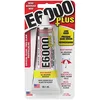
E6000 Plus Multi-Purpose Craft Adhesive
Clear-drying, flexible, waterproof adhesive built for wood, stone, glass, and ceramic — the most versatile pick for rock-to-wood crafts.
- Best for: Craft-weight rocks, birdhouses, picture frames, indoor or outdoor decor
- Why we picked it: Stays flexible after curing, so it survives the wood’s natural seasonal movement without cracking
- Main drawback: Strong solvent odor while curing — use in a ventilated space
Compare more rock-to-wood adhesive options
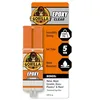 Strongest Bond Gorilla 2 Part Epoxy, 5-Minute Set
|
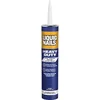 Heavy Rocks Liquid Nails Heavy Duty Construction Adhesive
|
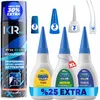 Small Pebbles CA Glue with Activator Kit for Woodworking
|
As an Amazon Associate we earn from qualifying purchases.
E6000 and two-part epoxy are the two adhesives that consistently hold up for rock-to-wood bonds, because they’re formulated to grip smooth, low-porosity surfaces rather than relying on soaking into pores the way wood glue does. Liquid Nails construction adhesive takes over once a rock is too heavy for craft-grade glue, and CA super glue only belongs on pebbles light enough to lift with two fingers.
Wood is the variable most rock-bonding guides ignore: it expands and contracts across the grain with humidity, while rock doesn’t move at all. A rigid adhesive with zero give, used on a wood surface that swells every summer, is what actually snaps a “perfect” bond months later — not a weak glue. That’s why flexible E6000 outlasts rigid epoxy on projects that live outdoors through seasonal humidity swings, even though epoxy tests stronger on day one.
| Adhesive | Weight Capacity | Flexibility | Indoor/Outdoor | Cure Time |
|---|---|---|---|---|
| E6000 Craft Adhesive | Light to medium (craft-weight) | Flexible | Both | Tacky in 10 min, full cure 24–72 hrs |
| Two-Part Epoxy | Medium to heavy, gap-filling | Rigid, no flex | Both | Sets in 5 min, full cure ~24 hrs |
| Liquid Nails Construction Adhesive | Heavy, structural | Rigid | Best outdoor/structural | Sets in 20 min, cures in 24 hrs |
| CA Super Glue + Accelerator | Light only (under 1 oz) | Brittle, no flex | Indoor best | Bonds in seconds with accelerator |
E6000 Craft Adhesive: Best for Flexible, Weatherproof Bonds
E6000 is a solvent-based craft adhesive that stays flexible after it cures, which is exactly what a rock-to-wood bond needs since the wood keeps moving slightly while the rock never does. It dries clear, so the glue line disappears on light-colored stone, and it’s rated for both indoor and outdoor use once fully cured. Apply a bead to the wood, press the rock in place, and hold or tape it for the first 10 minutes while it tacks up — full strength takes 24 to 72 hours depending on temperature and humidity.
It’s the right choice for birdhouses, garden markers, picture frames, and any craft project where the rock weighs a few ounces rather than several pounds. For heavier stone, size up to epoxy or Liquid Nails below.
Two-Part Epoxy: The Strongest Bond for Uneven Rock Surfaces
Two-part epoxy is a resin and hardener mixed 1:1 that cures into a rigid, waterproof plastic, and it’s the best gap-filler of any adhesive on this list. Real rocks are rarely flat on the back, and epoxy’s thick, unset consistency fills those irregular gaps before it hardens, so contact area — and bond strength — goes up. A 5-minute-set epoxy tacks up fast enough to hold most rocks without clamping, though full cure still takes about 24 hours.
Mix only what you can use in the working time listed on the package, since epoxy starts curing the moment the two parts combine. The same gap-filling property is why epoxy is also the standard choice for filling cracks in wood — if you want the full mixing and application walkthrough, see our guide on how to use epoxy glue.
Liquid Nails Construction Adhesive: Best for Heavy Rocks and Structural Work
Construction adhesive like Liquid Nails is a heavy-duty, caulk-gun adhesive built for structural and load-bearing bonds, which makes it the right call once a rock is too heavy for craft glue — garden edging, large landscaping stones fixed to a wood retaining structure, or stone veneer applied to an exterior wood wall.
📊 Liquid Nails LN-903 sets in 20 minutes and reaches full cure in 24 hours, and is rated to bond wood, treated wood, plywood, OSB, concrete, and brick veneer — Source: Liquid Nails LN-903 Technical Data Sheet, PPG Industries
For rocks over roughly 5 lbs, run a bead of construction adhesive and press the rock into place, then brace it with a temporary prop or tape until the adhesive sets. On anything mounted vertically or exposed to weather, add a mechanical fastener (a screw through a pilot hole, or wire bracing) as backup — adhesive alone shouldn’t carry the full structural load of heavy stone on an exterior wall.
CA Super Glue: Only for Small, Lightweight Rocks
Cyanoacrylate (CA) super glue bonds almost instantly when paired with an accelerator spray, which makes it useful for jewelry-scale crafts and pebbles light enough to lift with two fingers. But the cured bond is hard and brittle with zero flex, so it’s the first adhesive to fail under any real weight, vibration, or temperature swing. Keep it to pebbles under about 1 oz and indoor display pieces.
How to Prepare Rocks and Wood Before Gluing
Every adhesive above performs worse on a dirty or perfectly smooth surface. These six steps apply no matter which glue you choose:
- Clean the rock: Scrub it with warm soapy water and a stiff brush, rinse fully, and let it air-dry completely — trapped moisture weakens every adhesive on this list.
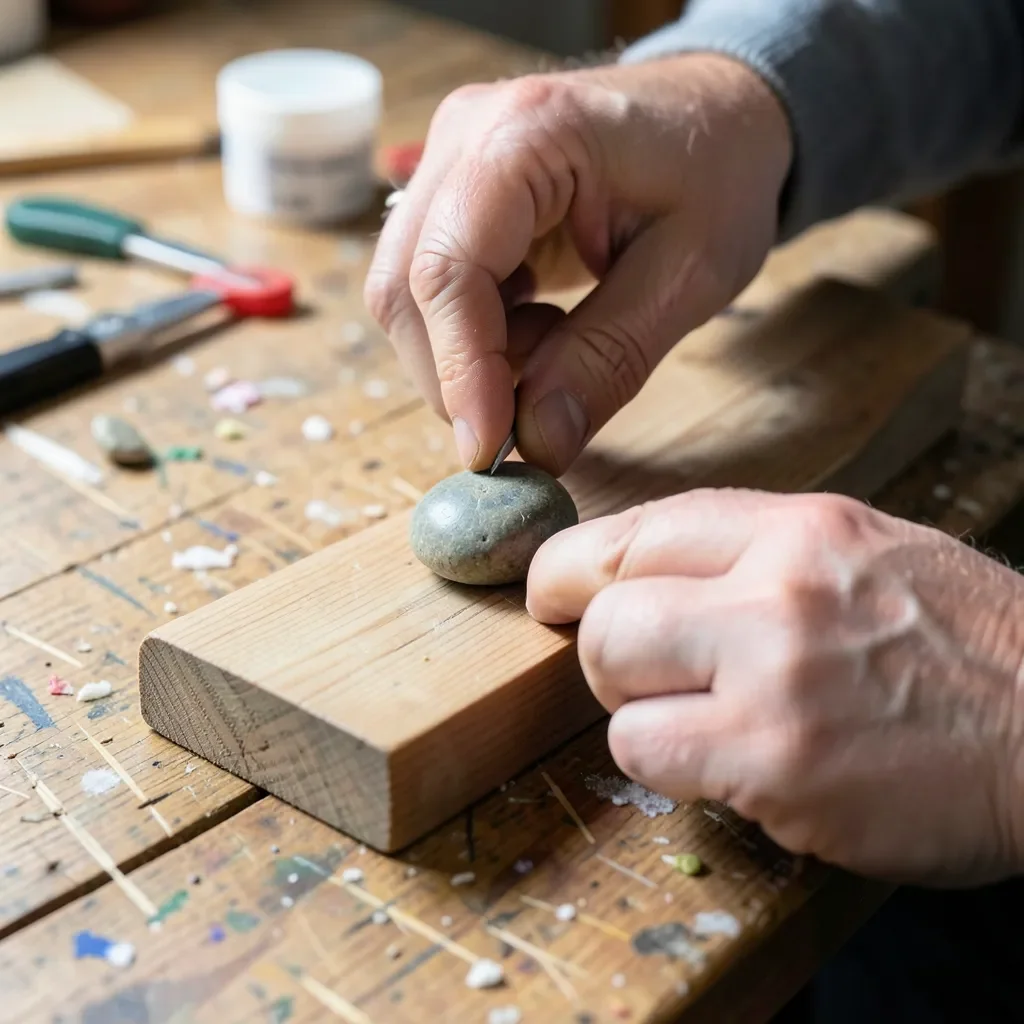
- Roughen both surfaces: If the rock is polished or glassy-smooth, scuff the contact area with 80–100 grit sandpaper. Do the same to the wood spot, even if it already looks rough.
- Remove all dust: Brush or vacuum away sanding residue, then wipe both surfaces with a cloth dampened in rubbing alcohol.
- Dry-fit your design: Place the rock on the wood without glue first and confirm placement — you won’t get a second chance once epoxy or E6000 grabs.
- Apply, press, and hold: Apply adhesive per the product label, press the rock down with a slight twisting motion to push out air pockets, then hold or clamp for the set time in the table above.
- Let it cure fully: Leave the project undisturbed for the full cure time before handling, moving, or displaying it outdoors.
Special Cases: Birdhouses, Gravel Frames & Exterior Stone Veneer
Gluing Stone to a Birdhouse or Other Outdoor Wood Structure
Outdoor, weather-exposed projects like a stone-accented birdhouse need an adhesive rated for temperature swings and moisture — E6000 or an exterior-rated two-part epoxy both work. Skip CA super glue here: UV exposure and temperature cycling make it brittle within a season.
Gluing Pebbles or Gravel to a Wood Picture Frame
For small pebbles or gravel arranged on a wood frame, E6000 is the best fit: it’s light-duty enough not to overwhelm a thin frame, dries clear, and stays flexible if the frame flexes when handled.
Attaching Stone Veneer to a Wood Wall or Fireplace Surround
Real or manufactured stone veneer applied to a wood-framed wall is heavy enough that adhesive alone is a risk long-term. Use a construction adhesive rated for masonry along with mechanical support (furring strips, screws, or a metal lath base per the veneer manufacturer’s installation guide) for anything beyond a few decorative accent pieces.
“In my shop, the rock-to-wood bonds that failed after a season were almost never a glue-strength problem — they failed because I skipped scuffing a smooth board with 100-grit before gluing. A rough surface for the adhesive to grip matters more than which brand you buy.”
Common Mistakes That Make Rocks Fall Off Wood
- Skipping surface prep: Oils, dust, or moisture left on the rock or wood is the single most common cause of failure — more common than picking the wrong glue.
- Using wood glue (PVA) or hot glue for anything permanent: Wood glue needs a porous surface to soak into, and most rocks don’t have one; hot glue turns brittle with temperature changes.
- Ignoring wood movement: A rigid adhesive on a wood surface that swells and shrinks seasonally will eventually crack loose, even if the initial bond tested strong.
- Handling the project before full cure: Moving or displaying a piece before the cure time in the table above lets the bond fail under its own weight.
- Using CA super glue on anything heavier than a golf ball: The brittle bond isn’t built for real weight or stress, no matter how fast it sets.
Can you hot glue rocks to wood?
Yes, but only for temporary or very light indoor crafts. Hot glue bonds fast, but it becomes brittle over time and fails under temperature changes or any real weight, so it’s not suitable for permanent or outdoor rock-to-wood projects.
Why does my rock keep falling off the wood?
The most common cause is inadequate surface prep — oils, dust, or moisture left on the rock or wood before gluing. The second most common cause is choosing an adhesive too light for the rock’s weight, such as using CA super glue on a rock heavier than a golf ball.
Does Gorilla Wood Glue work on rocks?
Not well. Gorilla Wood Glue (PVA) needs a porous surface to soak into and grip mechanically, and most rocks are actually less porous than wood, not more — so the glue has nothing to bite into. Use E6000 or epoxy instead for a rock-to-wood bond.
What is the strongest glue for outdoor rock-to-wood projects like a birdhouse?
Two-part epoxy is the strongest choice for outdoor use, creating a rigid, waterproof bond that resists temperature swings. E6000 is a close second and adds flexibility that helps on projects where the wood itself moves seasonally.
How long should epoxy cure before moving a glued rock?
Most two-part epoxies reach a workable set in about 5 minutes but need roughly 24 hours to reach full cured strength. Always check the specific product label, since formulas vary.
Can you glue pebbles onto a wood picture frame?
Yes. E6000 is the best choice for pebbles on a wood frame since it’s light-duty enough for a thin frame, dries clear, and stays flexible if the frame flexes when handled or hung.
Conclusion
For most rock-to-wood projects, E6000 and two-part epoxy are the adhesives worth reaching for — E6000 when the wood itself moves or the project lives outdoors, epoxy when the rock is heavy or uneven and needs gap-filling. Size up to Liquid Nails construction adhesive only once a rock is genuinely heavy, and save CA super glue for pebbles you could lift with two fingers. Whichever you choose, clean and roughen both surfaces first — that single step prevents more failed bonds than the glue itself ever will. For more adhesive comparisons, see our full wood glue and adhesive guide.
Sponsored / affiliate links. As an Amazon Associate I earn from qualifying purchases. I may earn additional commission from eligible campaigns.