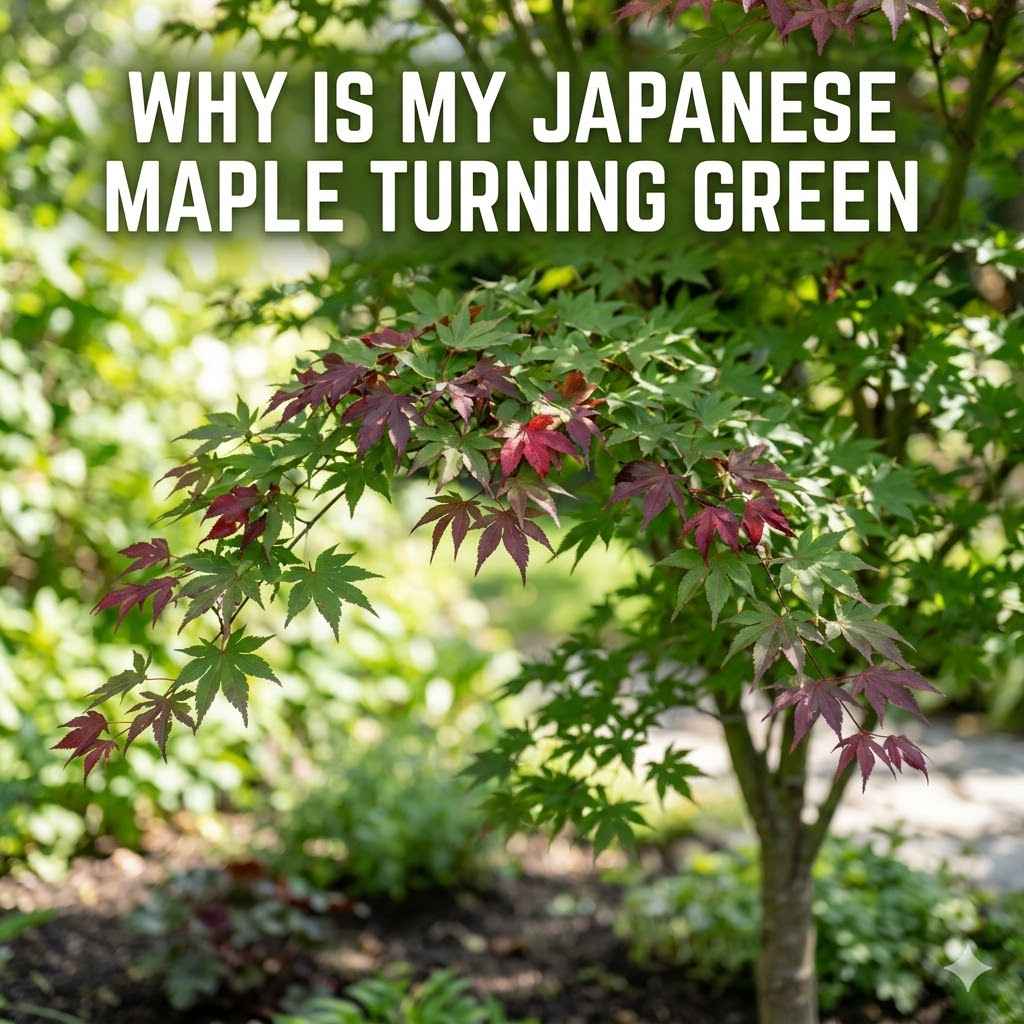
Why Is My Japanese Maple Turning Green
It can be a bit surprising and even worrying when your beautiful Japanese maple, known for its vibrant red or orange leaves, starts to look… well, green again. This isn’t usually a cause for alarm, though. It’s a common question for people new to these stunning trees.
Don’t fret, we’ll walk through the simple reasons this happens. By the end, you’ll know exactly what’s going on and what to do.
Understanding Japanese Maple Leaf Color Change
Japanese maples are famous for their stunning fall colors. Many varieties display bright reds, oranges, and yellows. However, their color can change throughout the year, and sometimes, they return to green.
This section explains why the colors appear and disappear. We will explore the natural processes that influence leaf pigment.
The Role of Chlorophyll
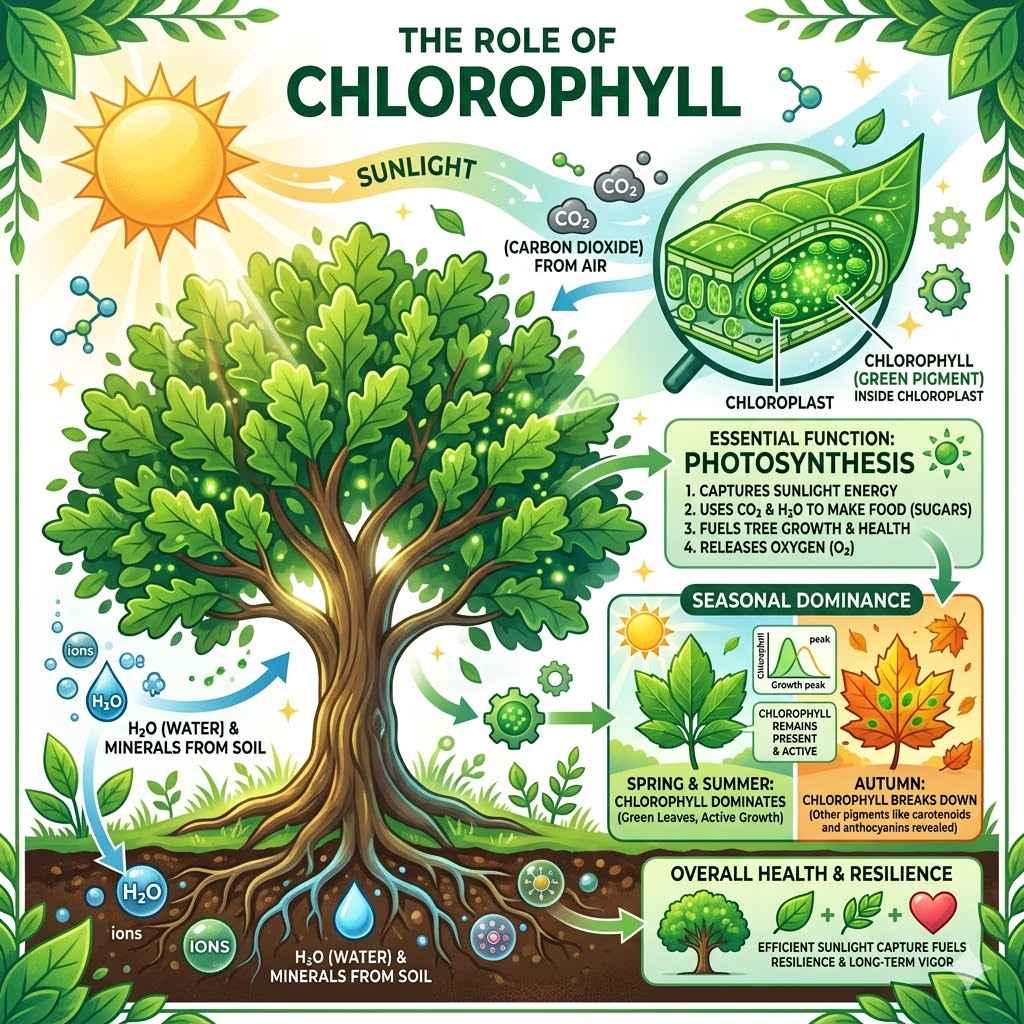
Chlorophyll is the green pigment found in plant leaves. It’s essential for photosynthesis, the process plants use to make food from sunlight. Chlorophyll is always present in the leaves.
In the spring and summer, chlorophyll is the dominant pigment, making the leaves appear green.
This green color helps the tree capture sunlight efficiently. It fuels the tree’s growth and overall health. Even as other pigments develop, chlorophyll remains active.
Accessory Pigments and Their Effects
Besides chlorophyll, leaves have other pigments like carotenoids (yellows and oranges) and anthocyanins (reds and purples). Carotenoids are present all summer but are hidden by the green chlorophyll. Anthocyanins are produced later in the season, often in the fall.
These pigments give Japanese maples their spectacular autumn displays. The changing lengths of days and cooler temperatures trigger the production of anthocyanins.
Factors Influencing Pigment Production
- Sunlight Exposure: Adequate sunlight is crucial for anthocyanin production, which creates red and purple hues. Too little sun can limit the intensity of these colors.
- Temperature: Cool nights, especially those with temperatures between 40-50°F (4-10°C), are ideal for anthocyanin development. Frost can halt pigment production and cause leaves to drop.
- Genetics: Different Japanese maple varieties have different genetic predispositions for color. Some are bred for vibrant reds, while others lean towards oranges or yellows.
Why Is My Japanese Maple Turning Green Again? Common Scenarios
It is quite common for Japanese maples to revert to a green color, especially after their peak autumn display. This is usually a natural part of the tree’s annual cycle. The green color you see returning is often the chlorophyll reasserting itself or other pigments fading.
Let’s explore the specific reasons behind this green transformation. Understanding these will help you appreciate your tree’s natural rhythm.
Regrowth After Winter Dormancy
After the leaves have fallen in the autumn and the tree has gone through winter dormancy, new leaves emerge in the spring. These new leaves are typically a bright green. This is because chlorophyll production is at its highest as the tree prepares for active growth.
The vibrant red or orange colors seen in fall are often due to anthocyanins, which are temporary pigments produced in response to environmental cues like cooler temperatures and shorter days. Once these conditions pass, and the tree focuses on producing food for the growing season, the green chlorophyll becomes dominant again.
Environmental Stressors
Sometimes, a Japanese maple might turn green not as a seasonal change but as a response to stress. Stress can be caused by a variety of factors that might not be immediately obvious. These stresses can cause the tree to prioritize survival over its display colors.
When a tree is stressed, it might conserve energy. This can lead to changes in leaf color. The tree might try to produce more chlorophyll to maximize energy production, even if it means a less vibrant display of other colors.
Watering Issues
- Underwatering: If the tree doesn’t get enough water, it can become stressed. This can cause leaves to lose their vibrant colors and sometimes revert to green or even turn brown and drop. Consistent moisture is key for Japanese maples.
- Overwatering: Too much water can also be harmful. It can lead to root rot, which prevents the tree from absorbing nutrients and water properly. This stress can also affect leaf color.
Soil and Nutrient Imbalances
The health of the soil plays a vital role in a tree’s vigor and color. Japanese maples prefer well-draining, slightly acidic soil.
If the soil pH is too high or too low, the tree might not be able to absorb essential nutrients. This nutrient deficiency can manifest as dull foliage or a return to green. For example, a lack of magnesium can cause interveinal chlorosis, where the tissue between the veins turns yellow or pale green.
Sunlight and Temperature Extremes
While sunlight is essential for color, too much intense direct sun, especially during the hottest part of the day, can scorch the leaves. This can cause them to lose their color and turn brown or fade. Young trees are particularly susceptible.
Sudden temperature fluctuations can also shock the tree. A late frost after buds have opened can damage new growth and affect leaf color. Conversely, an unusually hot spell can stress the tree, leading to color loss.
Variety-Specific Coloration
It’s important to remember that not all Japanese maples are meant to be intensely red or orange all the time. Many popular varieties have different coloration patterns. Some varieties have leaves that are green for much of the year, only showing a hint of red in the fall.
Others might start with a bronzy-red color in spring that fades to a deep green in summer, and then show a resurgence of red in autumn. Knowing the specific cultivar of your Japanese maple is key to managing expectations about its color.
Diagnosing Why Your Japanese Maple Turned Green
To figure out exactly why your Japanese maple is showing green leaves, you need to observe a few things. It’s like being a detective for your tree. We will look at the tree’s history, its environment, and its overall health.
Think about when you first noticed the change. Was it after a specific event, or has it been a gradual shift? This information is very helpful.
Observing Leaf Characteristics
The appearance of the green leaves can tell you a lot. Are the entire leaves green? Are there spots or patterns?
Are the veins still a different color?
For example, if the new spring growth is a vibrant green, it’s likely normal seasonal change. If the leaves look pale or yellowish-green, it might indicate a nutrient deficiency. If the color change is sudden and patchy, it could be due to environmental shock.
Assessing Environmental Conditions
Consider the recent weather and your care routine. Has there been a drought? Were there any extreme temperature swings?
Check your watering schedule. Is the soil consistently moist but not waterlogged? Is the tree getting the right amount of sun for its variety?
Some Japanese maples prefer dappled shade, especially in hot climates, while others can tolerate more sun.
Checking for Pests and Diseases
While less common for causing a direct return to green, severe pest infestations or diseases can weaken a tree. This weakened state can indirectly affect leaf color.
Look for signs of common pests like aphids or scale insects. Also, check for fungal diseases that might affect the leaves or bark. A healthy tree is better able to maintain its natural coloration.
How to Help Your Japanese Maple Maintain Healthy Color
Once you understand why your Japanese maple might be turning green, you can take steps to ensure it stays healthy and displays its best colors. These are simple care tips that make a big difference.
The goal is to provide the best possible environment for your tree. This will help it thrive and show off its natural beauty throughout the seasons.
Proper Watering Techniques
Consistent moisture is crucial, especially during dry periods. Aim for deep watering rather than frequent shallow sprinklings. This encourages roots to grow deeper.
Water slowly and thoroughly, allowing the water to penetrate the soil. The soil should feel moist, not soggy. Mulching around the base of the tree helps retain moisture and keeps the soil cool.
Mulching Benefits
- Moisture Retention: A layer of organic mulch, such as wood chips or shredded bark, helps reduce water evaporation from the soil surface. This is especially beneficial during hot, dry summers.
- Temperature Regulation: Mulch acts as an insulator, keeping the soil cooler in summer and warmer in winter. This protects the tree’s roots from extreme temperature fluctuations.
- Weed Suppression: Mulch helps to suppress weed growth, which can compete with the tree for water and nutrients. This allows the Japanese maple to have better access to the resources it needs.
Soil Management and Fertilization
Japanese maples thrive in well-draining, slightly acidic soil with a pH between 5.5 and 6.5. If your soil is heavy clay, amending it with organic matter can improve drainage.
Fertilizing is usually not necessary for established Japanese maples. Over-fertilizing can actually be harmful, causing too much rapid growth that may not be hardy. If fertilization is needed, use a slow-release, balanced fertilizer in early spring.
Site Selection and Protection
Choose a planting location that suits your specific Japanese maple variety. Most prefer protection from harsh afternoon sun and strong winds.
Dappled shade or morning sun is often ideal. In very hot climates, providing some overhead shade during the peak heat of the day can prevent leaf scorch. Protecting young trees from strong winds can also prevent physical damage to branches and leaves.
Pruning for Health and Color
Pruning is important for shaping the tree and removing dead or diseased branches. Proper pruning also encourages better air circulation, which can help prevent fungal diseases.
Avoid excessive pruning, especially during the growing season. Light pruning after the leaves have fully emerged is usually best for maintaining structure and encouraging new, colorful growth in subsequent years.
Why Is My Japanese Maple Turning Green in Fall?
Sometimes, the question of why is my Japanese maple turning green is specifically asked about the fall season. This is a bit counterintuitive, as fall is when we expect the most vibrant colors. However, there are specific reasons this can happen.
Understanding these fall-specific color changes will help you manage your expectations and appreciate the tree’s natural variations.
Genetics and Fall Color Intensity
The intensity of fall color is largely determined by the tree’s genetics. Some Japanese maple cultivars are known for spectacular fall displays, while others are more subdued.
If your cultivar is genetically predisposed to a strong red or orange fall color, but you’re seeing more green, it might be due to environmental factors limiting anthocyanin production.
Environmental Factors Affecting Fall Color
Fall color development is highly sensitive to weather conditions. A warm, wet autumn can significantly reduce the vibrancy of fall foliage.
Specifically, a lack of sunny days and cool nights can prevent the tree from producing sufficient anthocyanins. If the fall is unseasonably warm and cloudy, the chlorophyll might break down slowly, and the accessory pigments may not be produced in strong amounts, leading to a less dramatic color change or a quicker return to green.
The Impact of Warm Autumns
- Reduced Anthocyanin Production: Anthocyanins are responsible for the reds and purples in fall leaves. Their production is stimulated by sunlight and cool temperatures. If autumn is warm and sunny, the tree might continue producing chlorophyll for longer, masking the developing reds.
- Earlier Chlorophyll Breakdown: In some cases, if temperatures remain consistently warm, the chlorophyll may break down rapidly, but without the chemical triggers for anthocyanins, the leaves might appear a dull yellow or simply fade to a less vibrant green before dropping.
Nutrient Levels and Fall Color
The nutrient status of the tree can also play a role in fall color. A tree that is well-nourished is generally better able to produce the pigments needed for vibrant fall foliage.
However, excessive nitrogen can encourage lush leafy growth that delays the onset of fall coloration. Conversely, a balanced diet supports the tree in producing the necessary compounds for a good color show.
Why Is My Japanese Maple Turning Green After Being Red?
This is a very common question, especially for those who have planted a Japanese maple for its striking red foliage. Seeing those beautiful red leaves fade or disappear, replaced by green, can be perplexing. This phenomenon is usually a natural process tied to the tree’s life cycle and environmental cues.
Let’s break down the reasons behind this color transformation. It’s not necessarily a sign of distress, but rather a reflection of the tree’s seasonal activities.
Seasonal Color Cycle
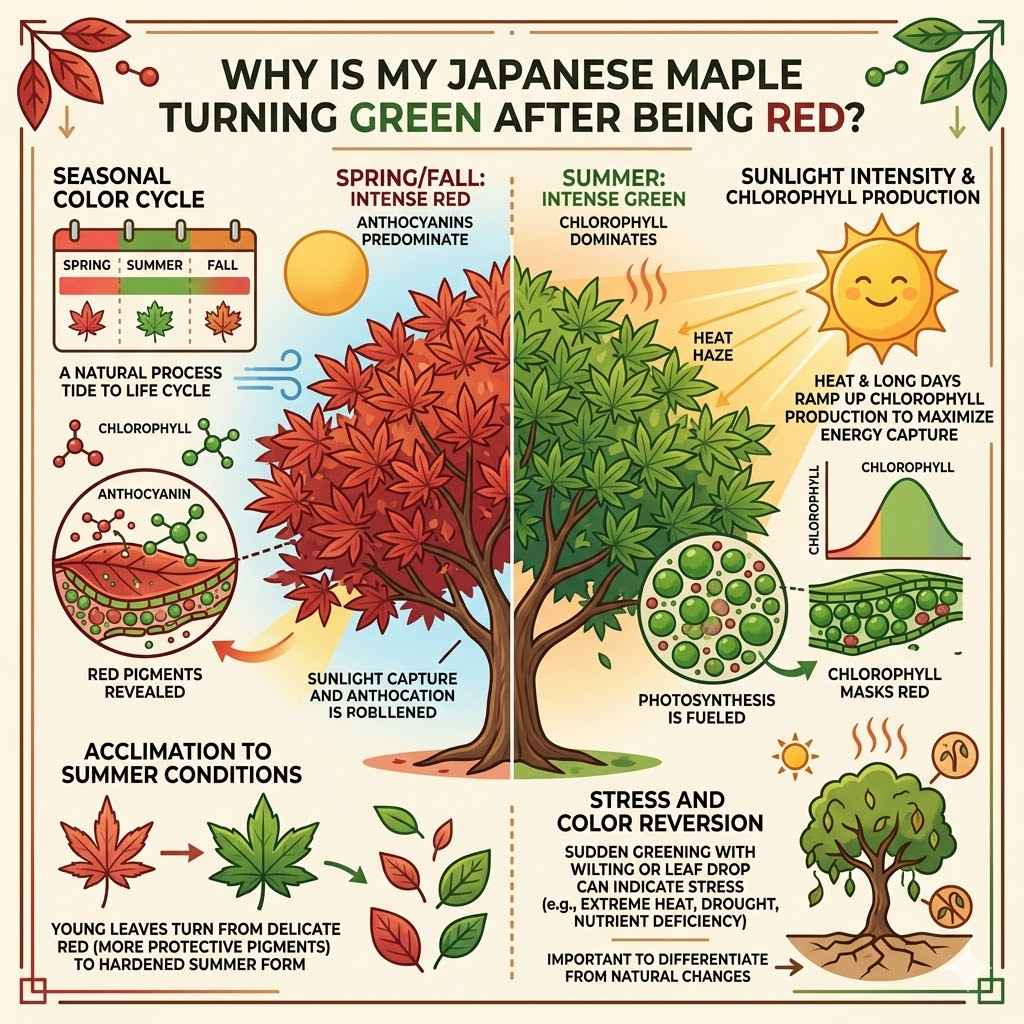
Many Japanese maple varieties, particularly those with red leaves, have a specific color cycle. The intense red color is often most prominent in the spring when the new leaves emerge and in the fall when conditions are right for anthocyanin production.
During the summer months, the dominant green pigment, chlorophyll, often becomes more visible. This happens because chlorophyll is essential for photosynthesis, and the tree needs it to produce energy throughout the growing season. The red pigments may still be present, but they are masked by the high concentration of chlorophyll.
Sunlight Intensity and Chlorophyll Production
Sunlight intensity plays a crucial role in how much chlorophyll is produced and how dominant it becomes. In the heat of summer, with long days and strong sunlight, trees ramp up chlorophyll production to maximize their energy capture.
This increased chlorophyll effectively “washes out” the red pigments. As the days shorten and temperatures cool in the fall, chlorophyll production decreases, allowing the red and orange pigments to become visible again.
Acclimation to Summer Conditions
When young leaves first emerge, they are often more delicate and may have a higher concentration of protective pigments, like anthocyanins, which contribute to their red hue. As the leaves mature and harden off for the summer, their structure and pigment composition change.
This natural acclimation process can lead to a shift in color from red to green. It’s the tree’s way of adapting its foliage to the demands of summer growth and photosynthesis.
Stress and Color Reversion
While seasonal changes are normal, a sudden reversion to green, especially if accompanied by wilting or leaf drop, can indicate stress.
Environmental stressors like extreme heat, drought, or nutrient deficiencies can cause the tree to prioritize survival. In such cases, the tree might produce more chlorophyll to attempt to sustain itself, leading to a greening effect. It’s important to differentiate between natural seasonal changes and signs of distress.
Frequently Asked Questions
Question: Will my Japanese maple ever be red again after turning green?
Answer: Yes, many Japanese maples that turn green in summer will display their red or colorful foliage again in the fall as temperatures cool and days shorten. This is a natural seasonal cycle for many varieties.
Question: Is it bad if my Japanese maple is mostly green?
Answer: Not necessarily. While many people love Japanese maples for their red color, a green Japanese maple is perfectly healthy. The color is influenced by genetics, season, and environment.
Some varieties are naturally green for much of the year.
Question: How can I make my Japanese maple redder?
Answer: Ensure it gets adequate sunlight (but not scorching afternoon sun), consistent watering, and avoid over-fertilizing, especially with nitrogen. Cool nights in the fall are also crucial for anthocyanin production.
Question: Should I water my Japanese maple differently if its leaves are green?
Answer: You should always water your Japanese maple based on its needs for consistent moisture, not its current leaf color. The goal is to keep the soil evenly moist but not waterlogged, regardless of whether the leaves are green or red.
Question: When is the best time to prune my Japanese maple to encourage good color?
Answer: Pruning is generally done to shape the tree and remove dead wood. While healthy growth supports good color, pruning is not the primary method to increase color intensity. Light pruning after leaves have fully emerged in spring is usually recommended.
Conclusion
If your Japanese maple has turned green, it’s likely a natural part of its seasonal cycle or a response to its environment. Most often, this greening is temporary. With proper care, your tree can continue to thrive and display its beautiful colors throughout the year.