Wide Plank Flooring: Widths, Cost Per Sq Ft & Subfloor Rules
Wide plank flooring means boards 5 inches or wider — solid hardwood runs $13 to $25 per square foot, engineered $10 to $20, though wide-format luxury vinyl stays under $3. Skip subfloor prep and the wider boards telegraph every dip, since wide plank needs flatness within 1/8 inch over 6 feet versus 3/16 inch for narrow strip. This guide covers true width classifications, solid vs. engineered tradeoffs, real installed cost, and which rooms wide planks actually suit.
Quick Answer
Wide plank flooring is industry-standard for boards 5 inches wide or more, with 6–9 inches being the most common range and up to 12 inches available in engineered formats. It costs more than narrow strip because it requires flatter, better-acclimated subfloors, but it also has fewer seams and shows off wood grain most homeowners find worth the premium.
What Actually Counts as “Wide Plank” Flooring?
Best Subfloor Prep Pick
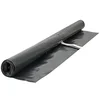
Roberts Moisture Barricade Underlayment Film
A 6-mil moisture barrier that goes down before wide plank over concrete or in below-grade rooms.
- Best for: installs over concrete or below-grade subfloors
- Why we picked it: exceeds NWFA thickness requirements and includes a seam-sealing adhesive strip
- Main drawback: adds a step versus click-lock products with pre-attached underlayment
Compare more wide plank subfloor prep tools
 Option 1 DAP Flexible Floor Patch and Leveler
|
 Option 2 General Tools Moisture Meter for Wood
|
 Option 3 NAACOO 4-in-1 Flooring Installation Kit
|
As an Amazon Associate we earn from qualifying purchases.
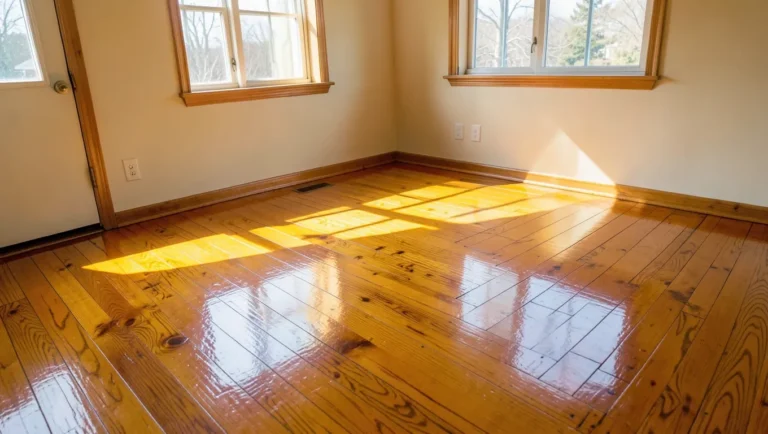
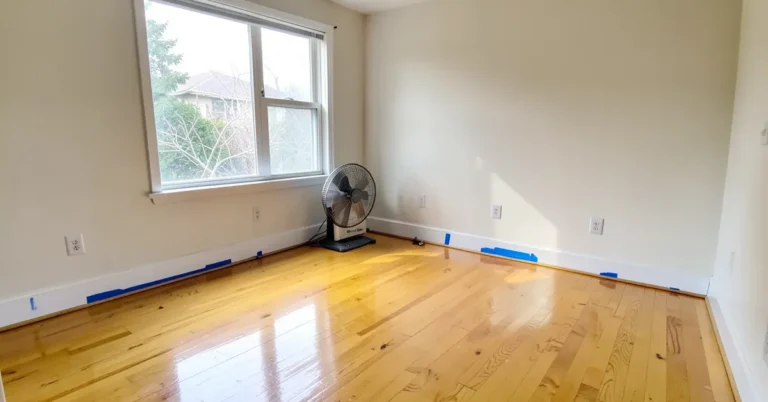
Wide plank flooring is a category of wood flooring that includes any board 5 inches wide or more — a width where fewer seams break up the room and the wood’s natural grain and mineral streaking stay visible across a longer stretch of board. Anything narrower than 5 inches is classified as strip or standard flooring, even if it’s labeled “plank” by a retailer.
| Category | Width Range | Typical Use |
|---|---|---|
| Strip / narrow | 2–3 inches | Traditional, small rooms, patterned layouts |
| Standard | 3–5 inches | Most common resale-safe choice |
| Wide plank | 5–7 inches | Open floor plans, modern and transitional homes |
| Extra-wide plank | 7–10+ inches | Large rooms, engineered formats, statement floors |
Most residential wide plank installs land in the 6–9 inch range. Anything past 10 inches is almost always engineered rather than solid hardwood, because a single 10-plus-inch-wide solid board moves too much with humidity to stay flat long-term.
Benefits of Wide Plank Flooring
Wide plank flooring offers a more spacious look and less visual interruption from seams, and because each board is milled from higher-grade lumber, it typically comes with better wear layers on the engineered side. Here’s what actually changes when you go wide.
Fewer Seams, Fewer Dirt Traps
Wide plank flooring has fewer seams than narrow strip or parquet, so the floor reads as one continuous surface instead of a grid. Fewer seams also means fewer gaps where dirt and debris collect, which cuts down on the sweeping and mopping a narrow-strip floor with the same square footage needs.
More of the Grain Shows
A wider board shows more of a tree’s natural character — cathedral grain, mineral streaking, knots — in a single piece instead of chopping it into 2-inch segments. That’s the main reason designers reach for wide plank in hardwood flooring projects meant to look custom rather than production-grade.
Engineered Wide Plank Handles Traffic Well
Engineered wide plank is more dimensionally stable than solid wide plank because its cross-layered core resists the cupping and gapping that wide solid boards are prone to. That stability, not the width itself, is what makes it hold up in high-traffic rooms with kids or pets.
Wood Species and Formats for Wide Plank Flooring
Wide plank is available in solid hardwood, engineered hardwood, and luxury vinyl plank — the species and format you pick affects both cost and how well the floor holds up in wide widths.
- White oak — the most common wide plank species; moderate movement, takes stain evenly, widely available up to 8 inches solid and 10 inches engineered.
- Hickory — harder and more dramatic grain variation than oak, but moves more with humidity, so it’s usually sold engineered in widths over 6 inches.
- Maple — tighter, more uniform grain; shows scratches more readily than oak, better suited to lower-traffic rooms in wide formats.
- Walnut — softer than oak or hickory, premium pricing, almost always sold engineered above 5 inches to control movement.
- Luxury vinyl plank (LVP) — the budget route to the wide plank look; widths up to 9–12 inches are common, fully waterproof, but doesn’t add resale value the way real wood does.
If you’re deciding between species for a whole-house project, our types of wood guide breaks down hardness and grain character across the species above in more detail.
Wide Plank Flooring Cost Per Square Foot (2026)
Wide plank costs more than narrow strip mainly because it takes more mature timber to mill a wide board without excess waste, and installation runs slower since fewer boards means more careful fitting per row.
📊 Solid wide plank hardwood runs $13–$25/sq ft; engineered white oak runs $10–$20/sq ft; wide-format LVP stays under $3/sq ft. — Source: 2026 flooring cost survey data (usabuildersdepot.com, hardwooddesigns.net)
| Cost Component | Typical Range |
|---|---|
| Material — solid hardwood | $13–$25 / sq ft |
| Material — engineered hardwood | $10–$20 / sq ft |
| Material — luxury vinyl plank | Under $3 / sq ft |
| Installation labor | $2–$4 / sq ft |
| Underlayment / moisture barrier | $0.50–$1.00 / sq ft |
| Trim and transition molding | $2–$4 / sq ft (per linear run) |
A mid-range 300 sq ft room in engineered white oak, fully installed with underlayment and trim, typically lands around $12–$16 per square foot all-in — call it $3,600–$4,800 for the room. Solid wide plank in a premium species like walnut can push past $8,000 for the same footprint.
Solid vs. Engineered Wide Plank: Which Is More Stable?
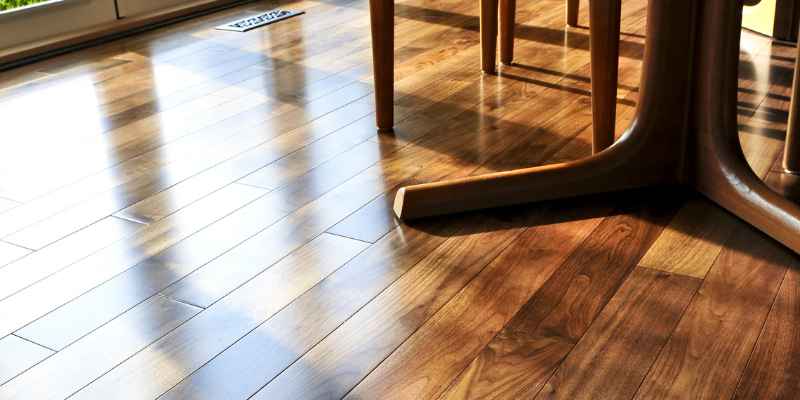
Engineered wide plank is a multi-layer product with a hardwood veneer bonded over a cross-layered plywood or HDF core that resists humidity-driven movement. Solid wide plank is one piece of wood all the way through, which looks and refinishes the same as engineered but moves more as humidity changes — the wider the board, the more that movement shows up as visible gaps or cupping.
| Factor | Solid Wide Plank | Engineered Wide Plank |
|---|---|---|
| Movement with humidity | Higher — more prone to gapping/cupping past 6 in. | Lower — cross-layered core resists movement |
| Max practical width | Around 7–8 in. before risk rises | Up to 10–12 in. in stable formats |
| Refinishing | 4–6 times over its life | 1–3 times, depends on veneer thickness |
| Best for | Stable climates, standard-width wide plank (5–7 in.) | Humid climates, below-grade rooms, extra-wide (8+ in.) |
Subfloor Requirements for Wide Plank Installation
Wide boards don’t flex over a bump the way narrow strip does, so an uneven subfloor shows up as squeaks, rocking boards, or visible gaps within months. The flatness tolerance for wide plank is roughly 1/8 inch over a 6-foot span — narrow strip flooring tolerates up to 3/16 inch over 10 feet, which is a meaningfully looser standard.
Preparing the Subfloor
- Check flatness with a 6-foot straightedge: lay it across the floor in several spots and measure any gap underneath with a feeler gauge or shim.
- Grind down high spots over 1/8 inch with a floor grinder or sander.
- Fill low spots with a self-leveling compound rated for wood flooring, following the manufacturer’s cure time before installing.
- Test subfloor moisture with a moisture meter — most manufacturers cap acceptable subfloor moisture at 12–14% for wood-over-wood installs.
- Install a moisture barrier membrane before laying wide plank over concrete or in below-grade rooms, even with engineered product rated for it.
“Level is typically not necessary, but reasonably flat is very important… if peaks or valleys in the subfloor exceed tolerance, sand down the high spots and fill the low spots with a leveling compound before installation.”
Acclimating the Planks
Let wide plank boxes sit unopened in the install room for 7–14 days before installation — longer than the 48 hours often quoted for narrow strip, since a wider board has more surface area to equalize with room humidity. Skipping acclimation is the single most common cause of gapping in wide plank floors installed during the first year.
Choosing the Right Width for Each Room
Wider planks generally suit larger, more open rooms, while narrower widths keep smaller rooms from feeling like a single oversized board. Personal style and existing trim still matter, but these are reasonable starting points by room:
- Living room and dining room: 6–8 inches
- Kitchen: 4–6 inches
- Bedrooms: 4–6 inches — see our bedroom flooring picks for species that hold up under bare feet
- Bathrooms: 3–4 inches, and only in engineered or waterproof formats
These are guidelines, not rules — a large primary bedroom can carry 6-inch planks fine, and a compact galley kitchen can still take 5-inch boards if the room reads long rather than boxy.
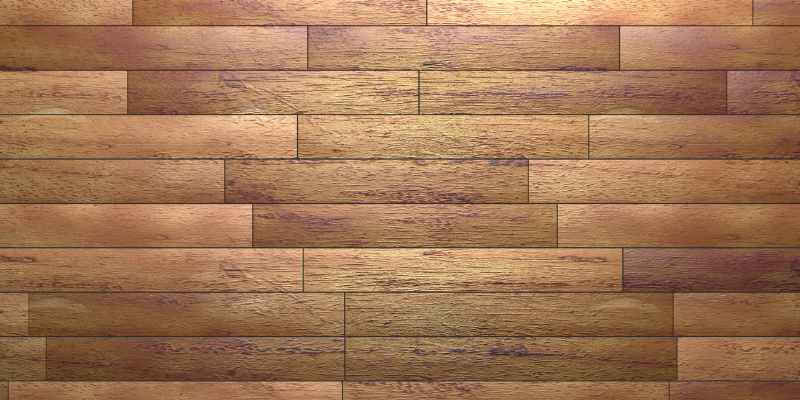
Wide Plank vs. Narrow Plank Flooring
Plank width changes the look, cost, and maintenance of a wood floor more than most buyers expect going in. Here’s how the two actually compare.
Appearance
Wide planks show more of each board’s natural grain and knots in one continuous piece, giving a warmer, more rustic feel. Narrow strip breaks the same floor into more repeating segments, which reads as more uniform and works well in traditional or minimalist rooms.
Cost and Durability
Wide plank costs more because it needs larger, more mature timber and slower, more precise installation. It’s also more durable against everyday wear per seam — fewer joints mean fewer weak points — but a poorly prepped subfloor hurts a wide-plank floor more visibly than it hurts narrow strip, since gaps and cupping show up faster on a wider board.
Maintenance and Repairs
Spills and scratches cover more visible surface on a wide board, and replacing a single damaged wide plank costs more than swapping a narrow strip because there’s more material per piece. Narrow strip is cheaper to spot-repair, but requires more seams to maintain overall.
Tips for Installing Wide Plank Flooring
Wide plank installation follows the same basic steps as narrow strip, but tolerances are tighter at every stage — from subfloor flatness (covered above) through the final finish coat.
Start Square, Not Just Straight
Snap a chalk line off the longest wall and confirm it’s actually square to the room, not just parallel to the wall — walls are rarely perfectly straight, and a wide-plank floor makes any drift far more visible than narrow strip does. Leave a 1/2-inch expansion gap between the first row and the wall.
Use a Tapping Block, Not the Hammer Directly
Strike a tapping block against the plank edge, never the plank itself — wide boards chip more easily at the tongue-and-groove joint than narrow strip, and a cracked edge on an 8-inch board is far more visible than the same crack on a 2-inch strip.
Finish and Protect
Apply a finish matched to the species and traffic level — oil-based or water-based polyurethane for most homes, or a natural oil finish for a more matte, low-sheen look. Follow the manufacturer’s recoat schedule; wide plank floors in high-traffic rooms typically need a fresh topcoat every 3–5 years — our recoating vs. refinishing guide covers how to tell which one your floor needs.
Frequently Asked Questions About Wide Plank Flooring
Are Wide Plank Floors More Expensive?
Yes. Solid wide plank hardwood runs $13 to $25 per square foot versus $6 to $12 for standard narrow strip, mainly because wide boards need larger, more mature timber and slower installation. Engineered wide plank narrows that gap to roughly $10 to $20 per square foot.
Are Wide Plank Floors Better Than Narrow Plank?
Not universally — wide plank shows more grain per board and has fewer seams, which most homeowners find more visually striking, but it costs more and demands a flatter subfloor. Narrow plank is more forgiving of an imperfect subfloor and cheaper to spot-repair.
How Wide Can You Get Plank Flooring?
Solid hardwood wide plank commonly tops out around 7 to 8 inches before movement risk rises. Engineered wide plank goes up to 10 to 12 inches in stable formats, and wide-format luxury vinyl plank can reach 9 to 12 inches since it doesn’t move with humidity the way real wood does.
Do Wide Planks Make a Room Look Smaller?
No — wide planks tend to make a room look larger, not smaller, because fewer seams create a more continuous, uninterrupted sightline across the floor. Very small rooms under roughly 100 square feet are the one exception where an 8-inch-plus board can start to feel oversized.
Is Wide Plank Flooring Going Out of Style?
No. Wide plank — generally 7 inches and wider — has moved from a premium upgrade to a mainstream default in 2026, especially paired with warm tones and matte finishes. Designers expect the trend to continue rather than fade.
Is Wide Plank Flooring Harder to Install?
It’s not harder in technique, but it’s less forgiving — wide plank requires a flatter subfloor (about 1/8 inch over 6 feet versus 3/16 inch for narrow strip) and a longer acclimation period of 7 to 14 days before installation. Most DIYers can still install it with careful subfloor prep.
Conclusion
Wide plank flooring — boards 5 inches or wider — costs more than narrow strip because it demands larger timber, a flatter subfloor, and longer acclimation, but it delivers fewer seams and more visible grain in return. Get the subfloor within 1/8 inch over 6 feet, acclimate the boards for at least a week, and choose engineered over solid if your home sees real humidity swings or you’re going past 7 inches wide.
Sponsored / affiliate links. As an Amazon Associate I earn from qualifying purchases. I may earn additional commission from eligible campaigns.