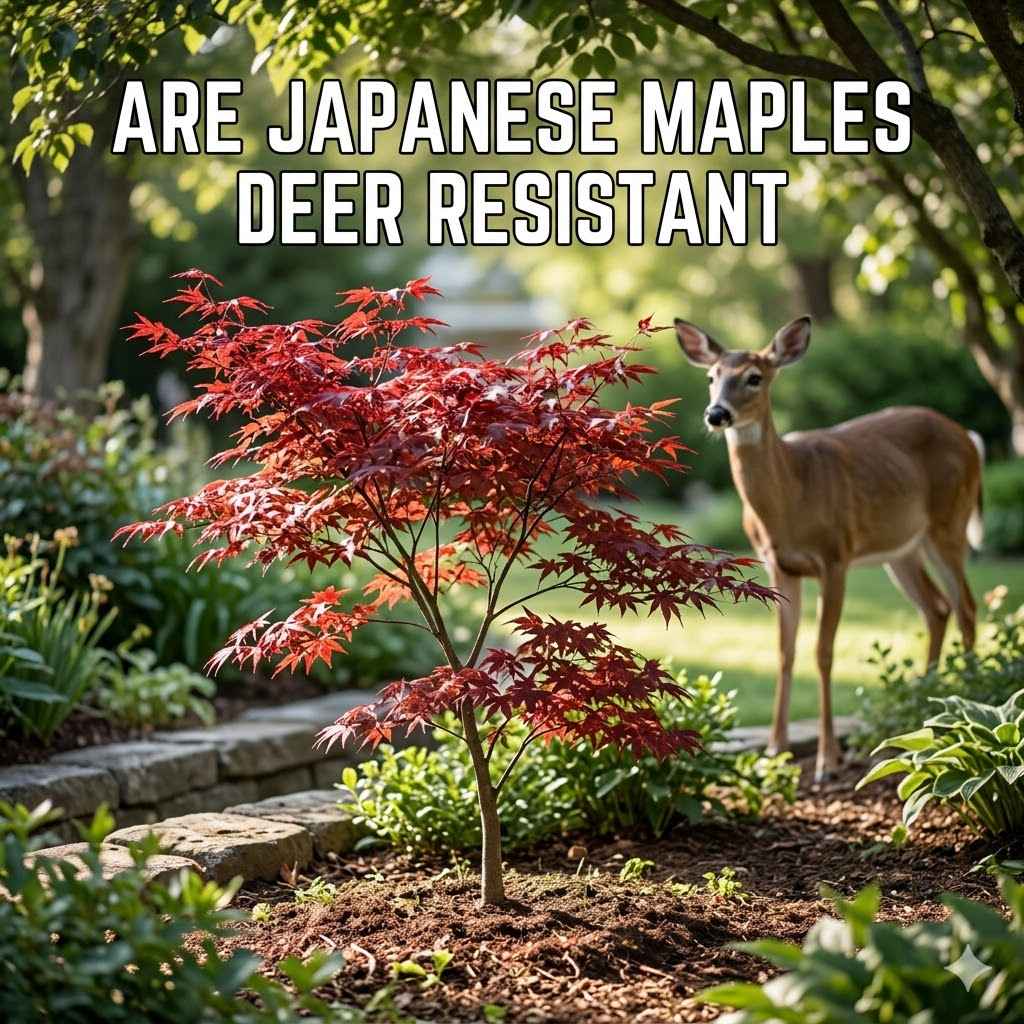
Are Japanese Maples Deer Resistant
Many gardeners wonder, Are Japanese Maples Deer Resistant? It can be a tricky question because it’s not a simple yes or no. Sometimes deer will nibble on almost anything, especially when hungry. For folks just starting out with these beautiful trees, figuring out what might get eaten can feel like a puzzle.
But don’t worry, we’ve got a straightforward way to help you sort it out. Let’s look at what makes deer less interested in certain plants.
Deciding if a Japanese maple is a good choice for your yard often comes down to whether deer will leave it alone. Many people dream of having these elegant trees with their stunning fall colors. However, if deer frequently visit your garden, you might worry they’ll damage your investment.
This guide aims to clear up the confusion about Are Japanese Maples Deer Resistant? We will explore the factors that influence deer browsing habits and provide practical advice for choosing and protecting your Japanese maple.
Understanding Deer Browsing Habits
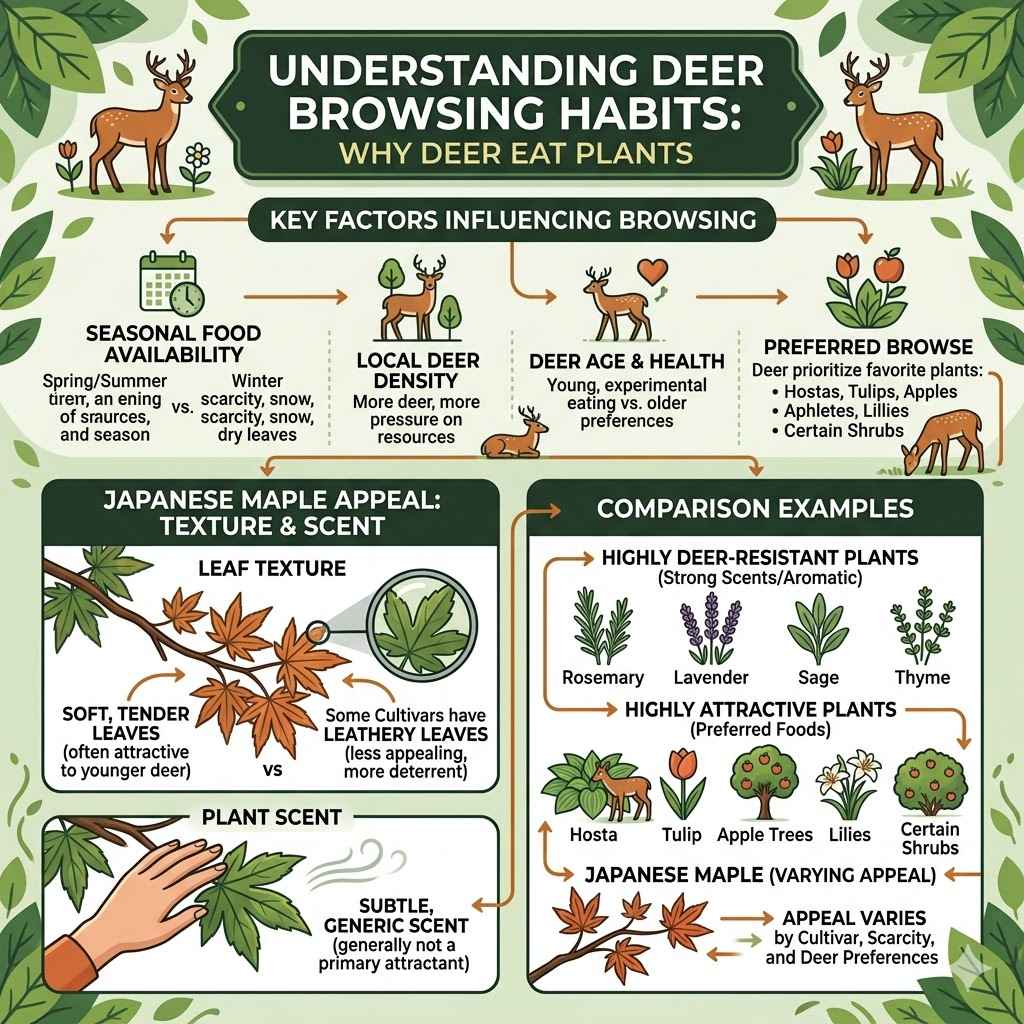
Deer are herbivores, meaning they eat plants. Their diet can change based on what’s available, the season, and how hungry they are. Sometimes, even plants typically considered deer resistant can become a snack if other food sources are scarce.
Factors like the local deer population density, the age and health of the deer, and the availability of preferred browse can all influence whether deer will eat your Japanese maple. Younger deer might be more experimental in their eating habits, while older deer may be more set in their preferences.
The texture and scent of a plant also play a role. Deer often avoid plants with rough leaves, strong scents, or milky sap. The specific variety of Japanese maple can also make a difference in its appeal to deer.
Leaf Texture and Scent
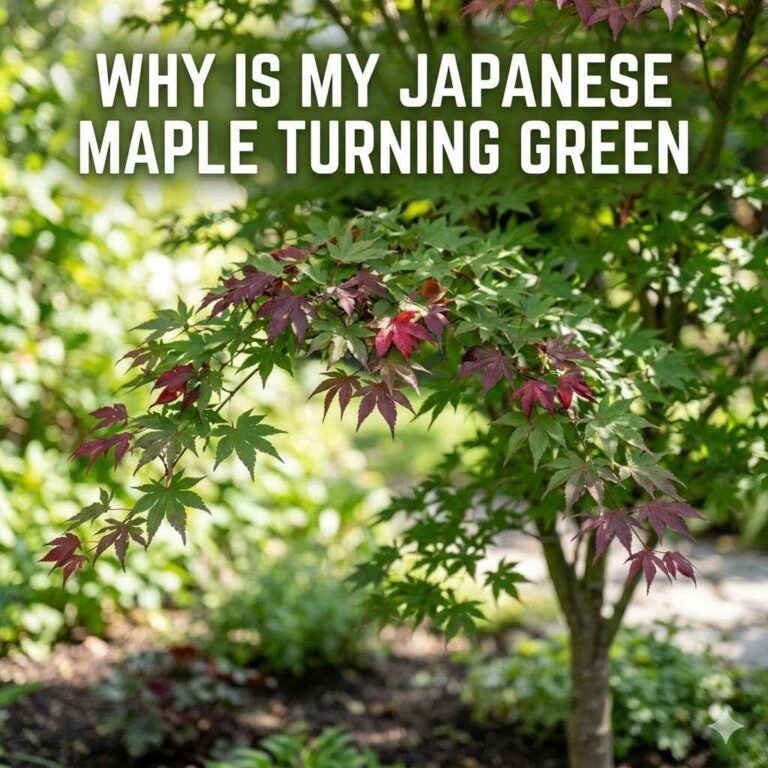
The texture of a plant’s leaves can be a deterrent for deer. Rough, fuzzy, or leathery leaves are generally less appealing than soft, tender ones. Japanese maples, with their lobed and often delicate leaves, can have varying textures depending on the cultivar.
Some may have slightly more leathery leaves, making them less of a target.
A plant’s scent is another key factor. Deer have a strong sense of smell and are often attracted to sweet or fragrant plants. They tend to avoid plants with strong, pungent, or unpleasant odors.
While Japanese maples don’t typically have a strong fragrance, their general scent profile might be less attractive than other plants in the landscape.
Research from various agricultural extensions has shown that strong aromatic plants like rosemary, lavender, and certain herbs are highly deer resistant due to their potent smells. Conversely, plants with tender, sweet-smelling foliage are often the first to be browsed. The subtle scent of a Japanese maple is generally not considered a primary attractant for deer.
What Makes a Japanese Maple Deer Resistant
When we ask, Are Japanese Maples Deer Resistant?, we are really asking if they are less likely to be eaten by deer. Several characteristics contribute to this. The texture of their leaves, for instance, is not usually what deer seek out as a tender treat.
They prefer softer, more succulent greens. Also, Japanese maples often have a certain bitterness or an unappealing taste that deer might discern.
The specific cultivars of Japanese maples can also vary in their appeal. Some may have more vigorous growth or tougher foliage, making them less attractive. The presence of tannins or other compounds in the leaves could also contribute to their deer resistance.
These compounds might make the leaves taste unpleasant or even indigestible for deer.
Furthermore, the mature form of many Japanese maples, with their often intricate branching patterns and sometimes papery bark, can also be less appealing for browsing compared to soft, leafy shrubs or young trees. This visual aspect, combined with the taste and texture, helps give them some natural protection.
Leaf Shape and Structure
The characteristic deeply lobed and often dissected leaves of many Japanese maple varieties present a unique texture. These intricate shapes are not as appealing to deer as the smooth, broad leaves of plants they commonly target. The structure of the leaf itself can be harder for deer to chew and digest effectively.
Consider the contrast with a young hosta plant. Hostas have large, tender leaves that are a favorite for deer because they are easy to eat and nutrient-rich. Japanese maple leaves, while beautiful to us, are structurally different and less “snackable” for deer.
This difference in leaf morphology is a significant factor in their relative resistance.
While there isn’t extensive scientific literature specifically detailing the leaf structure of Japanese maples in relation to deer preference, anecdotal evidence from gardeners and horticulturalists consistently points to the leaf form as a contributing factor to their deer resistance. The fine dissection of some cultivars, like Acer palmatum ‘Dissectum’, creates a feathery appearance that is less likely to be targeted.
Taste and Chemical Compounds
Plants contain various chemical compounds that affect their taste and edibility. Some compounds might be bitter, astringent, or even mildly toxic to animals. Deer, with their sophisticated palates, can detect these unpleasant tastes and generally avoid plants that contain them.
Japanese maples are thought to contain tannins, which are naturally occurring compounds found in many plants. Tannins can create a bitter or astringent taste that deer typically find unappealing. The concentration of these compounds can vary among different Japanese maple cultivars and even by season.
While research specifically quantifying tannin levels in Japanese maples in relation to deer preference is limited, the general principle of deer avoiding plants with bitter tastes is well-established in wildlife biology. This is a key reason why many plants with high tannin content, like certain oaks and witch hazels, are often noted for their deer resistance.
Varieties That Are More Deer Resistant
While the general answer to Are Japanese Maples Deer Resistant? leans towards ‘somewhat,’ some varieties truly stand out as being less appealing to deer. These are often the cultivars that have tougher leaves, a more distinct shape, or perhaps a less palatable flavor. When choosing a Japanese maple for an area with deer pressure, looking at specific types can make a big difference in your success.
Cultivars with more deeply lobed or dissected leaves, often referred to as “laceleaf” varieties, tend to be more ignored by deer. The feathery appearance and texture of these leaves are less inviting than the smoother, softer leaves of other plants. The structure of these leaves makes them harder for deer to eat quickly and easily.
Consider the ‘Dissectum’ group. These varieties are known for their delicate, fern-like foliage. Their unique leaf structure and often finer texture seem to be a natural deterrent.
Many gardeners report that these are among the last plants deer will nibble on, if at all.
Laceleaf Varieties
The ‘Dissectum’ group of Japanese maples, characterized by their deeply cut, feathery leaves, are frequently cited as being more deer resistant. Varieties such as Acer palmatum ‘Dissectum Viridis’ (green laceleaf) and Acer palmatum ‘Crimson Queen’ (red laceleaf) showcase this distinctive foliage.
The intricate, almost fern-like structure of these leaves provides a surface that deer find less palatable. It’s not the soft, tender bite they usually seek. The sheer volume of delicate leaflets may also make it harder for deer to get a satisfying mouthful, leading them to move on to easier targets.
A study conducted by Rutgers University, which lists various plants by deer resistance, consistently rates laceleaf Japanese maples as “seldom damaged” or “rarely damaged.” This is a strong indicator that their unique leaf morphology plays a significant role in deterring deer. This makes them a more reliable choice for gardens in deer-prone areas.
Here are some popular laceleaf Japanese maple varieties known for good deer resistance:
- Acer palmatum ‘Dissectum’ (Green Laceleaf Japanese Maple)
- Acer palmatum ‘Garnet’ (Red Laceleaf Japanese Maple)
- Acer palmatum ‘Viridis’ (Green Laceleaf Japanese Maple)
- Acer palmatum ‘Seiryu’ (Upright Laceleaf Japanese Maple)
Upright Varieties with Tougher Leaves
While laceleaf types are popular choices for deer resistance, some upright varieties of Japanese maples also fare well. These are often cultivars with slightly tougher, less tender foliage, or those whose growth habit makes them less accessible to browsing deer, especially as they mature.
For instance, certain cultivars with darker red foliage might be less appealing. The intensity of the color could be linked to different chemical compositions in the leaves, making them taste less desirable. Also, as these trees grow taller, the lower branches become out of reach for deer, offering some natural protection.
Observational data from many horticulturalists suggests that varieties with a more vigorous upright growth habit, and leaves that are somewhat leathery rather than thin and delicate, tend to be overlooked by deer. This is not a universal rule, but it is a pattern that many gardeners have noticed over time in areas with significant deer populations.
Protecting Your Japanese Maple from Deer
Even with their natural resistance, there are times when deer can become persistent and damage your Japanese maple. When this happens, taking steps to protect your tree is important. There are several methods you can use, ranging from simple physical barriers to repellents.
The goal is to make your tree less attractive or inaccessible to hungry deer.
The most effective way to protect a young Japanese maple is to create a physical barrier. This can be a fence, a tree guard, or netting. For smaller trees, this is a very practical solution.
For larger, mature trees, it might be less feasible but can still be applied to the most vulnerable lower branches.
Repellents are another option, but they often require reapplication, especially after rain. They work by using scents or tastes that deer find unpleasant. It’s often best to combine methods for the most robust protection.
Physical Barriers
Physical barriers are the most foolproof method to keep deer away from your Japanese maple. These can include fencing around the tree or a protective cage. For young trees, a simple wire mesh cylinder or a plastic tree guard around the trunk can prevent deer from eating the bark or lower branches.
A common and effective physical barrier is a deer fence. This can be a tall, sturdy fence that deer cannot jump over. For a single tree, you might use a series of posts driven into the ground around the tree and then wrap it with chicken wire or deer netting.
This creates a physical space that deer cannot enter.
The key is to ensure the barrier is tall enough and sturdy enough to deter deer. Deer can jump surprisingly high, so fences often need to be at least 6 to 8 feet tall. For individual trees, a cage that is at least 4-5 feet tall and wide enough to allow the tree to grow is often sufficient for young specimens.
This ensures the foliage and lower trunk are protected.
Here’s a simple approach for protecting a young Japanese maple:
- Select a wire mesh cylinder or deer netting that is at least 4 feet tall.
- Place the cylinder around the base of the Japanese maple.
- Ensure there is at least 1-2 feet of space between the tree trunk and the mesh to allow for growth and air circulation.
- Anchor the mesh securely to the ground using stakes or heavy stones to prevent it from being pushed over by deer.
Deer Repellents
Deer repellents work by using smells or tastes that deer find offensive. These can be very effective, but they generally need to be reapplied regularly, especially after rain or watering, and at the beginning of new growth seasons.
There are many types of repellents available. Some are made from natural ingredients like predator urine (coyote or fox), rotten eggs, or strong-smelling essential oils. Others are commercially produced and contain specific chemical compounds that are unpleasant to deer.
When using repellents, it’s important to follow the product instructions carefully. You should also rotate the type of repellent you use to prevent deer from getting accustomed to a particular smell or taste. Spraying the repellent on the foliage and lower branches of the Japanese maple is typically recommended.
Here are some common types of deer repellents:
- Scent-based repellents: These mimic the scent of predators or other animals that deer avoid.
- Taste-based repellents: These make the plant taste bad to deer, often using ingredients like bittering agents or capsaicin.
- Natural repellents: These include mixtures of soap, garlic, eggs, or hot sauce, which can deter deer with their strong odors and tastes.
A practical tip for using natural repellents is to create a mixture of 1 quart of water, 1 tablespoon of dish soap, and 1 tablespoon of hot sauce. Spray this mixture on the foliage. Remember to reapply this every few weeks, particularly after heavy rain, to maintain its effectiveness.
The Role of Maturity in Deer Resistance
As Japanese maples grow, their deer resistance can change. Young trees, with their tender bark and low-hanging branches, are often the most vulnerable. Mature trees, however, become less of a target.
This increase in resistance is due to a combination of factors related to their size, structure, and possibly changes in their chemical makeup.
A mature Japanese maple typically has a more substantial trunk, often with rougher bark that is less appealing to deer than the smooth, pliable bark of saplings. The canopy also rises higher off the ground, making the foliage inaccessible to deer without significant effort. This physical elevation is a primary reason why older trees are less frequently browsed.
Furthermore, as a tree matures, its growth rate might slow, and its tissues become tougher. This could translate to less succulent foliage and bark, making it less desirable for deer seeking a quick meal. The overall robustness of a mature tree also makes it better able to withstand minor browsing without suffering significant damage.
Young Trees vs. Mature Trees
Young Japanese maples are significantly more susceptible to deer damage than mature ones. Their bark is thin and pliable, making it an attractive target for deer to rub their antlers on or to strip for food, especially during winter months when other food sources are scarce. The low-hanging branches and tender leaves are also easily within reach for browsing.
Mature trees, on the other hand, have developed a thicker, often rougher bark that deer find less palatable and harder to strip. The canopy of a mature Japanese maple is also much higher off the ground, placing the majority of its foliage out of reach. This natural elevation is a significant protective factor.
In areas with high deer populations, it is common practice to provide protection for young Japanese maples for the first few years until they reach a substantial size. Once they are established and have grown beyond the typical browsing height of deer, they can often thrive with minimal or no additional protection.
Consider this comparison:
| Age Category | Vulnerability to Deer | Reasons |
|---|---|---|
| Young (1-5 years) | High | Tender bark, low branches, accessible foliage, rubbing antlers. |
| Mature (5+ years) | Low to Moderate | Thicker, rougher bark, higher canopy, more established growth. |
Growth Habit and Accessibility
The growth habit of a Japanese maple plays a crucial role in its accessibility to deer. Cultivars that grow tall and upright with a more open canopy structure will naturally become less accessible to deer as they mature. This means the lower branches and trunk are protected by height.
Conversely, Japanese maples that are naturally shorter, bushier, or have a weeping habit might remain more accessible to deer even as they age. This is because their foliage and branches can still be within browsing range. For these types, physical protection might be needed for a longer period.
Imagine a weeping Japanese maple cultivar that cascades towards the ground. Even if the tree is several years old, the drooping branches can easily be within a deer’s reach, making it a potential target. In contrast, a stately upright maple that grows straight and tall will naturally present a barrier as it gains height.
Environmental Factors Affecting Deer Pressure
The question of Are Japanese Maples Deer Resistant? is not just about the tree itself, but also about its surroundings. The local environment significantly influences how much pressure deer will put on your plants. Factors like the density of the deer population and the availability of other food sources are critical.
In areas with a very high deer population, even typically resistant plants can become targets. When deer are hungry and have limited options, they are more likely to browse on less preferred plants. This is why what works in one neighborhood might not work in another.
The presence of preferred food plants, such as hostas, tulips, or certain fruit-bearing trees, can also draw deer to an area. If these favorites are available, they might leave your Japanese maple alone. However, if those are gone, your maple could be next.
Deer Population Density
The sheer number of deer in an area is a primary driver of browsing pressure. In regions with high deer density, competition for food resources increases. This forces deer to broaden their diet and consume plants they might typically avoid.
For example, in suburban areas where deer populations have exploded due to a lack of natural predators and abundant food sources (like well-maintained gardens), even plants considered deer resistant can suffer damage. Deer become less picky when they are constantly hungry.
Statistics on deer populations can highlight this. In some states, deer herd numbers have been reported to be in the millions, leading to significant agricultural and landscape damage. A study in New York found that deer browsing caused millions of dollars in damage to ornamental plants and agricultural crops annually.
This level of pressure means even a Japanese maple might not be safe.
Availability of Preferred Food Sources
Deer are opportunistic feeders. If their favorite foods are readily available, they are less likely to seek out less desirable options. This is why the surrounding landscape plays a significant role in determining whether your Japanese maple will be browsed.
If your neighbors have lush gardens filled with hostas, daylilies, or young fruit trees, deer might congregate in that area and leave your Japanese maple untouched. Conversely, if these preferred food sources are scarce, deer may turn their attention to your Japanese maple, especially if it’s one of the few green things available.
Understanding what deer prefer in your specific region can help you predict their behavior. Common favorites include hostas, tulips, hydrangeas, and young trees with tender bark. If these are abundant, your Japanese maple might have a better chance of survival.
If they are not, you may need to take extra precautions.
When Are Japanese Maples Most Vulnerable
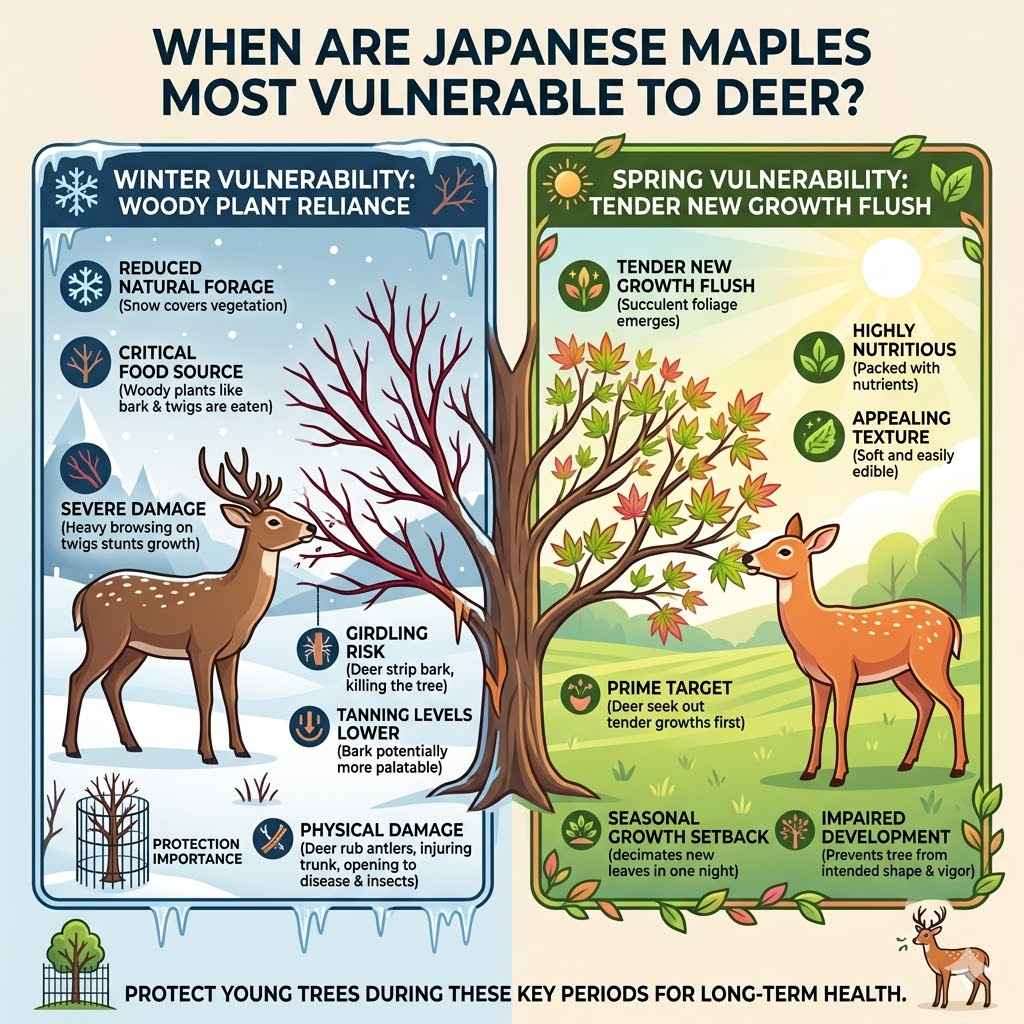
Japanese maples, like many ornamental plants, face periods of increased vulnerability to deer. These times are often linked to specific seasons when deer are most stressed for food, or when the plant itself is in a stage of development that makes it more palatable.
Winter is a particularly challenging time. With snow cover reducing natural forage, deer are forced to seek out woody plants for sustenance. The bark and twigs of young Japanese maples can become a critical food source.
During this season, even more resistant varieties may suffer damage.
The spring growth flush is another period of high vulnerability. Young, tender shoots and leaves are developing, and these are highly nutritious and palatable to deer. A young Japanese maple producing its first set of vibrant green leaves can be an irresistible temptation.
Winter Damage
During winter, deer populations often rely on woody plants for food as snow covers herbaceous vegetation. The bark and twigs of young Japanese maples become particularly vulnerable. Deer may strip the bark, which can girdle the tree and lead to its death, or they may browse heavily on the twigs, stunting growth.
The sap is also lower in tannins during winter, potentially making the bark and woody parts more palatable. Furthermore, deer might rub their antlers against the trunks of young trees, causing significant damage to the bark and cambium layer. This physical damage can open the tree up to disease and insect infestation.
In areas with significant deer pressure, protecting Japanese maples throughout the winter months is crucial. This is when the effectiveness of physical barriers like tree guards becomes most apparent. Without protection, young trees can sustain severe, sometimes fatal, damage.
Spring Growth and New Shoots
The emergence of new growth in spring is a critical period for young Japanese maples. The tender new shoots and leaves are packed with nutrients and have a soft texture that is highly appealing to deer. This makes them a prime target for browsing.
Young, succulent foliage is like a salad bar for deer. They will often seek out these new, tender growths first. A Japanese maple producing its first flush of vibrant leaves can be easily decimated by a hungry deer within a single night.
This damage can set back the tree’s growth for the entire season.
Even if the foliage isn’t completely eaten, repeated browsing on new shoots can prevent the tree from developing its intended shape and vigor. This is why protecting young trees, especially in the early spring, is so important for their long-term health and development.
Frequently Asked Questions
Question: Are all Japanese maples deer resistant?
Answer: No, not all Japanese maples are completely deer resistant. While many varieties are less palatable to deer than other plants, deer may still browse on them, especially when other food sources are scarce or deer populations are high. Some varieties are considered more resistant than others.
Question: Do deer eat Japanese maple bark?
Answer: Yes, deer can eat the bark of Japanese maples, particularly young trees, especially during winter when food is scarce. This can cause significant damage by girdling the tree, which can be fatal.
Question: What is the best way to protect a young Japanese maple from deer?
Answer: The most effective way to protect a young Japanese maple is through physical barriers. This includes using tree guards, wire mesh cylinders around the trunk, or fencing the area to keep deer out.
Question: How can I tell if deer have been eating my Japanese maple?
Answer: Signs of deer damage include ragged tears in the leaves or twigs (as opposed to clean cuts), stripped bark from the trunk or lower branches, and droppings found near the tree. Young trees may appear stunted or have their branches eaten down to the wood.
Question: Will deer repellents work on Japanese maples?
Answer: Deer repellents can be effective on Japanese maples, but they require regular reapplication, especially after rain. It’s often best to use them in conjunction with physical barriers for optimal protection.
Final Thoughts
So, to answer Are Japanese Maples Deer Resistant? they generally are more resistant than many other plants, but it’s not a guarantee. Laceleaf varieties and those with tougher leaves tend to be ignored more often. Protecting young trees with barriers is your best bet.
If deer pressure is high, consider combining methods like repellents with physical guards. You can enjoy these beautiful trees by understanding their needs and taking simple steps.