Can You Use Pine as Firewood? Pros and Cons
Many people wonder, Can You Use Pine as Firewood? Pros and Cons, especially when they have a lot of pine around. It might seem like a good idea to just burn it, but there are some things to know.
This can be a bit confusing for folks who are new to heating with wood. Don’t worry, though. We’ll break it down simply so you can decide if pine is right for your fireplace or wood stove.
We’ll look at what makes it work well and what can cause problems.
Is Pine Good Firewood Pros and Cons
Deciding if pine is a good choice for burning involves looking at its good and bad points. Pine is a softwood, meaning it burns faster and hotter than hardwoods like oak. This can be great for getting a quick fire going, but it also means you’ll need to feed the fire more often.
For beginners, this might seem tricky because you need to learn how much wood to use and how to manage the heat. We will explore the advantages and disadvantages of using pine wood for fuel.
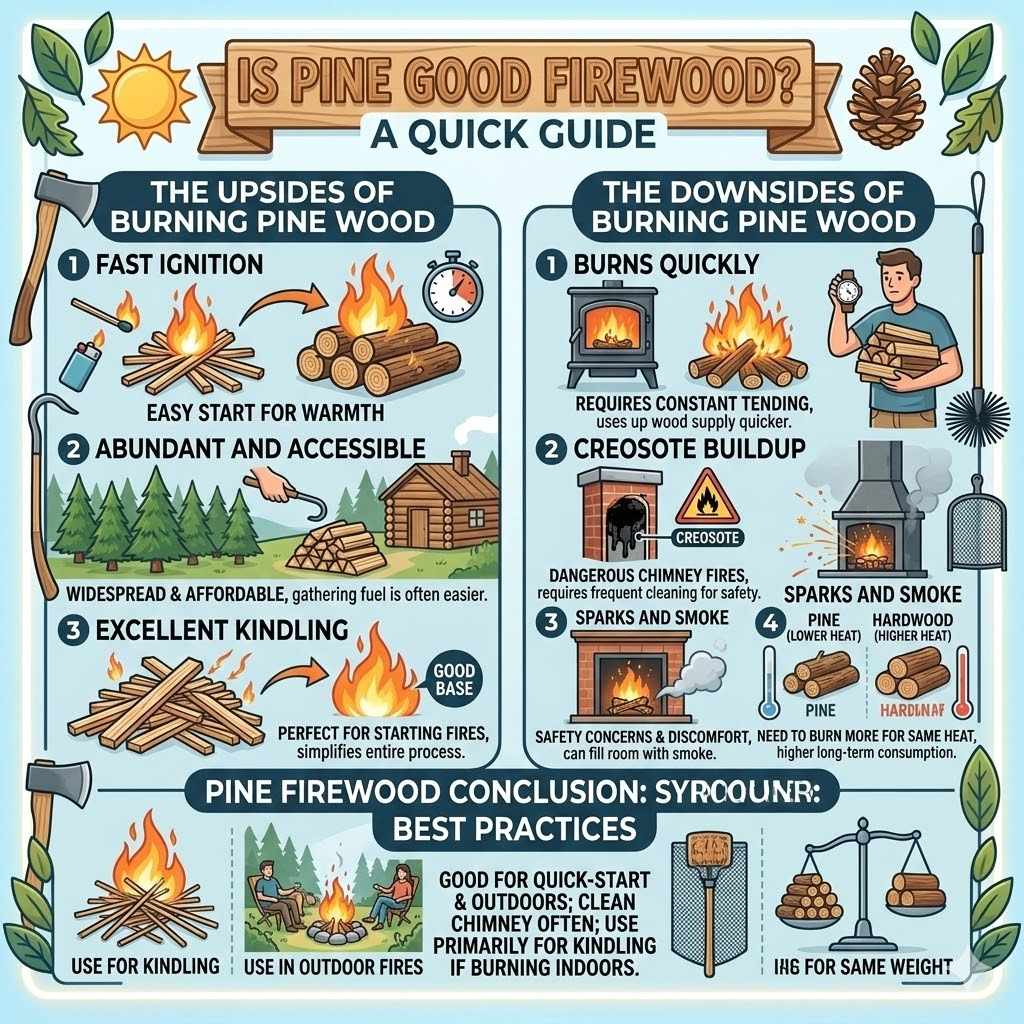
The Upsides of Burning Pine Wood
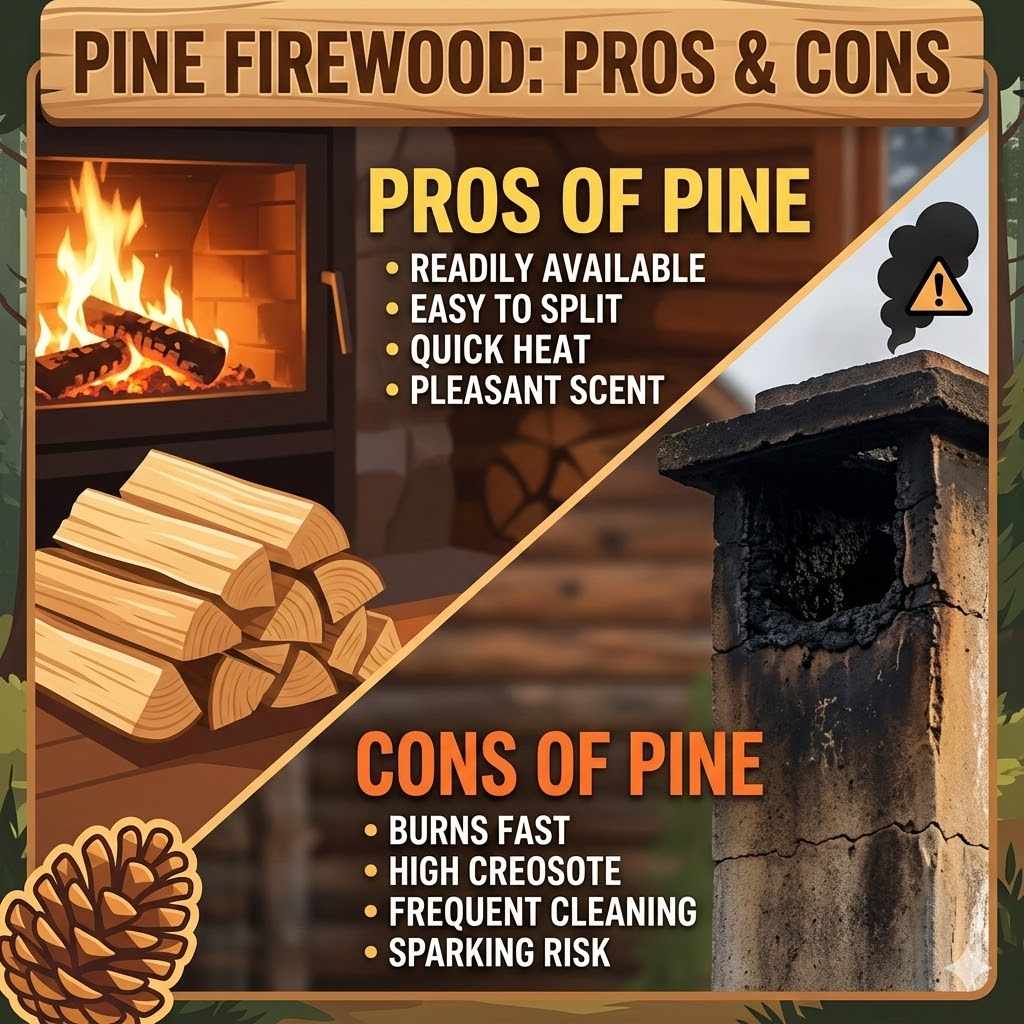
Pine wood has several benefits that make it appealing for burning. Its light weight and readily available nature are big pluses. It also ignites very easily, which is a major advantage when you want to start a fire quickly.
This makes it a popular choice for campers or anyone needing a fast warm-up.
- Fast Ignition
Pine ignites very easily. This means you can get a fire started quickly with just a few pieces of kindling and a match or lighter. This is especially useful on cold mornings when you want to warm up your home fast.
Unlike hardwoods, which can sometimes be stubborn to light, pine readily catches a flame. This makes the initial fire-starting process much simpler for beginners. It also means you don’t need as much effort or specialized tools to get your fire going.
- Abundant and Accessible
Pine trees grow quickly and are found in many parts of the world. This makes pine wood often readily available and sometimes cheaper than other types of firewood. If you live in an area with a lot of pine forests, you might even be able to gather your own fuel.
This accessibility makes it a practical option for many households looking to save money on heating. The widespread nature of pine also means it’s a common choice for log cabins and outdoor fires.
- Good for Kindling
Because it burns so easily and quickly, pine is excellent for starting fires. Smaller pieces of pine wood, called kindling, are perfect for catching a flame and then igniting larger pieces of wood. This helps build a strong base for your fire.
Using pine as kindling simplifies the entire fire-starting process. It ensures that your main fuel source catches fire efficiently. Many experienced wood burners keep a supply of pine kindling on hand for this exact purpose.
The Downsides of Burning Pine Wood
While pine offers some advantages, it also comes with significant drawbacks that can affect your fire and your home. These issues are important to understand before you decide to use pine as your primary firewood source. The main concerns revolve around how it burns and the byproducts it creates.
- Burns Quickly
Pine is a softwood, meaning it has a lower density compared to hardwoods. This low density causes it to burn much faster. While this is good for starting a fire, it means you will need to add more wood to the fire more frequently to maintain heat.
If you are looking for a fire that burns slowly and provides long-lasting warmth, pine might not be the best choice. You might find yourself constantly tending to the fire, which can be inconvenient. This fast burn rate also means you use up your wood supply quicker.
- Creosote Buildup
The fast, often less complete burn of pine produces more creosote. Creosote is a sticky, tar-like substance that builds up inside your chimney. If too much creosote accumulates, it can become a fire hazard and lead to dangerous chimney fires.
This means you will need to clean your chimney more often if you burn a lot of pine. Regular chimney maintenance is vital for safety, and pine increases the frequency of this necessary task. A chimney fire can cause significant damage to your home.
- Sparks and Smoke
Pine wood tends to spark and pop more when it burns than hardwoods. This is due to the presence of resin and moisture within the wood. These sparks can fly out of your fireplace or stove and can be a safety concern, potentially igniting nearby flammable materials.
Pine also tends to produce more smoke, which can be unpleasant and fill your room if your chimney draft isn’t perfect. The increased smoke can also lead to a sooty appearance on your walls and furniture over time.
- Lower Heat Output
Although pine burns hot initially, its overall heat output per piece of wood is lower than hardwoods. This means you need to burn more pine wood to produce the same amount of heat as a smaller amount of hardwood. Over time, this can lead to higher firewood consumption and potentially higher costs, despite the initial lower price of pine.
To get a consistent temperature, you might need to use more wood, which offsets the convenience of its quick burn.
Using Pine Wood Safely and Effectively
If you decide to use pine as firewood, it’s important to do so safely and in a way that minimizes its drawbacks. Understanding how to prepare and burn pine correctly can make a big difference. This section will offer practical tips and advice for getting the most out of pine while staying safe.
Properly Seasoning Pine Firewood
Seasoning firewood means letting it dry out for a period, usually at least six months. This process removes most of the moisture from the wood. Burning unseasoned or “green” wood is generally a bad idea, and it’s especially true for pine.
Properly seasoned pine burns cleaner and hotter, and it produces less smoke and creosote.
- Why Seasoning Matters
When wood is green, it contains a lot of water. Burning wet wood is inefficient because the fire’s energy is used to boil off the water instead of producing heat. This results in a weak flame, lots of smoke, and increased creosote.
Seasoning allows the water content to drop significantly, usually to around 20% or less. This means the wood burns hotter, cleaner, and with much less smoke. For pine, seasoning is crucial to reduce its tendency to spark and smoke excessively.
- How to Season Pine
To season pine, stack the logs off the ground on a pallet or some other base. Leave space between the logs for air to circulate. Cover the top of the stack with a tarp or wood shed roof, but leave the sides open.
This protects the wood from rain and snow while allowing air to flow through. Pine typically dries faster than hardwoods, so six months to a year of proper seasoning is usually sufficient. You can tell if pine is seasoned by its weight (it will be lighter) and by splitting a log – the ends should look dry and possibly cracked.
Best Practices for Burning Pine
Burning pine effectively involves a few key practices to manage its fast-burning nature and reduce potential issues. By following these tips, you can enjoy the benefits of pine without succumbing to its downsides.
- Start Fires with Pine, Then Add Hardwoods
Pine is excellent for starting a fire quickly. Use smaller pieces of seasoned pine to get your fire going. Once you have a good bed of coals, add denser hardwoods.
The hardwoods will burn longer and more steadily, providing sustained heat. This combination leverages pine’s fast ignition and hardwoods’ long burn time. It’s a practical approach for efficient and comfortable heating.
This method ensures you get the best of both worlds.
- Maintain Good Airflow
Proper airflow is essential for any wood-burning fire, but it’s particularly important for pine. Good airflow helps the fire burn hotter and more completely, which can reduce creosote buildup. Ensure your wood stove or fireplace dampers are adjusted correctly and that your chimney is not blocked.
This helps the smoke escape efficiently and makes the fire burn more cleanly. Too little air leads to smoldering fires, which create more creosote.
- Regular Chimney Cleaning
Due to the increased creosote potential, it’s vital to have your chimney inspected and cleaned regularly, especially if you burn a lot of pine. A professional chimney sweep can remove creosote buildup and check for any damage. This is a critical safety measure that helps prevent chimney fires.
Aim for at least one professional cleaning per year, or more often if you notice significant creosote deposits. Keeping your chimney clean is the most important safety step when burning pine.
When Not to Use Pine Firewood
There are certain situations where using pine as firewood is not recommended. Understanding these limitations will help you make the best choices for your home and safety. Sometimes, other options are simply better.
- Extended Cold Periods
For long, cold nights where you need consistent, long-lasting heat, pine might not be ideal. Its rapid burn rate means you’ll be constantly adding wood, which can be tiring and disruptive. Hardwoods are much better suited for maintaining a steady, overnight burn.
If your primary goal is to heat your home for many hours without frequent intervention, look for denser firewood types.
- Older or Poorly Maintained Chimneys
If your chimney is old, in poor condition, or has narrow flues, the increased risk of creosote buildup from pine can be a significant safety concern. Hardwoods generally produce less creosote. In such cases, it’s safer to avoid pine altogether or use it very sparingly and ensure professional inspections are frequent.
The risk of a chimney fire is simply too high.
- Wood Stoves Not Designed for Softwoods
Some modern, high-efficiency wood stoves are designed for specific types of wood to maximize their performance and minimize emissions. While most stoves can handle pine, check your stove’s manual. Some manufacturers may advise against burning excessive amounts of softwoods like pine due to their faster burn rate and creosote production.
Always follow your appliance’s guidelines.
Comparing Pine to Hardwood Firewood
To truly understand Can You Use Pine as Firewood? Pros and Cons, it helps to compare it directly with hardwoods. Hardwoods like oak, maple, and ash are often considered the gold standard for firewood.
They have different burning characteristics that make them suitable for different purposes.
The main differences lie in density, burn time, heat output, and creosote production. Hardwoods are denser, which means they burn slower and longer, providing more sustained heat. They also typically have a higher BTU (British Thermal Unit) rating, meaning they produce more heat per pound of wood.
While hardwoods can still produce creosote, it’s generally less than softwoods like pine when burned properly.
| Feature | Pine (Softwood) | Hardwood |
|---|---|---|
| Density | Low | High |
| Burn Time | Fast | Slow and Long |
| Heat Output (BTU) | Lower | Higher |
| Ease of Ignition | Very Easy | More Difficult |
| Creosote Production | Higher | Lower |
| Sparking | More Prone | Less Prone |
| Availability | Generally high | Varies by region |
Heat Output and Longevity
Hardwoods are known for their superior heat output and longevity. This is because they are denser and contain more energy per unit volume. When you burn a log of oak, it will burn for a significantly longer time than a log of pine of the same size.
This makes hardwoods ideal for keeping a fire going throughout the night or for heating a home for extended periods.
- Sustained Heat
The slow, steady burn of hardwoods provides a consistent and reliable heat source. This is crucial for maintaining comfortable temperatures in your home, especially during colder months. You don’t need to tend to the fire as often when using hardwoods.
This allows for more uninterrupted rest and comfort.
- Energy Content
Hardwoods have a higher energy density. This means a cord of hardwood will provide more total heat energy than a cord of softwood. For example, a cord of oak might produce around 24 million BTUs, while a cord of pine might produce closer to 15 million BTUs.
This difference in energy content is a significant factor when considering which wood to use for heating. You get more warmth for your money and effort with hardwoods.
Creosote and Safety Concerns
One of the biggest distinctions between pine and hardwoods lies in creosote production and the associated safety risks. Hardwoods, due to their denser structure and slower burn, tend to produce less creosote. This is a major advantage for chimney safety and maintenance.
- Reduced Creosote Risk
The cleaner, more complete burn of seasoned hardwoods results in less tarry residue building up in the chimney. This significantly lowers the risk of a dangerous chimney fire. While all wood burning produces some creosote, hardwoods are the safer bet for minimizing this hazard.
Regular chimney inspections are still necessary, but the frequency might be less demanding compared to burning pine.
- Less Sparking
Hardwoods tend to spark less than softwoods like pine. This is because they generally have lower resin content. Less sparking means a safer fire, especially in open fireplaces.
You have a reduced risk of embers escaping and potentially igniting nearby rugs, furniture, or curtains. This makes hardwood a more relaxed and worry-free choice for many homeowners.
The Verdict on Burning Pine Firewood
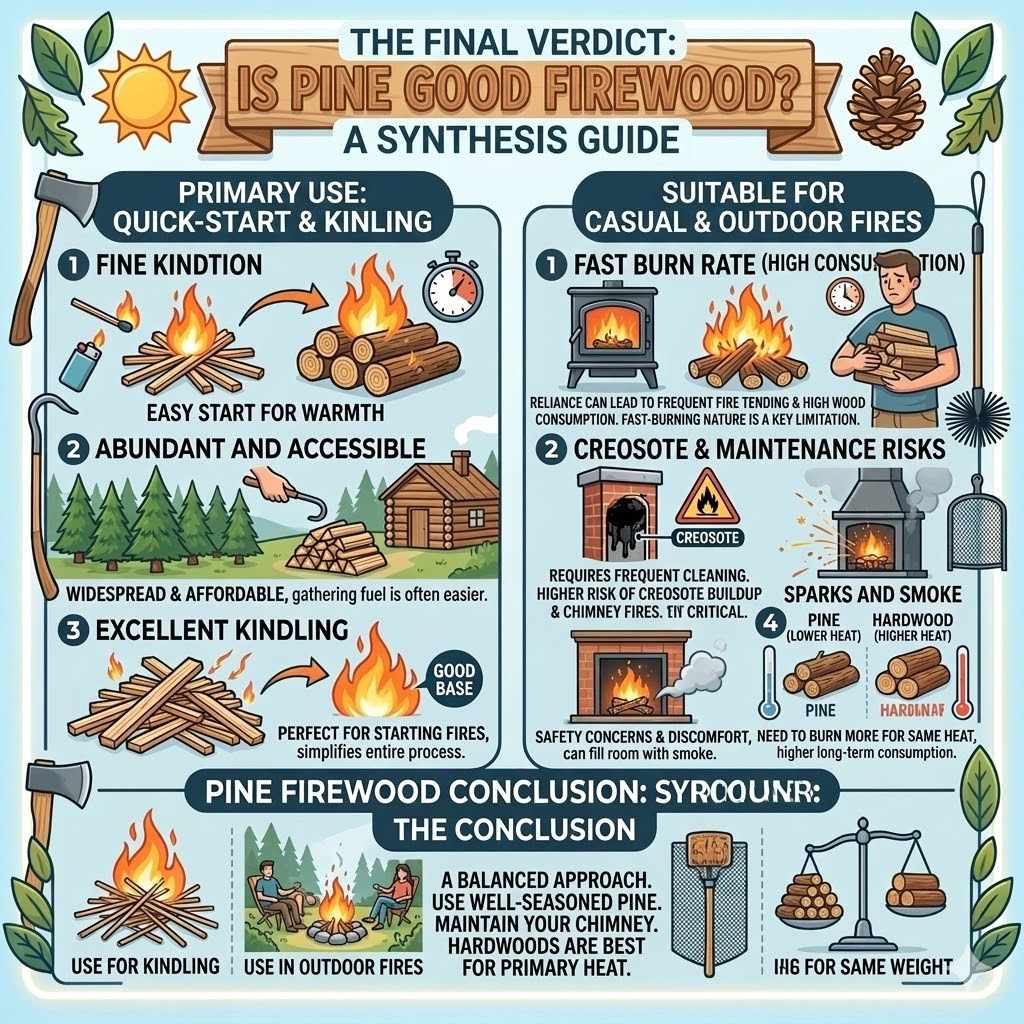
So, Can You Use Pine as Firewood? Pros and Cons boils down to a few key points. Pine can be used as firewood, but it’s best suited for specific purposes.
It’s great for starting fires quickly and for casual campfires where a long, steady burn isn’t critical. However, if you rely on firewood for primary home heating, especially during long, cold periods, pine’s fast burn rate and higher creosote production can be problematic. It’s crucial to always use well-seasoned pine and to maintain your chimney regularly.
For sustained, efficient heating, hardwoods are generally the superior choice.
Frequently Asked Questions
Question: Is pine firewood safe to burn indoors?
Answer: Yes, seasoned pine firewood can be safe to burn indoors in a properly functioning fireplace or wood stove. However, it produces more sparks and creosote than hardwoods, so regular chimney cleaning and vigilance against sparks are essential for safety.
Question: How much heat does pine firewood produce compared to oak?
Answer: Pine produces less heat than oak. Oak is a hardwood that burns slower and hotter, providing more sustained warmth. Pine, being a softwood, burns faster and produces less overall heat energy per piece.
Question: What is the main risk of burning unseasoned pine?
Answer: The main risk of burning unseasoned pine is the high moisture content. This leads to a smoky, inefficient fire, poor heat output, and a significant increase in creosote buildup, which is a fire hazard.
Question: Can I mix pine and hardwood for burning?
Answer: Yes, mixing pine and hardwood is a common and effective practice. Use pine to start the fire easily, and then add hardwoods to maintain a longer, steadier burn and provide sustained heat.
Question: How often should I clean my chimney if I burn a lot of pine?
Answer: If you burn a lot of pine, you should have your chimney inspected and cleaned more frequently. Many experts recommend at least once a year, but if you notice significant creosote buildup, you may need to clean it every few months.
Final Thoughts
You can indeed use pine as firewood, but with awareness of its pros and cons. It excels at quick starts and campfires. For primary home heating, understand its fast burn and creosote risks.
Always season pine well and clean your chimney often. For steady, efficient warmth, hardwoods are generally better.