Countertop Screws: Length That Won’t Poke Through the Top
Countertop screws are short screws driven up from inside the cabinet, through corner blocks or braces, into the underside of the top. Length is the whole game: one laminate installation guide specifies 1-1/4 in screws and warns that anything longer punctures the surface. This guide covers how to work out the right length for your top, which materials should never be screwed, and how to fasten wood tops without cracking them.
What Screws Do You Use to Attach a Countertop?
Best 1-1/4 In. Cabinet Screw Pick
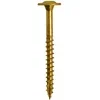 |
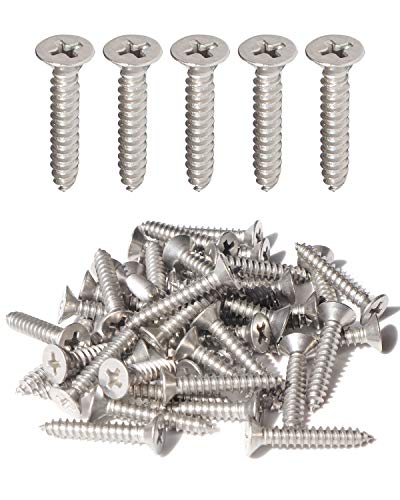
GRK CAB8114HP Cabinet HandyPak, #8 x 1-1/4 in, 100 screws A self-tapping #8 cabinet screw in the 1-1/4 in length that one laminate installation guide specifies, with a wide washer-style head that bears on a corner block or build-up strip.
|
Most base cabinets come with corner blocks or braces across the top, and the countertop is fastened from below through them. Family Handyman describes inserting the screws from under the braces so they stay put and do not protrude through the top surface of the countertop. That single detail is why countertop screws are chosen by length first and by brand second.
The old idea that a countertop screw is a special product is mostly a myth. The Custom Craft Countertops laminate installation guide lists plain 1-1/4 in drywall screws in its materials and uses them both to fix build-up strips to the cabinet and to drive up into the countertop. What matters is the length, the pilot hole and the material of the top.
Which Fastener for Which Countertop Material
Before buying any screws, check what your top is made of. The right fastener changes completely by material, and this is the part most short guides skip.
| Countertop material | Fastener method | Source |
|---|---|---|
| Laminate over particleboard | 1-1/4 in screws from below through build-up strips, 3 per strip | Custom Craft laminate installation guide |
| Solid wood or butcher block | Screws up through braces, with a 1/16 in gap or oversized holes so the top can move | butcherblock.com installation tips; Bob Vila |
| Quartz | No screws. Dabs of flexible 100% silicone, 8 to 12 in apart, on the perimeter support | MSI quartz installation guide |
Granite and other natural stone are also normally set on the cabinets rather than screwed down, but the sources read for this guide only cover quartz directly, so follow your installer’s or fabricator’s directions for stone.
How to Choose a Countertop Screw Length
The rule behind every recommendation is simple arithmetic. The screw passes through the corner block, brace or build-up strip first, and whatever is left bites into the underside of the top. The part that bites in has to stay clearly short of the top face.
| What you measure | How to use it |
|---|---|
| A: total thickness of your countertop | This is the limit. The screw tip must never reach the face. |
| B: thickness of the block, brace or strip the screw passes through | This much of the screw length is used up before it reaches the top. |
| Screw length minus B | This is how far the screw bites into the top. It must be less than A, with a real margin. |
| Example: 1-1/4 in screw through a 3/4 in block | 1/2 in bites into the top (1.25 minus 0.75). Measure your own blocks, since they vary. |
This is the reasoning behind the 1-1/4 in figure in the Custom Craft guide, which also states that longer screws will puncture the surface of the countertop. Use it as a starting point for a laminate top, not as a universal rule. If your top is thinner, your strips are thicker, or your cabinet brace is unusually deep, recalculate.
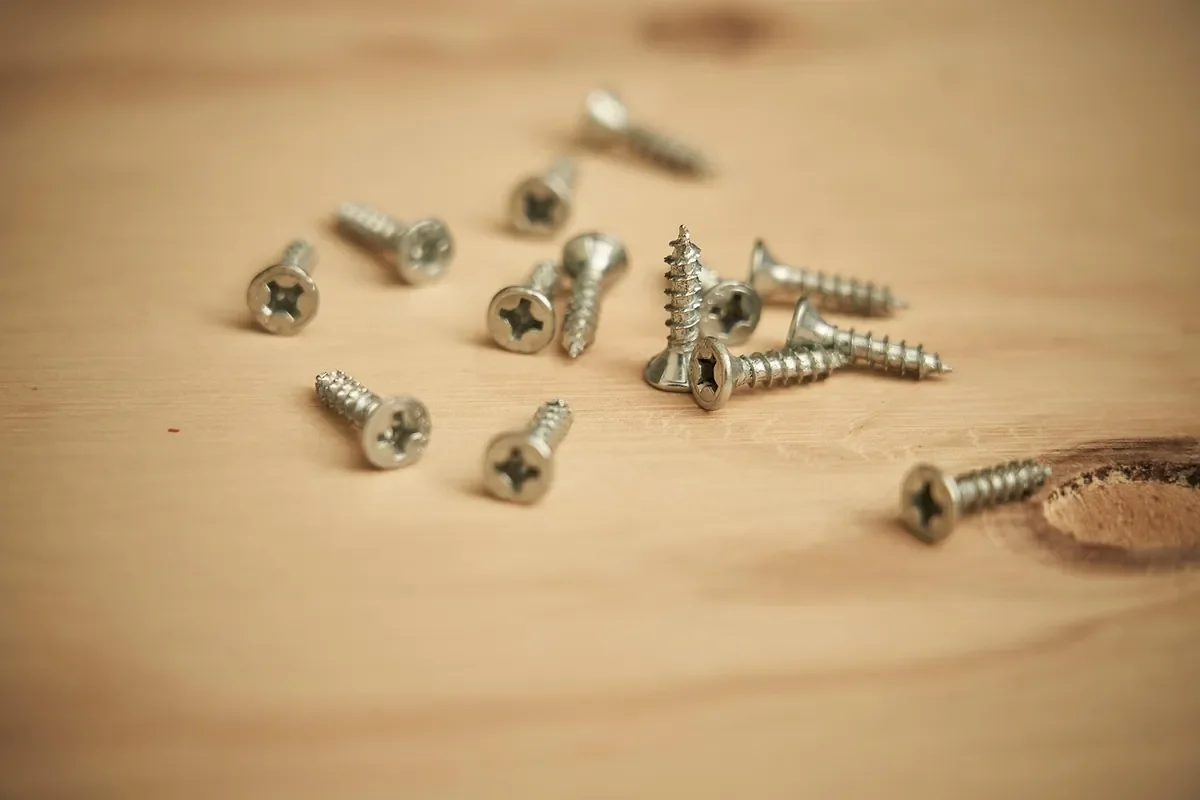
A practical safeguard is to test on scrap. Stack a piece of the same material as your top on a block the same thickness as your cabinet brace, drive one screw, and flip it over. If the tip shows or the surface bulges, the screw is too long. A strip of masking tape wrapped around the screw at the right length also gives you a visual stop while driving.
How to Fasten a Laminate Countertop Step by Step
These steps follow the Custom Craft laminate guide, which is written for particleboard-core laminate tops on standard cabinets.
- Check the cabinets are level. Adjust them if you can. The guide notes shims may be needed if the cabinets cannot be leveled.
- Fix build-up strips to the cabinet tops. Pre-drill the front and back of each strip, then fasten it to the cabinet face and back frame with 1-1/4 in drywall screws. Space strips about every two feet, with the first and last about 2 in from the ends of the run.
- Keep strips out of the way of sinks. On a sink base, measure the sink opening first so the strip does not block it.
- Set the countertop in place. Then fasten it with 3 screws of 1-1/4 in through each strip. If a strip crosses two cabinets on an island, the guide uses 3 screws inside each cabinet.
- Add support at overhangs. The guide calls for 2 to 3 screws in the section that overhangs.
- Apply pressure while driving. The guide notes that weight or pressure may be needed on the top while you screw it down.
If your cabinets are frameless, the same guide notes that extra build-up strips and 1-1/4 in screws may be needed. For cutting the sink opening before you fasten anything, see our guide to cutting a countertop for a sink, and for trimming a laminate top to length, how to cut a laminate countertop.
Fastening a Wood or Butcher Block Countertop
Wood moves with humidity, so rigid fastening is a common cause of cracks. The butcherblock.com installation tips say not to mount a butcher block top directly to a solid-topped base unit without a 1/16 in air space between the top and the base, which you can create with washers as spacers. Where the cabinet maker has not allowed for movement, they suggest an undersized screw with a washer, or oversized or countersunk pilot holes with flat head screws and washers.
Bob Vila gives pilot hole sizes for this job: a 1/8 in bit for #8 screws or a 9/64 in bit for #10 screws, drilling about halfway through the countertop, and says screws are best because glue can restrain wood from expanding and contracting. If a cabinet maker provides slotted screw holes, butcherblock.com says to locate the screws in the center of the slots.
Wood tops also need finishing and care once installed. Our guides to sealing butcher block and whether butcher block sags over time cover that side, and our butcher block cost guide helps if you are still choosing.
Common Mistakes With Countertop Screws
- Using a screw longer than your top allows. The Custom Craft guide is explicit that longer screws puncture the surface.
- Screwing into quartz. MSI says never to insert mechanical fasteners into quartz.
- Locking down a wood top rigidly. Without a gap or oversized holes, the top can crack as it moves.
- Skipping pilot holes. The laminate guide pre-drills every strip, and the wood-top guides specify pilot bit sizes.
- Over-driving. Particleboard has little grip left once a screw strips out, so stop when the screw is snug.
- Fastening only at the ends. The guide places 3 screws per strip and strips about every 2 feet, not just at the ends.
For screw diameters and how they map to drill bits, see our wood screw size chart, and if you countersink flat heads on a wood top, our explainer on what it means to countersink a screw helps. For a longer look at the installation itself, see laminate countertops installed.
Frequently Asked Questions
What screws are used to attach a countertop to base cabinets?
For laminate and particleboard-core tops, one installer guide calls for 1-1/4 in drywall screws driven up through build-up strips or corner blocks. Wood tops use screws through the cabinet braces, with a small gap or oversized holes so the top can move. Stone and quartz tops are usually bonded with silicone, not screwed.
What length screw will not poke through the countertop?
It depends on how thick your top is and what the screw passes through first. One laminate guide specifies 1-1/4 in screws and warns that longer screws puncture the surface. Measure your top, subtract the thickness of the block or strip, and choose a screw that stays clearly short of the top face.
How many screws does a countertop need?
One laminate installation guide uses 3 screws through each build-up strip, with strips about every 2 feet along the cabinet run. It also calls for 2 to 3 screws in any section that overhangs. Follow your countertop maker’s instructions if they differ.
Should you use construction adhesive to attach a countertop?
Not for a wood top. Bob Vila notes that glue can restrain a wood countertop and stop it from shrinking and expanding, so screws are the better fastener there. Manufacturers of other top materials give their own directions, so check the one for your top.
Can you screw into a quartz countertop?
No. The MSI quartz installation guide says never to insert mechanical fasteners such as nails and screws into quartz, and to fasten the top to the perimeter support with dabs of flexible 100% silicone 8 to 12 in apart.
Conclusion
Countertop screws are chosen by what they must not do: poke through the top. Measure your top and the block it sits on, use 1-1/4 in as the laminate starting point from Custom Craft, give wood tops room to move, and leave quartz to silicone. When in doubt, follow the instructions that came with your countertop over any general rule.
Sponsored / affiliate links. As an Amazon Associate I earn from qualifying purchases. I may earn additional commission from eligible campaigns.