Difference Between Oak And Maple Wood: Essential Facts
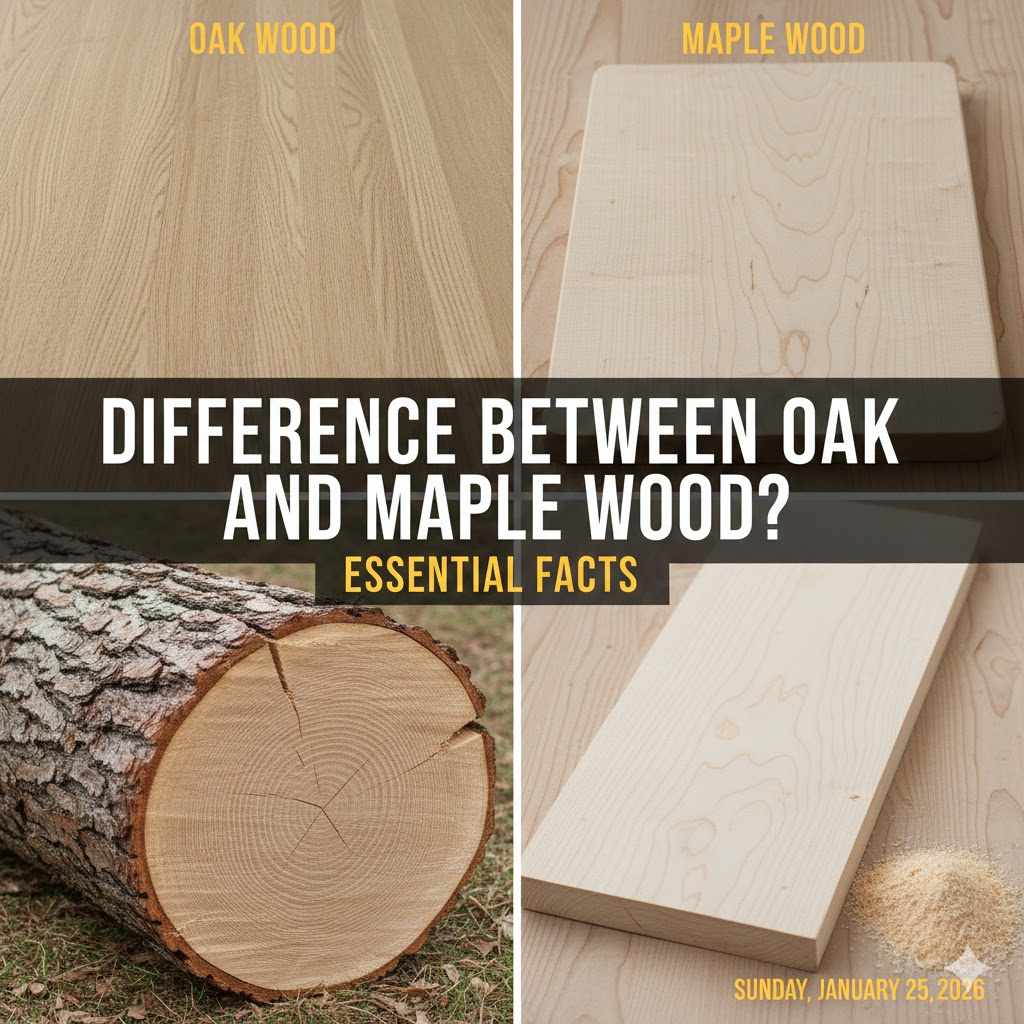
The main difference between oak and maple is their grain. Oak has a prominent, open grain pattern that feels textured and looks traditional. Maple has a fine, smooth grain that feels silky and looks modern. Oak is very easy to stain evenly, while maple often requires a pre-stain conditioner.
Hello friends! Welcome back to the workshop. Today, we’re tackling a question I get all the time: what’s the difference between oak and maple? When you’re standing in the lumber aisle, it’s easy to feel overwhelmed. Both woods are strong, beautiful, and popular for good reason. But choosing the right one can make or break your project.
Don’t worry. It’s simpler than you think. I’m here to walk you through everything you need to know. We’ll look at them side-by-side, from their grain and color to how they handle in the shop. By the end of this guide, you’ll be able to choose between oak and maple with total confidence. Let’s get started!
The First Impression: Appearance, Grain, and Color
The easiest way to tell oak and maple apart is simply by looking at them. Their grain patterns are like signatures—each one is unique and tells a story about the wood.
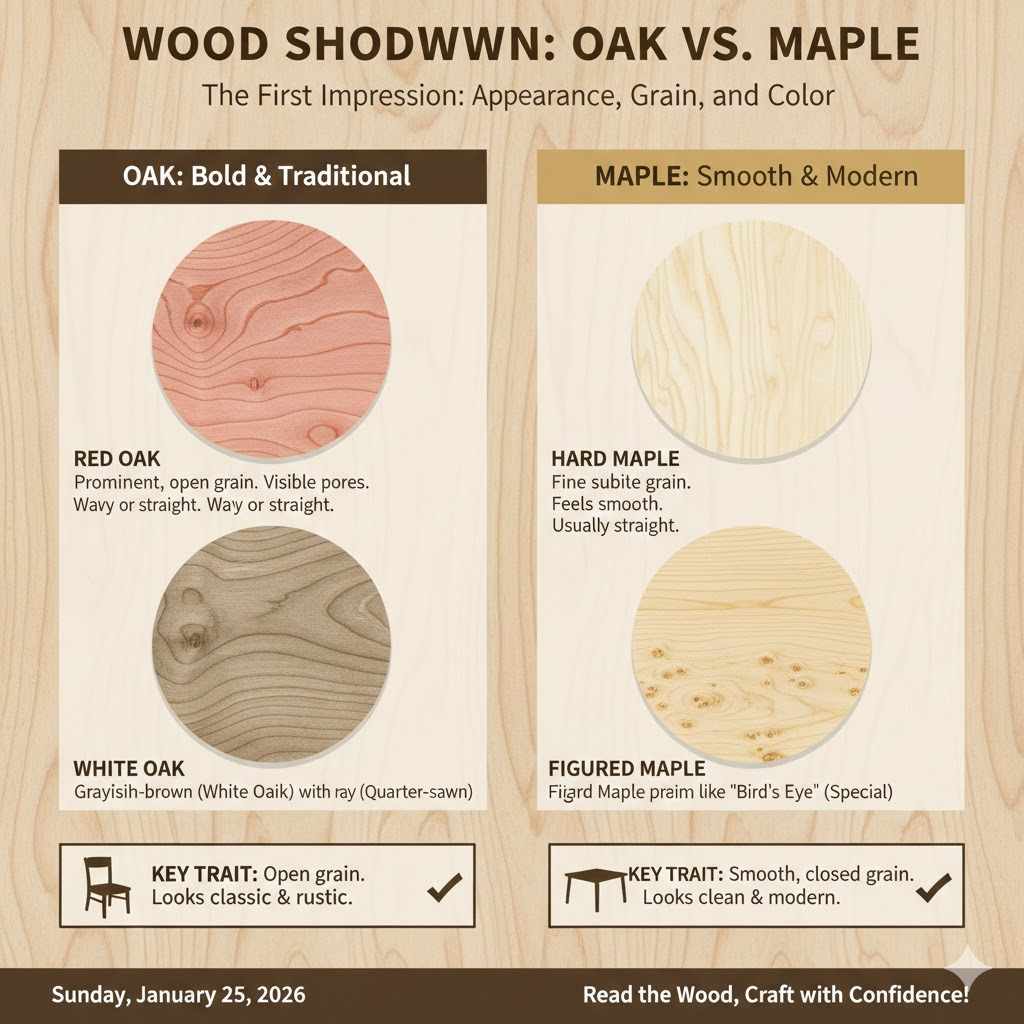
Oak: Bold and Traditional
When you think of classic, sturdy furniture, you’re probably picturing oak. Its most defining feature is its strong, prominent grain pattern. The lines are very visible and can be straight, wavy, or swirled. Oak is an “open-pored” wood, which means you can actually see and feel tiny pores or openings in the grain. This gives it a wonderful texture and a rustic, natural character.
- Red Oak: This is the most common type you’ll find. It has a warm, reddish, or pinkish tint. Its grain is often wide and wavy, making it look very bold.
- White Oak: This type has a more subtle, grayish-brown color. It’s a bit harder than red oak and is famous for having beautiful, long ray flecks, especially when it is “quarter-sawn.” These flecks are shiny, ribbon-like markings that add incredible visual interest.
Maple: Smooth and Modern
Maple is oak’s calmer, sleeker cousin. It has a very fine, subtle grain with light, consistent lines. It’s a “closed-pored” wood, so the surface feels incredibly smooth, almost silky to the touch. This clean, uniform appearance makes maple a favorite for modern and minimalist designs.
- Hard Maple (Sugar Maple): This wood is creamy white with a hint of a golden hue. Its grain is typically straight and very light. It’s the superstar of maple woods for its durability.
- Soft Maple: Slightly softer than hard maple (though still a hardwood!), soft maple is a bit darker, with more gray or reddish-brown streaks.
- Figured Maple: Sometimes, maple trees grow in special ways that create stunning patterns like “bird’s eye,” “curly,” or “quilted.” These unique grains are highly prized for special projects like musical instruments and fine furniture.
Which Wood is Tougher? Hardness and Durability
Both oak and maple are hardwoods, which means they are very strong and durable. But how do they compare in toughness? To measure this, woodworkers use something called the Janka hardness test. It’s a simple test that measures how much force it takes to press a small steel ball into a piece of wood. A higher number means the wood is harder and more resistant to dents and dings.
Here’s a quick look at how they stack up. As you can see, hard maple is one of the toughest contenders, making it a fantastic choice for high-traffic items.
| Wood Species | Janka Hardness Rating (in pounds-force) | Notes |
|---|---|---|
| Red Oak | 1,290 lbf | A strong, reliable standard for many projects. |
| White Oak | 1,360 lbf | Slightly harder than red oak and very rot-resistant. |
| Soft Maple | 950 lbf | Still a durable hardwood, just not as tough as its cousin. |
| Hard Maple (Sugar Maple) | 1,450 lbf | Extremely hard and resistant to wear and tear. |
What does this mean for your projects? For a kitchen table that will see daily use, a cutting board, or flooring, Hard Maple is a champion. Its density helps it resist scratches and dents. For furniture, cabinets, or trim, both Red Oak and White Oak are more than tough enough. White Oak has a special advantage: it is naturally resistant to water and rot due to its closed cell structure. This is why it has been used for centuries to build boats and outdoor barrels. To learn more about how wood properties are measured, you can explore resources from the U.S. Forest Service.
In the Workshop: A Guide to Workability
How a wood behaves with your tools is just as important as how it looks. Workability covers everything from cutting and sanding to finishing. Here’s where oak and maple really show their different personalities.
Cutting, Shaping, and Sanding
Working with both woods is a rewarding experience, but they require slightly different approaches.
- Cutting and Shaping: Oak is generally agreeable to work with. It cuts well and shapes nicely, though its strong grain can sometimes cause minor splintering, especially with hand tools. Keep your blades sharp! Maple, especially hard maple, is very dense. This means it can be tough on your saw blades and router bits. You need to use sharp tools and a steady feed rate to avoid “burning” the wood, which leaves brown scorch marks. The good news is that maple’s fine grain allows for very clean, sharp cuts.
- Sanding: This is where maple truly shines. Because of its closed-pore structure, maple sands to an incredibly smooth, glass-like finish. It’s a joy to feel a perfectly sanded piece of maple. Oak, with its open pores, is a different story. It sands well, but you’ll never get that same slick feeling. The pores can also collect sanding dust, so be sure to clean the surface thoroughly with a brush or compressed air before finishing.
Finishing: The Biggest Difference of All
If there’s one area where these woods are complete opposites, it’s finishing. Applying stain or a clear coat brings out the wood’s beauty, but your technique must match the wood type.
Oak is a dream to stain. Its large, open pores soak up stain like a sponge, resulting in a deep, rich, and even color. You don’t need any special tricks. Just apply the stain, wipe off the excess, and enjoy a beautiful result. This makes oak incredibly beginner-friendly for finishing.
Maple is notoriously tricky to stain. Its fine, tight grain doesn’t absorb stain evenly. If you apply stain directly, you’ll often end up with a blotchy, splotchy mess. It’s a frustrating experience for new and experienced woodworkers alike! To get an even stain on maple, you must first apply a pre-stain wood conditioner. This partially seals the wood so the stain goes on more uniformly. Alternatively, you can use gel stains or wood dyes, which sit more on the surface instead of soaking in.
Because of this, many people choose not to stain maple at all. A simple clear finish like lacquer, polyurethane, or oil will protect the wood and bring out its natural creamy color and subtle grain patterns. This is often the best way to showcase maple’s clean, modern beauty.
What Will It Cost? A Look at Price and Availability
For most of us DIYers, budget is a big factor. The good news is that both oak and maple are domestically grown and generally available.
- Oak: Red Oak is one of the most widely available and affordable hardwoods in North America. This makes it a go-to choice for large projects like cabinets or flooring. White Oak is usually a bit more expensive than red oak because it’s in high demand for its good looks and weather-resistant properties.
- Maple: The price of maple can vary quite a bit. Soft maple is often priced similarly to red oak, making it a good budget-friendly option for projects where super-high durability isn’t the top priority. Hard maple is typically more expensive than red oak, reflecting its extreme density and durability. Figured maple, like birdseye or curly maple, is a specialty product and commands a premium price.
Remember, prices can change based on your location and the local supply. Always check with your local lumberyard for the most accurate pricing.
Where They Shine: Common Uses for Oak and Maple
The unique properties of each wood make them perfectly suited for different types of projects. Understanding their strengths will help you make the right choice.
Common Uses for Oak
Oak’s strength and traditional aesthetic make it perfect for projects that need to feel timeless and sturdy.
- Furniture: Classic dining tables, chairs, rocking chairs, and bedroom sets.
- Cabinetry: A long-time favorite for kitchen cabinets due to its durability and easy finishing.
- Flooring: Oak flooring is a classic that adds warmth and value to a home.
- Trim and Millwork: Baseboards, crown molding, and window casings.
- Barrels: White oak is the wood of choice for aging wine and whiskey because it is watertight and adds flavor.
Common Uses for Maple
Maple’s hardness and clean look lend it to applications that require durability and a modern feel.
- Kitchen Items: Its closed-grain structure makes it ideal for cutting boards, butcher blocks, and rolling pins because it’s easy to clean.
- Flooring: Famously used for basketball courts, bowling alleys, and dance floors due to its incredible resistance to wear.
- Modern Furniture: Sleek tables, chairs, and dressers with a minimalist style.
- Cabinetry: Provides a bright, clean, and contemporary look for kitchens.
- Musical Instruments: Prized for making necks of guitars and violins. Baseball bats are also famously made from hard maple.
For more detailed information on choosing wood for furniture projects, many university extension programs, like this guide from Utah State University, offer valuable insights.
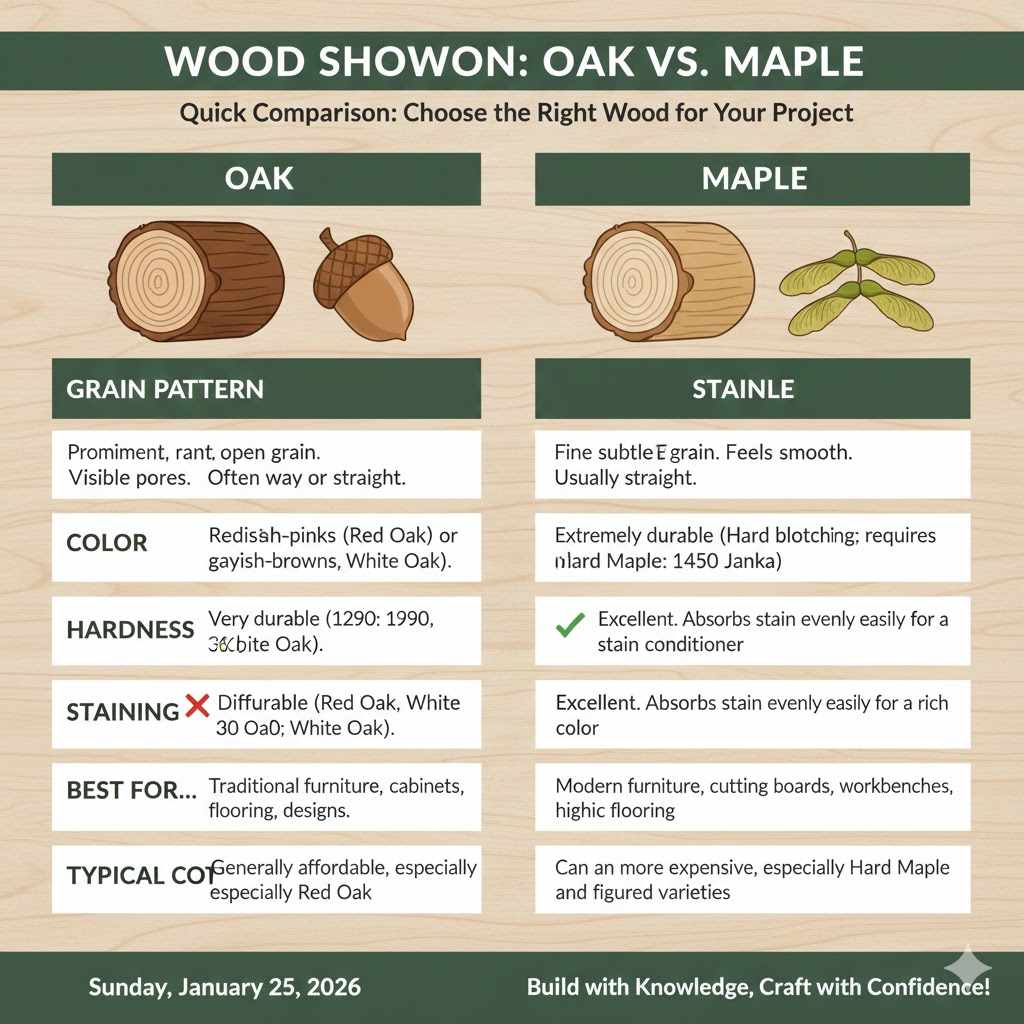
Quick Comparison: Oak vs. Maple at a Glance
Sometimes, a simple table is the best way to see the differences clearly. Here’s a head-to-head comparison to help you review.
| Feature | Oak | Maple |
|---|---|---|
| Grain Pattern | Prominent, open grain. Visible pores. Often wavy or straight. | Fine, subtle grain. Feels smooth. Usually straight. |
| Color | Reddish-pinks (Red Oak) or grayish-browns (White Oak). | Creamy white to light golden brown. |
| Hardness | Very durable (Red Oak: 1290, White Oak: 1360 Janka). | Extremely durable (Hard Maple: 1450 Janka). |
| Staining | Excellent. Absorbs stain evenly and easily for a rich color. | Difficult. Prone to blotching; requires pre-stain conditioner. |
| Best For… | Traditional furniture, cabinets, flooring, rustic designs. | Modern furniture, cutting boards, workbenches, high-wear flooring. |
| Typical Cost | Generally affordable, especially Red Oak. | Can be more expensive, especially Hard Maple and figured varieties. |
Frequently Asked Questions (FAQ)
Is oak or maple better for kitchen cabinets?
Both are excellent choices! It depends on the look you want. Choose oak if you prefer a traditional, textured look with a visible grain pattern. Choose maple if you want a clean, bright, and modern look with a smooth finish. Maple is slightly more durable against dents, but both are very sturdy.
Which is more expensive, oak or maple?
It varies, but generally, Red Oak is one of the most affordable hardwoods. Hard Maple is usually more expensive than Red Oak. White Oak and Soft Maple often fall somewhere in between. Figured maple (like birdseye) is a specialty wood and costs significantly more.
Is it safe to use maple for a cutting board?
Yes, absolutely! Hard maple is one of the best woods for cutting boards. It is very hard, durable, and has a closed-grain structure. This means it’s less porous than oak, so it’s easier to clean and less likely to harbor bacteria.
Is oak harder than maple?
Generally, no. Hard maple (at 1,450 Janka) is harder than both White Oak (1,360) and Red Oak (1,290). This makes hard maple more resistant to dents and scratches. However, all three are considered very durable hardwoods suitable for most projects.
How can I tell the difference between oak and maple just by looking?
Look at the grain. Oak has very large, visible pores and a prominent, coarse grain pattern. You can often feel the texture. Maple has a very fine, faint grain pattern and a smooth surface with no visible pores. Oak looks rustic; maple looks clean.
Why does my maple project look blotchy after staining?
This is a common issue with maple. Its dense, tight grain doesn’t absorb liquid stain evenly. Some spots soak up more stain than others, creating a blotchy appearance. To prevent this, always apply a pre-stain wood conditioner before staining maple, or use a gel stain which sits on top of the wood.
Conclusion: Making the Right Choice for Your Project
So, there you have it! The age-old matchup of oak versus maple isn’t about one being “better” than the other. It’s about which one is the right partner for your creative vision. They are both fantastic, strong, and beautiful American hardwoods.
If you dream of building a piece with a classic, textured feel that stains beautifully, oak will be your best friend in the workshop. If you’re aiming for a sleek, modern project with a silky-smooth finish that can stand up to heavy use, then maple is calling your name.
Now that you understand their key differences—from grain and hardness to workability and cost—you have the power to choose with confidence. Trust your instincts, think about the final look and feel you want to achieve, and go for it. The most important thing is to have fun and be proud of what you create. Happy building!