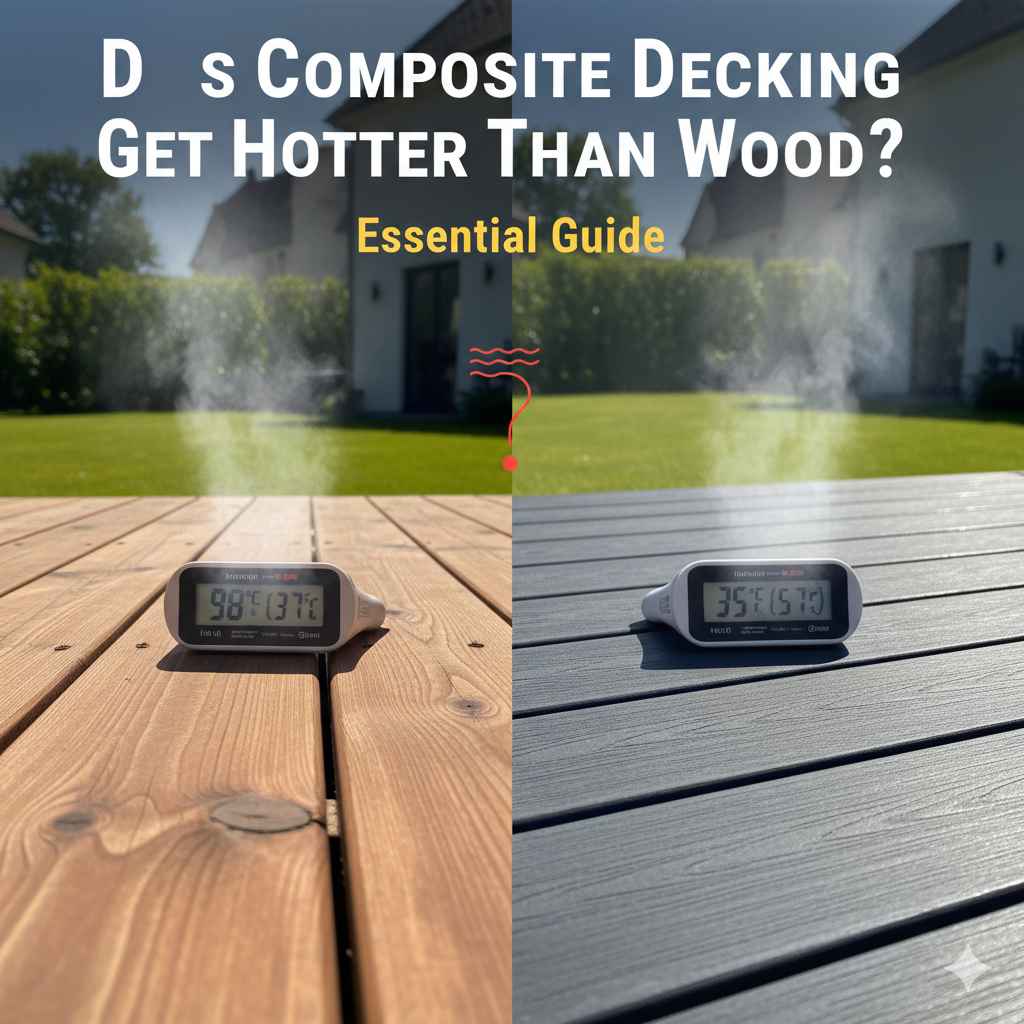
Does Composite Decking Get Hotter Than Wood? Essential Guide
Generally, composite decking can get hotter than traditional wood decking, especially darker colors. However, advancements in composite technology have led to cooler options, and proper placement and color choice significantly impact surface temperature. Understanding these factors helps you make the best choice for your comfortable outdoor space.
Welcome to the workshop, fellow DIYers! Today, we’re tackling a question that pops up often when people think about upgrading their outdoor living areas: Does composite decking get hotter than wood? It’s a practical concern, especially if you’re picturing bare feet on scorching surfaces during sunny summer days. We’ve all been there, right? Stepping onto a hot deck can be an unwelcome surprise. But don’t worry, we’ll break down exactly what makes decks hot, how composite and wood compare, and what you can do to keep your deck cool and comfortable for everyone. Let’s get started and make sure your deck is a place you’ll love spending time on, no matter the weather!
Understanding Deck Surface Temperatures
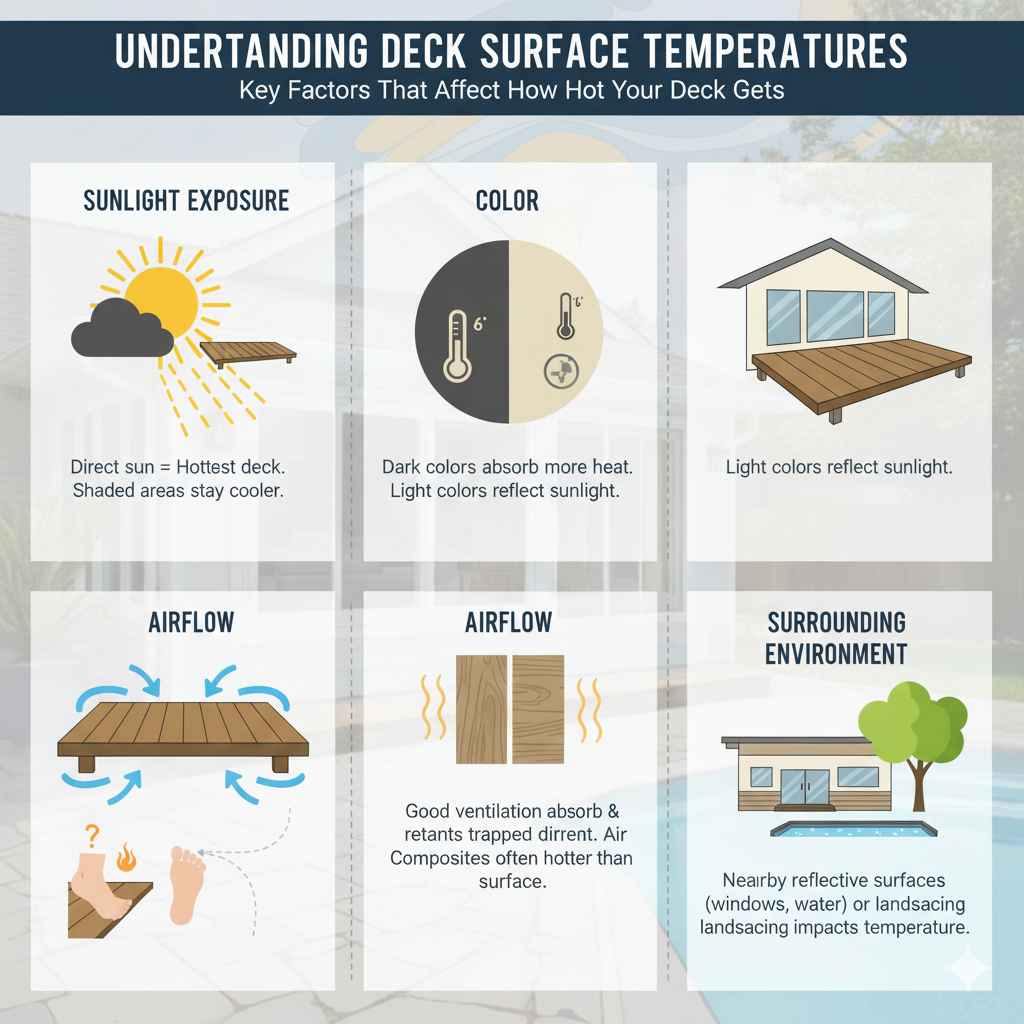
Before we dive into the composite vs. wood debate, let’s quickly understand what affects how hot any deck surface gets. It’s not just about the material itself, but a few key players contribute significantly:
- Sunlight Exposure: This is the biggest factor. How much direct sun does your deck get throughout the day? A shaded deck will naturally stay cooler than one bathed in sunlight for hours.
- Color: Darker colors absorb more solar radiation (sunlight) than lighter colors. Think about wearing a black shirt versus a white shirt on a hot day – the black shirt gets much hotter. This applies to your deck too!
- Airflow: Good ventilation around and under the deck allows hot air to escape. If air gets trapped, the deck can retain heat more easily.
- Material Properties: Different materials absorb and retain heat differently. Some materials are better at reflecting sunlight, while others absorb it and then radiate it back.
- Surrounding Environment: Factors like nearby reflective surfaces (walls, windows, pools) or dense landscaping can influence the temperature.
Keeping these in mind helps us evaluate how composite and wood decks perform under the sun.
Composite Decking vs. Wood Decking: The Heat Factor
This is the big question! Let’s compare how composite and traditional wood decking generally fare when it comes to getting hot under the sun.
What is Composite Decking?
Composite decking is a popular alternative to traditional wood. It’s typically made from a blend of recycled plastic (like polyethylene, polypropylene, or PVC) and wood fibers (sawdust or wood flour). This mixture is then formed into planks that mimic the look of wood but offer different properties in terms of durability, maintenance, and, yes, heat retention.
What is Wood Decking?
Wood decking refers to decks built from natural lumber. Common types include pressure-treated pine (the most budget-friendly option), cedar, redwood, and tropical hardwoods like ipe and teak. Each natural wood has unique characteristics regarding durability, resistance to rot and insects, and how it responds to heat.
Does Composite Get Hotter Than Wood? The General Answer
Yes, in many traditional formulations, composite decking can indeed get hotter than wood decking, especially when comparing darker colors of composite to lighter or naturally colored wood.
Here’s why:
- Material Composition: The plastic components in older or standard composite formulas tend to absorb and retain heat more readily than natural wood fibers. Wood naturally has some insulating properties.
- Color Absorption: As mentioned earlier, dark colors absorb more heat. Many popular composite decking colors are deep browns, grays, or even blacks, which are excellent at soaking up solar energy.
- Surface Finish: The smooth, non-porous surface of some composites can contribute to heat absorption and slow down heat dissipation compared to the grain and natural texture of wood.
However, this isn’t the whole story! The decking industry has made significant strides. Newer generations of composite decking are engineered with advanced technology to combat heat buildup.
Newer Composite Technologies and Heat Reduction
The initial perception of composite decking being a “hot” surface led manufacturers to innovate. Today, you’ll find composite products designed to stay cooler. These often fall into two main categories:
- Enhanced Capstock Composite Decking: This is the most common type of advanced composite. It features a thick outer shell, or “cap,” made of durable, high-performance polymers. This cap is bonded to a core of recycled wood and plastic. The newer capping materials are engineered to be more reflective and resistant to heat absorption. They often incorporate advanced UV inhibitors and specialized pigments.
- Cool-Touch Technology Composites: Some manufacturers explicitly market their composite lines with “cool-touch” or “heat-dissipating” technology. These products use specific pigment technologies and core formulations that reflect more solar radiation. They are specifically designed to reduce surface temperature compared to standard composites.
When shopping for composite decking, look for these advanced features. They make a noticeable difference.
Factors That Affect Heat (Beyond Material)
It’s crucial to remember that even the “coolest” composite or wood can get warm in the wrong conditions. Let’s revisit those other critical factors:
Color Matters – A Lot!
This is perhaps the most impactful factor after direct sunlight. Lighter colors reflect more sunlight, keeping surfaces cooler. This applies to both wood and composite.
- Wood: Natural cedar or redwood boards can be quite light. Pressure-treated wood might be greenish or brown and, depending on its natural hue, can absorb less heat than dark composites.
- Composite: Lighter tans, grays, and whites in composite decking will significantly outperform darker shades (like deep charcoal or espresso) in terms of staying cool.
A study from the U.S. Forest Products Laboratory, a branch of the U.S. Department of Agriculture, highlights how wood properties and treatments can influence thermal performance. While their research often focuses on wood’s natural properties, it underscores the importance of material characteristics impacting heat absorption (Source: USDA Forest Products Laboratory).
Installation and Airflow
How your deck is built plays a role. Proper spacing between boards and adequate clearance between the deck and the ground allow air to circulate. This is like a natural ventilation system for your deck.
- Board Spacing: Small gaps (usually 1/8 inch) between composite or wood deck boards allow heat to dissipate upwards and outwards.
- Under-Deck Ventilation: A deck built with several feet of clearance off the ground will have better airflow underneath than a deck built very low to the ground. Allowing air to move freely under the deck helps prevent heat buildup.
Shade Solutions
The easiest way to combat a hot deck is to provide shade. Even partial shade can make a big difference in surface temperature throughout the day.
- Pergolas
- Umbrellas
- Sails
- Mature trees
- Covered porches or overhangs
Comparing Temperature Performance: Tables and Data
While exact temperature readings can vary wildly based on the specific hour, day, and location, it’s helpful to see a general comparison. Keep in mind these are typical ranges and not absolute guarantees. Manufacturers of advanced composite decking often provide their own comparative data, which is worth checking.
Typical Surface Temperature Ranges (Under Direct Sun)
The following table provides a general idea of how different decking materials might perform under identical sunny conditions. Actual temperatures can fluctuate by 10-20°F or more.
| Decking Material | Typical Color Range | General Surface Temperature (Fahrenheit) | Notes |
|---|---|---|---|
| Standard Composite | Dark Brown, Gray, Black | 140°F – 175°F+ | Can become very hot. Absorbs significant solar radiation. |
| Standard Composite | Lighter Tan, Beige | 130°F – 160°F | Slightly cooler than dark composites, but still can be warm. |
| Advanced/Cool-Touch Composite | Various (including darker shades) | 120°F – 145°F | Engineered to reflect more solar rays and stay cooler. |
| Pressure-Treated Wood | Light Green to Brown | 125°F – 150°F | Heat tolerance varies with wood type and finish. Can splinter. |
| Cedar/Redwood | Reddish-Brown to Tan | 120°F – 145°F | Natural insulating properties, generally cooler than standard composites. |
| Hardwood (e.g., Ipe) | Deep Brown | 135°F – 165°F | Dense hardwoods can absorb and retain heat. |
This table shows that while standard composites often register higher temperatures, advanced composites are closing the gap with wood. Lighter colors, regardless of material, are the coolest.
Pros and Cons: Heat Perspective
Let’s summarize the heat-related pros and cons for each material type.
Composite Decking (General, including Standard & Advanced)
- Pros:
- Advanced versions are engineered to be cooler.
- Consistent color and low maintenance.
- Resistant to fading (though darker colors still absorb heat).
- Doesn’t splinter or warp as easily as wood.
- Often made from recycled materials.
- Cons:
- Standard composites can get significantly hotter than wood.
- Darker colors are major heat absorbers.
- Can be more expensive upfront than basic wood.
- Scratching can reveal a different color underneath on some older versions.
Wood Decking (Pressure-Treated, Cedar, Redwood, Hardwood)
- Pros:
- Generally cooler than standard dark composites.
- Natural appeal and aesthetic.
- Can be lighter in color, reflecting more sun.
- Often more affordable for basic types (like pressure-treated).
- Easier to repair or replace individual boards.
- Cons:
- Requires regular sealing and staining to protect from elements and maintain color.
- Prone to warping, cracking, and splintering if not maintained.
- Can be susceptible to rot and insect damage.
- Heavy maintenance to keep it looking good and performing well.
Choosing the Right Decking: Tips for a Cooler Experience
When selecting your decking material, keep these tips in mind to ensure a comfortable outdoor space:
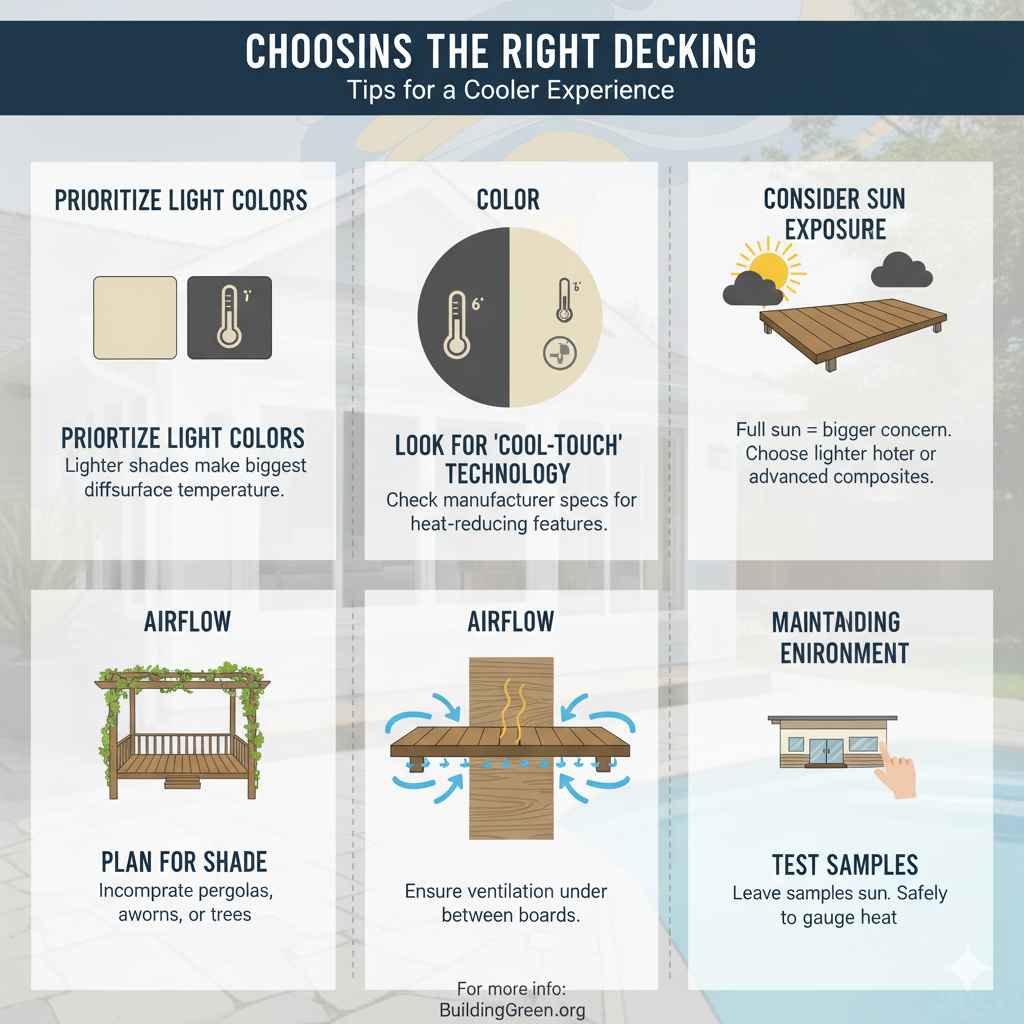
- Prioritize Light Colors: Regardless of whether you choose wood or composite, opting for lighter shades will make the biggest difference in surface temperature.
- Look for “Cool-Touch” Technology: If going with composite, specifically seek out brands and product lines that advertise heat-reducing features. Check manufacturer specifications for comparative temperature data.
- Consider Your Sun Exposure: If your deck will be in full, intense sun for most of the day, heat is a bigger concern. This might sway you towards lighter materials or advanced composites.
- Plan for Shade: Incorporate pergolas, awnings, or strategically placed trees during the design phase. Shade is your best friend for a cooler deck.
- Maintain Good Airflow: Ensure your deck design allows for ample ventilation underneath and between boards. Follow manufacturer guidelines for proper spacing.
- Test Samples: If possible, get samples of different decking materials and leave them in direct sunlight for a few hours. Carefully touch them (with caution!) to gauge the heat difference.
For homeowners in hotter climates, or those who plan on spending a lot of time barefoot on their deck, these considerations are paramount. Websites like BuildingGreen provide valuable resources on sustainable building materials, including options that perform well in various environmental conditions.
Frequently Asked Questions (FAQ)
Let’s answer some common questions beginners might have about deck temperatures.
Q1: Will my dark composite deck be too hot to walk on in the summer?
A: Possibly. Darker, standard composite decks can get very hot and might be uncomfortable or even painful to walk on barefoot during peak sun hours. Advanced composites with cool-touch technology or lighter colors are better options for barefoot comfort.
Q2: Is there anything I can do to cool down a hot composite deck?
A: Yes! Watering down a hot deck can offer temporary relief. Installing shade structures like pergolas or awnings, planting trees, or using large umbrellas will provide long-term cooling. Ensure good airflow under the deck too.
Q3: How does the wood type affect how hot a wood deck gets?
A: Lighter-colored woods like cedar or redwood tend to stay cooler than darker hardwoods or even some pressure-treated woods. The density of the wood also plays a role; denser woods might absorb more heat.
Q4: Are composite decks more slippery when wet and hot than wood decks?
A: Generally, both can become slippery when wet. Heat alone doesn’t typically make them more slippery, but any moisture combined with heat can reduce traction on both materials. Some composite decks have enhanced surface textures for better grip.
Q5: If I choose a light-colored composite deck, will it still feel as hot as wood?
A: A light-colored composite, especially one with advanced cool-touch technology, will likely feel much cooler than a dark composite and can be comparable to, or even cooler than, many wood options under direct sun.
Q6: Do warranties cover deck temperature issues?
A: Decking warranties typically cover material defects like cracking, splitting, or significant fading. They do not usually cover surface temperature, as this is influenced by environmental factors and installation. Always check the specific warranty details from the manufacturer.
Q7: Can I stain a composite deck to make it cooler?
A: No, you cannot stain composite decking in the same way you stain wood. Stains or paints would not adhere well to the plastic-rich surface and would likely peel or chip. If you want to change the color, you would typically need to replace the boards. For heat management, focus on the original color and material choice.
Conclusion
So, to circle back to our main question: Does composite decking get hotter than wood? The answer is nuanced. Historically, and with standard formulations, yes, especially darker colors. Composite decking, with its plastic components and darker hues, could absorb and retain more heat than many natural wood options. This led to the common perception of composites being “hot decks.”
However, the decking landscape has evolved considerably. Modern, high-quality composite decking, particularly those with advanced capstock technology and “cool-touch” features, are engineered to significantly mitigate heat absorption. When comparing these advanced composites to lighter-colored woods like cedar or redwood, the temperature difference can be minimal, and sometimes even in favor of the composite.
Your best bet for a comfortable deck, regardless of material, is to choose lighter colors, ensure good airflow, and consider incorporating shade solutions. If you love the low maintenance of composite but are concerned about heat, invest in the newer, cooler technologies. If natural beauty is your priority and you don’t mind a bit more upkeep, well-maintained wood can offer a wonderfully cool surface, especially in lighter tones. By understanding these factors, you’re well-equipped to design an outdoor oasis that’s both beautiful and enjoyable, from your very first step onto it.