Does Poison Oak Grow on Trees or Ground
Many people wonder Does Poison Oak Grow on Trees or Ground? It can be a tricky question for folks who are new to identifying plants, especially when you’re just trying to enjoy the outdoors safely. Sometimes it pops up low to the ground, and other times it seems to climb up!
Don’t worry, we’ll clear this up with simple steps so you can tell the difference and stay itch-free. Let’s figure out where this plant likes to hang out.
Poison Oak Plant Characteristics
Understanding poison oak starts with knowing what it looks like. It’s a plant that can cause a really uncomfortable rash if you touch it. This rash happens because of a special oil in the plant called urushiol.
Lots of people get this rash, which makes learning to identify poison oak very important for anyone spending time outside, whether in forests, parks, or even their backyard. Knowing its common forms helps a lot.
Leaf Appearance and Arrangement
Poison oak leaves are its most famous feature, and they have a very distinct look. Each leaf stem has three leaflets. This “leaves of three, let it be” rhyme is a great way to remember it.
The leaflets are not always smooth-edged; they can be lobed, like an oak leaf, or they can have smooth edges. The color of the leaves changes with the seasons, often being shiny green in the summer and turning shades of yellow, orange, or red in the fall. In winter, the plant might lose its leaves, making it harder to spot.
The arrangement of these leaflets is also key. They grow in a compound leaf structure, meaning several leaflets make up one whole leaf. The middle leaflet usually has a longer stem than the two side leaflets.
This pattern helps distinguish it from other plants that might have three leaves but in a different arrangement. Learning to recognize this three-leaflet pattern consistently is a top priority for avoiding contact.
The Urushiol Oil
The cause of the infamous rash is an oily substance called urushiol. This oil is found in all parts of the poison oak plant – the leaves, stems, and roots. It’s clear or slightly white when it first comes out of the plant.
Once it’s exposed to the air, it turns black and waxy. Urushiol is very sticky and can easily transfer from the plant to your skin, clothing, tools, or even pets. Even dead poison oak plants can still contain urushiol that can cause a reaction.
Washing contaminated items or skin promptly after contact is critical.
Seasonal Changes and Identification
Poison oak looks different throughout the year. In spring, new leaves emerge, often with a reddish tint. During summer, the leaves are typically a vibrant, sometimes glossy, green.
As fall arrives, the leaves can turn beautiful shades of yellow, orange, and red, which can be misleading if you’re only used to seeing it green. In colder climates, poison oak is deciduous, meaning it loses its leaves in the fall. This can make it look like dead sticks in the winter.
However, the stems and roots still contain urushiol, so caution is needed year-round. Knowing these seasonal changes helps in identification, even when it’s not in full leaf.
Growth Habits of Poison Oak
Now, let’s get to the main question: Does Poison Oak Grow on Trees or Ground? The answer is that it can do both, and it can even grow in between. This flexibility is one reason it can be found in so many different places.
It’s not limited to just one type of environment. Its ability to adapt its growth form helps it thrive.
Poison Oak as a Ground Cover
Very often, poison oak is seen growing as a low-growing shrub or ground cover. It spreads along the ground, forming dense patches. This is especially common in open fields, along the edges of forests, or in disturbed areas where it can spread easily.
In this form, it might reach just a few inches to a couple of feet high. This ground-hugging habit means you might brush against it easily when walking through tall grass or underbrush. It’s in this form that many people accidentally come into contact with it.
When poison oak grows low to the ground, it often looks like a small shrub. It can be hard to spot among other plants, especially if it hasn’t leafed out yet. The stems can be woody and may sprawl out in many directions.
This makes it important to watch where you step and place your hands, especially in areas where you know poison oak is common. Even a small plant can transfer enough urushiol to cause a significant rash.
Poison Oak Climbing Tendencies
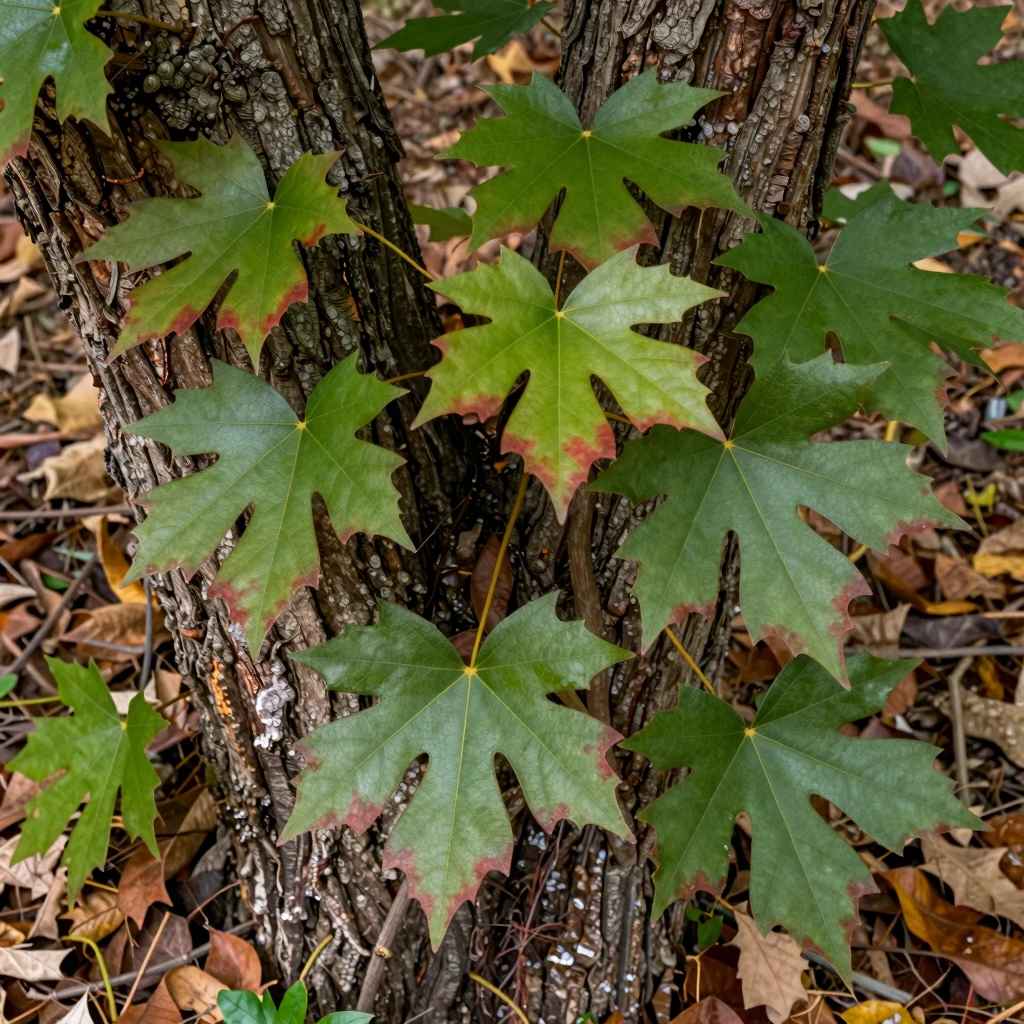
While it’s often a ground plant, poison oak also has a climbing habit. It can grow up trees, walls, fences, or any sturdy structure it can find. When it climbs, it often develops thick, hairy-looking stems that can be several inches in diameter on older plants.
These aerial stems are covered in tiny rootlets, called adventitious roots, which help it cling to surfaces. It’s this climbing form that can lead people to mistakenly think it’s a vine growing on a tree.
The urushiol is present in these climbing stems too, so touching them can cause a rash. In fact, climbing poison oak can be more dangerous because the plant might be higher up, and you might not expect to encounter it in such a location. The leaves of climbing poison oak are often larger and more spread out than those of ground-covering plants.
This climbing ability allows it to reach sunlight in shaded areas by using larger plants for support. This is a crucial part of understanding the full picture of how poison oak grows.
Intermediary Growth Forms
It’s also important to note that poison oak doesn’t strictly stick to being just on the ground or just climbing. You can find it growing in transition zones. For example, it might start as a ground cover and then begin to creep up the base of a tree or a rock.
Or, a climbing vine might have branches that droop down and spread out on the ground. This mixed growth pattern adds to the confusion for many people trying to identify it.
This versatility means that when you’re in an area where poison oak is known to grow, you need to be aware of all its potential forms. Don’t assume it’s only going to be at your feet. Keep an eye out for it on tree trunks, along fences, and as a low shrub in open areas.
The plant’s ability to adapt its shape is a survival advantage for it and a challenge for us when trying to avoid it. This adaptability is key to its widespread presence.
Regions Where Poison Oak Thrives
Poison oak isn’t found everywhere. Its preferred habitats are specific, and knowing these regions can help you anticipate when you might encounter it. It generally prefers certain types of climates and soils, which influences where it grows most commonly.
Understanding its geographical distribution is a practical step in avoiding it.
Western United States and Canada
In the western United States and Canada, poison oak (Toxicodendron diversilobum) is very common. It thrives in a variety of habitats, including forests, woodlands, chaparral, coastal areas, and even urban and suburban landscapes. It’s particularly prevalent in California, Oregon, Washington, and parts of British Columbia.
Here, it can be found as both a shrubby ground cover and a climbing plant on trees and other structures. The mild, wet winters and dry summers in these regions are ideal for its growth. Many hikers and outdoor enthusiasts in this area learn quickly to identify and avoid it.
Southeastern United States
In the southeastern United States, a different species, Atlantic poison oak (Toxicodendron pubescens), is found. This variety typically grows as a low, shrubby plant, rarely climbing. It prefers sandy soils and open, sunny areas like fields, pastures, and the edges of pine forests.
While it doesn’t climb like its western cousin, it can still form dense thickets that are easy to stumble into. Its presence in states like Florida, Georgia, South Carolina, North Carolina, and Virginia means that people in these areas also need to be aware of it. This species is a significant cause of allergic contact dermatitis in its native range.
The statistics show that poison oak is a widespread concern. A 2015 study published in the Journal of the American Academy of Dermatology indicated that over 85% of people are sensitive to urushiol. This means that for most of the population, encountering poison oak can lead to an allergic reaction.
The prevalence in both coastal and inland areas, as well as varied terrains, contributes to this high number of exposures. The plant’s ability to grow in both forested and open environments means that hikers, gardeners, and even people in urban parks face a risk.
Identifying Poison Oak Safely
The best way to deal with poison oak is to identify it and avoid touching it. This requires careful observation and knowing what to look for, even when the plant is not at its most recognizable. The goal is always prevention to avoid the itchy rash that can last for weeks.
“Leaves of Three Let It Be” Revisited
The popular rhyme “Leaves of three let it be” is a fundamental rule for identifying poison oak, poison ivy, and poison sumac. These plants all share the characteristic of having three leaflets per leaf stem. However, it’s crucial to remember that this is a general guideline, not an absolute rule.
Many other harmless plants also have three leaflets, and some poison oak leaves might appear slightly different depending on conditions. But as a first step, if you see a plant with a leaf stalk holding three leaflets, it’s wise to be cautious and assume it might be poison oak until proven otherwise.
The leaflets themselves can vary in shape. They are often ovate or elliptical, but their edges can be smooth, toothed, or lobed. The terminal leaflet, the one in the middle, typically has a longer stalk than the two lateral leaflets.
The leaf surface is usually smooth and can be somewhat glossy, especially in younger leaves. This detail about the middle leaflet’s stalk is a key differentiator. Always inspect the entire leaf structure carefully.
Many mistaken identities occur because people only look at the number of leaves and not their shape or arrangement.
Distinguishing from Similar Plants
It’s important to know that not every plant with three leaves is poison oak. For instance, some types of clover have three leaves. However, clover leaves are typically rounded and have a distinct notch at the tip, and they don’t have the lobed edges often seen in poison oak.
Another plant that can be confused is Virginia creeper, which sometimes has three leaves, but it more commonly has five leaflets arranged in a hand-like fashion. Box elder saplings can also have three leaflets, but their leaflets are usually opposite each other on the stem, not in a cluster with a longer central one.
Visual aids like field guides or reputable plant identification apps can be very helpful in distinguishing poison oak from look-alike plants. Compare images carefully, paying attention to the leaflet shape, margin, and arrangement, as well as the overall growth habit of the plant. Many resources show side-by-side comparisons of poison oak with common plants it’s often confused with.
Being able to differentiate it from harmless species reduces unnecessary fear while still ensuring you’re vigilant against the real threat.
What to Do If You Touch Poison Oak
If you suspect you have touched poison oak, the most important thing is to act quickly. Urushiol oil can start to bind to your skin within minutes. Wash the affected area immediately with soap and cool water.
A detergent soap is often recommended as it can help break down the oil. Rinse thoroughly. If you have rubbing alcohol or a specialized poison ivy/oak wash available, use that as well.
Wash any clothing, tools, or gear that may have come into contact with the plant. Urushiol can remain active on surfaces for a long time.
After washing, keep the area clean and dry. Avoid scratching, as this can spread the oil and lead to infection. If a rash develops, over-the-counter treatments like calamine lotion or hydrocortisone cream can help relieve itching.
For severe reactions, consult a doctor. It’s also important to wash your pet’s fur if they have been through an area with poison oak, as they can carry the oil on their coats and transfer it to you. Prompt action greatly reduces the severity of the rash.
Practical Scenarios and Prevention
Knowing the theory behind poison oak is one thing, but applying that knowledge in real-life situations is where it truly matters. Prevention is the most effective strategy. Let’s look at how you might encounter poison oak and how to best protect yourself.
Scenario 1 Hiking Trip
Imagine you are on a hike in a wooded area in California. The trail is well-maintained, but there are areas where the forest opens up to sunny clearings, and the edges of the path are overgrown. You’re wearing shorts and t-shirts.
As you walk, you brush against some leafy plants near the trail. You notice they have three leaflets per stem. Even though they look a bit different from the pictures you saw, you recall the “leaves of three” rule.
Because you’re unsure and it matches the description of having three leaflets, you immediately stop. You do not touch the plants further. You carefully step away from the plants, trying not to brush against anything else.
You are wearing long socks and tuck your pants into your socks as a precaution. You make a mental note of the area so you can be extra careful on your way back. This proactive approach significantly lowers your risk of exposure, even if the plants weren’t poison oak.
Scenario 2 Gardening in Your Backyard
You’re in your garden, weeding. You’re kneeling down and reaching into some dense bushes. You’re wearing gardening gloves, but your arms are bare.
You pull out what you think is a weed, and it has three leaflets and looks a bit scraggly. You toss it into your wheelbarrow and continue gardening. Later, you notice an itchy red rash developing on your arm.
This scenario highlights how easy it is to come into contact with poison oak, even in your own yard. The key learning point here is that your gardening gloves might not have been enough if they were old or if the oil transferred to the outside of them. Also, if you touched your arms or face after touching the plant or contaminated gloves, you could get a rash.
To prevent this next time, always wear long sleeves and pants when gardening, and wash your gloves and tools thoroughly after gardening in an area where poison oak might be present. Consider wearing disposable gloves for weeding in suspected areas.
Prevention Strategies for Outdoors
When heading outdoors, especially in areas known for poison oak, it’s best to be prepared. Wear long sleeves, long pants, closed-toe shoes, and gloves. This physical barrier is your first line of defense against the urushiol oil.
Tuck your pants into your socks and your shirt into your pants to prevent the plant from touching your skin. Choose trails that are known to be clear of poison oak if possible.
- Wear protective clothing. Long sleeves, long pants, socks, and closed-toe shoes act as a physical barrier. Tucking pants into socks and shirts into pants adds an extra layer of protection.
- Use barrier creams. Some products are available that can help block the urushiol oil from penetrating the skin. These creams need to be applied before going out and reapplied periodically, especially if sweating heavily.
- Stay on marked trails. Poison oak often grows along the edges of paths or in unmaintained areas. Sticking to cleared trails reduces your chances of accidental contact.
- Identify and avoid. Learn to recognize poison oak in all its forms. If you see it, give it a wide berth and warn others.
- Wash thoroughly after exposure. If you think you might have touched poison oak, wash your skin immediately with soap and water. Also, clean any clothing or gear that may have been contaminated.
Prevention Strategies for Homeowners
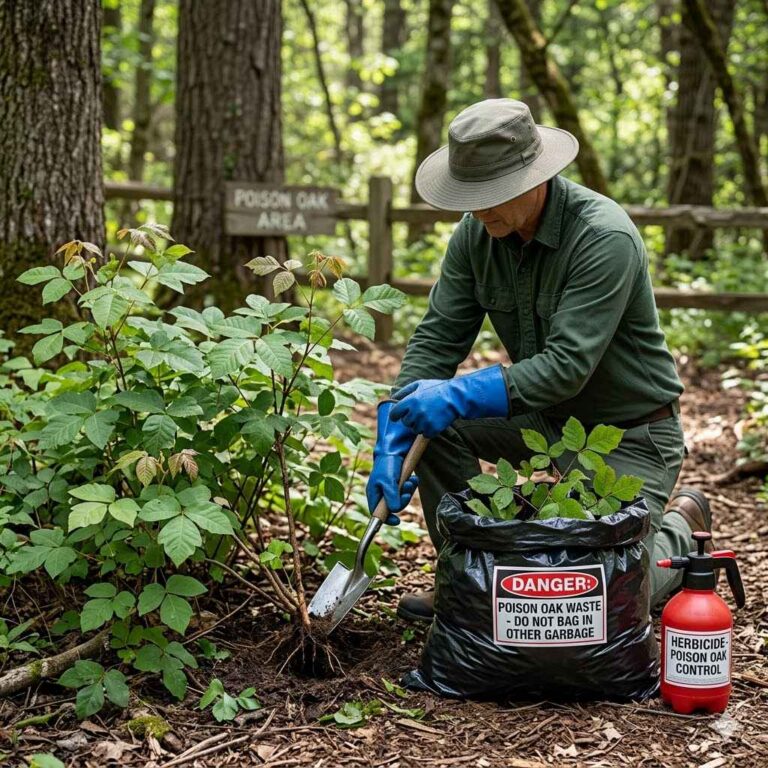
If poison oak is growing on your property, removal might be necessary. However, this should be done with extreme caution. When removing poison oak, wear protective clothing, including gloves, long sleeves, long pants, and eye protection.
It’s often best to use a herbicide designed for poison oak and poison ivy, following the product instructions carefully. Alternatively, you can dig up the plant, ensuring you get as much of the root as possible. Dispose of the plant material properly by bagging it and taking it to a waste disposal facility that accepts such items.
Never burn poison oak, as the smoke can carry urushiol and cause serious respiratory problems.
Does Poison Oak Grow on Trees or Ground Facts
To summarize the core question: Does Poison Oak Grow on Trees or Ground? It’s both! Poison oak can grow as a low shrub along the ground and also as a climbing vine that attaches to trees and other vertical surfaces.
Its ability to adapt its growth habit is a key characteristic.
| Growth Habit | Description | Common Locations |
|---|---|---|
| Ground Cover | Low-growing shrub, spreads horizontally | Open fields, forest edges, disturbed areas |
| Climbing Vine | Grows up trees, fences, walls using aerial roots | Forests, shaded areas with support structures |
| Mixed Habit | Combines ground spreading with climbing tendencies | Transition zones between open areas and wooded regions |
The urushiol oil is present in all parts of the plant, regardless of whether it’s growing on the ground or climbing. This oil is what causes the itchy rash. Awareness of its dual growth habit is crucial for effective identification and prevention.
People often encounter it in its ground-hugging form, but its climbing ability means it can be found in unexpected places too.
Frequently Asked Questions
Question: Is poison oak the same as poison ivy?
Answer: No, poison oak and poison ivy are different plants, but they are closely related and both contain urushiol, the oil that causes an allergic rash. Poison ivy typically has five leaflets per leaf stem, while poison oak usually has three. Their leaf shapes also differ, with poison oak leaves often resembling oak leaves.
Question: Can I get a rash from touching poison oak even in winter?
Answer: Yes, you can. Poison oak is deciduous and loses its leaves in winter, but the urushiol oil remains active on the stems and roots. So, touching the bare plant in winter can still cause a rash.
Question: What is the best way to remove poison oak from my yard?
Answer: The safest way is to use a specialized herbicide carefully following instructions. If you choose to dig it up, wear protective gear and get the entire root system. Never burn poison oak, as the smoke can cause severe respiratory reactions.
Question: Can my pets get poison oak?
Answer: Your pets cannot get the rash themselves, but they can carry the urushiol oil on their fur. If they brush against poison oak and then you pet them, you can get the rash from them.
Question: How long does the poison oak rash last?
Answer: The rash typically lasts for one to three weeks. The duration depends on the severity of the exposure and your individual sensitivity to urushiol. Scratching can prolong the healing process and lead to infection.
Summary
Poison oak adapts by growing both on the ground as a shrub and as a vine climbing trees. This means you need to be aware of it at your feet and up high. Always look for the tell-tale three leaflets and remember to wear protective clothing when outdoors.
Proper washing after potential contact is your best defense against the itchy rash.