Is Red Oak Good for Furniture? Durability, Cost and Where It Falls Short
Yes, red oak is good for furniture — it’s hard enough (1,290 lbf on the Janka scale) for tables, chairs, and cabinets that see daily use, it’s usually 20–30% cheaper than white oak, and it takes stain evenly. Its one real weakness: red oak’s open pore structure reacts with iron and water to form black stains, so it’s a poor choice near damp countertops or for pieces that will sit outdoors.
Most articles on this topic repeat the same three adjectives — durable, beautiful, affordable — without explaining what actually makes red oak behave differently from white oak or maple on a workbench. Here’s the physical reasoning behind each claim, plus the drawback that gets left out.
Red Oak’s Hardness, In Actual Numbers
Best For Protecting Red Oak’s Finish
 |
Howard Feed-N-Wax Wood Polish & Conditioner, 16 oz – $11.48 A beeswax-and-orange-oil conditioner that feeds red oak’s open grain without leaving standing moisture on the surface.
|
“Durable” means different things depending on the wood you’re comparing against. The Janka hardness test measures the force needed to embed an 11.28mm steel ball halfway into a wood sample — higher numbers resist dents and scratches better:
| Wood | Janka Hardness (lbf) | How It Compares to Red Oak |
|---|---|---|
| Hard Maple | 1,450 | ~12% harder, smoother closed grain |
| White Oak | 1,360 | ~5% harder, more water-resistant |
| Red Oak | 1,290 | — |
| Black Walnut | 1,010 | ~22% softer, darker natural color |
| Eastern White Pine | 380 | ~70% softer, dents easily |
Red oak sits in the middle of the common furniture hardwoods — hard enough for dining tables and dressers that get used daily, softer than maple but with a much more visible grain that many people prefer for a traditional look.
The Drawback Most Guides Skip: Tannin and Open Pores
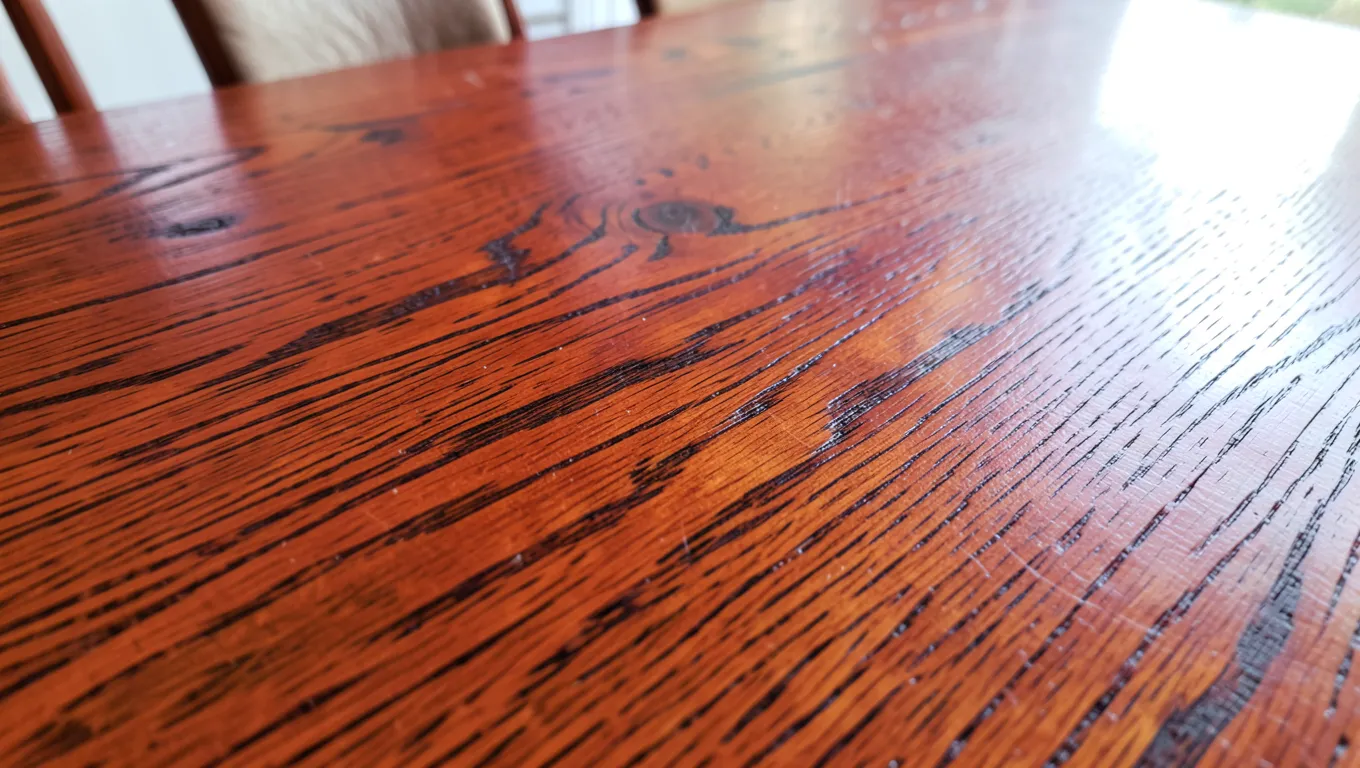
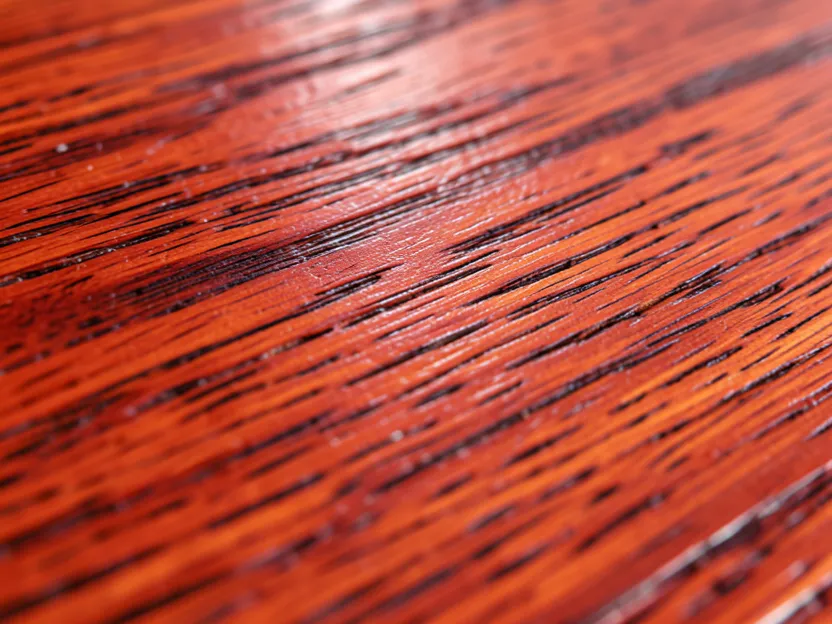
Red oak has open, tubular pores running the length of the grain — you can actually see daylight through a thin cross-section, which is why red oak isn’t used for wine barrels (white oak’s pores are plugged with a substance called tyloses, making it watertight). Two practical consequences follow directly from this:
- Iron + water + tannin = black stains. Red oak is high in tannic acid. If water sits on it and contacts iron (steel wool during finishing, a rusty nail, or even tap water with dissolved iron in some regions), it reacts to form iron acetate — a black or blue-black stain that looks like water damage but is actually a chemical reaction. This is why furniture makers avoid steel wool on red oak and instead use synthetic abrasive pads.
- The open grain telegraphs through paint. If you want a smooth painted finish rather than a stained one, red oak’s pores will show through as a slightly textured surface unless you fill them first with a grain filler. Maple or birch give a smoother painted result with less prep work.
Neither of these is a reason to avoid red oak — they’re reasons to finish it correctly. Seal it fully (including the underside of tabletops, where humidity gets absorbed unevenly), keep it away from standing water, and use a chemical stripper or synthetic pad instead of steel wool if you ever refinish an older piece.
Red Oak vs. White Oak vs. Maple: Which One for What
These three get compared constantly because they’re the most available domestic furniture hardwoods in the U.S. Here’s where each one actually wins:
| Comparison | Winner | Why |
|---|---|---|
| Cost | Red Oak | Typically 20–30% cheaper than white oak per board foot; more widely available domestically |
| Moisture/outdoor resistance | White Oak | Closed pores (tyloses) block water penetration — the reason it’s used for boats and barrels |
| Smooth painted finish | Maple | Tight, closed grain needs little to no grain filler before painting |
| Visible, traditional grain look | Red Oak | Strong ray-fleck and cathedral grain patterns read as classic “oak furniture” |
| Dent resistance | Maple | Highest Janka hardness of the three at 1,450 lbf |
Where Red Oak Belongs — and Where It Doesn’t
Good fits: dining tables, chairs, dressers, bookcases, cabinet frames, and any indoor furniture that gets handled and used daily. Its hardness holds up to normal wear, and its grain takes stain evenly enough to match almost any interior style, from farmhouse to traditional.
Poor fits: outdoor furniture (the open grain absorbs moisture and swells/checks with repeated wet-dry cycles — use white oak, teak, or a weather-rated species instead), kitchen countertops or anywhere it will regularly contact standing water, and projects where you specifically want a glass-smooth painted finish without grain-filling work.
What Red Oak Furniture Actually Costs
Pricing depends heavily on construction (solid wood vs. veneer over plywood) and joinery quality, not just the species:
| Piece | Typical Price Range |
|---|---|
| Dining table (solid red oak) | $400 – $1,200 |
| Dining chair (each) | $80 – $250 |
| Bookshelf | $150 – $700 |
| Kitchen cabinet set (red oak faces) | $3,000 – $10,000+ installed |
Caring for Red Oak Furniture
Dust with a soft, dry cloth; a damp cloth is fine for spills if you dry the surface immediately afterward — don’t let water sit. Use coasters and placemats, since red oak’s open grain makes it more susceptible to water rings than white oak or maple. Refinishing calls for 220-grit sanding and a synthetic abrasive pad rather than steel wool, for the tannin-staining reason explained above. A fresh coat of oil-based polyurethane or a penetrating oil (like Danish oil) every few years keeps the finish protective rather than just decorative.
Frequently Asked Questions
Is red oak durable for furniture?
Yes. At 1,290 lbf on the Janka hardness scale, red oak is hard enough for dining tables, chairs, and cabinets that see daily use. It’s slightly softer than white oak (1,360) and hard maple (1,450), but the difference is minor for typical household use.
What are the benefits of red oak furniture?
Red oak is typically 20–30% cheaper than white oak, takes stain evenly, and has a strong, visible grain that reads as classic “oak furniture.” It’s also widely available at most lumberyards in the U.S., which keeps material and replacement-part costs down.
How does red oak compare to white oak?
Red oak is softer, cheaper, and more porous than white oak. White oak’s pores are naturally plugged with tyloses, making it far more water-resistant — that’s why white oak is used for barrels and outdoor furniture, while red oak’s open grain makes it better suited to indoor pieces.
Can red oak be used for outdoor furniture?
It’s not a good choice. Red oak’s open pore structure absorbs moisture readily, leading to swelling, checking, and rot over repeated wet-dry cycles outdoors. White oak, teak, or a pressure-treated softwood are better choices for anything left outside.
Conclusion
Red oak earns its popularity honestly: it’s hard enough for daily-use furniture, noticeably cheaper than white oak, and its open grain gives it a distinct, classic look that takes stain well. Just keep it away from standing water and iron contact during refinishing, since its tannin content is what causes the black staining that occasionally gets blamed on “bad wood” instead of chemistry.
Sponsored / affiliate links. As an Amazon Associate I earn from qualifying purchases. I may earn additional commission from eligible campaigns.