Hardwood Floor Cracking Noise When Walking: Silent Steps Ahead
If you’re experiencing cracking noise when walking on your hardwood floor, it may be due to loose floorboards rubbing together or against nails or floor joists. To fix this issue, you can try adding a dry lubricant, such as lock lubricant or powdered graphite, into the joints between the floorboards.
Sprinkle the lubricant and then walk back and forth to work it into the cracks. This should help reduce the noise caused by the movement of the loose boards. Additionally, environmental factors such as moisture, humidity, and temperature can contribute to the creaking sound.
If the problem persists, it may be worth consulting a professional for further inspection and repair.
Silencing Your Steps On Hardwood Floors
Eliminate those annoying cracking noises from your hardwood floors by applying a dry lubricant like lock lubricant or powdered graphite into the joints between the floorboards. Work the lubricant into the cracks by walking back and forth with a cloth placed over the boards.
This simple solution can help silence your steps and restore peace to your home.
Identifying The Noise
If you’ve noticed a cracking noise when walking on your hardwood floors, it’s important to identify the source of the sound. Is it coming from a specific area or throughout the entire floor? Determining the location of the noise can help you understand the underlying cause and find an appropriate solution.
Common Causes Of Floor Sounds
There are several common reasons why hardwood floors may make cracking noises when walked upon. Understanding these causes can help you address the issue effectively.
1. Loose Floorboards: Loose floorboards are a common culprit behind cracking noises. Over time, the boards can shift, creating gaps and causing them to rub against each other or against the nails or floor joists.
2. Humidity and Temperature Changes: Wood is a natural material that expands and contracts with changes in humidity and temperature. These fluctuations can lead to the development of gaps between floorboards, resulting in cracking sounds.
3. Moisture Issues: Excess moisture can also contribute to cracking noises in hardwood floors. If the area where the noise occurs is exposed to moisture, such as a cold basement, the wood may absorb the moisture, causing it to swell and create gaps.
4. Subfloor Issues: Problems with the subfloor, such as unevenness or inadequate support, can cause the floorboards to flex and create noise when walked upon.
Now that you’ve identified the noise and its possible causes, it’s time to take action to silence your steps on hardwood floors. Here are some effective solutions:
1. Secure Loose Floorboards: If loose floorboards are the source of the noise, you can fix them by securing them with screws or nails. Ensure that the boards are properly aligned and fastened to prevent movement and rubbing.
2. Address Humidity and Temperature Changes: Maintain a stable indoor environment by controlling humidity and temperature levels. Use a humidifier or dehumidifier to keep the moisture content within the recommended range for hardwood floors.
3. Manage Moisture Issues: If moisture is causing the cracking noises, identify and address the source of the excess moisture. Repair any leaks or improve ventilation to prevent further moisture-related problems.
4. Address Subfloor Problems: If the subfloor is contributing to the noise, consult a professional to assess and repair any issues. They may recommend reinforcing the subfloor or adding additional support.
Remember, it’s important to take proactive measures to address cracking noises in hardwood floors. Ignoring the issue can lead to further damage and potentially costly repairs down the line. By identifying the noise, understanding its causes, and implementing appropriate solutions, you can enjoy silent and comfortable steps on your hardwood floors once again.
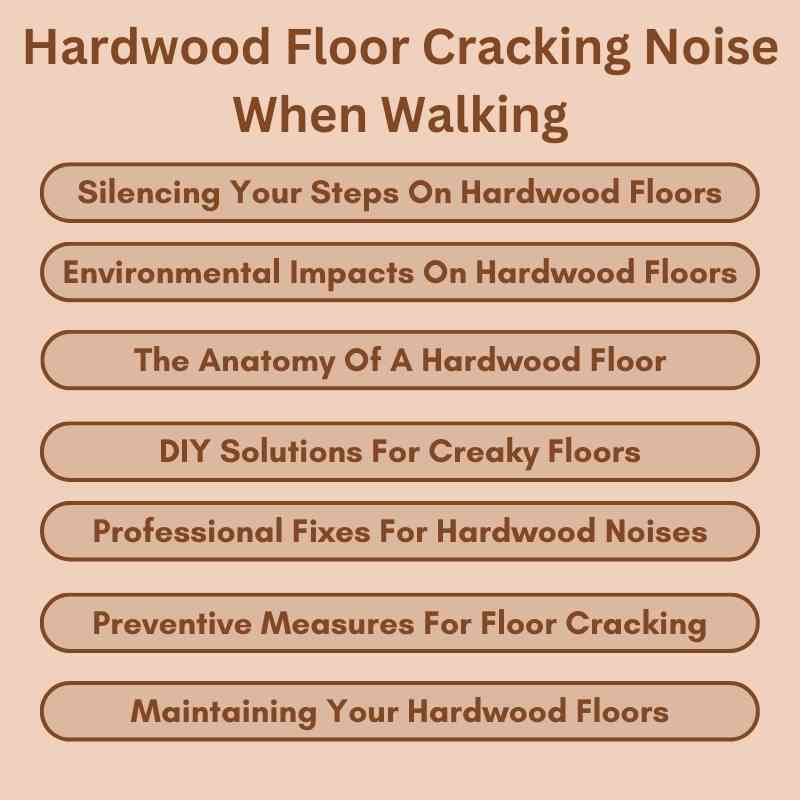
Environmental Impacts On Hardwood Floors
When walking on hardwood floors, it can be frustrating to hear cracking noises. This issue is often caused by loose boards rubbing together or against nails or floor joists. To address the problem, you can add a dry lubricant, such as lock lubricant or powdered graphite, into the cracks between the floorboards to minimize the noise.
Moisture
Excessive moisture in the environment can lead to hardwood floor cracking when walking. High humidity levels, water leaks, or spills can seep into the wood, causing it to swell and contract, eventually leading to cracks and noise.
Humidity
Fluctuations in humidity levels can significantly impact hardwood floors. Changes in humidity can cause the wood to expand and contract, leading to stress on the floorboards and resulting in cracking noises when walked upon.
Temperature
Extreme temperatures, especially in areas such as cold basements, can affect the moisture content in wood, leading to expansion and contraction that can cause cracking sounds when walking on hardwood floors.
The Anatomy Of A Hardwood Floor
When it comes to understanding the intricacies of hardwood floors, it is essential to delve into the anatomy of these beautiful and timeless flooring options. From the composition of the floorboards to the tightness and wood fit, each component plays a crucial role in the overall performance and longevity of the hardwood floor.
Floorboards And Anchor Points
The floorboards of a hardwood floor are the foundational elements that contribute to its structural integrity. These boards are securely anchored to the subfloor, providing stability and support for the entire flooring system. The anchor points, such as nails or screws, play a pivotal role in ensuring that the floorboards remain firmly in place, minimizing the potential for movement and noise.
Tightness And Wood Fit
One of the key factors influencing the occurrence of cracking noise when walking on hardwood floors is the tightness and wood fit. Proper installation and alignment of the floorboards are critical in preventing gaps and movement that can lead to undesirable creaking or popping sounds. When the wood fit is precise, it contributes to a seamless and harmonious flooring surface, minimizing the risk of noise-related issues.
DIY Solutions For Creaky Floors
If you’ve ever been annoyed by the creaking and cracking noises your hardwood floors make when you walk on them, you’re not alone. Fortunately, there are several do-it-yourself solutions that can help alleviate this common issue. By addressing the underlying causes of the noise, you can restore peace and quiet to your home while also prolonging the life of your hardwood floors.
Using Dry Lubricants
When wooden floorboards are causing the noise, add a dry lubricant to the problem area. Sprinkle lock lubricant or powdered graphite into the joints between the floorboards. Then place a cloth over the boards and walk back and forth to work the powdery lubricant down into the cracks.
Powdered Graphite And Baby Powder Tricks
Another effective method is to use powdered graphite or baby powder. Simply sprinkle either of these substances into the cracks and crevices of the noisy floor. The fine particles work their way into the joints, reducing friction and eliminating the creaking sound.
Professional Fixes For Hardwood Noises
Experience bothersome hardwood floor cracking noise when walking? Don’t fret! We have professional fixes for you. Simply add a dry lubricant like lock lubricant or powdered graphite to the problem area by sprinkling it into the joints between the floorboards.
Then, work the powdery lubricant down into the cracks by walking back and forth over a cloth placed on the boards. Say goodbye to those annoying floor noises!
When To Call In The Pros
If you have tried all of the DIY fixes and your hardwood floor still makes noise, it may be time to call in a professional. A flooring specialist can identify the root cause of the problem and provide a long-term solution that will prevent the noise from returning. Additionally, if you have an older hardwood floor that has not been properly maintained, a professional can inspect the floor for damage and recommend repairs to prevent further issues.
Long-term Solutions For Squeaky Floors
While DIY fixes can provide temporary relief, for a long-term solution, you will need to address the root cause of the problem. Here are some long-term solutions for squeaky hardwood floors:
- Fix loose floorboards: Loose floorboards are a common cause of squeaky floors. A professional can secure loose floorboards using screws or nails to prevent them from rubbing together and creating noise.
- Replace damaged boards: If your hardwood floor has damaged boards, they may need to be replaced. A professional can remove the damaged boards and replace them with new ones to restore the integrity of the floor.
- Address moisture issues: Moisture can cause hardwood floors to warp and swell, which can lead to squeaking. A professional can identify and address any moisture issues in your home to prevent further damage to the floor.
- Add support: If your floor joists are not properly supported, they can flex and create noise. A professional can add support to the joists to prevent them from moving and creating noise.
Remember, it’s important to address hardwood floor noise as soon as possible to prevent further damage to your floor and to maintain the value of your home. With the right long-term solution, you can enjoy a quiet and beautiful hardwood floor for years to come.
Preventive Measures For Floor Cracking
To prevent hardwood floor cracking noise when walking, it’s important to address the root cause. Loose boards are often the culprit, so try adding a dry lubricant to the problem area. Sprinkle lock lubricant or powdered graphite into the joints between the boards and walk back and forth to work the lubricant down into the cracks.
This should help reduce the noise and prevent further cracking.
Proper Installation Techniques
The first and most important preventive measure for floor cracking is proper installation techniques. When installing hardwood floors, it is important to ensure that the subfloor is level, clean, and dry. Any unevenness in the subfloor can cause the hardwood floor to crack and make noise when walked on. Additionally, it is important to use the correct type and amount of adhesive to ensure that the hardwood floor is securely attached to the subfloor.
Choosing The Right Materials
Choosing the right type of hardwood flooring is also important in preventing floor cracking. Different types of hardwood have different levels of hardness, and some are more prone to cracking than others. It is important to choose a hardwood that is appropriate for the level of foot traffic in the room where it will be installed. Additionally, it is important to choose the correct size and thickness of flooring boards to prevent cracking.
Other Preventive Measures
Other preventive measures for floor cracking include:
- Keeping the humidity level in the room between 35% and 55% to prevent the hardwood from expanding and contracting too much
- Using furniture pads to prevent scratches and dents in the hardwood
- Regularly cleaning the hardwood with a dust mop or vacuum to prevent dirt and debris from getting stuck in the cracks between boards
- Using rugs or runners in high traffic areas to protect the hardwood from wear and tear
By following these preventive measures, you can ensure that your hardwood floors remain beautiful and free from cracking and noise for years to come.
Maintaining Your Hardwood Floors
Hardwood floors can bring a touch of elegance and warmth to any home. However, over time, they may develop issues such as cracking noises when walked upon. To ensure the longevity and beauty of your hardwood floors, it’s essential to follow proper maintenance practices. By incorporating regular cleaning and care, as well as making seasonal adjustments, you can preserve the quality of your hardwood floors and prevent the occurrence of cracking noises.
Regular Cleaning And Care
Proper cleaning and care are essential for maintaining the integrity of your hardwood floors. Regularly sweeping or vacuuming the floors to remove dirt and debris can prevent scratches and damage that may lead to cracking noises. Additionally, using a pH-neutral hardwood floor cleaner and a slightly damp mop can help keep the floors clean without causing excess moisture, which can contribute to floor noise.
Seasonal Adjustments
Seasonal changes, such as fluctuations in temperature and humidity, can impact hardwood floors and lead to cracking noises. To address this, it’s important to maintain a consistent indoor environment by using a humidifier during dry seasons and ensuring proper ventilation during humid periods. This can help minimize the expansion and contraction of the wood, reducing the likelihood of cracking sounds when walking on the floors.
Advanced Techniques To Quiet Hardwood Floors
When it comes to dealing with a hardwood floor cracking noise when walking, there are advanced techniques that can effectively address this issue. From epoxy and construction glue solutions to underfloor fixes and joist adjustments, these methods can help you achieve a quieter and more pleasant living environment.
Epoxy And Construction Glue Solutions
If you’re dealing with persistent cracking noises in your hardwood floor, using epoxy and construction glue can provide a durable and long-lasting solution. Epoxy can help stabilize loose floorboards, while construction glue can effectively bond the boards to the subfloor, minimizing movement and noise.
Underfloor Fixes And Joist Adjustments
Addressing the underlying causes of hardwood floor noise often involves underfloor fixes and joist adjustments. By securing loose subflooring and making necessary adjustments to the floor joists, you can significantly reduce the occurrence of cracking noises when walking on your hardwood floors.
Frequently Asked Questions
Why Does My Wood Floor Crackle When I Walk On It?
When wooden floorboards crackle when you walk on them, it is usually due to loose boards rubbing together or against a fixing nail or floor joist. To stop the cracking sound, you can add a dry lubricant like lock lubricant or powdered graphite to the problem area.
Sprinkle it into the joints between the floorboards, then walk back and forth to work the lubricant into the cracks.
How Do I Stop My Floor From Cracking Sound?
To stop your floor from making cracking sounds, try adding a dry lubricant to the problem area. Sprinkle lock lubricant or powdered graphite between the floorboards and walk back and forth to work it into the cracks. This will help reduce the friction and eliminate the noise.
Why Do My Floors Make Noise When I Walk?
Your floors may make noise when you walk due to loose boards rubbing together or onto a fixing nail or floor joist, creating a creaking or squeaking noise. To fix this issue, add a dry lubricant to the problem area by sprinkling lock lubricant or powdered graphite into the joints between the floorboards.
Walk back and forth over the cloth to work the lubricant down into the cracks.
Why Does My Floor Sound Like It’s Cracking?
The cracking sound in your floor is likely caused by loose boards rubbing together or against nails or floor joists. To fix it, you can add a dry lubricant, such as lock lubricant or powdered graphite, between the floorboards. Walk back and forth to work the lubricant into the cracks.
Moisture, humidity, and temperature can also contribute to the creaking sound.
Conclusion
Hardwood floor cracking noise when walking can be a frustrating and annoying issue to deal with. However, there are various solutions available to fix this problem such as adding dry lubricant to the problem area or fixing loose boards. It is important to identify the root cause of the noise to determine the most effective solution.
By following these tips, you can ensure a peaceful and quiet environment in your home without any unwanted creaking or popping sounds from your hardwood floors.