How Do Oak Trees Grow: A Complete Guide
Learning how oak trees grow might seem tricky at first. Many people wonder about the whole process from a tiny acorn to a giant tree. It feels like a big mystery sometimes.
But don’t worry! This guide makes it super simple. We will walk through each step together, making it easy to follow.
Get ready to discover how these amazing trees come to be.
Oak trees are truly magnificent. They stand tall for hundreds of years, providing homes for wildlife and shade for us. Understanding how these giants begin their life is fascinating.
It all starts with a simple acorn. This guide aims to demystify the entire process, making it accessible to everyone, from backyard gardeners to curious students. We will explore the seed’s journey, the conditions needed for germination, and the slow but steady growth of a young oak sapling into a mature tree.
This journey involves light, water, nutrients, and time. Oak trees are resilient but require specific environments to thrive.
From Acorn to Sapling
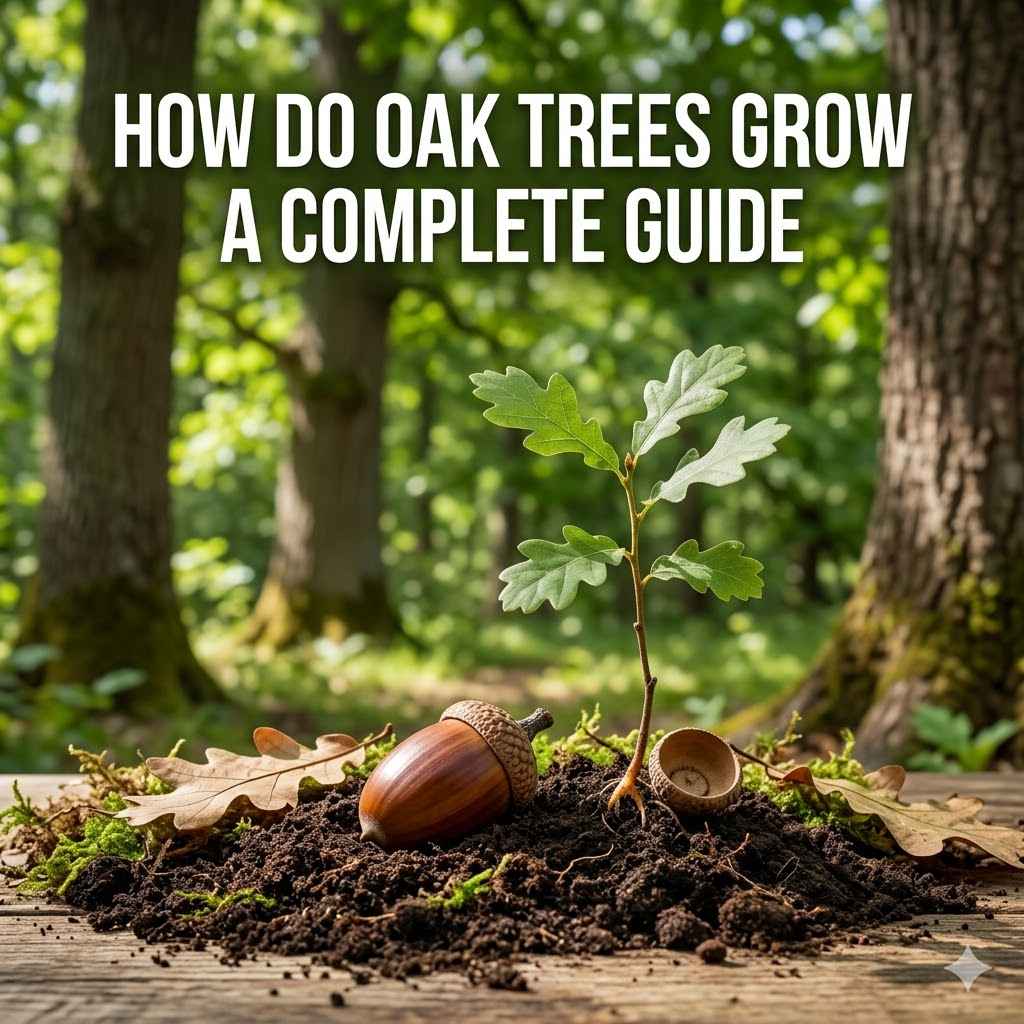
The life of an oak tree begins with an acorn, which is the fruit of the oak tree. These acorns are technically seeds, each containing the potential for a new oak. For an acorn to sprout, it needs to be healthy and find the right spot.
Often, squirrels and other animals bury acorns, forgetting some, which then have a chance to grow. This natural process is key to oak tree reproduction. The hard outer shell protects the embryo inside.
When conditions are right, the shell cracks open, and a root emerges first.
The Acorn’s Journey Begins
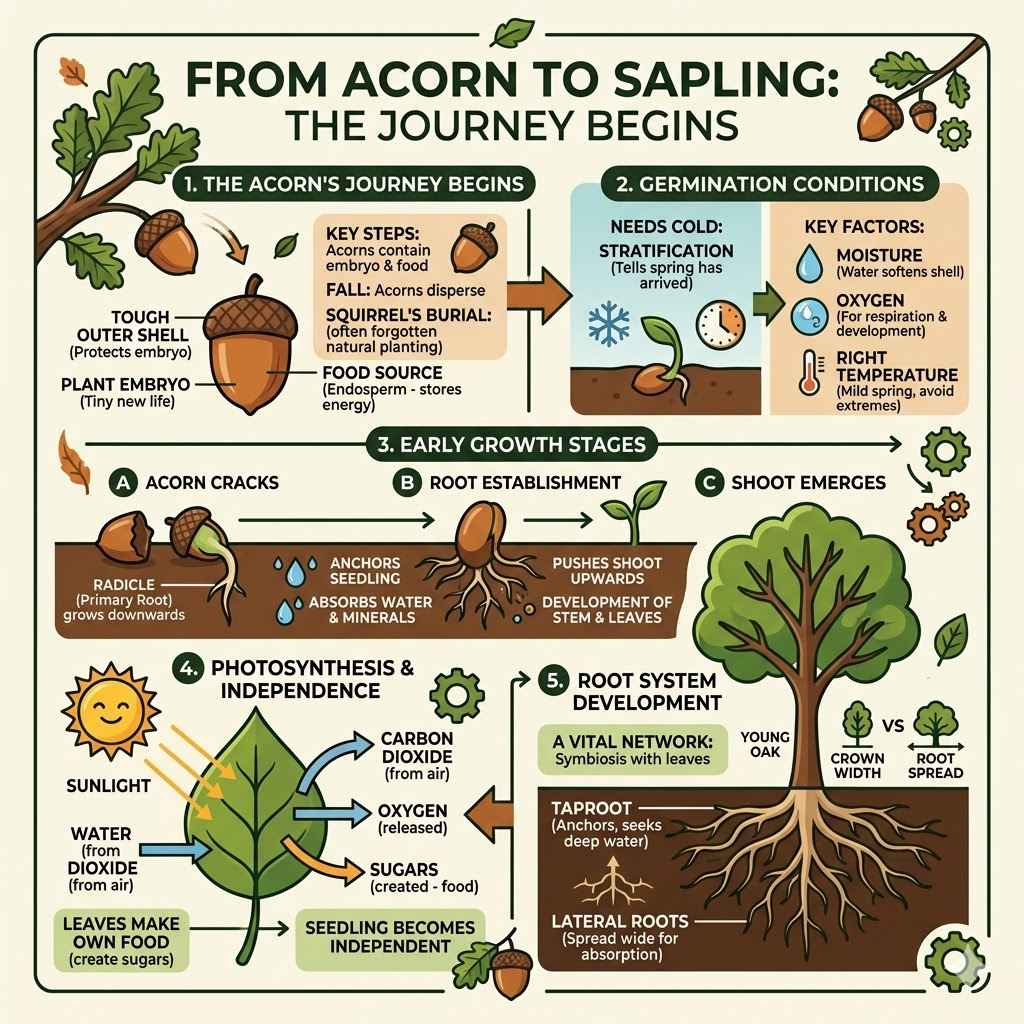
An acorn is a remarkable package of life. Inside its tough shell is a tiny plant embryo and stored food. This food source is called endosperm, and it provides the energy the seedling needs to start growing before it can make its own food.
The acorn must also go through a period of cold called stratification. This means it needs to experience a cold winter. This cold period tells the acorn that spring has arrived and it’s time to sprout.
Without this cold treatment, many acorns would not germinate even if planted in warm soil.
- Acorns are the seeds of oak trees.
- They contain an embryo and a food source.
- A period of cold (stratification) is usually needed.
The acorn falling from a mature oak tree is the very first step. These acorns disperse in the fall. Many are eaten by animals, but some are buried by creatures like squirrels.
These buried acorns are often forgotten. This accidental planting is a major way oak trees spread to new areas. The soil provides moisture and protection for the acorn.
The depth at which it is buried can also affect its chances of survival. Too deep, and it might not get enough light. Too shallow, and it might dry out or be eaten.
Germination Conditions
For an acorn to germinate, it needs a few key things. The most important are moisture, oxygen, and the right temperature. Water softens the acorn shell and signals the embryo to start growing.
Oxygen is needed for the seedling’s respiration, just like it is for us. The temperature should be mild, typically in the spring after the winter cold has passed. Too much heat or cold can prevent germination.
Sunlight is not needed for the initial sprouting because the acorn has its own food supply. The first thing to emerge is the radicle, which is the embryonic root. It anchors the seedling and starts absorbing water and nutrients.
- Moisture is essential to soften the shell and start growth.
- Oxygen is needed for the seedling to breathe and develop.
- Suitable temperatures, usually in spring, are vital.
Once the radicle emerges, it grows downwards into the soil. This root system is crucial for the young oak’s survival. It not only anchors the plant but also begins to absorb water and essential minerals from the soil.
These minerals are like vitamins for the plant, helping it to grow stronger. If the acorn sprouts in dry soil, the delicate root may not be able to find enough moisture to survive. This is why acorns often germinate best in moist forest floors or well-watered garden beds.
The success of germination largely depends on these fundamental environmental factors being present.
Early Growth Stages
After the root has established itself, the seedling begins to push a shoot upwards towards the light. This shoot will develop into the stem and leaves of the young oak tree. The leaves are where photosynthesis happens.
Photosynthesis is the process by which plants use sunlight, water, and carbon dioxide from the air to create their own food (sugars) and release oxygen. This is how the young oak starts to become independent of the stored food in the acorn. The rate of this early growth is influenced by sunlight intensity, water availability, and soil fertility.
From Seedling to Sapling
A seedling is a very young plant that has just sprouted from a seed. It is usually quite small and delicate. As it grows, developing more leaves and a stronger stem, it becomes known as a sapling.
A sapling is a young tree, still slender, but with a more established root system and noticeable height. For oak saplings, the first few years are a critical time. They are vulnerable to drought, pests, and browsing animals like deer.
Protection from these threats is important for their survival and continued growth. A sapling might only be a few feet tall, but it has a strong potential to become a large tree.
- Seedlings are very young plants.
- Saplings are young trees, more developed than seedlings.
- Early years are challenging due to vulnerability.
The growth rate of an oak sapling can vary greatly. Factors like soil quality, rainfall, and competition from other plants play a big role. In ideal conditions, an oak sapling might grow one to two feet in height each year.
However, in less favorable environments, growth can be much slower. The plant focuses its energy on developing a strong root system first. This underground network is vital for accessing water and nutrients, especially during dry spells.
The visible growth above ground is often a reflection of the unseen development happening below the surface.
Root System Development
The root system of an oak tree is extensive and vital. Initially, the primary root, or taproot, grows straight down into the soil. This taproot helps to anchor the young tree securely and can reach deep water sources.
As the sapling grows, lateral roots spread outwards from the taproot. These lateral roots are important for absorbing water and nutrients from a wider area of soil. They also help to stabilize the tree as it gets larger and taller.
The development of a robust root system is a slow process, but it is foundational for the tree’s long-term health and stability. A healthy root system can make up a significant portion of the tree’s total mass.
- Taproots anchor the tree and seek deep water.
- Lateral roots spread wide for water and nutrient absorption.
- A strong root system is key to stability and health.
The root system works in symbiosis with the leaves. The roots take in water and minerals, and the leaves produce sugars through photosynthesis. These sugars are then transported throughout the tree, providing energy for all its functions, including root growth.
If the root system is damaged, for example, by soil compaction or disease, the entire tree will suffer. The intricate network of roots can spread much wider than the tree’s canopy. Some studies suggest that the root system can extend two to three times the width of the tree’s crown.
This vast network is essential for accessing the resources needed to support such a large organism.
Oak Tree Growth Factors and Stages
As an oak tree matures, its growth continues, but the focus shifts. The tree dedicates more energy to increasing its girth (trunk diameter) and developing a strong, expansive canopy. This phase is characterized by steady, incremental growth, often measured in inches of trunk diameter and feet of new branch growth per year.
The tree’s ability to photosynthesize efficiently is paramount, as is its access to water and soil nutrients. The life of an oak tree is a testament to slow, persistent development, adapting to its environment over many decades and even centuries.
From Sapling to Young Tree
The transition from a sapling to a young tree marks a significant milestone. At this stage, the oak is typically several feet tall and has a more developed trunk that is thicker than a pencil. The branches are becoming more distinct, and the tree can begin to withstand moderate environmental stresses better than when it was a mere sapling.
It is still vulnerable, but its chances of survival have increased considerably. This period is crucial for establishing its place in the ecosystem, competing for sunlight and resources.
Establishing the Trunk and Canopy
The trunk of a young oak tree grows in diameter through the process of secondary growth. This happens in a layer of cells called the vascular cambium, located just beneath the bark. New wood (xylem) is added to the inside of the cambium, and new bark (phloem) is added to the outside.
This process allows the trunk to thicken each year, providing structural support for the growing canopy and protecting the tree’s vital tissues. The canopy, composed of branches and leaves, expands outwards and upwards. A well-developed canopy maximizes sunlight absorption for photosynthesis, directly fueling further growth.
The shape of the canopy can vary significantly between different oak species, adapting to local light conditions.
- Secondary growth thickens the trunk.
- The vascular cambium adds new wood and bark.
- Canopy expansion maximizes sunlight for photosynthesis.
The energy captured by the leaves is distributed throughout the tree. A portion goes to growing new leaves and branches, another to thickening the trunk and roots, and some is stored for future use, especially during winter. The structure of the canopy is also influenced by the tree’s genetics and its environment.
If it grows in an open field, its canopy might be broad and rounded. If it grows in a dense forest, it may grow taller and narrower, reaching for available sunlight above its neighbors. This adaptation is a key aspect of how trees maximize their photosynthetic potential.
Branching Patterns
The way an oak tree branches is unique to its species and its environment. Young trees often have a dominant leader branch that grows straight upwards, guiding the tree’s vertical growth. As the tree matures, lateral branches develop and grow outwards.
These branches form the structure of the canopy. The angle at which branches grow from the trunk can affect the tree’s overall shape and strength. Branches that grow at a wide angle (closer to horizontal) are generally stronger than those that grow at a narrow angle (closer to vertical).
The density of branches and leaves in the canopy also influences how much light penetrates to lower branches and the forest floor.
- Dominant leader branches guide vertical growth.
- Lateral branches form the canopy structure.
- Branch angles influence strength and shape.
In dense forests, oak trees may exhibit apical dominance, where the terminal bud at the tip of the leader branch suppresses the growth of lateral buds. This results in a tall, slender trunk with branches concentrated towards the top. In open, sunny areas, apical dominance is less pronounced, allowing for more extensive lateral branching and a broader, more spreading crown.
This differential growth pattern is a remarkable adaptation to maximize the tree’s photosynthetic efficiency in its specific habitat. The pattern of branching also dictates where acorns will eventually be produced, affecting the distribution of new oak trees.
Mature Oak Trees
Mature oak trees are impressive specimens, often standing over 50 feet tall with trunks several feet in diameter. They are vital components of forest ecosystems, providing habitat and food for countless species of wildlife. These trees are a source of wood for construction and furniture, and their acorns are a critical food source for animals like squirrels, deer, and birds.
Their deep root systems help prevent soil erosion, and their extensive canopies provide cooling shade. The long lifespan of oak trees means they can witness centuries of change in their environment.
Longevity and Ecosystem Role
Oak trees are known for their longevity, with many species living for hundreds of years, some even exceeding a thousand years. This long life allows them to become dominant features in their environments, influencing the landscape and the species that live within it. They are considered keystone species in many forest communities because they support a wide diversity of life.
For example, research has shown that oak trees can support hundreds of different insect species, which in turn provide food for birds and other animals. Their presence also affects soil composition and moisture levels.
- Oak trees can live for hundreds or even thousands of years.
- They are keystone species, supporting diverse wildlife.
- Their presence significantly impacts the ecosystem.
The massive size of mature oaks means they create unique microhabitats. Their bark can host mosses, lichens, and insects. Their branches provide nesting sites for birds.
Their fallen leaves decompose, enriching the soil. Even their dead or decaying parts offer crucial habitats. For instance, dead standing trees (snags) provide homes for woodpeckers and other cavity-nesting animals.
The continuous cycle of life and death associated with mature oak trees is fundamental to the health and resilience of the forest. A single large oak can be a bustling metropolis of activity for numerous organisms.
Acorn Production and Seed Dispersal
Mature oak trees produce acorns in large quantities, especially during “mast” years, which occur every few years. This abundant production of acorns ensures that some seeds will survive to germinate, even with high rates of predation by animals and spoilage. The dispersal of these acorns is largely carried out by animals, such as squirrels, jays, and chipmunks.
These animals gather acorns and bury them for later consumption. If they forget where they buried some acorns, these have a chance to sprout and grow into new oak trees. This animal-assisted dispersal is crucial for the spread and regeneration of oak populations.
- Mast years produce abundant acorns.
- Animals like squirrels and jays are key dispersers.
- Forgotten buried acorns can sprout into new trees.
The success of acorn dispersal depends on the behavior of the animals involved. Squirrels often bury acorns in multiple locations, increasing the chances that some will be forgotten. Birds, like jays, may carry acorns long distances before burying them.
The effectiveness of seed dispersal can significantly influence the genetic diversity and spatial distribution of oak populations. A wider dispersal means a greater chance for oaks to colonize new areas and adapt to changing environmental conditions. The process is a perfect example of mutualism, where animals get food and oaks get their seeds spread.
Environmental Factors Affecting Growth
Oak trees, like all plants, are heavily influenced by their environment. The availability of sunlight, water, and nutrients in the soil, along with temperature and climate, all play a role in how well an oak tree grows. Different oak species have evolved to thrive in various conditions, from dry, sandy soils to moist, rich woodlands.
Understanding these factors helps explain why some oaks grow tall and vigorous while others are stunted or struggle to survive. The health of the surrounding environment is directly linked to the health of the oak.
Sunlight and Shade
Sunlight is the primary energy source for oak trees through photosynthesis. Most oak species prefer full sun to partial shade. In a sunny location, the tree can capture ample light energy to fuel vigorous growth.
If an oak is growing in deep shade, its growth will be significantly slowed, and it may become leggy as it stretches for light. Young oak seedlings are more tolerant of shade than mature trees, as they often start their lives on the forest floor, waiting for an opening in the canopy. Once they have established a root system, they will actively compete for sunlight.
- Full sun promotes vigorous growth in most oaks.
- Deep shade stunts growth and causes legginess.
- Young seedlings can tolerate shade while establishing roots.
The amount of sunlight an oak receives directly impacts its ability to produce sugars. More sunlight generally means more sugar production, which translates to faster growth in trunk diameter, height, and branch development. In dense forests, competition for sunlight is intense.
Trees that are taller and have wider canopies can shade out their neighbors, limiting their access to light. This competition shapes the forest structure and the growth patterns of individual trees. An oak growing in an open meadow will likely have a very different shape and size compared to one growing in a crowded forest.
Soil and Water Needs
The soil is where oak trees get their water and essential nutrients. Oaks generally prefer well-drained soils, meaning water doesn’t sit around the roots for too long, which can cause rot. They can grow in a variety of soil types, including sandy, loamy, and clay soils, but the ideal soil is fertile and moist.
The pH of the soil also matters; most oaks prefer slightly acidic to neutral soils. Water is critical for photosynthesis and for transporting nutrients throughout the tree. During dry periods, trees with deeper and more extensive root systems are better equipped to survive.
The amount of rainfall and the soil’s ability to retain moisture are key determinants of oak growth.
| Soil Type | Drainage | Nutrient Content | Oak Preference |
|---|---|---|---|
| Sandy | Excellent | Low | Tolerant, but may need amendments |
| Loamy | Good | High | Ideal |
| Clay | Poor | Moderate to High | Tolerant if not waterlogged |
Water availability is so important that drought can severely impact oak trees. Even a mature oak can be stressed by prolonged dry spells. The tree will begin to shed leaves to conserve water.
In extreme cases, drought can lead to branch dieback or even the death of the tree. Conversely, too much water can also be detrimental. Soils that are constantly waterlogged can suffocate the roots, preventing them from accessing oxygen and leading to root rot.
This is why well-drained soil is so highly valued by oak trees.
Temperature and Climate
Temperature and climate are fundamental factors that determine where oak trees can grow and how well they thrive. Oak species have adapted to a wide range of climates, from temperate regions with cold winters and warm summers to more Mediterranean climates with hot, dry summers. The annual cycle of temperature influences when trees bud, flower, produce acorns, and go dormant.
Extreme temperatures, either very hot or very cold, can damage oak trees. For instance, late spring frosts can kill developing buds and flowers, reducing acorn production. Very hot summers can increase water stress.
- Climate dictates the geographic range of oak species.
- Temperature cycles influence seasonal growth processes.
- Extreme temperatures can cause damage and stress.
The long-term climate trends are also becoming increasingly important. Changes in average temperature and rainfall patterns, often linked to climate change, can impact oak populations. Some species may find their current habitats becoming too warm or too dry, forcing them to adapt or migrate.
Conversely, other areas might become more suitable. Understanding these climatic influences is key to predicting how oak forests will fare in the future. For example, research indicates that certain oak species in the southeastern United States are experiencing increased stress due to rising temperatures and changing precipitation patterns.
How Do Oak Trees Grow Complete Guide Overview
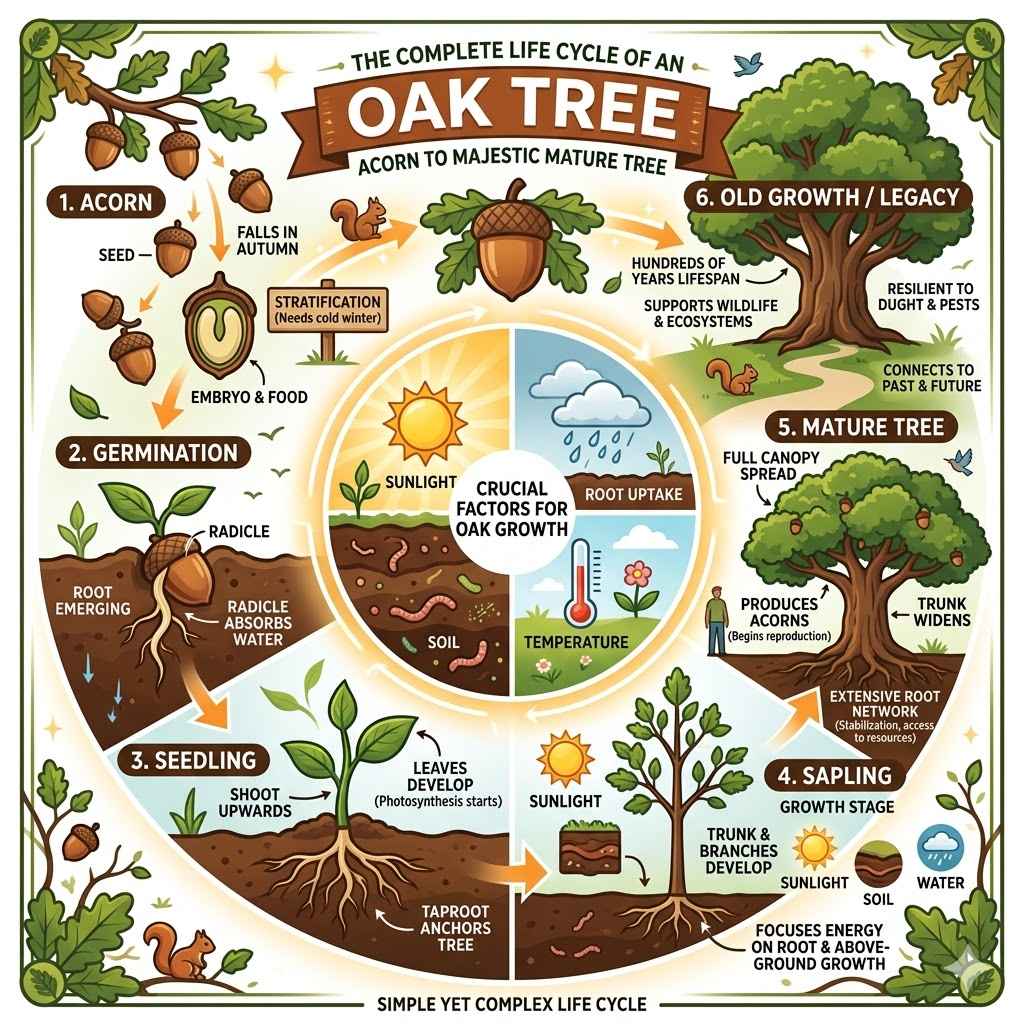
This article has covered the entire life cycle of an oak tree, from its beginnings as a tiny acorn to its status as a majestic mature tree. We explored the crucial factors that influence its growth, including sunlight, soil, water, and temperature. Understanding these elements helps us appreciate the resilience and adaptability of these vital trees.
The information provided offers a clear path to comprehending the simple yet complex process of how oaks develop.
Frequently Asked Questions
Question: How long does it take for an acorn to sprout
Answer: It can take anywhere from a few weeks to several months for an acorn to sprout. This depends on whether it has had enough cold (stratification) and the conditions of moisture and temperature.
Question: What is the most important thing for an oak seedling to survive
Answer: The most important thing for an oak seedling is a consistent supply of water and adequate sunlight. It also needs protection from harsh conditions and browsing animals.
Question: Do oak trees grow fast
Answer: Oak trees are known for their slow to moderate growth rate. They prioritize building a strong structure, especially their root system, before growing quickly in height.
Question: How deep do oak tree roots grow
Answer: Oak tree roots can grow very deep, especially the taproot, which can extend many feet into the soil to reach water and anchor the tree.
Question: Can an oak tree grow in shade
Answer: Young oak seedlings can tolerate some shade, but most oak species need a good amount of sunlight to grow into healthy, mature trees.
Conclusion
Understanding how oak trees grow reveals a fascinating process of development. From a buried acorn, moisture and time allow a root to emerge, followed by a shoot reaching for light. This young sapling slowly builds its trunk and canopy, driven by sunlight, water, and nutrients.
Mature oaks become vital parts of their ecosystems, supporting diverse life for centuries. Their growth is a steady, resilient journey shaped by their environment. You now have a complete picture of this magnificent natural process.