How Far Apart Should Japanese Maples Be Planted?
Figuring out where to put your beautiful Japanese maple can feel a bit tricky, especially if you’re new to gardening. You want them to look their best as they grow, but it’s easy to wonder about spacing. This guide makes it simple. We’ll walk through everything you need to know, step by step, so you can give your trees plenty of room to thrive. Get ready to learn just How Far Apart Should Japanese Maples Be Planted? with easy advice.
Japanese Maple Spacing Needs
Understanding how much space your Japanese maple trees need is the first step to a gorgeous garden. These trees are loved for their delicate leaves and graceful shapes. They aren’t just plants; they are living art. Giving them enough room allows them to reach their full potential, both in size and beauty. It prevents them from crowding each other or your home, and ensures they get the light and air circulation they need to stay healthy. Proper spacing also makes maintenance much easier.
Mature Size and Growth Habits
Every Japanese maple variety is different. Some stay small and tidy, while others can grow quite large and wide. Knowing the mature size of your specific tree is super important for deciding how far apart to plant them. This information usually comes on the plant tag or can be found online.
Dwarf Varieties: Many Japanese maples are considered dwarf, meaning they reach only a few feet in height and width. For example, Acer palmatum ‘Katsura’ typically grows to about 6-8 feet tall and wide. If you have two dwarf varieties, you might be able to plant them as close as 4-6 feet apart, provided they have similar growth habits.
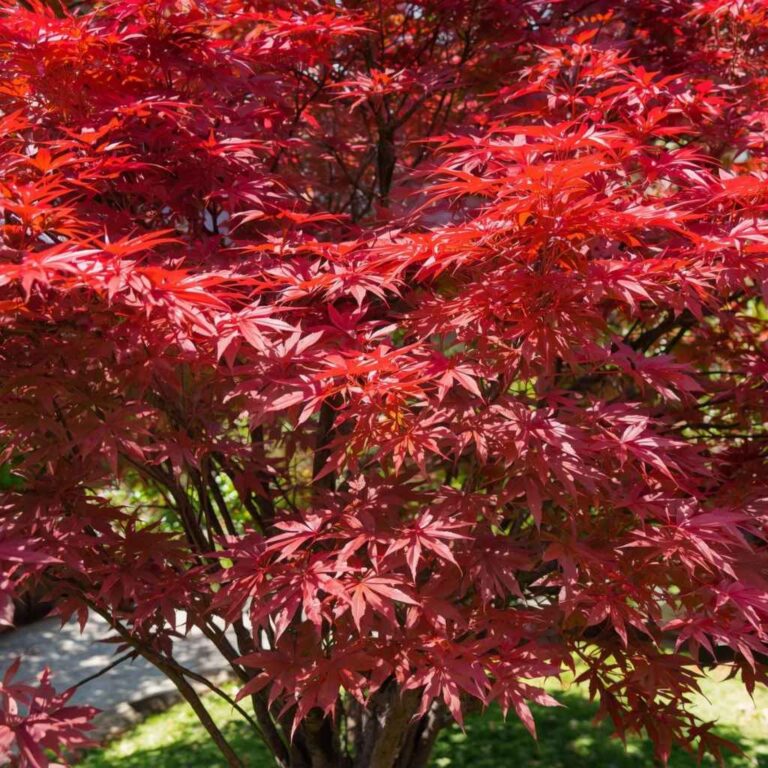
Medium Varieties: These trees can reach 15-25 feet tall and wide. Varieties like ‘Bloodgood’ or ‘Crimson Queen’ fall into this category. For these, a spacing of 10-15 feet is usually a good starting point.
Large Varieties: While less common for Japanese maples, some can reach over 30 feet tall and wide. If you have one of these, give it ample space, at least 20-30 feet or more, especially if planting near other trees or structures.
It’s always better to give them a little too much room than not enough. You can always enjoy the space around them while the trees grow into it.
Air Circulation and Disease Prevention
Good airflow around your Japanese maples is vital for their health. When trees are planted too close, air can’t move freely between their branches and leaves. This creates a humid microclimate.
Preventing Fungal Diseases: Fungal diseases, like powdery mildew or anthracnose, love damp, stagnant conditions. Poor air circulation traps moisture on leaves and bark, giving these diseases a perfect place to thrive. Planting maples with adequate spacing allows for better drying after rain or dew.
Reducing Pest Infestations: While not as common as fungal issues, good airflow can also discourage certain pests. Pests often seek out sheltered, undisturbed areas. Open spacing makes the trees less attractive to some of these unwelcome visitors.
Promoting Stronger Growth: Healthy trees are less susceptible to problems. By ensuring good air circulation, you are supporting the overall vigor and resilience of your Japanese maples. This means fewer interventions needed down the line and a more beautiful, healthy specimen.
Sunlight Requirements
Japanese maples generally prefer dappled shade or morning sun. Planting them too close together can lead to one tree shading out another, especially as they mature. This can affect leaf color and overall plant health.
Leaf Color Intensity: Many Japanese maples develop their most vibrant leaf colors in bright, indirect light. If a tree is constantly in deep shade cast by a neighbor, its colors might appear duller. For instance, a red-leafed variety might look more green than red in heavy shade.
Branch Growth Patterns: Trees will naturally stretch towards light sources. If one tree is too close to another, it might grow unevenly, with branches reaching across the gap to catch more sun. This can create an unbalanced and less aesthetically pleasing form.
Preventing Overheating: In very hot climates, dense foliage from closely planted maples can trap heat. While they like sun, intense, direct afternoon sun combined with trapped heat can scorch leaves. Spacing helps keep the area around each tree cooler.
Factors Influencing Planting Distance
Deciding on the right distance for your Japanese maples involves looking at several key factors. It’s not just about the tree itself but also its surroundings and your garden’s design. Thinking about these elements will help you make the best choice for long-term beauty and health.
Proximity to Structures
When planting Japanese maples, where they are located in relation to your house, fences, or other buildings is a major consideration. You want to avoid future conflicts as the tree grows.
Foundation Issues: Large trees planted too close to foundations can cause problems over time. Their roots can potentially damage foundations or seek out moisture from them. Even smaller trees, if planted right next to a wall, can cause issues with drainage or block access.
Overhanging Branches: As Japanese maples grow, their branches can extend quite far. If planted too close to a house, branches might press against siding or windows, causing wear or creating pathways for pests. They can also drip sap or shed leaves onto your roof.
Obstructions: Buildings can block sunlight or wind, affecting the tree’s growth and health. They can also cast shadows that might not be ideal for the maple’s preferred light conditions. It’s important to consider the mature canopy spread and plan accordingly.
Companion Planting with Other Trees
If you plan to plant multiple Japanese maples or other types of trees near them, you need to think about their combined needs. Different trees have different root systems and canopy structures.
Root Competition: Trees compete for water and nutrients in the soil. Planting them too close means their roots will overlap and compete directly. This can stunt the growth of all involved. A general rule of thumb is to space trees so their mature root zones do not significantly overlap.
Canopy Overlap: Similar to how closely planted maples can shade each other, other types of trees can also block light. Some trees have dense foliage that can create deep shade, which might not be suitable for Japanese maples.
Species Compatibility: Consider the growth habits and needs of neighboring plants. For example, a fast-growing poplar planted too near a slow-growing Japanese maple will likely dominate the space. It’s best to pair plants with similar light, water, and soil needs.
Aesthetic Design and Visual Appeal
Beyond practical needs, how your Japanese maples look in your landscape is very important. Spacing plays a big role in creating a pleasing visual composition.
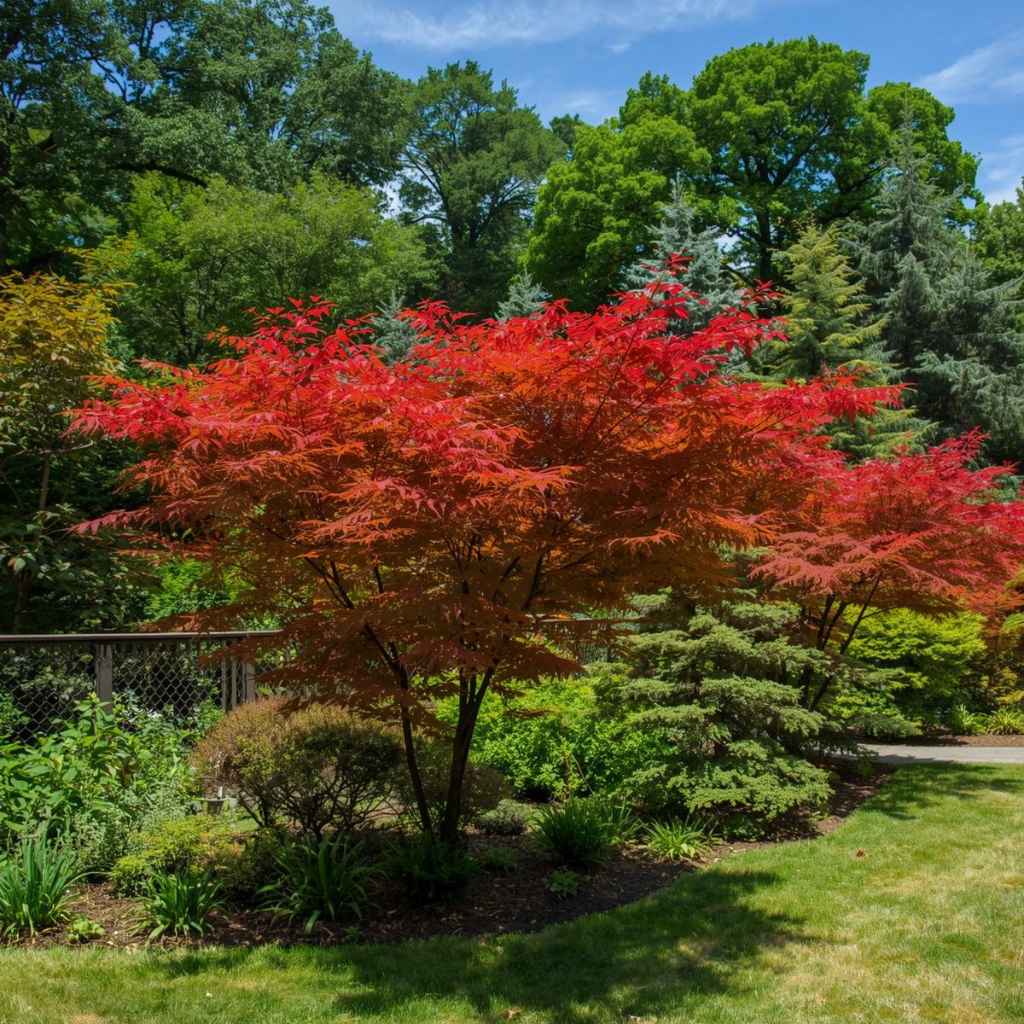
Creating Focal Points: A single, well-spaced Japanese maple can be a stunning focal point in a garden. It draws the eye and stands out as a specimen plant. Giving it plenty of room allows its unique form to be appreciated.
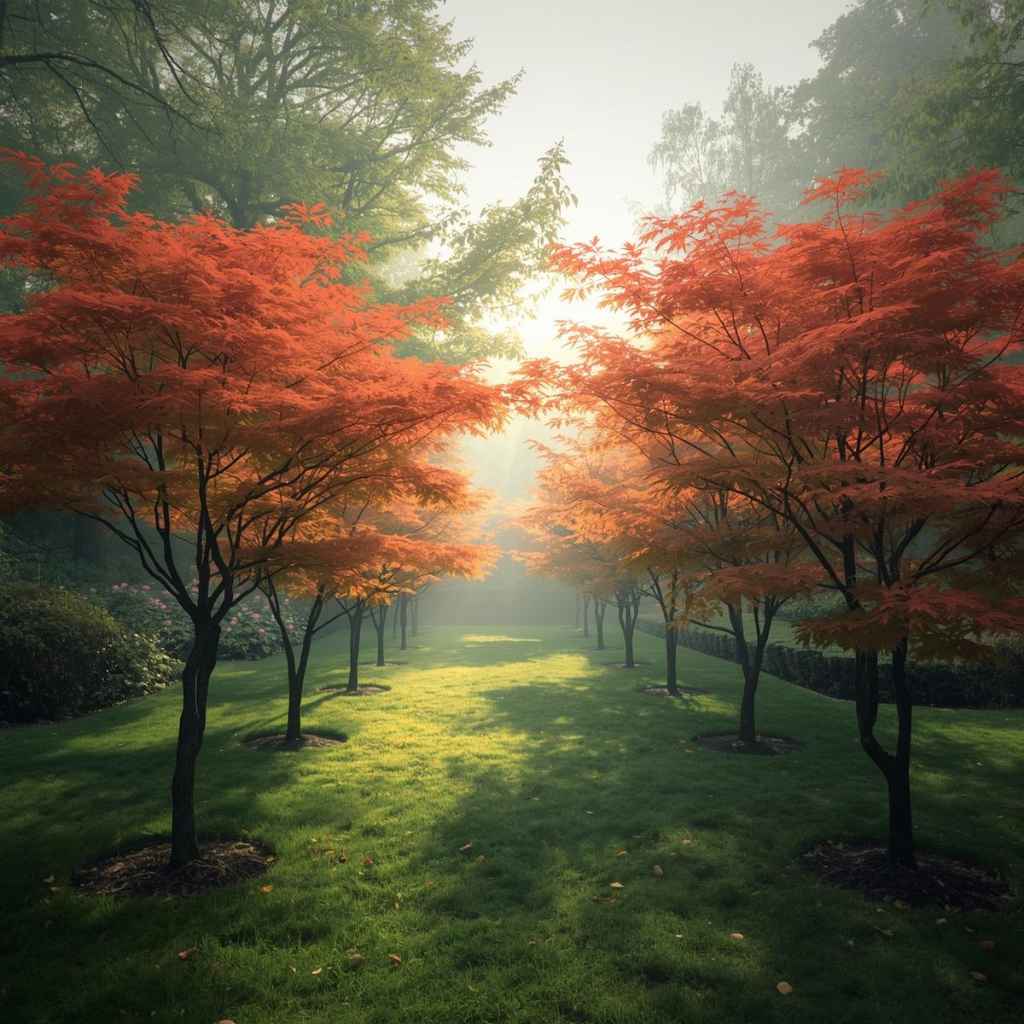
Groupings and Layering: When planting multiple maples or combining them with other plants, consider how they will look together. Groupings can create a sense of depth and texture. You might plant a taller maple behind a shorter one, or intersperse them with shrubs.
Allowing for Growth: Remember that trees change over time. What looks good now might be too crowded in a few years. Planting with the mature size in mind ensures your garden design remains beautiful as the trees grow. This foresight prevents the need for costly or difficult removals later.
Recommended Spacing Guidelines
Let’s get to the practical advice on how much space to give your Japanese maples. These are general guidelines, and you should always consider the specific variety and its mature size. It’s better to err on the side of more space.
Spacing Between Japanese Maples
When planting two or more Japanese maples together, the distance between them depends on their mature spread. The goal is to allow each tree to develop its natural shape without interfering with its neighbors.
Dwarf Varieties: For smaller maples that reach 4-6 feet wide, planting them 6-8 feet apart is usually sufficient. This allows them to fill in a bit without touching for many years.
Medium Varieties: Trees that grow 10-15 feet wide generally need about 15-20 feet of space between them. This gives their branches room to spread and their canopies to mature gracefully.
Larger Varieties: For the biggest maples, aim for 25-30 feet or more. If you are planting them in a row, consider the total width they will occupy and the space needed for each.
Spacing from Other Plants and Features
It’s not just about spacing maples from each other. You also need to consider their distance from other elements in your garden.
Shrubs: Smaller shrubs can often be planted within the drip line (the area under the outermost branches) of a mature Japanese maple, but not too close to the trunk. A distance of 3-5 feet from the trunk is a good starting point.
Perennials: Perennial flowers and groundcovers can be planted even closer, often within 2-3 feet of the trunk, as they are usually smaller and less competitive.
Trees (Different Species): If planting a Japanese maple near a different type of tree, give them at least 15-20 feet of separation, and more if the neighboring tree is large or fast-growing.
Walkways and Patios: For trees planted near paths or seating areas, ensure there is at least 6-8 feet of clearance for comfortable passage and to prevent branches from hanging too low.
Using a Measuring Tape for Accuracy
A simple measuring tape is your best friend when planning tree placement. Don’t guess distances; measure them.
Measure Mature Width: Look up the mature width of your Japanese maple variety. For example, if ‘Crimson Queen’ has a mature width of 10 feet, you’ll want to plant it at least 10 feet away from anything it shouldn’t touch, and ideally 15-20 feet from another similar-sized maple.
Consider Trunk to Trunk: When planting multiple trees, measure from the center of one trunk to the center of the next. If you want 15 feet of space between their mature canopies, and each tree will be 10 feet wide, then the center of each trunk should be roughly 15 feet apart.
Marking Your Spots: Use stakes or spray paint to mark where you plan to dig. This allows you to step back and visualize the spacing before you commit to planting. You can adjust if it doesn’t look right.
Understanding Tree Root Systems
The roots of a Japanese maple are just as important as its branches for its health and stability. Roots can spread out much wider than the visible canopy. This is a key factor in how far apart to plant them.
Root Zone Spread
The root system of a tree typically extends outwards at least as far as the branches, and often much further. For many trees, including Japanese maples, the root zone can be 2 to 3 times the width of the canopy.
Water and Nutrient Uptake: The majority of a tree’s feeder roots, which absorb water and nutrients, are found in the top 12-18 inches of soil. These roots spread widely to capture as much as possible from the soil.
Anchorage: While feeder roots are shallow, larger structural roots spread wider and deeper to anchor the tree firmly in the ground. These can also interact with structures if planted too close.
Implications for Spacing: This wide root spread means that even if the canopies of two Japanese maples aren’t touching, their root systems will be competing. Therefore, spacing them based on canopy width alone isn’t enough; you must also consider root zone competition.
Impact on Nearby Utilities and Structures
Tree roots are notorious for finding their way into underground utility lines and affecting structures.
Water Pipes: Tree roots are attracted to moisture. They can seek out leaky water pipes, entering them and causing blockages and damage. This is why planting large trees close to water mains or service lines is risky.
Sewer Lines: Similar to water pipes, sewer lines can also be targets for aggressive root systems. Roots can infiltrate cracks in sewer pipes, leading to costly repairs and backups.
Foundations and Sidewalks: Over time, tree roots can lift and crack concrete foundations, sidewalks, and driveways. This is more common with trees that have shallow, spreading root systems, but even Japanese maples can cause issues if planted too close to hard surfaces.
Root Pruning Considerations
If you absolutely must plant a Japanese maple closer to a structure or utility line than recommended, you might consider root pruning. However, this is a risky practice that should be done with extreme caution and ideally by a professional.
Professional Assessment: A certified arborist can assess the risk and advise on the best course of action. They might recommend barriers or specific planting depths.
Surgical Cuts: Root pruning involves making clean, surgical cuts to sever roots that might otherwise grow into unwanted areas. This is typically done to encourage roots to grow away from a structure or to make transplanting easier.
Stress to the Tree: Improper or excessive root pruning can severely stress the tree, making it susceptible to disease, pests, and even death. It’s a last resort measure.
Case Studies and Examples
Seeing how spacing plays out in real-world gardens can be very helpful. These examples illustrate the importance of giving Japanese maples the room they need.
Example 1 A Tale of Two Maples
Sarah planted two Japanese maples, ‘Crimson Queen’ (a laceleaf variety known for its weeping habit and deep red leaves) and ‘Viridis’ (a green laceleaf), in her backyard. She loved the look of them close together.
Initial Planting: She planted them only 5 feet apart. For the first few years, they looked charming, with their branches intertwining a little.
Five Years Later: The ‘Crimson Queen’ had grown to about 6 feet wide and the ‘Viridis’ was about 5 feet wide. Their branches were now overlapping significantly. The ‘Crimson Queen’ was starting to look a bit shaded by the ‘Viridis’, and its vibrant red color wasn’t as intense. Air circulation between the trees was poor.
Ten Years Later: Sarah realized her mistake. The trees were now competing fiercely. The ‘Crimson Queen’ was suffering from a fungal spot disease on some lower leaves, likely due to the lack of airflow. She had to prune them back quite a bit to try and improve the situation, which unfortunately made them look less natural and graceful. If she had planted them 15 feet apart, they both would have reached their full, beautiful potential without issues.
Example 2 The Overlooked Root System
John wanted a stunning Japanese maple as a focal point near his patio. He chose a beautiful Acer palmatum ‘Emperor I’, a stunning red-leafed variety known to grow up to 15-20 feet tall and wide.
Proximity Planting: He planted it just 8 feet from the edge of his concrete patio. He loved the immediate impact of the young tree.
Seven Years Later: The ‘Emperor I’ was thriving and had reached about 10 feet in height and width. Its branches beautifully cascaded outwards, but they were starting to hang over the patio. More concerningly, John noticed a few cracks developing in the patio slab near where the tree was planted.
Future Concerns: He realized the strong root system of the maple was likely starting to exert pressure on the concrete. Had he planted it 20 feet away from the patio, he would have enjoyed the tree’s beauty without the risk of future structural damage and would have had plenty of space to walk around it comfortably.
Frequently Asked Questions
Question: Can Japanese maples be planted too close together?
Answer: Yes, Japanese maples can definitely be planted too close together. If they are too close, their roots will compete for water and nutrients, and their branches can shade each other, hindering healthy growth and potentially leading to diseases. It’s best to give them ample space based on their mature size.
Question: How far from a house should I plant a Japanese maple?
Answer: It’s generally recommended to plant Japanese maples at least 10-15 feet away from your house. This distance accounts for the mature spread of the canopy and the potential reach of the root system, preventing future issues with foundations, siding, or overhanging branches.
Question: Will the roots of a Japanese maple damage my house?
Answer: While Japanese maples are not as aggressive as some other trees, their roots can potentially cause damage if planted too close to foundations, sidewalks, or underground pipes. Planting them at a safe distance minimizes this risk.
Question: What happens if I plant my Japanese maples too close?
Answer: Planting them too close can lead to stunted growth, poor air circulation increasing disease risk, less vibrant leaf color due to shading, and eventual overcrowding where branches touch and compete. You might also face the need for aggressive pruning later on.
Question: Can I plant other trees near my Japanese maple?
Answer: Yes, you can plant other trees nearby, but you must consider spacing. If planting another tree, ensure there is adequate distance between them (at least 15-20 feet, more for larger trees) to avoid root competition and canopy overlap. Ensure they have similar light and water needs.
Final Thoughts
Giving your Japanese maples the right amount of space is key. Planting them at least 10-15 feet apart, and even more for larger varieties, ensures they have room to grow their roots and branches freely. This prevents competition, promotes health, and allows their natural beauty to shine for years to come. You’ll enjoy their graceful shapes and vibrant colors best when they aren’t crowded.