How Many Leaves on an Oak Tree? Science-Based Local Fact
Wondering about How Many Leaves on an Oak Tree? Science-Based Local Fact might seem like a puzzling question at first. It feels like a big number, hard to guess.
Many people start looking for answers and find it tricky. But don’t worry! We will break it down easily, step by step.
Get ready to learn a simple way to find out about oak tree leaves and see the surprising facts ahead.
Estimating Oak Tree Leaves A Scientific Approach
Figuring out the exact number of leaves on an oak tree is a fascinating challenge that combines observation with scientific estimation. While it’s impossible to count every single leaf individually, especially on mature trees, scientists have developed methods to arrive at reasonable approximations. This process often involves sampling techniques and understanding the typical density of foliage an oak tree can produce.
For beginners, the sheer scale of the task can seem overwhelming, making it difficult to know where to start. This section will guide you through the core concepts scientists use to tackle this seemingly impossible question, transforming a daunting problem into an approachable scientific inquiry.
The Science of Leaf Counting Simplified
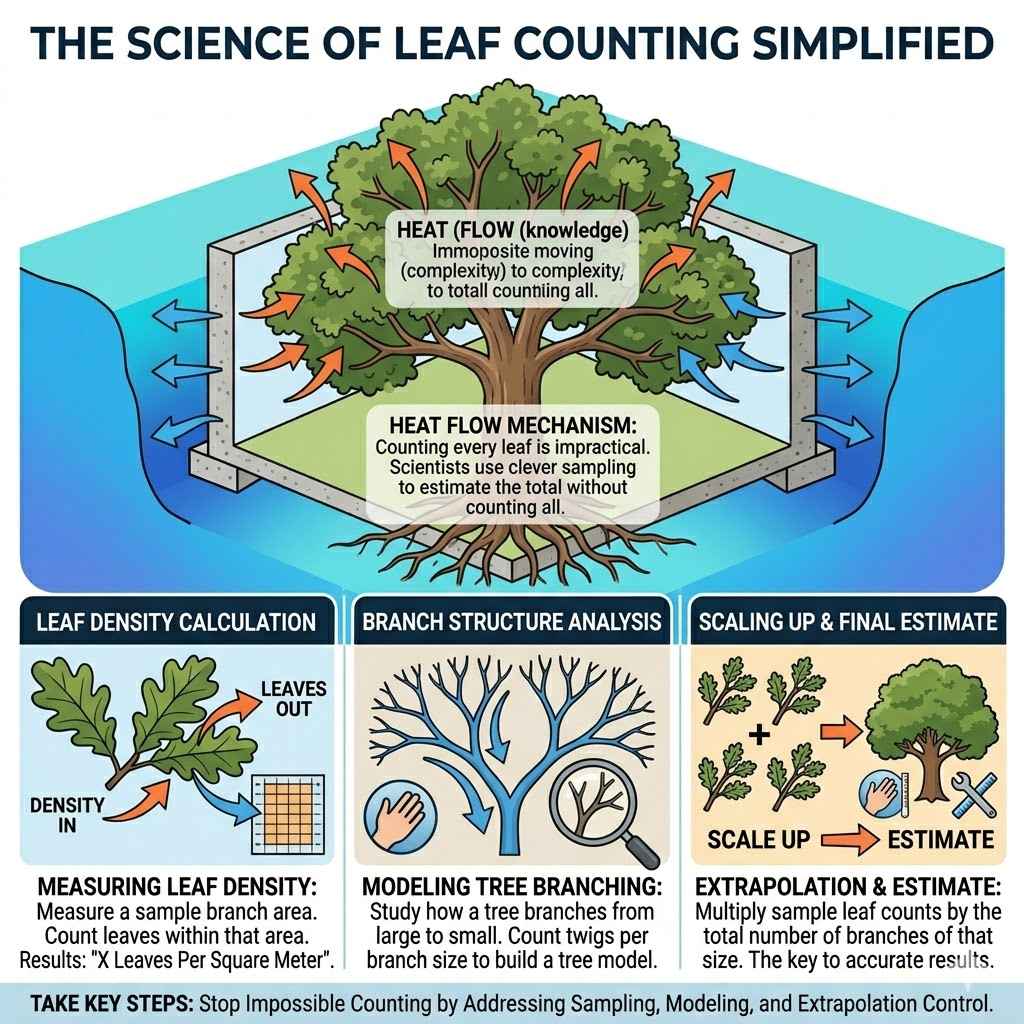
Counting leaves on a whole tree is like trying to count grains of sand on a beach. It’s too much to do one by one! Scientists use clever methods to get a good idea of the number without actually counting every single leaf.
They often start by estimating how many leaves are on a small branch. Then, they figure out how many branches of that size might be on the whole tree. Multiplying these numbers gives them a pretty good guess.
This method is called sampling. It’s used in many areas of science when counting everything is just not practical. For example, to estimate the number of fish in a lake, scientists don’t catch every single fish.
They catch a few, count them, and then use that to estimate the total population in the lake.
Leaf Density Calculation
Leaf density refers to how many leaves are packed into a certain space. Scientists might measure the area covered by leaves on a sample branch. They then count the leaves within that measured area.
This gives them a density figure, like ‘X leaves per square meter of branch surface’. This density is a key factor in estimating the total leaf count. Different types of oak trees, and even trees of different ages, will have varying leaf densities.
Branch Structure Analysis
Oak trees have complex branching patterns. Some branches are thick and main, while others are thin twigs. Scientists study how the tree branches out.
They might classify branches into different sizes. Then, they estimate the number of smaller branches that grow from each larger branch. This hierarchical structure helps them build a model of the entire tree’s branching system.
Knowing the branching structure is vital for extrapolating leaf counts from small samples to the entire tree.
Factors Influencing Leaf Count
Several things affect how many leaves an oak tree might have. The age and size of the tree are big ones. A young sapling will have far fewer leaves than a giant, old oak.
The species of oak also matters. Some oaks are naturally bushier than others. Plus, the environment plays a role.
A tree growing in a sunny spot with plenty of water will produce more leaves than one struggling in poor conditions.
Tree Age and Size
As oak trees grow, their canopy expands, and they develop more branches. This means more space for leaves. A tree that is just a few years old might only have a few hundred or thousand leaves.
A mature oak, which could be decades or even centuries old, can have hundreds of thousands, even millions, of leaves. The sheer biomass of a mature oak tree supports a vast number of leaves.
Oak Species Variation
There are many different types of oak trees, also known as Quercus species. Each species has its own unique characteristics regarding leaf shape, size, and growth habit. For example, a Red Oak might have a different leaf arrangement and density compared to a White Oak.
These variations directly influence the total leaf count. Some species are known for their dense foliage, while others are more open.
Environmental Conditions
Sunlight is essential for photosynthesis, the process plants use to make food. Trees in open, sunny areas will have more leaves to capture sunlight than those in shady spots. Water availability is also critical.
Drought-stressed trees may produce fewer leaves or shed them early to conserve water. Soil quality, nutrient availability, and protection from strong winds can all impact leaf production.
Methods for Estimating Leaf Numbers
Scientists use a few different ways to estimate the number of leaves on a tree. One common method involves taking a small sample of branches and counting the leaves on them. Then, they estimate the total number of similar branches on the tree.
Another way is to use aerial photography or satellite imagery. They can analyze the canopy cover and relate it to leaf density.
Branch Sampling Technique
This is a hands-on approach. Researchers carefully select a representative branch from the tree. They might measure the length and diameter of this branch.
Then, they meticulously count every leaf on that branch. They repeat this process with several branches of different sizes and locations on the tree. This gives them an average leaf count per branch type.
They then estimate the total number of branches of each type on the entire tree and multiply.
For instance, a scientist might find that a medium-sized branch has about 500 leaves. They then estimate that the entire tree has, say, 1000 such branches. This would lead to an estimate of 500 leaves/branch * 1000 branches = 500,000 leaves.
This is a simplified example, as real calculations involve more complex branch classifications and statistical analysis.
Canopy Cover Analysis
This method uses technology. Images taken from airplanes or satellites can show the overall area covered by the tree’s canopy. By understanding how much of that area is typically covered by leaves, scientists can make estimates.
They might use specific software to analyze the images and calculate the projected leaf area. This projected leaf area is then correlated with total leaf biomass or count using established relationships.
This technique is particularly useful for studying large forest areas. It allows for broad estimations without needing to access every single tree individually. However, it can be less precise for individual tree counts compared to direct sampling, especially if canopy overlap occurs.
Biomass Estimation
Another scientific approach involves estimating the total weight, or biomass, of the tree’s leaves. This is often done by carefully harvesting a small portion of the canopy, weighing it, and then determining the dry weight of the leaves. Scientists can then extrapolate this to estimate the total leaf biomass for the entire tree.
Once the total leaf biomass is known, and the average weight of a single leaf is determined, the total number of leaves can be calculated.
This method can be destructive if not done carefully, as it involves removing parts of the tree. However, it offers a different perspective and can be validated against other estimation methods. It requires specialized equipment for weighing and drying plant material accurately.
How Many Leaves on an Oak Tree? A Realistic Estimate
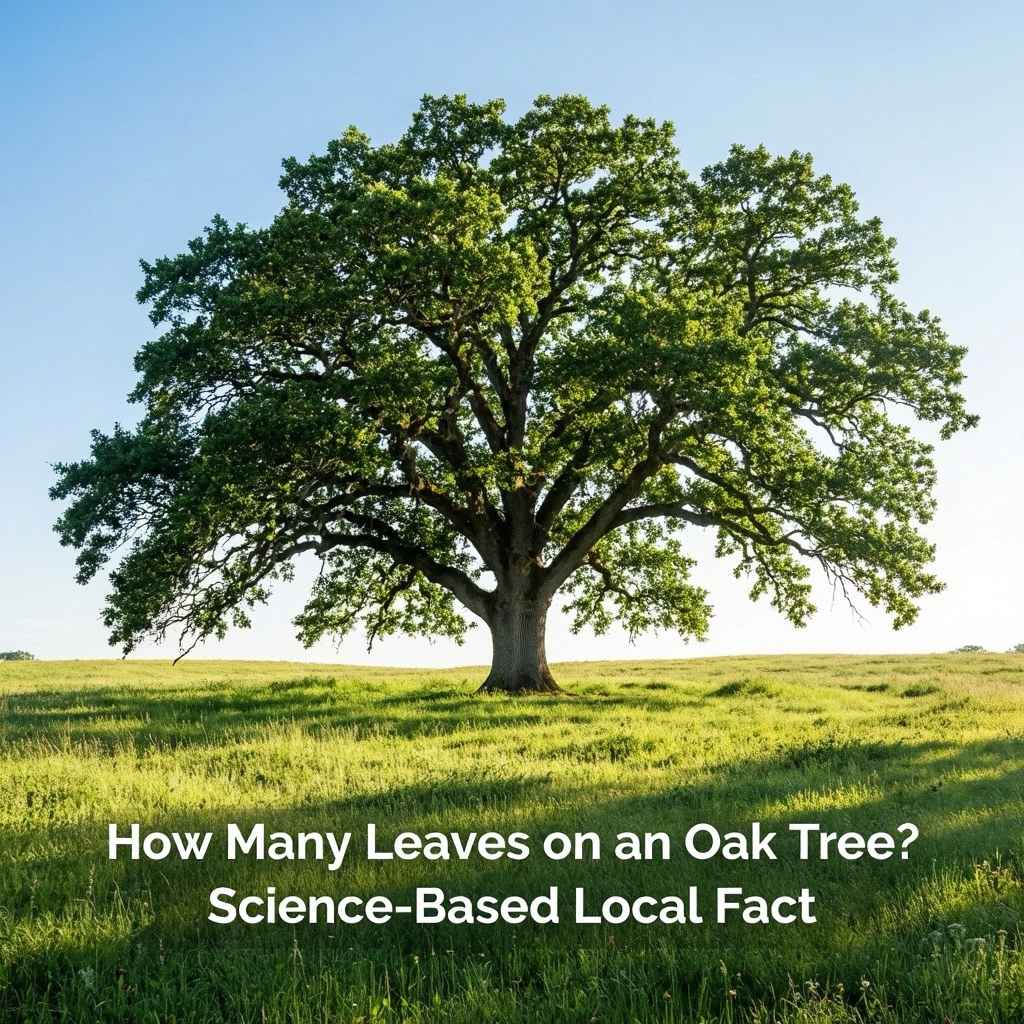
So, to answer the burning question: How many leaves on an oak tree? A young oak might have a few thousand. A mature, large oak tree could have anywhere from 200,000 to over 500,000 leaves.
Some giant specimens might even reach a million leaves or more! These numbers are estimates, of course, and can vary greatly. But they give you a good idea of the incredible scale of an oak’s foliage.
Typical Range for Mature Oaks
For a healthy, mature oak tree, you can generally expect the leaf count to be in the hundreds of thousands. A commonly cited range for a large oak is between 200,000 and 500,000 leaves. This range accounts for variations in species, growth conditions, and tree health.
It’s a significant number, highlighting the tree’s vital role in its ecosystem.
Maximum Potential Leaf Count
Under ideal conditions, with abundant sunlight, water, and nutrients, a very large and old oak tree could potentially host a staggering number of leaves. Estimates for exceptional individuals can push past 700,000 or even 1,000,000 leaves. These are the ancient giants of the forest, with massive crowns supporting an extraordinary volume of foliage.
Such trees are ecological powerhouses.
Local Variations and Factors
The number of leaves on an oak tree in your backyard might differ from one in a dense forest or a drier region. Local climate plays a huge part. For instance, oaks in areas with long, dry summers might have fewer leaves than those in consistently moist environments.
Soil type and nutrient levels also influence how robustly the tree can support its leaf canopy. Even nearby buildings or other trees can affect sunlight exposure.
Why This Question Matters
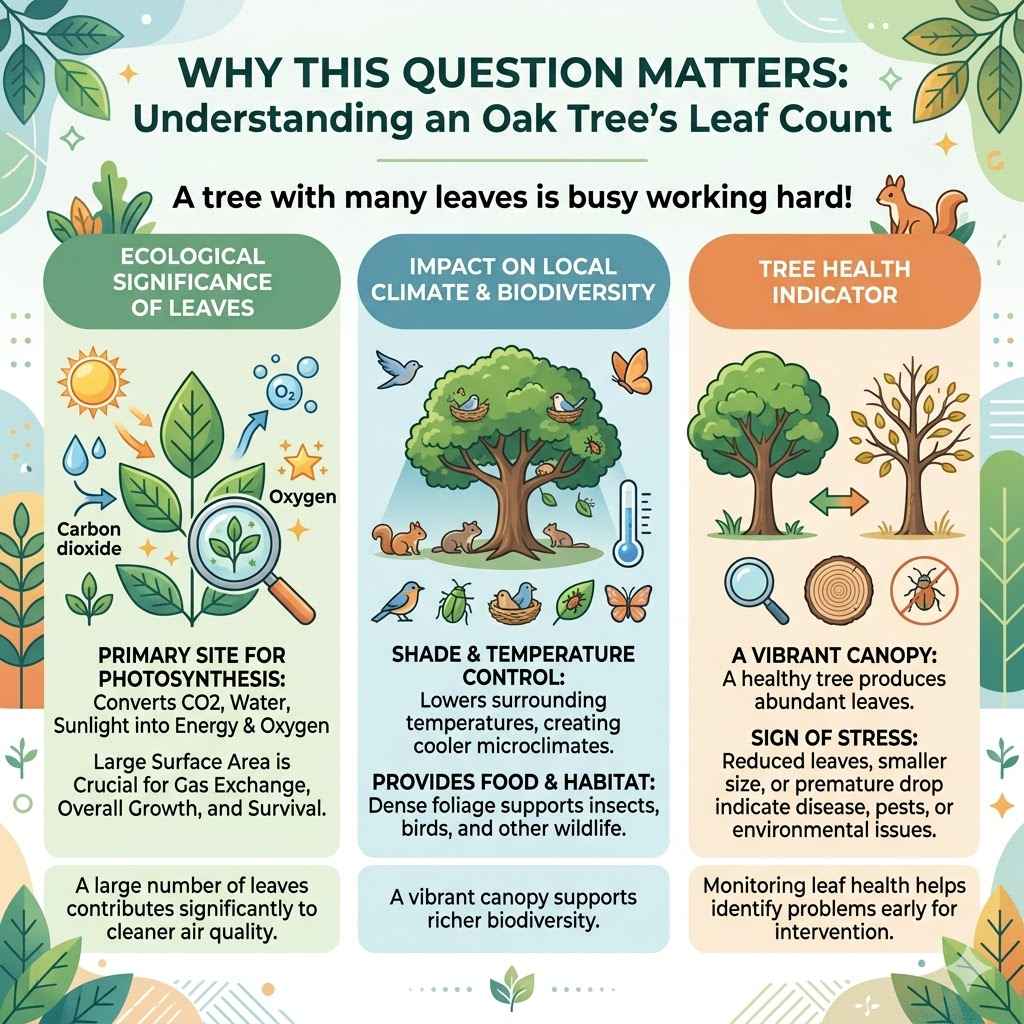
Understanding how many leaves are on an oak tree isn’t just a fun fact. It tells us a lot about the tree’s health and its role in nature. Trees with lots of leaves are busy working hard!
They help clean the air by taking in carbon dioxide and releasing oxygen. They provide shade and homes for many animals. So, knowing about their leaves helps us appreciate these amazing natural structures even more.
Ecological Significance of Leaves
Leaves are the primary sites for photosynthesis, the process that converts sunlight, water, and carbon dioxide into energy for the tree and oxygen for the atmosphere. A large number of leaves means a tree is performing photosynthesis on a grand scale, contributing significantly to air quality. This large surface area is crucial for gas exchange and for the tree’s overall growth and survival.
The sheer volume of leaves on an oak tree makes it a vital component of its local environment.
Impact on Local Climate and Biodiversity
The dense foliage of an oak tree provides shade, which can significantly lower temperatures in its immediate surroundings. This creates cooler microclimates that benefit various plants and animals. The leaves themselves are a food source for many insects, and the branches and trunk provide habitat for birds, squirrels, and other wildlife.
A tree with a healthy, abundant leaf canopy supports a richer biodiversity.
Tree Health Indicator
The number and health of leaves on an oak tree can serve as an indicator of its well-being. A tree that is struggling due to disease, pests, or environmental stress will often show reduced leaf production, smaller leaves, or premature leaf drop. Monitoring leaf health can help identify potential problems early, allowing for intervention to help the tree recover.
A vibrant, full canopy is a sign of a healthy tree.
Frequently Asked Questions
Question: Can I count the leaves on my oak tree myself
Answer: While you can count the leaves on a small branch, counting all the leaves on a mature oak tree is practically impossible for an individual. Scientists use estimation methods to get a number.
Question: Do all oak trees have the same number of leaves
Answer: No, the number of leaves varies greatly depending on the oak species, its age, size, and the environmental conditions it’s growing in.
Question: Are there any tools to help estimate leaf count
Answer: Scientists use techniques like branch sampling, canopy cover analysis with aerial imagery, and biomass estimation. For a hobbyist, observing leaf density on a branch and estimating similar branches is a starting point.
Question: How many leaves does a very old oak tree have
Answer: Very old and large oak trees can have hundreds of thousands, or even over a million, leaves.
Question: What is the main purpose of so many leaves
Answer: The main purpose is photosynthesis, which allows the tree to create food and energy, and to produce oxygen for the environment. They also provide shade and habitat.
Summary
Estimating how many leaves are on an oak tree involves scientific methods like branch sampling and canopy analysis. Mature oaks can have hundreds of thousands of leaves, vital for photosynthesis, air quality, and supporting local wildlife. This impressive number reflects the tree’s health and ecological importance.